
Economy
COVID-19 Gulps $8 trillion Globally in Response Packages – IMF

By Mathew Dadiya, Abuja
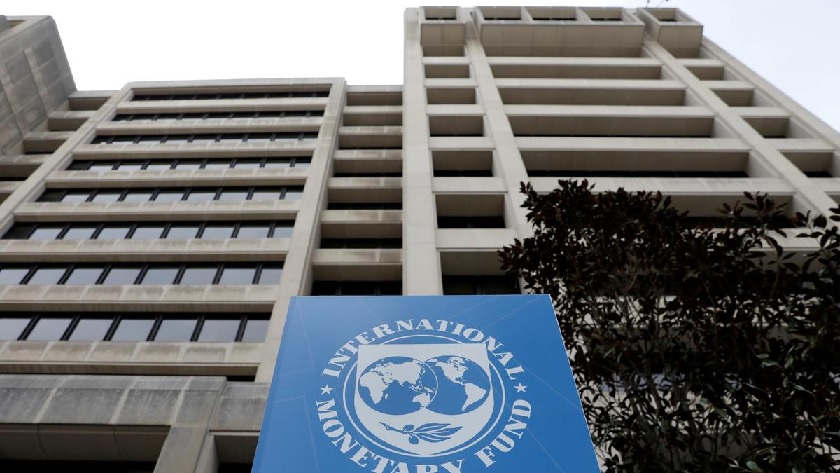
The International Monetary Fund, Wednesday, said so far, countries around the globe have taken fiscal actions amounting to about $8 trillion to contain the pandemic and its damage to the economy.
The IMF, which disclosed this during a briefing at the ongoing Spring Meetings in Washington DC, United States, said that in times of pandemic, fiscal policy is key to save lives and protect people.
It advised that governments have to do whatever it takes, stressing, ”but they must make sure to keep the receipts.
”According to the Fund, the Fiscal Monitor shows how policymakers can offer emergency lifelines to: save lives; protect people from losing jobs and incomes, and companies from bankruptcies; and enable a recovery.
Given the break down it said, emergency lifelines provided globally include higher spending and foregone revenues ($3.3 trillion), public sector loans and equity injections ($1.8 trillion), and guarantees ($2.7 trillion).
The Group of Twenty advanced and emerging economies are at the forefront with actions totaling $7 trillion, the Fund noted.
”Fiscal support is also provided by automatic stabilizers— features of the tax and benefit system that stabilize incomes and consumption, such as progressive taxation and unemployment benefits, ” the IMF stated.
On when the world is likely to recover from this shock, the IMF said, ”We do not know enough to foresee the timing and circumstances of the eventual recovery. But in times of emergency, the implication for policymakers is do whatever it takes but make sure to keep the receipts.”
It therefore, laid three guiding principles for countries to follow:
• “Target support to households to ensure access to basic goods and services and to a decent standard of living. To avoid permanent scarring, target support to viable businesses to limit layoffs and bankruptcies.
•” Deploy resources in a temporary and efficient way and reflect the costs in multi-year fiscal reports. Governments should reinforce principles of good governance commensurate with the scale of intervention. That should include, for example, accurate accounting; frequent, timely and complete disclosure of information; and the adoption of procedures to allow for ex-post evaluation and accountability. In a nutshell, policymakers should do whatever it takes but make sure to keep the receipts.
• “Assess, monitor, and disclose the fiscal risks because not all measures will have an immediate effect on deficits and debts. For example, government guarantees extended on business loans may have no upfront costs but will fall on the government accounts if businesses fail to honor their obligations in the future.
Actions to save lives globally
In order to save lives, the global fund advised that governments should finance additional health and emergency services as much as needed.
“But this is challenging, ” the IMF acknowledged.
It said, first, countries with limited health care capacity cannot adequately scale up resources. and secondly, borrowing constraints in many emerging market and developing economies requires shifting expenditure toward the health sector while safeguarding social protection spending and vital public services (transport, energy, communications).
It also noted that global coordination would help achieve a universally low-cost vaccine and medicine, and support countries with limited health capacity, including through aid, medical resources, and concessional emergency financing. ”As our Managing Director said in her recent speech, the IMF stands ready to deploy $1trillion lending capacity to assist member countries, with a focus on low-income developing countries, ” it assured.
Protect livelihoods with targeted fiscal measures
The IMF advised that social distancing necessary to slow the virus’ spread- with closed schools, restaurants, shopping centers, offices, and factories- inevitably carries economic costs.
It added that people and businesses need large, timely, temporary, and targeted fiscal support to remain afloat.
The international Fund stated: ”Countries’ institutional and financial capacity will influence the size of the lifelines they can offer along with the design and type of measures:
• Advanced economies can rely on a wide range of instruments on the spending, tax, and liquidity front to support people and firms given their strong tax-benefit systems.
”In the United States and Germany, for example, measures include extended unemployment benefits, including for the self-employed; payroll tax deferral; and wage subsidies to small and medium enterprises.
”Many workers, small enterprises, and self-employed entrepreneurs struggle to pay bills, make debt payments, and keep people on the payroll. To help them, several European countries have rolled out liquidity lifelines such as affordable loans or guarantees. France and Japan are providing government-funded paid sick and family leave to those who are unwell, self-isolate, or have to stay home and look after children during school closings.
• Emerging market and developing economies typically have less room in the budget to respond. They face several shocks: the pandemic, a steep drop in demand from abroad for their goods and services, plunging commodity prices, capital flight, and higher borrowing costs in financial markets. Also, they have relatively less developed tax-benefit systems.
”In those cases, in countries like India and Kenya, cash transfers made with the help of unique identification systems and digital technologies, or in-kind provision of food and medicine are possible options, such as in Bangladesh. China offers temporary tax relief for the most-affected people and firms, including in transportation, tourism, and hospitality services. Full and timely value-added tax refunds can grant businesses access to much needed cash.
Facilitate the recovery with broad-based fiscal stimulus
”As the pandemic abates and the Great Lockdown ends, a globally coordinated, broad-based fiscal stimulus may become an effective tool to foster the recovery. Coordination enhances the effectiveness of policy actions. But, at the same time, it has to respect relevant differences across countries, mainly in their financing capacity.
”The pandemic and the associated Great Lockdown led to increases in debt and deficits beyond those recorded in the global financial crisis. As the pandemic abates and the economy recovers in 2021, public debt ratios are expected to stabilize at new—higher—levels. If the adverse scenario in the World Economic Outlook were to materialize, debt levels would be even higher and debt dynamics more unfavorable.”




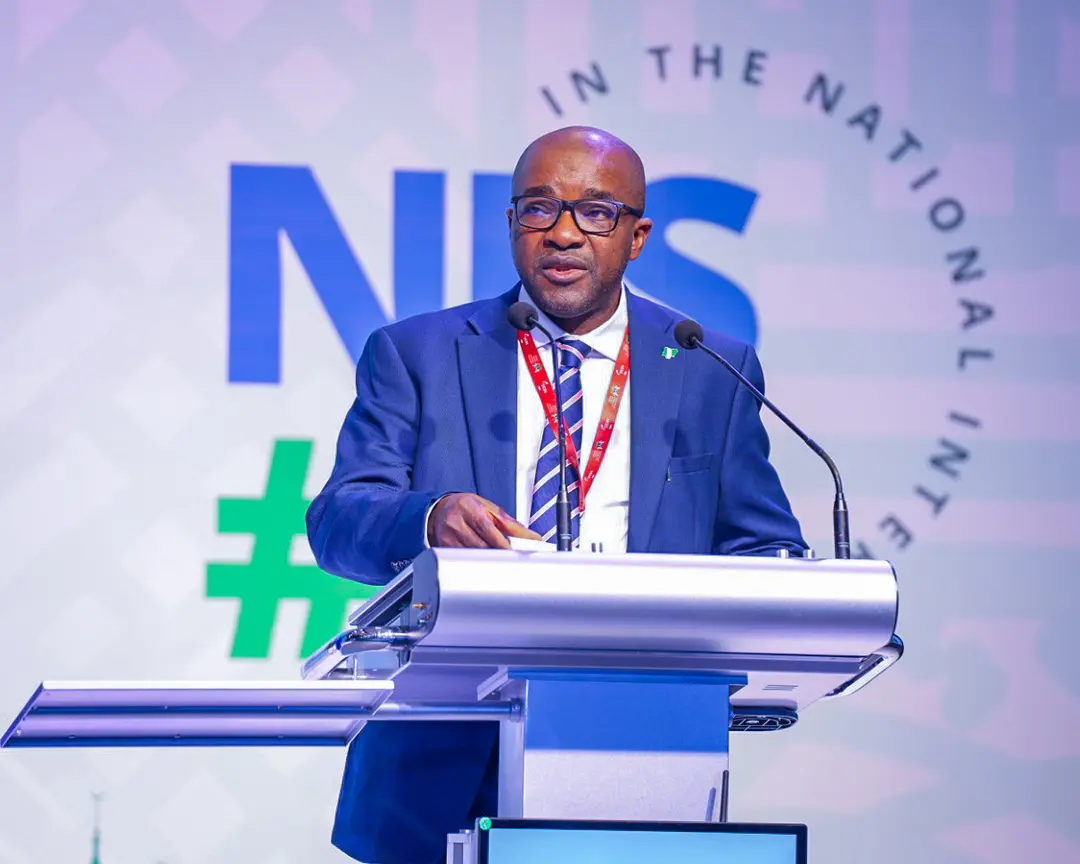
Chairman, Nigerian Economic Summit Group (NESG), Olaniyi Yusuf has urged the Federal Government to translate economic reforms into tangible results, including job creation, increased productivity and improved living standards.
Yusuf made the call on Monday in Abuja at the 32nd Nigerian Economic Summit (NES32), themed “Growth That Works: Delivering Jobs, Productivity and Shared Prosperity”.
He said Nigeria’s economic reforms had created an opportunity to strengthen the foundations for socio-economic development, in spite of the pressures on households and businesses.
“Our responsibility now is to ensure that reforms translate into stronger enterprises, better jobs, more productive workers, rising incomes, improved living standards and shared prosperity,” Yusuf said.
He said recent measures, including petroleum subsidy removal, foreign exchange reforms, fiscal restructuring and banking sector reforms, were necessary to address economic distortions.
However, he said macroeconomic stabilisation alone would not automatically translate into broad-based economic growth or improved citizens’ welfare.
Yusuf said households needed decent jobs, stronger purchasing power, and improved security and reduced poverty, while businesses required lower production costs, reliable electricity and affordable financing.
According to him, Nigeria must sustain economic stabilisation while prioritising practical measures to improve productivity and expand economic opportunities.
He said the summit’s theme reflected the need to measure economic success by the quality of jobs created, business competitiveness and the extent to which prosperity reached Nigerians.
Yusuf identified productivity, human capital development and resilience as key priorities for achieving sustainable and inclusive economic growth.
He said investments in education, healthcare, nutrition and relevant skills would improve workers’ productivity and prepare young Nigerians for employment.
The NESG chairman also called for improved infrastructure, predictable regulations, fair competition and an efficient legal system to encourage private investment and business expansion.
Yusuf said Nigeria’s economic performance presented a mixed picture, with improvements in some macroeconomic indicators alongside persistent challenges affecting businesses and households.
He noted that real Gross Domestic Product (GDP) grew by 4.43 per cent year-on-year in the second quarter of 2026, compared with 3.89 per cent in the first quarter.
Yusuf, however, expressed concern over persistent food inflation, high production costs, unreliable electricity, expensive financing and inadequate infrastructure.
According to him, a slowdown in inflation does not necessarily mean that goods have become affordable, as households continue to grapple with elevated prices.
Yusuf urged policymakers to prioritise productive investments, effective public expenditure and measures to address poverty, food insecurity and gaps in access to essential services.
He also called for stronger links between education and employment through technical and vocational training, digital skills and industry relevant learning.
The NESG chairman identified agriculture, agro-processing, manufacturing, construction, tourism and digital services as sectors with opportunities to expand productive employment.
He said the private sector remained central to Nigeria’s economic transformation but required an enabling environment to invest, produce and create jobs.
Yusuf urged businesses to invest in technology, workforce skills, local supply chains and export competitiveness, while calling on the government to improve infrastructure and ensure regulatory predictability.
He emphasised the need to assess the actual impact of reforms rather than merely documenting policies introduced or activities undertaken.
Yusuf said commitments arising from the summit should include clear institutional responsibilities, realistic timelines, measurable indicators and periodic reviews to ensure accountability.
He called on the government, businesses, development partners and other stakeholders to work together to translate economic stability into investment, productivity, employment and shared prosperity.
Yusuf said the ultimate test of the summit would be whether its deliberations produced tangible improvements in the lives of farmers, manufacturers, entrepreneurs and young people seeking decent jobs.
He urged participants to develop practical solutions and measurable commitments that would continue to deliver results beyond the summit.
By Tony Obiechina, Abuja
The Development Bank of Nigeria Plc (DBN) has launched DAWN: DBN Action for Women in Nigeria, unveiled its Impact Report and presented MSME Data Assets at the seventh edition of Annual Lecture held in Abuja.
DBN, in a statement on Thursday, said while delivering a welcome address, its Managing Director and Chief Executive Officer, Dr Tony Okpanachi, said the central challenge was no longer reforms themselves but ensuring benefits reach businesses at end of the chain.
He asked how to make sure benefits reach traders in Onitsha, fabricator in Aba, farmer in Kebbi and young founder in Yaba, noting that MSMEs accounted for about half of Nigeria’s GDP and more than eight in every ten jobs, adding that when reform works for MSMEs it works for most Nigerians.
He explained that reform becomes prosperity only when entrepreneurs can act on it whether through long tenor loans to buy equipment, banks willing to take risk or skills and records needed to grow.
He said working through Participating Financial Institutions DBN provides longer term funding, partial credit guarantees through subsidiary Impact Credit Guarantee Limited and capacity building including Entrepreneurship Training Programme.
He disclosed that as at December 2025 DBN had disbursed a cumulative N1.4 trillion to MSMEs through 84 Participating Financial Institutions creating about 1.6 million jobs nationwide.
Under the new five year strategy, the Bank aims to reach more than two million MSMEs with deliberate targets for women led businesses, youth led businesses and underserved states.
On DAWN, Okpanachi said finance alone had not enabled enough women-led businesses to scale.
He said initiative brings together financing, guarantees and credit support, technical assistance, outcome linked grants and market linkages delivered through banks, microfinance institutions, fintechs, aggregators, cooperatives and direct channels.
Its priority sectors are agriculture and exports, healthcare, arts and creatives, technology and green business.
He said DAWN is about moving gender focused lending beyond intention and turning access into opportunity.
On the sidelines of the lecture DBN and African Development Bank held a signing ceremony of AfDB DBN 61 million United States dollars Gender Line of Credit development that reinforces Bank commitment to women led enterprises.
Okpanachi urged Participating Financial Institutions to extend lending into sectors and states where access to finance has been limited, policymakers and regulators to measure reform by what changes for business at end of chain and MSMEs to formalise, keep good records and use support now available.
The Vice President as Special Guest of Honour was represented by Dr Fred Iklaga Senior Technical Adviser in the Office of Special Adviser to the President on Economy.
Keynote speakers were Chief Executive Officer of MTN Nigeria, Dr Karl Toriola, and Chairman of Nigeria Sovereign Investment Authority, Dr Segun Ogunsanya.
Fireside chat featured Chief Executive Officer of Sterling Bank Abubakar Suleiman, manufacturing and trade entrepreneur Mrs Omoyemi Chukwurah and by video Kola Masha of Babban Gona.
The Secretary to the Government of Federation, represented by Augusta Warren Bekaredebo, said 2026 tax reforms would bring relief to many small businesses expressing optimism that a lot of businesses will be smiling by next year because they will be exempted from tax.

By Ubong Ukpong, Abuja
The House of Representatives on Wednesday, summoned telecommunication operators in the country to appear before it over the present poor network services.
The Ad Hoc Committee investigating the persistent poor quality of telecommunication services in Nigeria gave the chief executive officers (CEOs) of major telecom operators seven days to appear before it and explain the deteriorating quality of network services across the country.
The committee issued the ultimatum at a public hearing in Abuja on Wednesday, directing the CEOs of MTN Nigeria, Airtel Nigeria, Globacom (Glo), Mafab Communications Ltd.
and other telecommunications service providers to appear before it on October 28, 2026.The resolution followed the adoption of two motions sponsored by Rep. Sunday Umeha and Rep Afam Ogene after the committee expressed displeasure over the failure of the invited telecom operators, including MTN and Mafab Communications, to honour previous invitations and appear before the lawmakers.
The committee directed the Nigerian Communications Commission (NCC) to ensure that all the affected operators comply with the invitation and appear before it at 2 p.m. on October 28 in Hearing Room 447 of the New Building of the National Assembly Complex, Abuja.
It also directed the operators to submit all relevant documents to the committee on or before the scheduled date and account for the persistent decline in service quality, which has continued to affect millions of subscribers and businesses across the country.
The lawmakers warned that any chief executive who failed to honour the invitation would face a possible summons for arrest to compel their appearance before the committee.
Speaking at the hearing, the committee’s Chairman, Rep. Olumide Osoba (APC-Ogun), said telecommunications services had become indispensable to Nigeria’s economy, extending beyond voice calls and internet access to critical commercial activities, including Point of Sale (POS) transactions.
Osoba noted that businesses, financial transactions and other essential services depended heavily on reliable telecommunications networks, making the persistent decline in service quality a matter of serious national concern.
He said the House constituted the ad hoc committee to investigate the recurring complaints by subscribers and determine the factors responsible for the poor quality of services provided by telecommunications operators.
The chairman, however, expressed concern that the invited chief executives had continued to evade direct engagement with the committee by offering various excuses or sending lower-ranking officials to represent them.
He said the practice undermined the purpose of the parliamentary investigation, stressing that the committee expected the chief executives, who were in a position to explain their companies’ operational challenges and commitments, to appear in person.
Also speaking, Rep. Ibe Osonwa expressed displeasure over what he described as the operators’ disregard for the House, despite the substantial revenue they generated from their operations in Nigeria.
Osonwa said it was unacceptable for companies benefiting from the Nigerian market to ignore invitations from the legislature, particularly when the purpose was to obtain explanations on issues directly affecting their customers and the wider economy.
He stressed that telecommunications operators had a responsibility to account for the quality of services delivered to Nigerians, adding that the House would not overlook any attempt to frustrate its investigation.
In his ruling, Osoba urged the NCC to ensure full compliance with the committee’s resolution, reiterating that the affected telecommunications operators must appear before the lawmakers on October 28 and provide the necessary explanations and documents.



Court Nullifies Omo-Agege’s NDC Senatorial Candidacy
ShareFrom Francis Sadhere, Delta The Federal High Court sitting in Warri, Delta State, has nullified the nomination of former Deputy...


APC Mourns 15 Supporters Killed In Zamfara Road Accident
ShareBy Orjime Moses, Abuja The All Progressives Congress (APC) has mourned 15 of its members and supporters reportedly killed in...
Ortom ‘Ranched’ Benue People in IDP Camps Instead of Cattle – Tondo
ShareFrom Attah Ede, Makurdi Former Benue State Commissioner for Lands and Survey, John Tondo, has criticised former Governor Samuel Ortom...


2027: INEC Chairman Seeks Stronger Security Cooperation Ahead Of Elections
ShareBy Orjime Moses, Abuja The Chairman of the Independent National Electoral Commission (INEC), Prof. Joash Ojo Amupitan, SAN, has called...


CBN Retains Interest Rate at 23 Per Cent
ShareBy Tony Obiechina, Abuja The Monetary Policy Committee (MPC) of the Central Bank of Nigeria (CBN) has retained the benchmark...


2027: Emovworho Warns Delta Politicians Against Exploiting Youths
ShareBy Orjime Moses, Abuja A concerned son of the Urhobo Nation, Austin Obule Emovworho, has warned political leaders in Delta...


Katsina Suspends Daura Emir, Orders Probe into Sexual Assault Allegation
ShareBy David Torough, Abuja The Katsina State Government has suspended all official engagements and travels of the Emir of Daura,...
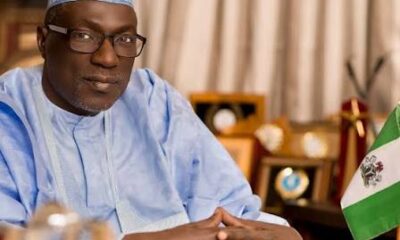

Makarfi Chairs DAILY ASSET 10th Anniversary, Awards
ShareBy David Torough, Abuja Former Kaduna State Governor, Senator Ahmed Mohammed Makarfi, has accepted the invitation to chair the 10th...


Customs Unveils Novara to Spotlight Officers’ Challenges
ShareBy Tambaya Julius, Abuja The Nigeria Customs Service (NCS) has unveiled a 79-episode television drama series, Novara, to showcase the...


FCT Upgrades 20 PHCs Under World Bank-supported IMPACT Project
ShareBy Laide Akinboade, Abuja The Federal Capital Territory Administration (FCTA) has upgraded 20 Primary Health Centres (PHCs) across the territory...