
BUSINESS
Dangote Submits Paper Work for Largest Seaport, Plans Gas Export

Torough David, Abuja
The President/Chief Executive of Dangote Group, Aliko Dangote, has commenced the process to develop what he described as Nigeria’s biggest and deepest seaport in Olokola, Ogun State, a move that signals the expansion of his multibillion-dollar industrial empire and a strategic push into maritime logistics.
Speaking during an interview in Lagos on Monday, Dangote disclosed that he submitted the necessary paperwork for the seaport project in late June.
The planned port, located about 100 kilometres from his Lekki-based refinery and fertilizer complex in Lagos, is expected to ease the export of goods such as fertilizer, petrochemicals, and liquefied natural gas, while enhancing access for imported equipment and raw materials.
“It’s not that we want to do everything by ourselves, but I think doing this will encourage other entrepreneurs to come into it,” Dangote said, expressing optimism that the project would attract more private investment into Nigeria’s underdeveloped port infrastructure.
Dangote currently exports urea and fertilizer through an on-site jetty he built, that also receives heavy equipment for the refinery.
The proposed Atlantic seaport, if approved, will rival existing ports in Lagos, including the recently completed Lekki Deep Sea Port, which was funded by Chinese investors and began operations in 2023.
It also marks a return to the Olokola site for Dangote, who had previously shelved plans to site his massive refinery and fertilizer plant there due to conflicts with local authorities.
Those disputes, however, appear to have been resolved under the current administration.
The development also comes four months after he disclosed readiness of the company to return to the Olokola Free Trade Zone in Ogun Waterside Local Government Area of the state.
Dangote also plans to export liquefied gas from Lagos, a project that will involve constructing pipelines from Nigeria’s oil-rich Niger Delta., vice-president of the group Devakumar Edwin said in another interview.
“We want to do a major project to bring more gas than what NLNG is doing today,” he said, referring to Nigeria LNG Ltd., a joint-venture between the government, Shell Plc, Eni SpA and TotalEnergies SE, which is currently the continent’s largest exporter of LNG.
“We know where there is a lot of gas, so run a pipeline all through and then bring it to the shore.”
Dangote already sources natural gas from the Niger Delta to supply his fertilizer plant, where it’s used as feedstock to produce hydrogen for ammonia, a key component in the production of the crop nutrient.
The billionaire also plans to start distributing fuel to retailers in Nigeria from August, using a fleet of 4,000 gas-powered trucks, a move that has drawn criticism from some groups accusing him of attempting to monopolise the oil sector, which he has denied.
Dangote, valued at $27.8bn according to the Bloomberg Billionaires Index, also owns cement manufacturing and sugar plants in Africa.
The Organization of the Petroleum Exporting Countries (OPEC), has revised downward its 2026 global oil demand growth estimates, citing expected slower consumption growth in advanced economies, where collective demand will rise by only 100,000 barrels per day.
The cartel said it now expects global oil demand growth to reach 1.
2 million barrels per day in 2026, down from its previous forecast of 1. 4 million barrels per day, explaining that the revision would bring total global oil consumption to 106.3 million barrels per day.In Europe, oil demand will decline by 30,000 barrels per day as weaker economic activity weighs on consumption, OPEC, said in its monthly oil market report.
The OPEC also expects some Asian economies, particularly Japan, to record slower demand growth. The organization forecast Japanese oil consumption to fall by 80,000 barrels per day.
However, strong demand from major emerging economies partly offset these weaker signals.
The OPEC said China would add 250,000 barrels per day to global demand, supported by its petrochemical industry. The organization also forecast India to increase demand by 200,000 barrels per day, driven by infrastructure spending and growth in vehicle ownership. Overall, OPEC expects emerging economies and developing countries to contribute an additional 1.1 million barrels per day to global oil consumption in 2026.
The OPEC’s revision aligns with a broader reassessment of global oil demand expectations.
In its May 2026 report, the International Energy Agency projected a much sharper downturn. The agency forecast a contraction of 420,000 barrels per day in global oil demand for the full year rather than a slowdown in growth.
The gap between the two institutions now exceeds 1 million barrels per day, highlighting the uncertainty surrounding the market outlook.
Both reports identified the near-closure of the Strait of Hormuz as a major factor behind market instability. According to the U.S. Energy Information Administration, six Gulf countries collectively reduced production by 10.5 million barrels per day in April, marking what the agency described as an unprecedented contraction outside pandemic periods.
As supply shortages intensified, oil producers outside the Middle East moved to increase production to offset part of the missing volumes. Several African producers, including Nigeria, Libya and Angola, benefited from rising demand for Atlantic Basin crude among Asian and European buyers that lost access to Gulf oil supplies, according to the IEA.
However, not all African producers can fully capitalize on the opportunity. Nigeria, Africa’s largest oil producer and an OPEC member, nonetheless showed encouraging momentum. According to provisional data published on May 15 by the Nigerian Upstream Petroleum Regulatory Commission, the country increased oil production from 1.546 million barrels per day in March to 1.663 million barrels per day in April 2026.
The Nigerian Content Development and Monitoring Board (NCDMB) has reaffirmed that compliance with Nigerian Content regulations in the oil and gas industry remains non-negotiable.
The Executive Secretary of NCDMB, Felix Ogbe, stated this on Tuesday at the 2026 Nigerian Oil and Gas Midstream and Downstream Stakeholders Summit in Lagos.
Ogbe was represented by Austin Uzoka, Head of the Directorate of Planning, Research and Statistics.
He said the midstream and downstream sectors remained vital to Nigeria’s economic expansion, industrialisation and job creation efforts.
The summit focused on the theme, ‘Unlocking, Growing and Sustaining Nigerian Content Development in Nigeria’s Oil and Gas Midstream and Downstream Sectors.’
Ogbe described the gathering as a strategic platform for shaping the future direction of Nigeria’s energy industry and strengthening indigenous participation.
According to him, reforms, improved regulatory clarity and growing investor confidence are repositioning Nigeria as a leading oil and gas investment destination in Africa.
He noted that the Board, established under the Nigerian Oil and Gas Industry Content Development Act 2010, continued promoting local capacity development and technology transfer.
Ogbe added that the Board had also advanced employment opportunities for Nigerians across several segments of the oil and gas industry.
He said Nigerian companies had recorded significant achievements in upstream operations, particularly in exploration, drilling, engineering, fabrication and project management activities.
According to him, the next growth phase lies within the midstream and downstream sectors of the nation’s petroleum industry.
He identified gas processing, transportation infrastructure, storage facilities, LPG and CNG distribution, refining and petrochemical development as major investment opportunities.
Ogbe said Nigeria was gradually reducing dependence on imported refined petroleum products through increased local refining and processing capacity.
He described the Dangote Refinery as a strong symbol of Nigeria’s industrial ambition, energy independence and economic self-sufficiency.
Ogbe stated that modular refineries were equally opening fresh opportunities for indigenous participation, local investment and improved national energy security.
He also highlighted ongoing gas commercialisation projects as important drivers of industrialisation and value addition within the domestic economy.
The NCDMB boss specifically referenced the Nigeria LNG Train 7 project and the Federal Government’s Presidential Initiative on Compressed Natural Gas.
According to him, both initiatives would strengthen domestic gas utilisation and support broader industrial growth across the country.
While emphasising the Board’s regulatory responsibilities, Ogbe insisted that compliance with Nigerian Content requirements remained central to industry operations.
“Compliance remains non-negotiable, but it must also be practical, implementable and supportive of investment and business growth,” he said.
He urged policymakers, investors, operators and service providers to deepen collaboration in order to maximise opportunities within the sector.
Ogbe said stronger partnerships would help drive sustainable economic growth, industrial capacity and long-term competitiveness in Nigeria’s energy industry.
The two-day summit attracted major stakeholders from the oil and gas industry to discuss strategies for expanding local content development.
Participants also examined ways to strengthen industrial capacity and improve Nigeria’s competitiveness within the global energy market.
Dangote Petroleum Refinery has reduced the price of aviation fuel, also known as Jet A1, from N1,750 to N1,650 per litre.
The company said the move is aimed at reducing the financial burden on airline operators and ensuring steady fuel supply across the country.
The development was announced in a statement issued on Tuesday in Lagos by the company’s spokesperson, Anthony Chiejina.
According to him, the refinery also introduced a 30-day interest-free credit facility for marketers and airline operators backed by bank guarantees.
He added that the company had also changed its pricing structure from dollar-based transactions to payments in Naira, a move expected to ease pressure on local operators.
Chiejina stated that the reduction was necessary due growing concerns over the rising operational costs in Nigeria’s aviation sector.
According to him, aviation fuel accounts for a major part of airline expenses.
He said, “Industry stakeholders have repeatedly warned that the increasing cost of Jet A1 fuel was putting serious financial pressure on domestic airlines and threatening smooth flight operations.
“The refinery’s latest decision is expected to provide relief for airline operators by lowering fuel costs, improving operational stability and supporting efforts to reduce airfares for passengers.”




GAIYD, EFCC Task Boy-child on Integrity as World Marks Int’l Day
ShareBy David Torough, Abuja Stakeholders at the commemoration of the International Day of the Boy Child on Saturday in Abuja...
AFCON Qualifiers: Nigeria to Face Madagascar, Tanzania, Guinea-Bissau
ShareNigeria have been drawn in Group L of the 2027 Africa Cup of Nations qualifiers, where they will face Madagascar,...
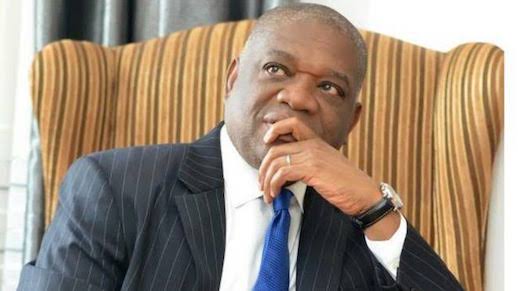
Kalu Commends Tinubu, APC, Constituents after Winning Party Primaries
ShareBy Eze Okechukwu, Abuja The Senator representing Abia North Senatorial District, Orji Uzor Kalu, has expressed gratitude to President Bola...


Protests Rock Conduct of APC Senatorial Primaries in Kogi
ShareFrom Joseph Amedu, Lokoja Controversy and protests marred Monday’s All Progressives Congress (APC) senatorial primaries in Kogi State, even as...

Bichi Community Shows Good Example of Massive Support to APC, Abba Yusuf
ShareFrom Rabiu Sanusi, Kano Kano State Governor, Abba Yusuf has declared support for the re-election bid of the member representing...

Troops Apprehend 16 Suspects, Recover Arms in Nationwide Operations
ShareTroops of the Nigerian Army have apprehended a total of 16 suspects and recovered arms and other items in a...


Corruption Probe: Nigerians Slam APC Over Clearance of Okowa, Bello
ShareBy Mike Odiakose, Abuja Following All Progressives Congress (APC) primaries for Senatorial aspirants in which former Delta state governor, Senator...

Responsible Journalism Necessary for National Security – CDS
ShareThe Chief of Defence Staff (CDS), Gen. Olufemi Oluyede says responsible journalism is necessary for national security. Oluyede said this...
OPEC Projects Slower Drop in Crude Consumption by Advanced Economies
ShareThe Organization of the Petroleum Exporting Countries (OPEC), has revised downward its 2026 global oil demand growth estimates, citing expected...
Egypt Signifies Investment Interest in Nigeria’s CNG Industry
ShareEgypt’s Natural Gas Vehicles Company (Cargas) has launched ambitious plans to explore expansion opportunities into the Nigerian market and participate...