
NEWS
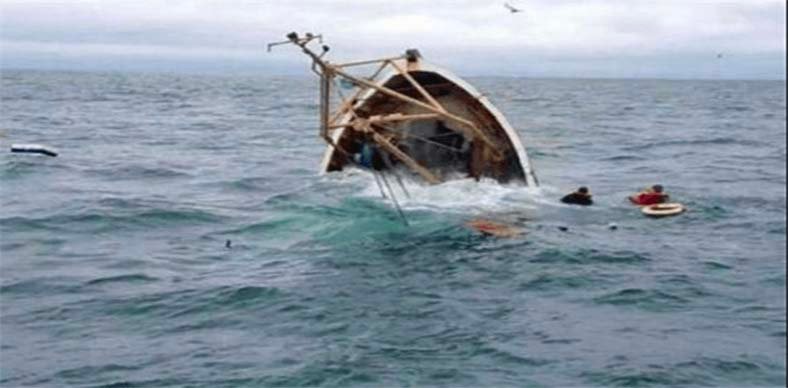
Delta Boat Mishap: APC Stalwart Condoles With Bereaved Families

By Mathew Dadiya, Abuja
A stalwart of the All Progressives Congress (APC) and former aspirant for the Warri South-West Constituency in Delta State House of Assembly, Hon. Jude Akpodubakaye has condoled the families of APC supporters who lost their lives in a boat mishap while returning from the party’s governorship campaign in the Warri South-West local government area of the state.
Hon.
Akpodubakaye said that he was heartbroken and saddened by the unfortunate incident.Speaking with newsmen in Abuja on Friday, Hon. Akpodubakaye, a software engineer and entrepreneur, sympathized with the leadership of APC led by the Deputy Senate President and governorship candidate of the party in Delta State, Ovie Omo-Agege,and the national chairman of the party over the sad incident and prayed God to grant the bereaved families the fortitude to bear the irreparable loss.
Akpodubakaye therefore, called for synergy among relevant agencies at the federal and state level to come up with measures that could halt this incessant and needless waste of human lives in the country’s waterways.
He reiterated the urgent need for the state government and relevant authorities to put in place adequate safety measures along the waterways to prevent future boat mishaps.
Akpodubakaye however regretted that while many may not be paying attention to these frequent boat mishaps on the country’s waterways, these boat mishaps have continued to occur often with heavy casualty figures, just as he blamed the Delta State government for paying lip service to the issue of marine safety along the state’s waterways.
He recalled that only recently, precisely on 6th June this year, about 28 persons lost their lives when a canoe conveying them across River Benue capsized in Benue State, informing that the victims were traveling from Ijaha in Makurdi Local Government Area of Benue State to participate in an annual convention of their church.
“Also, a boat conveying 19 passengers and two crew members from Ebute-Ero to Ikorodu in the night also capsized in Lagos State, adding that the Lagos situation seemed to be a little bit better than that of Benue where 10 persons were lucky to be rescued while others lost their lives in the mishap.
“It is indeed tragic that despite various water management authorities that have been established in this country, our waterways remain as death traps. There is no doubt that water transportation could be one clear source of decongesting the roads.
“There is an urgent need for the enforcement of the operational standards for all ferry and canoe operators across the country’s waterways. I am so saddened to hear of these sorts of avoidable marine accidents along our waterways in Delta State.
“Hopefully, when the APC government eventually comes on board, come 2023, the new government will put in place appropriate legislation to curb these incessant marine accidents with regular inspection of these boats, just like motor vehicles are inspected and deemed road worthy or marked ‘off the road’, to detect dilapidated and rickety boats which constitute a serious hazard to human lives.
“Provision of emergency services along the waterways will be given due consideration because the absence of such emergency agencies also contributes to the high casualty figures recorded when boat accidents occur,” Akpodubakaye stated.


From Rabiu Sanusi, Kano
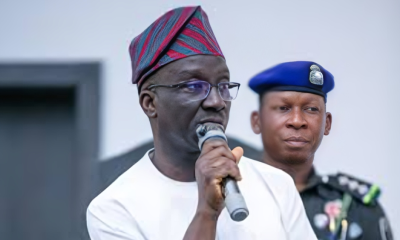
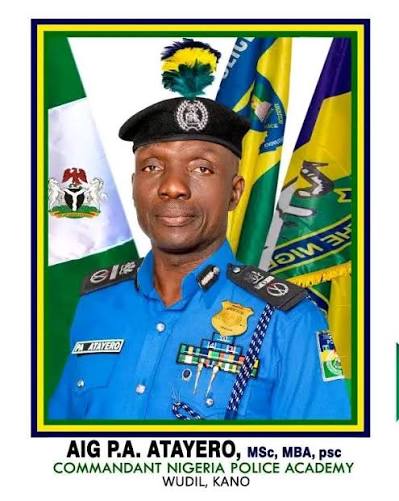
The Nigeria Police Academy, Wudil, Kano State, on Monday witnessed an emotional and colourful farewell ceremony as its 24th Commandant, Assistant Inspector-General of Police (AIG) Patrick A. Atayero, officially retired from the Nigeria Police Force after attaining the mandatory retirement age of 60.
The occasion, marked by a grand Pulling-Out Parade, celebrated a distinguished career of dedicated service, leadership, and commitment to the advancement of police education in Nigeria.
The ceremony, which coincided with AIG Atayero’s 60th birthday, attracted an array of dignitaries, senior military and police officers, government officials, traditional rulers academics and well-wishers who gathered to honour a leader widely credited with transforming the Nigeria Police Academy through infrastructure development, enhanced academic standards and strengthened discipline among cadets.
The parade featured impressive drills and displays by cadets, earning admiration from guests who applauded the academy’s high level of professionalism.
Kano State Governor, Abba Kabir Yusuf, was represented at the event by his Special Adviser on Community Policing, Hajiya Ambassador (Dr.) Maimuna Umar Sheriff, underscoring the cordial relationship between the Kano State Government and the Nigeria Police Academy.
The governor’s representative commended the retiring Commandant for his invaluable contributions to policing and security development, describing his tenure as one that significantly strengthened the institution’s reputation as Nigeria’s foremost police training academy.
Delivering an emotional valedictory address Atayero expressed profound gratitude to Almighty God for granting him a successful career spanning decades of dedicated service to the nation.
He described his journey in the Nigeria Police Force as deeply rewarding and thanked President Bola Ahmed Tinubu for his leadership and reforms under the Renewed Hope Agenda which he said had positively impacted the Nigeria Police Force.
He also paid glowing tribute to the Inspector-General of Police Olatunji Rilwan Disu for his confidence, mentorship and unwavering support throughout his tenure as Commandant.
The retiring police chief also acknowledged the support of the Minister of Police Affairs, Senator Ibrahim Gaidam the Chairman of the Police Service Commission, Hashimu Argungu (Rtd) members of the National Assembly the Force Management Team and Kano State Governor Abba Kabir Yusuf for fostering a peaceful environment for the academy.
He further appreciated the Executive Chairmen of Wudil, Warawa and Dawakin Kudu Local Government Areas, traditional rulers, religious leaders the Police Community Relations Committee (PCRC), the Ijesha Progressive Union, his course mates, academy staff, colleagues, friends and his family for their unwavering support throughout his career.
The ceremony concluded with the traditional Pulling-Out Parade, one of the Nigeria Police Force most symbolic retirement rites as senior officers ceremonially pulled the newly retired AIG through the academy gates in an official vehicle amid loud cheers, applause and heartfelt tributes.
The emotional farewell marked the end of an illustrious chapter in AIG Patrick Atayero’s policing career leaving behind a legacy of professionalism, institutional development and exemplary leadership at the Nigeria Police Academy, Wudil.
By Reuben Abati
In the midst of the brazen, extra-judicial killings of Nigerians in South Africa, along with other Africans, on the grounds that these are illegal immigrants, the South African President Cyril Ramaphosa has now sent South Africa’s Minister of International Relations and Cooperation, Ronald Lamola, and a team, as envoys to President Bola Ahmed Tinubu.
They arrived in the country on Friday, 24 July, but the Nigerian President declined to meet with them.They were kept waiting through-out the weekend. On Monday, that is yesterday, they were directed instead to meet with the Minister of State for Foreign Affairs, Ambassador Sola Enikanolaiye, who would then brief the President later.
The substantive Minister, Ambassador Bianca Odimegwu-Ojukwu is out of the country for a meeting in Addis Ababa. The explanation from the Nigerian side was also that the President of Nigeria was not given any prior notice.
The South African delegation met with Enikanolaiye who lamented the fact that recurring attacks on Nigerians in South Africa have followed a disturbing pattern for more than two decades, and that Nigerians who supported South Africa’s liberation from apartheid have been treated unfairly. “…What we have found is that this xenophobic act has gone beyond the attack on criminals. We have records of Nigerians who have a legitimate purpose to remain in South Africa, yet they have been attacked”, he said.
Nigeria, through its reception and responses, is being diplomatic, without seeming to appear offensive. But the detail in every diplomatic gesture of this type is in the nuances. The Presidency on the international stage is a club of brothers, sovereigns in each individual right, bonded by mutual self-respect, established diplomatic relations, and courtesies.
Where cracks occur, there must be an underlying conflict, in this case, the recurrent murder, harassment and deportation of Nigerians in South Africa.
When the Nigerian President refuses to see envoys from a brother-President, and his Foreign Ministry says there was no prior notice, that is a sophisticated way of expressing displeasure or a subtle rejection of the envoys either on the grounds that they are too junior, so they are asked to meet their counterparts in the receiving country, or this may be a message to the sending country.
Whatever may be the sub-text of Nigeria’s snobbery of President Ramaphosa, this is the most appropriate response in this matter. President Tinubu has simply stood up for his own countrymen.
He has sent a message that he is a very busy President, who cannot just receive envoys “without prior notice”. It is hard though to believe that this is the true story. But as proud and concerned Nigerians, it is a cover story that we would rather believe. Thank you, Mr. President, for this diplomatic moment. Nigerian lives matter at home and abroad. Citizen diplomacy must remain at the centre of Nigeria’s diplomatic process: essentially the strategic framework of Demography, Development, Diaspora, and Democracy (the 4Ds).
President Ramaphosa’s South Africa and its citizens have been indeed unfair to Nigerians living in South Africa, treating both legal and illegal immigrants like common criminals in open violation of all known rules of decency and international law.
Black South Africans, after Nelson Mandela, have not been kind to other Africans living among them, nor have they, particularly the new generation born after the end of apartheid, been appreciative of the sacrifice that other Africans made to ensure the liberation of their country, from the trauma of minority, white rule.
This emerging generation of black South Africans lack a sense of history. Mandela welcomed other Africans with open arms. His children are driving everyone away.
In recent months, a fresh wave of anti-immigrant protests and violence swept through major South African cities with the people going from door-to-door, attacking businesses and homes belonging to foreigners, harassing anyone at all who sounded or looked different.
The South African mob wielded dangerous weapons; they prevented foreigners from accessing hospital services, and in due course they gave a deadline of 30 June for all foreign-owned shops to shut down and for all foreigners to leave.
They soon resorted to mob violence. Not even asylum seekers whose rights are recognized under international law were spared. Foreigners in South Africa began to flee. Countries started evacuating their citizens. More than 38, 000 Malawians were hounded out.
Zimbabweans fled across the border. Ghana and Nigeria evacuated their citizens. Hundreds of Nigerians including women and children were stranded, seeking refuge at the Nigerian High Commission in Pretoria.
While the racism, violence, and protests festered, the prompt response of the South African government, cast in the cloak of populism, was to encourage the breakdown of law and order. South Africa’s Home Affairs Minister, Leon Schreiber told undocumented immigrants to leave or face deportation.
The Constitutional Development Minister Mmamoloko Kubayi and Minister in the Presidency Khumbudzo Ntshavheni, disclosed that South Africa will enforce its immigration laws.
The government’s position merely emboldened the anti-migrant activists like Nkosikhona Ndabandaba and Jacinta Ngobese-Zuma, as well as vigilante groups such as “March and March” and Operation Dudula. Foreigners were told to leave or return to their countries in a coffin! They were accused of contributing to unemployment in South Africa, placing pressure on public services, taking South African women, appearing generally more prosperous in another man’s country.
Xenophobia soon turned into hate and the South Africans began to beat, maim and kill. By the time President Ramaphosa suddenly thought it necessary to make the statement that “illegal immigration is not the cause of all our economic challenges…and that vigilantism will not be allowed”, the South Africans had tasted blood and they only wanted more bloodshed.
Three Mozambicans were killed. A Nigerian, Amaramiro Emmanuel was beaten to death by officers of the South African National Defence Force on April 20. Andrew Ekpenyong and Emeka Charles Iroegbu were killed in Pretoria by the police.
Musa Joe, popularly known as Big Joe was gunned down in front of his shop in Mpumalanga. On July 23, Charles Simon Ibeh was killed in Bellville, Cape Town. Other Nigerians who lost their lives include Taiwo Raji, Silas Ani and Yemi Akinwunmi. Several others are in hospitals. Mrs Abike Dabiri-Erewa, Chairperson of the Nigeria Diaspora Commission (NIDCOM) reports that about 116 Nigerians were killed in South Africa in the last two years alone! Minister of State for Foreign Affairs, Amb. Sola Enikanolaiye puts the figure at 98 between 2002 and 2026.
Whether 116 or 98, these are Nigerian lives not mere statistics. They are our brothers, sisters, children and relatives. Under customary international law, South Africa has a responsibility to protect them, namely, the R2P rule. They failed.
Now, they are coming to us, crying over spilt milk, asking for Nigeria’s co-operation on what their Minister Lamola calls “a shared responsibility.” The mood in Nigeria as well as in Ghana is not to share anything with South Africa but to remind that country and its people of their ingratitude and acts of wickedness towards other Africans. President Donald Trump and all the white South Africans who fled South Africa, out of fear of persecution must be laughing at South Africa in derision.
Many Nigerian lawmakers and citizens have called for retaliatory action against South Africans and South African businesses.
The Ghanaians have been more proactive. Ghana, like Nigeria, has evacuated about 1, 000 of its citizens, and has summoned South Africa’s High Commissioner to Ghana. It also turned down a proposed state visit to Ghana by President Ramaphosa, following the killing of a Ghanaian citizen, Bashiru Isak (40) in Pretoria. The South African special envoy was also in Ghana last week.
The government of Ghana rejected the message he brought from President Ramaphosa. Nigeria should similarly reject the same message and send Ghana’s High Commissioner home! Ghana had taken the additional step of reporting the Republic of South Africa to the African Union.
South Africa’s conduct is a direct violation of the Constitutive Principles of the African Union, a blemish on the values of Pan-Africanism, and such projects as the African Continental Free Trade Area (AfCFTA). South Africa is now seeking diplomatic engagements ahead of the African Union Extraordinary Summit on Conflict Prevention and Resolution scheduled for Angola from August 29 -30, 2026.
At the end of the 69th ordinary Session of the ECOWAS Authority of Heads of State and Government, the body issued a communique in which it denounced the “unAfrican behaviour” of South Africans. In both Nigeria and Ghana, citizens even believe that the matter should be taken directly to the International Criminal Court (ICC) to hold South Africa responsible for acts of genocide and crimes against humanity. Two Ghanaian civilians have already filed protests with the ICC. Roland Lamola has been busy defending his country and pleading for dialogue and engagement on migration.
When he returns to South Africa, he should be asked to tell President Ramaphosa and South Africans in general, that we, the people of Nigeria, are terribly disappointed, and our protest must be on record, for no one knows what else will happen tomorrow and South Africans will again turn on foreigners in their midst.
In their projection of hate and intolerance, South Africans made no distinctions between illegal and legal migrants. All migrants equally deserve protection under the law, and there are established protocols for addressing their circumstances and those do not include violence and extra-judicial killing.
The South African government claims it was focused only on undocumented migrants, but it has been unable to show evidence of the number, if any, of anti-migrant activists and vigilantes – “March and March” or Dudula – who are currently being prosecuted.
The security agencies in actual fact, and cabinet Ministers aided and abetted the protests with their racism. Their complicity deserves to be called out and sanctioned. Foreigners are not the source of their problems.
Black South Africans are victims of a post-apartheid society that is yet to empower the majority of the South African people. Popular power may have changed hands but the economy is still significantly in the hands of a minority.
It is the responsibility of the South African government to make life easier for its own people and not abdicate responsibility by promoting the impression that outsiders are the problem. Migrants bring much that is positive to the South African environment.
Nigerians have been accused of taking over most of the small-scale businesses. South Africans who work in these businesses as assistants and apprentices were in a vantage position to learn certain skills, and acquire knowledge from their more skillful African brothers.
As citizens, they would be better placed to acquire small loans and learn to stand on their own and set up businesses in their own country. Now that they have chased the foreigners away, they have no one to turn against but themselves. Persons in Gauteng are beginning to discriminate against persons from Limpopo and Kwa-Zulu Natal, asking others to stay in their own
original provinces. Thus, hate breeds hate and feeds on itself, not a good sign for a country in need of unity and peace.
African leaders are quick to speak of trade relations, integration, solidarity and co-operation in pursuit of the AU’s Agenda 2063, the Africa we want, but this works more at the level of rhetoric, majorly at the level of government-speak.
The peoples of Africa themselves remain disconnected. Africa has failed in pulling itself together; the continent has done more in pushing itself apart. Xenophobia in South Africa is a symptom.
The AU has a protocol establishing the African Economic Community (AEC) on the Free Movement of Persons, Right of Residence, and the Right of Establishment but this is yet to come into force. Only four out of 55 AU members have agreed to the protocol on the Free Movement of Persons since 2019. The long-term goal is to work harder towards the unity of African states and peoples. The teaching of history must be made compulsory at all levels in South African schools to cure the growing, mass affliction of collective amnesia.

By Raphael Atuu, Abuja
The Abuja Municipal Area Council (AMAC) has commenced the training of its in-house and outsourced cleaning personnel in a renewed effort to improve environmental sanitation, strengthen public health, and ensure cleaner communities across the Federal Capital Territory (FCT).
The maiden capacity building programme, organised by the Department of Environmental Health Services, was held at the Medical and Health Workers’ Union of Nigeria (MHWUN) Secretariat, Ayuba Wabba House, Durumi District, Abuja, under the theme, “Operation: Keep Abuja Municipal Area Council and the Entire FCT Clean.
”Representing the Executive Chairman of AMAC, Hon. Christopher Zakka Maikalangu, the Head of the Department of Environmental Health Services, Hajiya Hannatu Ibrahim, said the council was committed to building a professional sanitation workforce capable of addressing emerging environmental and public health challenges.
She described the initiative as part of the council’s broader strategy to promote disease prevention, environmental protection and sustainable urban sanitation through continuous training and capacity development.
The participants were taken through practical and classroom sessions on antimicrobial decontamination, deep cleaning techniques, infection prevention and control, safe handling of cleaning chemicals, proper use of Personal Protective Equipment (PPE), eco-friendly cleaning methods, waste management, occupational health and safety, customer relations, and the operation of modern cleaning equipment.
Delivering lectures at the training, the Head of Cleaning Services Unit, Sanitarian James Danjuma, spoke on antimicrobial decontamination and deep cleaning procedures, while Sanitarian Kalu Nsi Eke highlighted safe cleaning practices, workplace safety and environmentally sustainable sanitation methods.
The Registrar Emeritus of the Environmental Health Council of Nigeria, Dr. Ebisike Augustine Onyekachi, urged participants to maintain professionalism, comply with standard operating procedures and recognise their responsibility as frontline public health practitioners working to safeguard healthy communities.
The Department of Environmental Health Services commended the Executive Chairman, Hon. Christopher Zakka Maikalangu, for his support and commitment to advancing environmental health initiatives in the area council.
The department also appreciated the Medical and Health Workers’ Union of Nigeria for providing the training venue, as well as the facilitators, organisers and participants whose contributions ensured the success of the programme.
It noted that the exercise marks the beginning of a continuous professional development programme aimed at raising cleaning standards, protecting public health and promoting sustainable environmental sanitation across the Federal Capital Territory.



AIG Patrick Atayero Bows Out at 60
ShareFrom Rabiu Sanusi, Kano The Nigeria Police Academy, Wudil, Kano State, on Monday witnessed an emotional and colourful farewell ceremony...


Court Sentences Man to Death over Murder of Woman
ShareFrom Aliyu Askira, Kano A Kano State High Court, presided over by Justice Farida Dan Baffa, has sentenced one Sha’aibu...
Xenophobia, Tinubu and Ramaphosa
ShareBy Reuben Abati In the midst of the brazen, extra-judicial killings of Nigerians in South Africa, along with other Africans,...

AMAC Trains Cleaning Personnel to Improve Environmental Sanitation in FCT
ShareBy Raphael Atuu, Abuja The Abuja Municipal Area Council (AMAC) has commenced the training of its in-house and outsourced cleaning...

Uba Sani Picks Jerry Adams as 2027 Running Mate
ShareKaduna State Governor, Uba Sani has nominated the Executive Chairman of the Kaduna State Internal Revenue Service, Jerry Adams, as...

How President Tinubu is redrawing S’East Political Map
ShareBy Tunde Rahman WHEN the 2023 presidential election results were announced, many analysts and commentators gave a largely unanimous verdict...


APC Chieftain Faults Obi’s Call for Tinubu’s Resignation
ShareAyoola Lawal, a former Secretary of the APC Committee of Diaspora Chairmen, has filtered calls by NDC Presidential Candidate, Peter...
When Xenophobia Strikes, Nigeria Must Engage South Africa in ‘Roforofo Diplomacy’
ShareBy Isaac Asabor Every time xenophobic violence erupts in South Africa, the script is almost always the same. Horrific images...


Ariana Grande Sues Hackers who Leaked Music, Videos
SharePop star Ariana Grande has filed a lawsuit against two unidentified hackers who, she claims, leaked unreleased music and studio...


WHO Urges Action on Hepatitis, Announces Hepatitis D as Carcinogenic
ShareThe World Health Organisation (WHO) has called on governments and partners to urgently accelerate efforts to eliminate viral hepatitis as...