
NEWS
Democracy Day: Activists urge Govt to Address Hunger, Inflation, Insecurity

Activists marking the Democracy Day in Lagos State have called on the Federal Government to address hunger, inflation and insecurity in the country.
They made the call on Wednesday while marching along some major streets in Ikeja axis of the state to protest what they called economic hardship and insecurity.
Reports says that the protesters, mainly human rights activists and Pro-June 12 activists, early Wednesday morning converged under the Ikeja Bridge in Lagos, as the country marks the 2024 Democracy Day.
The protesters in their numbers chanted solidarity songs and displayed placards with different inscriptions like “Cost of living is becoming unbearable”; “We demand for better governance; payment of living wage to all Nigerians”; amongst others.
One of the speakers, Mr Omotaje Olawale, said the current electoral process was faulty from the beginning and was imposed on Nigerians by the military government.
Olawale said that though many Nigerians, including MKO Abiola, the acclaimed winner of 1993 Presidential Election, knew this faulty electoral process, but chose not to quit.
He noted that too much power had been given to those in authority, while the electorate were left unprotected, living at the mercy of few Nigerians handling the `national cakes’.
Funmi Ajayi of Activists for the Masses Coalition, called on those in authority to listen to average Nigerians.
Ajayi said that democracy should address hunger, inflation, insecurity and basic needs of average Nigerians.
Reports says that the protesters were peaceful in their march.
The Commissioner of Police in Lagos State, Mr Adegoke Fayoade led the Police personnel and other security agencies in providing security.
Fayoade explained that though the protesters were peaceful in their conduct, security personnel had to be on ground to prevent the process from being hijacked by undesirable elements. (NAN)
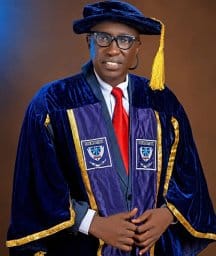
From Joseph Amedu, Lokoja
A Professor of Entrepreneurship and Corporate Strategy at the Federal University, Lokoja, John Alabi has called for more investment in the entrepreneurship/innovation sector to tackle Nigeria’s dwindling economy.
Professor Alabi who made the call while delivering the 46th Inaugural Lecture series of the University at its Felele Campus in Lokoja,on Wednesday, also stressed the need for government at all levels to prioritize investment in the sector to take care of the rising unemployment situation in Nigeria.
In his Lecture titled “Entrepreneurship Leadership through Entrepreneurial Education and Empowerment: Building an Entrepreneurial Economy in Vuca World” Professor Alabi advised that governments must provide enabling policies, universities must produce innovative graduates, industries must become active partners, financial institutions must support enterprise growth, and entrepreneurs themselves must embrace continuous learning, resilience, ethical leadership, and technological adaptation.
He explained that through entrepreneurial education and empowerment, nations can transform uncertainty into opportunity and build inclusive, resilient, and globally competitive economies.
“Governments should position entrepreneurship as a national development strategy rather than an employment intervention.
“Align entrepreneurship policies with national industrial and digital transformation agendas and investment in entrepreneurship ecosystems at federal, state, and local government levels.
“Building an entrepreneurial economy in a VUCA world requires more than increasing the number of entrepreneurs; it demands developing entrepreneurial leaders who can envision opportunities amid uncertainty, inspire innovation, mobilize resources, and create sustainable value
Professor Alabi also advocated that universities should focus on producing job creators rather than job seekers, establish functional entrepreneurship centres linked to industry, reward commercialization of research and innovation and encourage faculty-industry collaboration.
Other recommendations advanced by Professor Alabi includes, “Integration of entrepreneurship education across all levels of education, from primary to tertiary institutions.
“Shift from certificate-oriented learning to competency and problem-solving-based education.
“Promotion of interdisciplinary learning combining entrepreneurship, digital technology, leadership, and sustainability.
“Strengthen experiential learning through internships, incubators, business simulations, and enterprise projects.
“Developing a National Entrepreneurial Leadership Policy as well as establishment of a coordinated national framework for entrepreneurial leadership development.
“Encouragement of collaboration among government, academia, industry, and civil society”
In his welcome address, the Vice Chancellor of the Federal University, Lokoja, Professor Gbenga Ibileye gave an assurance that his administration would continue to encourage delivery of inaugural Lecture to ensure sustainability in the academic system.
Professor Ibileye said that the essence of the academic tradition is an opportunity for the academic staff to showcase their intellectual capacity in their field of study.
The Vice Chancellor described the topic of the lecture as timely and a welcome development that would go a long way in addressing the current economic reality in Nigeria.
He extolled Professor John Alabi, the Inaugural Lecturer, for his choice of contemporary topic that would add value to the people and the nation at large.
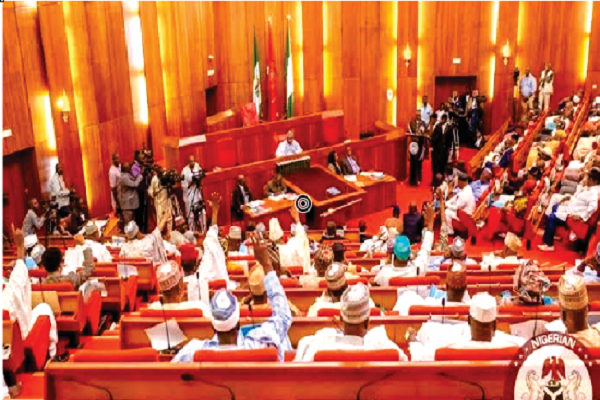
The Senate on Tuesday passed a bill extending the implementation of the capital component of the 2025 Appropriation Act from September 30 to December 31.
The bill, according to the upper chamber, seeks to provide additional time for ministries, departments and agencies (MDAs) to complete all ongoing capital projects.
The bill, sponsored by the Senate Leader, Opeyemi Bamidele (Ekiti Central), was read for the first time and subsequently considered for second reading after the suspension of the relevant Senate Rule.
Leading debate on the bill, Bamidele said the extension would provide the legal and administrative window required to fully implement projects for which funds had been appropriated and released.
He said that capital budget implementation involved procurement, contract execution, mobilisation, certification of works and payment processes, among other procedures.
The senate leader said several infrastructure and development projects across the country were at various stages of completion and required additional time for implementation.
According to him, allowing the existing implementation deadline to lapse can create difficulties for MDAs in completing projects for which resources had already been appropriated and released.
Bamidele added that the extension would help prevent projects from becoming abandoned and ensure that appropriated resources were deployed for their approved purposes.
The senate leader stressed that the extension would not amount to a relaxation of accountability, fiscal responsibility or legislative oversight.
He said that MDAs would remain required to comply with the appropriation act, financial regulations, procurement laws and other applicable statutes.
Contributing, the Deputy Senate President, Sen. Barau Jibrin, said the extension was important to prevent the proliferation of abandoned projects across the country.
Jibrin urged the senators to support the bill, saying it would provide an opportunity for ongoing projects funded under the 2025 appropriation to be completed.
The Minority Leader, Abba Moro (Benue South) also supported the extension but urged senators to avoid unnecessary comparisons with previous administrations during debates on budget implementation.
Moro said the focus should remain on creating the necessary conditions for the government to implement its programmes and projects.
The bill was subsequently committed to the Committee of Supply, which considered and approved amendments to the relevant provisions.
The senate, thereafter, passed the bill at third reading, extending the implementation of the capital component of the 2025 appropriation act to December 31.
The Senate President, Godswill Akpabio, thanked senators for their contributions, saying the extension would facilitate payment for contracts and completion of projects covered by the 2025 capital appropriation.
He urged relevant authorities to utilise the extended period to complete necessary contractual obligations and infrastructure projects for the benefit of Nigerians.(NAN)
The Federal Government said Nigeria’s hosting of the 2026 Creative Africa Nexus (CANEX) Weekend will attract investment, deepen market access and accelerate growth in the country’s creative economy.
Minister of Industry, Trade and Investment, Dr Jumoke Oduwole, stated this in Abuja on Tuesday at a news conference on preparations for the event scheduled for Lagos from Nov.
5 to Nov. 8.Oduwole said more than 10,000 participants were expected at the event, expressing confidence that Nigeria would surpass previous attendance records.
She said CANEX 2026 would provide a major platform for Nigerian and African creative entrepreneurs to interact with investors, financiers, distributors and international markets.
“For the Government of the Federal Republic of Nigeria and all states of the Federation, CANEX is much more than a celebration of African creativity. It is a platform for trade, investment, enterprise and market access,” she said.
The minister said Nigeria’s strength in music, film, fashion, literature, visual arts, gastronomy, sports and technology made the country well positioned to host the continental creative economy gathering.
According to her, the Federal Government is positioning the creative industries as an important component of its broader trade and export agenda towards achieving a one-trillion-dollar economy.
Oduwole noted that global trade was increasingly generating value through services, technology, content, intellectual property and culture, rather than relying solely on physical goods.
“Nigeria is already a major source of African music, film, fashion and creative content. The opportunity before us is to capture more of the economic value generated by that creativity,” she said.
She explained that CANEX would connect creators and creative businesses with finance, investors, distribution networks, technology and international markets.
“Today, our message is simple: we want to see partnerships formed, financing mobilised, intellectual property commercialised, businesses entering new markets and Nigerian creative enterprises scaling beyond our borders,” Oduwole said.
The minister said Lagos would become a meeting point for Africa and the global creative economy during the event, with all 36 states and the Federal Capital Territory expected to have dedicated pavilions.
She said the pavilions would provide opportunities for the states and the FCT to showcase their creative assets, enterprises and investment opportunities to local and international participants.
Oduwole added that designated deal rooms would facilitate business engagements, investment discussions and commercial partnerships between investors and operators in the creative sector.
She said the Federal Government was working with state governments, the private sector and the African Export-Import Bank (Afreximbank) to ensure that CANEX 2026 produced tangible economic opportunities.
According to her, the preparations reflect a whole-of-government approach involving institutions responsible for foreign affairs, finance, customs, immigration, health, transportation and security.
Oduwole said Nigeria’s hosting of CANEX would also mark the event’s first outing in West Africa, further strengthening the country’s profile as a hub for African trade, investment and enterprise.
She disclosed that Lagos would also host the Intra-African Trade Fair (IATF) in 2027, describing it as Africa’s largest trade fair.
The minister said the two platforms would provide opportunities to showcase Nigerian products, connect businesses with African markets and demonstrate investment opportunities across various sectors of the economy.
Also speaking, the Inspector-General of Police, Olatunji Disu, said the Nigeria Police Force had been integrated into the planning process from the outset to guarantee adequate security during the event.
Disu said effective security arrangements would be central to the successful hosting of CANEX 2026, particularly because of the anticipated influx of international delegates into Lagos.
He assured that security considerations were being incorporated into the preparations to ensure that participants, businesses and other stakeholders could engage in the programme in a secure environment.
Similarly, the Minister of State for Foreign Affairs, Amb. Sola Enikanolaiye, said his ministry was collaborating with the Ministry of Industry, Trade and Investment and other relevant agencies to drive international participation.
Enikanolaiye said information on CANEX 2026 would be circulated through diplomatic missions in Nigeria and Nigerian missions abroad to broaden awareness and attract participants from different countries.
He added that the ministry was working with immigration authorities to facilitate efficient visa processing for international delegates expected to attend the event.
The minister described CANEX as a strategic platform for Nigeria to project its creative industries as instruments of soft power and cultural diplomacy.
The Federal Government said the event would feature music, film, fashion, gastronomy, literature, visual arts, sports and technology.
CANEX 2026 will also feature investment, financing and market-access engagements aimed at deepening commercial opportunities, strengthening creative enterprises and expanding Nigeria’s participation in the global creative economy.(NAN)
SO




Don Calls for More Investment in Entrepreneurship/Innovation in Nigeria
ShareFrom Joseph Amedu, Lokoja A Professor of Entrepreneurship and Corporate Strategy at the Federal University, Lokoja, John Alabi has called...


Tinubu Submits NDDC 2026 Appropriation Bill
SharePresident Bola Tinubu has submitted the 2026 Statutory Budget Proposal of the Niger Delta Development Commission (NDDC) to the House...


Senate Passes Bill Extending 2025 Capital Budget Implementation to Dec 31
ShareThe Senate on Tuesday passed a bill extending the implementation of the capital component of the 2025 Appropriation Act from...
CANEX 2026 to Unlock Investment, Jobs in Nigeria’s Creative Economy — FG
ShareThe Federal Government said Nigeria’s hosting of the 2026 Creative Africa Nexus (CANEX) Weekend will attract investment, deepen market access...


NNPC Posts N7.2trn Profit amid Revenue Decline
ShareThe Nigerian National Petroleum Company Ltd. (NNPC Ltd.) recorded N7.2 trillion Profit After Tax (PAT) in 2025, a 33 per...

Wike Approves Contracts for Digitization of FCT High Courts
ShareThe Minister of the Federal Capital Territory (FCT), Nyesom Wike, has approved the award of contracts for the digitisation of...

OPay Names Top 10 Teams in N18m National Innovation Challenge
ShareIn a bid to empower young Nigerians with the skills, opportunities and support needed to build solutions for real-world challenges,...


CBN Sets Agenda for Post-Recapitalisation Banking
ShareBy Tony Obiechina, Abuja The Central Bank of Nigeria (CBN) said recent reforms in the foreign exchange market, monetary policy...

Gunmen Abduct 18 Women in Benue, 47 Niger Farmers
ShareFrom Attah Ede, Makurdi, and Dan Amasingha, Minna Fresh fears over the worsening insecurity across the country emerged on Tuesday...

NASS Extends 2025 Capital Budget Again, Adjourns to Oct 13
ShareBy David Torough, Abuja The National Assembly on Tuesday extended the implementation of the capital component of the 2025 Appropriation...