
COVER
Direct Party Primaries: Why President Buhari is Right

By Ogaga Ifowodo
It seems to me that the almost total condemnation of President Buhari’s withholding of assent to mandatory direct party primaries is borne of a nervous anxiety over the fate of our shabby democracy.
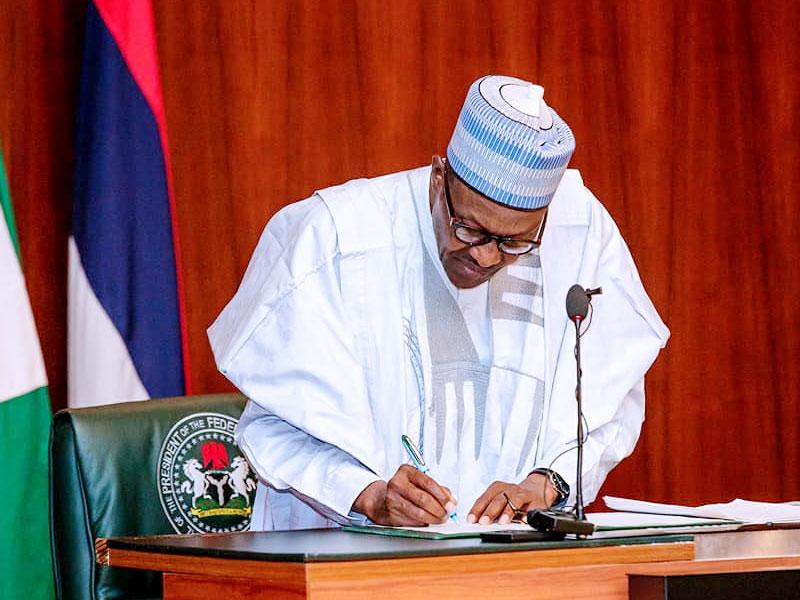
The news dominating the headlines now is President Buhari’s refusal of assent to the Electoral Act (Amendment) Bill 2021.
While the bill includes other important provisions aimed at patching up our admittedly rageddy electoral process — electronic transmission of results, for instance — it is the proposition of direct party primaries that constitutes the big bone of contention.It is as clear from the president’s letter to the National Assembly giving his reasons for withholding assent as in the torrent of reactions by citizens and civil society organisations (CSOs).
The president is concerned about the financial, security and legal consequences of signing the bill into law. He thinks that direct party primaries would infringe on the rights of Nigerians to participate in governance and democracy, ironically the very thing that patriots and CSOs insist the bill will promote!
In his words, the “amendment as proposed is a violation of the underlying spirit of democracy, which is characterised by freedom of choices (sic) of which political party membership is a voluntary exercise of the constitutional right of freedom of association.”
And this also is my point of disagreement with those who have pilloried the president and urged the National Assembly to override his veto by way of a two-thirds majority vote.
As it happens, however, many of the president’s critics are not only friends and comrades in the struggle for democracy during the long years of military dictatorship, several, like myself, even being jailed for our pains, but also CSOs, the constituency that I served for two decades in the heyday of military tyranny as a student and human rights activist.
Take, for instance, the well-reasoned argument of my good friend, right from our days in the National Association of Nigerian Students (when there was a body properly called by that name), Samuel “Big Sam” Adegboruwa (SAN).
Not an easy task disagreeing with him, but differ I must, not in the form or even substance of his argument — it being legalistic in the main — but in the spirit of what democracy truly enjoins on us. In other words, what makes it possible for both President Buhari and Adegboruwa to lay claim to the same motive: democracy, freedom of association and popular participation in choosing those to govern us.
But more than a worry over disagreement with fellow-travellers is the fact that mine has been among the many voices clamouring for electoral reforms — see, for example “The Time for Genuine Electoral Reform is NOW!” April 27, 2016, and, also, “Why APC Must Enact Change by Jettisoning Indirect Rule,” September 13, 2018. So, then, how do I now differ from the prevailing sentiment? In a small but crucial way. I will explain.
It will be noticed that the subject of the first article is a general call for electoral reform — including the need to curb the costly timidity or connivance of the Supreme Court in substituting its opinions for the will of the people in electoral matters, with the 2008 report of the Justice Uwais panel as immediate point of reference, while the second article is a direct appeal to the All Progressives Congress (APC), of which I’ve been a member since 2014.
And it turns on the narrow issue of freedom of association, a dispassionate discussion of which, I believe, will make President Buhari, whatever motive may be attributed to him by his critics, closer to its letter and spirit than might be readily admitted. We must be instinctively suspicious of power, but I think we must also be ready to concede when a valid argument is made in support of an official action, even when we are opposed to it.
I differ from the view that party primaries be made legally mandatory because that would be a clawback from the full purport of the constitutional guarantee of freedom of association.
Political parties may loom large and enjoy enormous prestige, especially where they produce presidents, prime ministers, governors and legislators, but in reality, they are just like any other association of citizens formed for any number of causes, power or governance among them.
Crucially, they are voluntary associations. Moreover, they are not agencies formed by or for the government, which would make it necessary to regulate every aspect of their activities by law.
This, in a nutshell, is what the president poignantly pointed out in his letter to parliament, even when so much on the defensive that he could not forward it until deadline day.
Amending the electoral law to prescribe direct primaries as the one and only means by which political parties can choose their candidates is, the president argues, “a violation of the underlying spirit of democracy, which is characterised by freedom of choices.” Then he added the clincher: “Political party membership is a voluntary exercise of the constitutional right to freedom of association,” stating the obvious, that “millions of Nigerians are not card-carrying members of any political party.”
I have no doubt that those who think that President Buhari’s refusal of assent is entirely driven by partisan and selfish reasons would not argue the contrary view. They can’t be heard to say that political parties are not voluntary associations of individuals with a partisan view of society and governance, for which they seek power in order to actualise it.
As a result of their crucial role within the framework of electoral democracy, however, certain conditions must be prescribed for their registration and participation in the electoral process.
And by and large, the extant electoral act supplemented by any guidelines that the Independent National Electoral Commission (INEC) issues in exercise of its powers, sufficiently take care of that need.
That political parties are not the fons et origo, the source and origin, or beginning and end of democracy can be seen in the fact that independent candidates can and ought to also be able to seek the mandate of the people. So, then, what amendment should be proposed for them — that direct primaries be conducted by INEC for all individuals who indicate their intention to run for political office, at which all the relevant constituents, not members of any political party, would vote?
I make the last point, of course, only for the sake of argument but, essentially speaking, parties should be free to choose their candidates through consensus or, failing that, direct or indirect primaries.
If they sideline their members — we must always be reminded that it is an internal affair of the party — they run the risk of angering them and the ensuing discord and disenchantment could prove disastrous to their hope of winning the election at stake.
They should know that rival parties would only be too happy to exploit any disaffection caused by disenfranchising their members. That, in my view, is enough reason for the leaders of the parties to be very cautious in choosing the option for selecting their candidates.
It is true that a coincidence of the lure of office, as a sure means to power and affluence on the part of politicians, and grinding poverty and deep alienation from government, on the part of the masses of the people, has led to the enthronement of money as the arbiter of all of our elections, and that consequently this in-built check to the subversion of party members’ participation in choosing candidates has little or no effect.
Nevertheless, laws should never be enacted to void the vital civic obligation of responsibility. Part of our problem is over-legislation: just see how voluminous our constitution is yet how frivolous our regard for it, how ineffective it is as our foundational document of nation-building.
The solution lies in returning power to the people, or put another way, in empowering the people to shun the vicious effect of money in our elections, and in inculcating the value and true spirit of democracy, not in the vain hope that legislating every aspect of our lives will abate the evil.
Again, President Buhari points out the obvious. The higher the stakes — and they can’t get higher than our numerous parties conducting direct primaries across the length and breadth of the country — the ever greater the amounts of money that would be needed by the parties to organise them and to fund INEC’s supervision in thousands of locations.
And this gives even greater advantage to the money-bags, who invariably are the incumbents: the president, governors, senators and representatives, ministers and other high political appointees running for elective office, state legislators and local government chairpersons. Or the challenger with a godfather or for whom money is no object. Just how would direct primaries prevent a poverty-stricken electorate from selling their votes to the highest bidder?
My experience of being universally hailed twice over as head and shoulders above my opponents and yet being told to my face, “But you don’t have money” tells me we are better off with the strict prosecution of electoral offences, especially vote-buying.
Just three months ago, I was asked by my party and I gladly agreed to enter the race to fill a vacant seat in the Delta State House of Assembly. I lost because the rival party, which has controlled the power and purse of the State since 1999, threw open the treasury to buy votes as its only hope of winning. And win they did, offering an average of four to five thousand naira for a vote, even ten thousand naira in some instances!
I reported in my reflections, “Of Bye-elections and the Isoko South Constituency 1 BUY-election,” September 23, how a mother voted against her son’s and my party, APC, because PDP is where the money is: obe yo igho ro, she had said as a matter of fact; franchise be damned! Indeed, at the rate we are going, a goat might very well win an election if sponsored by any of the major parties ready to outbid its rivals. A hyperbole, I agree, but don’t bet against it.
It seems to me that the almost total condemnation of President Buhari’s withholding of assent to mandatory direct party primaries is borne of a nervous anxiety over the fate of our shabby democracy.
Given the trauma of military terror constantly triggered by the stark perversions of elections at every level, our very souls cry out for a modicum of respect for the will of the people, starting with the process of nomination of candidates where parties seem to control all the aces.
Why leave our fate in their hands, if they won’t practice the internal democracy that they loudly proclaim in their constitutions and manifestoes, when we can compel them by law to be democrats? But can we? Can we legislate the internalisation of the ethos of democracy? I think that the president’s letter shows some of the ways that we give ourselves false assurances of popular participation in an era of money-bag politics.
And this nervous anxiety manifests itself in how ready we are to overlook the blurring of boundaries and to condone or even call for the desecration of first principles, while at the same time constantly lamenting that ours is a federation in name only.
Because we have lost faith in our ability to organise and compel action for the common good, we look to law as our saviour, a deus ex machina that would enthrone democracy by magically doing away with the win-at-all-cost mentality of electoral office seekers and the corrupted will of an impoverished people.
It is why, for instance, INEC has to conduct governorship elections and why we want it to also handle local government elections. Yet, the problem of state independent electoral commissions being mere agents of the state governors and their parties can be dealt with by guaranteeing their independence.
One way of doing so is to free them of the control of sitting governors by making their budgets appropriated first line charges. Their autonomy would be further ensured with their members drawn from each registered party (which must pass the test of viability and continued registration after an election), civil society organisations and the bar and bench, the chairperson of the commission to be elected from among the members.
This formula, by the way, can also be used to constitute INEC, and the Justice Uwais panel made a gesture towards the same goal. But rather than advocate for this or any other means of ensuring the autonomy and credibility of state electoral commissions, we settle for the easy option of calling in the Federal Government through INEC to further erode the idea of federalism.
Even worse, all the states elect their governors on the same day, except for the disruption caused by the courts, leading to a few states now having to elect their governors on the effective dates of the determining electoral petition judgements. The constant, however, is the role of the federal behemoth.
Which brings me to the thrust of Adegboruwa’s earnest criticism of President Buhari’s refusal of assent and urging of the National Assembly to override it: that mandatory direct primaries do not violate the constitutions of the political parties, given the constitutional and statutory duty of INEC to register parties in accordance with the provisions of the Constitution which, needless to say, are superior to any validly enacted law, never mind that mere party constitutions are not legal documents in the first place.
Unimpeachable argument, but this ignores the question of the extent, scope and implications of the fundamental principle and right to freedom of association. It also elides the related issue of the overreaching nature of the military-imposed 1999 Constitution.
In another context, I know that Adegboruwa would be even more eloquent about how the 1999 Constitution tells a lie against itself by claiming it is we the people who enacted and gave it unto ourselves, and point to how it enables the centre to arrogate to itself virtually every significant right and power of government in the exclusive legislative list, thereby making the states nothing more than glorified administrative units of an imperious centre, the lethal effects of which we see in our unitary state passing off as a federation.
Why the Constitution even sets up state governments, when the obverse ought to be the case — the states setting up the Federal Government — and provides for the manner of election of its executives and legislators.
The unending agitation for a sovereign national conference is caused precisely by the need to draw up a constitution that accords with not only the letter but, more important, the spirit of democracy, especially in a clamorous multi-ethnic nation such as Nigeria.
I repeat: I have myself argued the case for direct party primaries but as an address to the parties themselves. I would now qualify that call with a proviso: when necessary.
Political parties, as voluntary associations, should be the judge of when to use consensus, direct or indirect primaries to choose their candidate. The efforts and scarce resources of the Federal Government are better channelled towards the eradication of the withering effect of money in our politics; in particular, of vote buying at polling units on election day.
Yet, direct primaries are only one aspect of the amendment bill. I consider electronic transmission of results from polling units far more crucial to the fate of our fledgeling democracy.
To that extent, I am more inclined to agree with Femi Falana (SAN), but on a slightly different ground: that the National Assembly strike out the provision in the bill for mandatory direct primaries, since section 87 of the Electoral Act allows direct or indirect primaries, and pass the entirety of the rest of the amendment bill. Since the president did not adduce any other reason for withholding his assent, it goes without saying that we would then not throw out the baby with the bath water.
Ogaga Ifowodo is a lawyer, scholar, poet, public commentator and principal partner at Remedium Law Partners. He was the APC candidate in the September 11 Delta State House of Assembly bye-election.



By Laide Akinboade, Abuja
As part of efforts to reposition the newspaper for optimum corporate performance, the management of Asset Newspapers Limited, Publishers of DAILY ASSET, has announced the appointment of David Torough as the Editor of the Abuja-based national daily.
A statement by the management said the appointments were part of the company’s new strategy to further penetrate the various states in the country and raise its readership and patronage.
“DAILY ASSET is widely acceptable across the country and to maintain our leadership position, we need to increase management presence, hence the need to create new Bureau offices in some locations outside Abuja and Lagos,” the statement quoted the Publisher/ Editor-in-Chief, Dr Cletus Akwaya to have said.
In a statement yesterday, Publisher and Editor-in-Chief of the fast-growing daily, Dr. Cletus Akwaya said the appointment was part of the new strategy to properly situate the paper for better productivity.
“DAILY ASSET has a commitment with the Nigerian people. We are determined to weather the storm and give Nigerian readers a Newspaper that satisfies their yearnings and reading pleasure and we can only do that with the right set of professionals,” the statement said.
Akwaya, a former Commissioner of Information from Benue State said the difficult times being faced by Nigerians posed a great challenge to the media as the people deserved credible information with which to make choices.
“We have a bond with the people, to offer credible information at all times in the best tradition of the Nigerian Press and on this scale of objectivity, truth and fairness, we pledge to remain steadfast no matter the challenges,” Akwaya was quoted to have said.
He said the newspaper will maiantin its daily print run and circulation to all states of the federation and urged advertisers to take advantage of the deep penetration of the Daily Asset brand to send their messages.
Torough, the new Editor has had a steady rise in the Newspaper in the last five years.
A graduate of Mass communication of the Benue State University, Makurdi, Torough joined the company in 2022 as Benue State Correspondent. He was spotted for his brilliance and redeployed to Abuja the following year and promoted to Deputy News Editor. He was subswuently named Deputy Editor of the paper, a position he held until the recent appointment.
Torough has attended several journalistic workshops and trainings to properly equip himself for the task ahead.
The statement also said the Management named Eze Okechukwu as Deputy Editor.
Before his elevation as Deputy Editor, Eze has been Deputy Politics Editor and DAILY ASSET Newspaper correspondent covering the Senate, having joined the organization in 2021.
Born on March 10, 1975, Eze holds a Masters Degree in Mass Communication from the Enugu State University of Science and Technology.
Eze began his journalism career with Daily Star, Enugu and later worked with Daily Trust Newspaper, Abuja as sports reporter.
Aside from his journalistic excellence, he has a great deal of passion for sports.

From Ngutor Dekera, Kaduna and Aliyu Askira, Kano
Northern governors and traditional rulers yesterday called for the suspension of mining activities across the region for six months, blaming illegal mining for worsening insecurity in many states.
The resolution was contained in a communiqué issued after a joint meeting of the Northern States Governors’ Forum and the Northern Traditional Rulers’ Council held at the Sir Kashim Ibrahim House, Kaduna. The meeting, chaired by the Gombe State Governor and NSGF Chairman, Muhammadu Yahaya, had in attendance the 19 northern governors and chairmen of the 19 states’ traditional councils.The Forum expressed concern over the escalating violence in parts of the North, including the killings and abductions recently recorded in Kebbi, Kwara, Kogi, Niger, Sokoto, Jigawa and Kano states, as well as renewed Boko Haram attacks in Borno and Yobe.“The Forum extends its deepest condolences and solidarity to the governments and good people of the affected states,” the communiqué said, noting that the attacks on schoolchildren and other citizens had become “unacceptable tragedies” that required urgent collective action.It commended President Bola Tinubu for what it described as the Federal Government’s “firm response” to recent abductions and insurgency threats, especially the rescue of some abducted pupils.The governors also saluted security agencies for their sacrifices on the frontlines.“We resolved to renew our support for every step taken by the President and Commander-in-Chief to take the fight to insurgents’ enclaves in order to end the criminality,” the Forum stated.A major highlight of the meeting was the North’s renewed push for the establishment of state police, with governors and traditional rulers insisting that decentralised policing had become inevitable.“The Forum reaffirms its wholehearted support and commitment to the establishment of state police,” the communiqué added, urging federal and state lawmakers from the region to “expedite action for its actualisation.”On illegal mining, the governors said criminal mining networks were fuelling violence and providing resources for armed groups.As a corrective measure, they asked Tinubu to direct the Minister of Solid Minerals to impose a six-month suspension of mining activities in order to allow for a full audit and revalidation of licences.“The Forum observed that illegal mining has become a major contributory factor to the security crises in Northern Nigeria. “We strongly recommend a suspension of mining exploration for six months to allow proper audit and to arrest the menace of artisanal illegal mining,” it said.To strengthen the fight against insecurity, the governors also announced the creation of a regional Security Trust Fund.Under the proposed arrangement, each state and its local governments will contribute ₦1bn monthly, to be deducted at source under an agreed framework.They said the fund would help provide sustainable financing for joint operations, intelligence-driven interventions and coordinated security responses across the region.At the end of the meeting, the Forum reaffirmed its commitment to unity and collective responsibility.“Only through unity, peer review and cooperation can we overcome the pressing challenges before us,” it declared.The Forum agreed to reconvene on a date to be announced.Meanwhile, Nigeria’s worsening security crisis took a grim turn on Monday as bandits launched fresh attacks in Kano State, abducting 25 villagers, even as the Federal Government raced to secure the release of more than 300 Catholic school children kidnapped in Niger State.In the early hours of Monday, armed bandits invaded Unguwar Tsamiya—popularly called Dabawa—in Shanono Local Government Area of Kano State, whisking away nine men and two women after shooting into the air and assaulting residents. The attackers also rustled two cows.A resident lamented the community’s helplessness: “We cannot do otherwise; most of us cannot leave because we have nowhere to go. This is our place, our land and everything is here.”The assault came less than 24 hours after a similar attack on Yan Kamaye in Tsanyawa LGA, a community along the volatile Katsina border.In Niger State, National Security Adviser Nuhu Ribadu has assured distraught families of St. Mary’s Co-Education School, Kontagora that the more than 300 students and staff abducted on November 21 will return home “soon.” Ribadu, who led a high-level federal delegation to the school on Monday, said the abductees are safe, though he offered no specifics on their location or the status of rescue operations.According to Daniel Atori, spokesman for the Catholic bishop overseeing the school, the NSA reassured officials: “The children are where they are and will come back safely.”The St. Mary’s attack is part of a worrying resurgence of mass kidnappings reminiscent of the 2014 Chibok schoolgirls’ abduction. Security analysts warn that banditry has evolved into a “structured, profit-seeking industry,” with hundreds of Nigerians abducted in November alone.The Kontagora school abduction occurred the same week 25 girls were kidnapped in Kebbi State—victims who authorities say have since been rescued through “non-kinetic” means. About 50 of the St. Mary’s hostages have also managed to escape.Ribadu’s delegation, which included the Minister of Humanitarian Affairs and the Director-General of the Department of State Services (DSS), reaffirmed the government’s commitment to securing the freedom of all abducted citizens.As communities from Kano to Niger continue to bear the brunt of these violent incursions, the escalating spate of kidnappings underscores the urgent national demand for a more decisive and coordinated security response.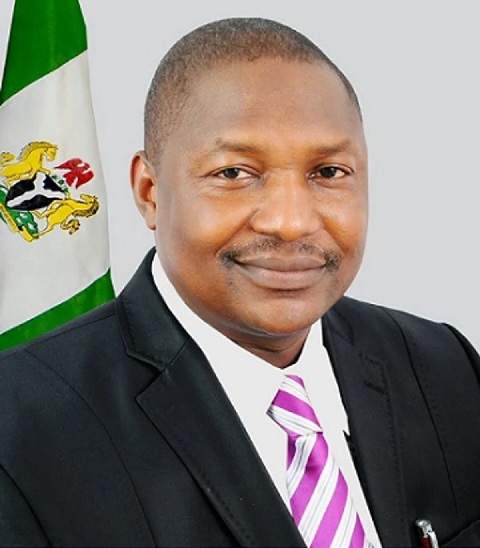
By David Torough, Abuja
The Economic and Financial Crimes Commission (EFCC) said former Attorney‑General of the Federation and Minister of Justice, Abubakar Malami, will face a team of interrogators at its office daily throughout December.
A credible source in the EFCC said on Monday that the daily appearance was part of an ongoing investigation into the whereabouts of an alleged 490 million dollars Abacha loot secured through a Mutual Legal Assistance (MLAT) request. The source said that Malami, who was summoned for interrogation by the EFCC on Saturday, was barred from leaving Nigeria for the next one month.According to the source, one of the conditions for his release on Saturday was that he should report daily to the EFCC Headquarters in Abuja for further interrogation.The source said Malami would have to appear daily at the anti-graft office due to the volume of the investigation and the seriousness of the charges against him.”We seized his passport, it is the normal routine during investigation, but he has to report at the EFCC headquarters in Abuja every day for the next month.”He will be reporting for further investigation throughout December.”He will be reporting every day, starting from Dec. 1st to Dec. 31st.He will appear before the team of investigators for the entire month of December.”He will be reporting to EFCC for investigation for the period because of the volume of the investigation and the seriousness of the charges against him,” the source added.According to the source, a fact sheet on the former minister revealed that Malami had several issues to clarify with the EFCC within the coming weeks.“We have asked him to explain the whereabouts of the $490 million Abacha loot secured through MLAT.“We didn’t say he stole money, but he should account for the loot. This is one of the issues he will clarify to our investigators.”The commission cited the large volume of documents he must review and the need for extensive interviews as reasons for seizing his passport.The source said EFCC would not engage in a war of words but would release its findings after a thorough investigation.Malami, in a statement by his media aide, Mohammed Doka, on Monday in Abuja, however, described the EFCC investigation as a political witch‑hunt.He confirmed he honored an EFCC invitation on Nov. 28, describing the engagement as fruitful and expressing confidence that the probe would vindicate him.Malami described the EFCC’s allegations as baseless, illogical and devoid of substance, insisting they collapse under factual scrutiny.


2027: Yona Donates APC Campaign Banner, Seeks Constituents Support
ShareBy Tambaya Julius, Abuja The Councillor representing Tattara/Kondoro Electoral Ward and Chief Whip of the Karu Legislative Council, Hon. Barr....

Pope Leo to Have Surgery after Lump Found on Lung
SharePope Leo XIV has announced he will be operated “in the coming days” after a nodule was found on his...


Motorists Express Worry over Non-access to NNPC Petrol Discount
ShareMany motorists said in spite of the discount in pump price of petrol at the Nigerian National Petroleum Company Ltd...


Tuberculosis: Benue Assembly Passes Law, to Protect Patients from Discrimination
ShareBy Laide Akinboade, Abuja The Benue State House of Assembly has passed into law a landmark legislation aimed at eliminating...

President Tinubu’s 30-Day Fuel “Discount” Cannot Repair the Damage of Subsidy Removal
ShareBy Daniel Nduka Okonkwo The Federal Government has issued a stark warning: restoring petrol subsidies could push the exchange rate...


Troops Neutralize Explosive Devices planted in Zamfara Community
ShareFrom Ifeanyichukwu Nwannah, Gusau The troops of Operation Fansan Yamma (OPFY) have neutralised Explosive Devices Planted along Magami–Hannutara–Dansadau road, Maru,...


Mbah Reaffirms Enugu’s Commitment to Trade, Investment, Industrial Growth
ShareFrom Sylvia Udegbunam, Enugu Enugu State Governor, Dr. Peter Mbah, has reaffirmed his administration’s commitment to creating an enabling environment...


Concerns About the 2027 General Elections
ShareBy Jibrin Ibrahim As the countdown to the 2027 elections reached 100 days this week Tuesday, Joash Amupitan, chairman of...

World Bank Report Confirms Economic Reforms Yielding Results – Tinubu
SharePresident Bola Tinubu said the World Bank’s October 2026 Nigeria Development Update confirms his administration’s economic reforms are yielding results...

Bandits Burn Houses, Business Premises in Niger Border Community
ShareFrom Dan Amasingha, Minna Suspected bandits have attacked Kigbera village in Konkoso Ward, Borgu Local Government Area of Niger State,...