
NEWS
Diri’s Aide Urges FG to Embrace Community Based Security against Insurgency

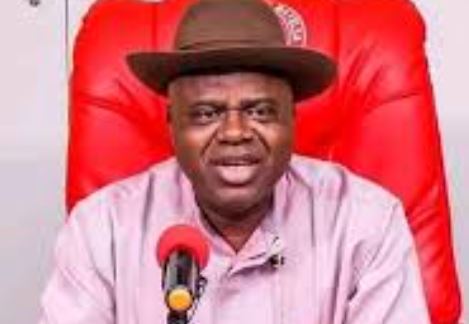
From Mike Tayese, Yenagoa
Technical Adviser to the Governor of Bayelsa State on Communication and Strategy, High Chief Abednego Don Evarada has called on the Federal Government to embrace new security reforms to include the key community actors in tackling issues of persistent insecurity befalling the nation.
According to High Chief Abednego Don Evarada, despite the existing centralised security structure being adopted by the Military, the lack of Proper coordination between the Military and the key actors in the communities are being exploited by insurgent groups against the Nigerian nation.
Technical Adviser to the Governor of Bayelsa State on Communication and Strategy, High Chief Abednego Don Evarada made this known during the 2026 celebration of the Feast of Barracuda organised by the National Association of Seadogs, Oxbow Marino Deck in Yenagoa, Bayelsà State.
Evarada, who is a public analyst and Activist, while delivering a keynote address with the theme “Security Challenges and National Security: Evaluating the Effectiveness of the Nigerian Security Architecture”, pointed out that Nigeria faces one of the most complex security environments in its history including cases of terrorism, banditry, kidnapping, piracy, oil theft, cultism, cybercrime, separatist agitations, farmer-herder conflicts, and organised criminal networks which have stretched our security institutions to their limits.
He noted that with scary incidents of Chibok girls, Owo Church massacres among others,” Beyond the international outrage lay a painful reality: a massive failure of intelligence gathering, threat assessment, and rapid response.”
High Chief Abednego Don Evarada however noted that though Nigeria operates one of the most centralized policing systems in the world,” The Nigeria Police Force remains primarily under federal control. There are clear advantages to this arrangement. It promotes national coordination.”
He urged the Federal Government to adopt the security architecture of foreign nations in which community policing seeks to build partnerships between security agencies and citizens. It encourages intelligence sharing.
“It promotes trust. It enables early threat detection. It transforms security from a government responsibility into a collective responsibility. The most successful security systems in the world understand this principle.”
In his speech, the Steerer, Oxbow Marino Deck, High Chief, Douglas Etulankimor Sampson-Eteli described the Feast of Barracuda as an annual event of the National Association of Seadogs (NAS).aka Pyrate confraternity.
He pointed out that the concept of the Feast of Barracuda came from old seafarers’ experience with the Barracuda fish, a large predatory fish that attacked other marine life and sometimes humans.
According to him, “Sailors saw it as an impediment to smooth sailing/ trade. So, whenever they conquered a baracuda, they did feast on it to celebrate getting rid of a threat.”
He said NAS adopted that metaphor, the Barracuda fish represent the ills blocking the attainment of an egalitarian/ just society,” Feasting on it simply means identifying, discussing and symbolically defeating those ills.”
“The National Association of Seadogs was founded in 1952 by Prof. Wole Soyinka and 6 others. It’s a humanitarian/ civic group. Feast of Baracuda is held across all NAS decks (NAS chapters) globally.”
“It’s an event of both Public Lectures/ forum and communal feasting where an actual barracuda fish is unveiled and eaten.”
“The Feast of Barracuda Lectures are used to discuss contemporary social, political or economic issues militating against a just society. It also doubles as humanitarian outreach; NAS Desks use FOB to donate books to schools, medical kits, visit orphanages etc.”
“In short: starting from a seafarer metaphor, Nas turned Feast of Baracuda into an annual civic forum since 1980’s to “Feast on” societal problems through debates, advocacy and community services.”

By Tony Obiechina, Abuja
The Ministry of Defence has affirmed its commitment to partner with the National Identity Management Commission (NIMC) to fully implement the NIMC Act 2026, leveraging integrated digital identity systems and identity verification to bolster national security operations.
The Minister of Defence, General Christopher Musa stated this when he received the Director General/CEO of NIMC, Dr.
Abisoye Coker-Odusote, alongside her management team, at the Ship House in Abuja.General Musa emphasised that robust interagency collaboration is crucial in addressing the dynamic nature of modern crime and threat environments, noting that tackling internal and external security challenges relies heavily on actionable data.
“For us in the security sector, data is critical to know who we are dealing with, who we are expecting, and even those within us, because sometimes the enemy is within. It is therefore vital for us to be able to identify everyone accurately,” General Musa stated.
He added that the Ministry of Defence will continue to extend total support to all government institutions in alignment with its operational mandate.
Earlier, Dr. Abisoye Coker-Odusote highlighted that the visit was focused on discussing the strategic implementation of the NIMC Act 2026 and its pivotal role in strengthening Nigeria’s security architecture.
Both leaders agreed on the necessity of a secure, trusted, and interoperable digital identity ecosystem to improve identity verification, enhance defence operations, and foster seamless intelligence sharing across government agencies.
OPay, a leading fintech company in Nigeria, has announced the selection of the top 48
teams for the next stage of the OPay National Innovation Challenge, following an
overwhelming response from students across Nigeria.
The National Innovation Challenge is one of the three flagship initiatives under the newly
expanded OPay Scholars Programme, alongside the ₦1.
initiative and OPay Futures. The programme reflects OPay’s long-term commitment to
supporting education, innovation, digital skills development and youth empowerment acrossOPay, a leading fintech company in Nigeria, has announced the selection of the top 48
teams for the next stage of the OPay National Innovation Challenge, following an
overwhelming response from students across Nigeria.The National Innovation Challenge is one of the three flagship initiatives under the newly
expanded OPay Scholars Programme, alongside the ₦1.2 billion, 10-year scholarship
initiative and OPay Futures. The programme reflects OPay’s long-term commitment to
supporting education, innovation, digital skills development and youth empowerment across banks.
By David Torough, Abuja
Macrostrat Nigeria Limited has called for stronger fiscal reforms and closer coordination between monetary and fiscal authorities following the Central Bank of Nigeria’s decision to retain all key monetary policy parameters at its 306th Monetary Policy Committee (MPC) meeting.
The recommendation emerged from a national policy webinar titled “The CBN Decides: July 2026 MPC Decision,” hosted by Macrostrat on July 22, 2026, where leading economists and policy experts assessed the implications of the apex bank’s decision to maintain its tight monetary stance.
The CBN on July 21 voted unanimously to retain the Monetary Policy Rate (MPR) at 26.5 percent, while leaving the Cash Reserve Ratio at 45 percent for Deposit Money Banks and 16 percent for Merchant Banks, maintaining the liquidity ratio at 30 percent, and keeping the asymmetric corridor at +50/-450 basis points.
According to Macrostrat, the decision reflects the CBN’s commitment to price and exchange rate stability amid easing inflation, global geopolitical uncertainties, volatile commodity markets, and anticipated election-related fiscal spending.
However, experts at the webinar warned that while the policy pause may help stabilize market expectations in the short term, persistently high interest rates continue to constrain private sector investment, job creation and economic expansion.
They argued that inflation in Nigeria remains largely driven by structural factors—including food supply disruptions, insecurity, high logistics costs, rising energy prices and infrastructure deficiencies—rather than excessive consumer demand, limiting the effectiveness of monetary tightening alone.
The panel also highlighted a disconnect between the official policy rate and prevailing money market rates, noting that high Cash Reserve Ratio requirements have locked significant banking sector liquidity at the CBN, reducing credit available to businesses and encouraging banks to invest in government securities instead of lending to the real sector.
Macrostrat called on the Federal Government and the CBN to adopt a coordinated policy approach by aligning fiscal and monetary measures, reforming the Cash Reserve Ratio framework, expanding targeted intervention funds for agriculture and manufacturing, and investing in power, transport and food supply infrastructure to tackle the structural drivers of inflation.
The firm further recommended narrowing the gap between official policy rates and market rates, improving debt issuance coordination, and establishing a joint macroeconomic policy coordination council involving the CBN, Ministry of Finance, Budget Office and Ministry of Industry, Trade and Investment.
For businesses, Macrostrat advised companies to improve working capital management, optimize supply chains and hedge foreign exchange risks, while investors were encouraged to take advantage of elevated yields on Nigerian Treasury Bills and other short-term fixed-income instruments while closely monitoring global geopolitical developments.
Speaking through the policy brief, Macrostrat Managing Director and Chief Executive Officer, Dr. Justin Amase, said sustainable economic growth would require moving beyond monetary tightening to comprehensive structural reforms that address insecurity, energy shortages, logistics bottlenecks and domestic food production.
The webinar featured economists and policy experts including Dr. Ayo Teriba, Prof. Evans Osabuohien, Dr. Faith Iyoha, Prof. Comfort Amire, Dr. Adedeji Adeniran, Dr. Rislanudeen Mohammad, and Prof. Likita Ogba, who collectively agreed that lasting macroeconomic stability would depend on effective monetary-fiscal coordination rather than interest rate policy alone.


FG, Access Bank Push AI to Grow MSMEs
ShareThe Federal Government and Access Bank Plc have emphasised the strategic role of Artificial Intelligence and digital financial infrastructure in...
We often forget: PWDs also Have Birthdays Reflection on Disability, Dignity, and Nigeria
ShareBy Ebuka Ukoh This piece highlights the systemic barriers – physical, attitudinal, and institutional – that prevent persons with disabilities...
Ghost Agencies, Short Memories, and Ancestral Shame
ShareBy Prince Charles Dickson, PhD Our ancestors did not endure wars, disease, displacement and impossible journeys merely to produce citizens...
Defence Ministry Partners NIMC to Enhance Data Integrity, National Security
ShareBy Tony Obiechina, Abuja The Ministry of Defence has affirmed its commitment to partner with the National Identity Management Commission...

CVR in Ondo Satisfactory – Says INEC
ShareThe Independent National Electoral Commission ( INEC) in Ondo State says the conduct of residents during the Continuous Voter Registration...


NEC Applauds Alia on Economic Transformation
ShareFrom Attah Ede, Makurdi The National Economic Council (NEC) Monitoring and Implementation Committee has commended Benue State Governor, Rev. Fr.Hyacinth...

OPay Unveils Top 48 Teams in National Innovation Challenge
ShareOPay, a leading fintech company in Nigeria, has announced the selection of the top 48teams for the next stage of...


Macrostrat Urges Fiscal Reforms as CBN Holds Rates Steady After 306th MPC Meeting
ShareBy David Torough, Abuja Macrostrat Nigeria Limited has called for stronger fiscal reforms and closer coordination between monetary and fiscal...


Resign Now, Nigeria Needs Fresh Leadership, Peter Obi Tells Tinubu
ShareBy Tambaya Julius, Abuja The presidential candidate of the Nigeria Democratic Congress (NDC), Peter Obi, has called on President Bola...
ISWAP Finance Chief, Usman, 46 Others Surrender To Troops In Borno
ShareBy Tambaya Julius, Abuja A senior finance operative of the Islamic State West Africa Province (ISWAP), identified as Musa Usman,...