
NEWS
Doguwa Heads Reps Panel on Shiites Crisis

By Orkula Shaagee, Abuja
The House of Representatives Tueday, set up a seven – man adhoc committee headed by Leader of the House, Hon. Ado Doguwa to interface with the Executive arm with a view to finding a lasting solution to the lingering crisis by members of the Islamic Movement of Nigeria, popularly called Shiites.
The decision followed the adoption of a motion of urgent public importance sponsored by Hon.
Mohammed Shamsudeen Bello.While presenting the motion, Hon. Bello said that the activities of members of Shiites in Abuja have seriously destabilized political, constitutional, economic and social structures of the Federal Republic of Nigeria.
He noted that “on the 22nd of July 2019 and several other dates before now, the members of Islamic Movement of Nigeria (Shi’ite) have done and threaten to do an act preparatory to and or in furtherance of an act of terrorism including destabilization and destroying of public utilities, attack on security personnel such as the Nigerian police and Civil Defence Corp. This act seriously intimidates the population of Abuja as well as its environs and also damages or intends to damage corporate existence of the Federal Republic of Nigeria.
“Such violent and unlawful assembly becomes sporadic and leads to the loss of lives and properties. The Nigerian Police Force appeared incapable to tame it as a result of colossal violence of the members of Islamic Movement of Nigeria (Shi’ite). Hence, the need to direct the Inspector General of Police of the Federal Republic of Nigeria to initiate the proscription of the IMN and or declare the assembly unlawful in Nigeria. The incident of 22nd day of July, 2019 is disheartening, especially as it led to the death of a Deputy Commissioner of Police as reported by The Nigeria lawyer’ an electronic media outfit.”
The lawmaker, who expressed worry that the continuous violent blood protest by members of Islamic Movement of Nigeria (Shi’ite) negates the corporate existence of the Federal Republic of Nigeria, noted that if urgent steps are not taken to proscribe Islamic Movement of Nigeria (Shi’ite) or declare their assembly unlawful in Nigeria, the Group may likely arm itself and turn a deadly Group like Indigenous People of Biafra (IPOB) and Boko Haram.
Consequently, the House should constitute an ad-hoc committee to investigate, make recommendation and report back to the House within one week for further legislative actions.




By David Torough, Abuja
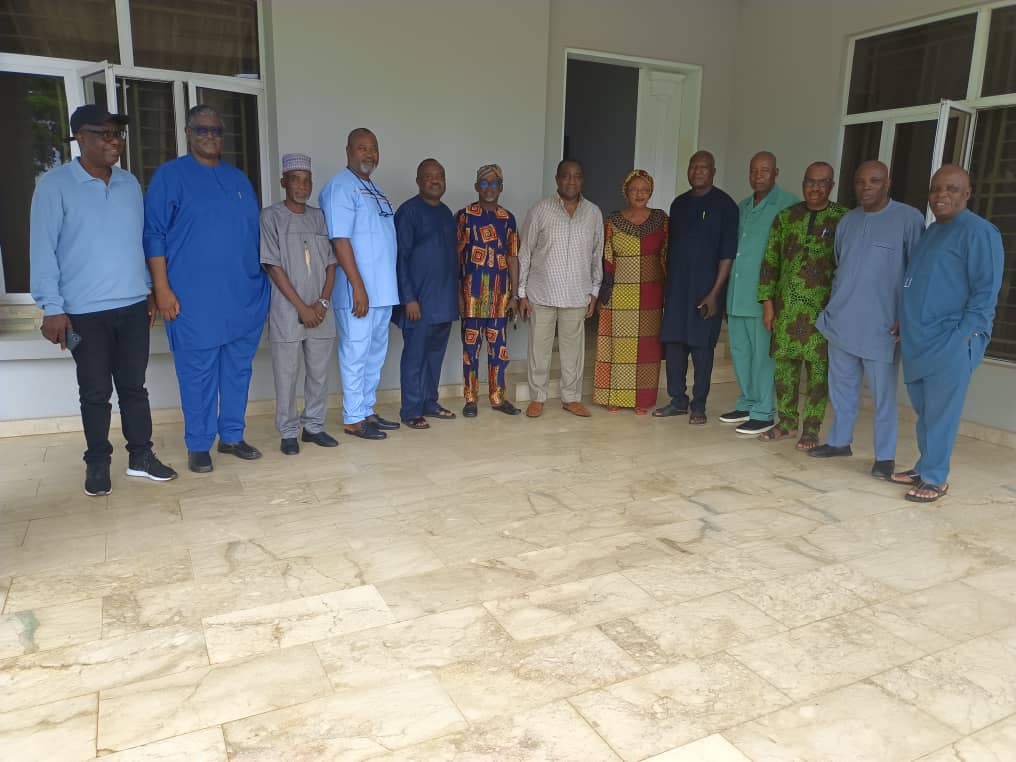
Former Benue State Governor, Senator Gabriel Suswam, has described the killing of former Secretary to the Benue State Government (SSG), Prof. David Salifu, as barbaric, cruel and undeserved, while calling for urgent action to address the country’s worsening security challenges.
Suswam made the remarks during a condolence visit to the family of the late Prof.
Salifu, where he was accompanied by his former deputy, Chief Steven Lawani, and members of the Benue State Executive Council who served under his administration between 2007 and 2015.Paying tribute to the deceased, the former governor described Prof.
Salifu as a peaceful, humble and dedicated public servant whose contributions to governance and the development of Benue State would remain unforgettable.He noted that Salifu served as Secretary to the State Government throughout his administration with integrity, professionalism and unwavering commitment to public service.
Suswam said he received news of the former SSG’s fatal shooting by suspected bandits with profound shock and grief, condemning the killing as a reprehensible act against a man who devoted his life to serving humanity.
He expressed concern over the deteriorating security situation across the country and urged security agencies to intensify efforts to protect lives and property, stressing that no Nigerian should have to live in fear of violent attacks.
The former governor prayed for God’s comfort and strength for Prof. Salifu’s immediate family, his community, the people of Benue State, and the management, staff and students of the Federal University Wukari, where the late academic served as Dean of the Faculty of Management Sciences.
He also encouraged the widow, Mrs. Elizabeth Salifu, to remain steadfast and preserve the unity of the family while taking solace in her husband’s legacy of integrity and service.
Responding on behalf of the family, Mr. Samuel Salifu and Mrs. Elizabeth Salifu thanked Suswam and the former members of the State Executive Council for their support and solidarity since the tragic death of Prof. Salifu.
They prayed for God’s continued blessings and protection upon the former governor and members of his delegation.
Among those who accompanied Suswam on the visit were former Head of the Civil Service, Terna Ahua; former Attorney General and Commissioner for Justice, Dr. Alex Ter Adum; former Chief Economic Adviser, Dr. Sebastian Agbinda; and several other former commissioners and officials who served in the Suswam administration.
NEWS
Nigerian Banks Remain Strong, Secure as Global Cyber Campaign Sweeps Across Sectors, Continents
By David Torough, Abuja
Nigerian banks have moved swiftly to contain the effects of a sophisticated global cyber campaign sweeping across sectors and continents, with industry sources assuring the public that the nation’s financial system remains strong, resilient and secure.
The campaign, described by analysts as one of the most coordinated waves of attacks in years, is neither peculiar to Nigeria nor limited to finance.
Organisations in telecommunications, healthcare, government, energy, technology and corporate registries across Europe, Asia, the Americas and Africa have been targeted by the same wave of intrusions, underscoring the borderless nature of modern cybercrime. The data is stark: CheckPoint, a leading international cybersecurity firm, reports a 115 per cent surge in attacks on the global financial sector last year, with organisations worldwide facing thousands of attempted intrusions weekly. The current campaign has been linked to threat actors that have struck more than 35 organisations across several countries and sectors.Despite the onslaught, banking services and digital channels across Nigeria remain fully operational and customer deposits safe. Banks activated their incident response protocols as soon as reports emerged, working closely with regulators, law enforcement and international cybersecurity partners to investigate and strengthen their defences. Nigerian banks operate some of the most advanced cybersecurity infrastructure on the continent, backed by years of sustained investment in protecting customer information and assets. Experts note that resilience in an era of global cyber warfare lies not in immunity from attack, which no organisation can claim, but in the speed and rigour of response, and on that measure the industry has acted decisively and in full compliance with regulatory requirements.
The banking public is, however, urged to remain vigilant. Fraudsters often exploit moments of heightened attention with fake calls, text messages and emails. Customers should never divulge personal or banking information, including passwords, PINs, One-Time Passwords (OTPs), card details or Bank Verification Numbers (BVNs), to anyone over the telephone, however convincing the caller sounds; no bank will ever ask for these details. They should also avoid opening suspicious emails, clicking unfamiliar links or downloading attachments from unknown senders. Anyone who suspects foul play or unusual account activity should contact their bank immediately, and only through its dedicated official channels: verified customer care lines, official websites, mobile applications or branches.
As governments and corporations worldwide race to shore up their digital defences, the message from the Nigerian banking industry is one of calm and confidence: the system is safe, deposits are secure, and the institutions entrusted with the nation’s savings remain watchful and prepared.

By David Torough, Abuja
Dangote Petroleum Refinery has reduced the ex-depot prices of Premium Motor Spirit (PMS), popularly known as petrol, and Automotive Gas Oil (AGO), commonly known as diesel, in a move aimed at making petroleum products more affordable and supporting economic activities across Nigeria.
The new pricing, which takes effect on Thursday, August 6, sees the ex-depot price of petrol reduced by N50 per litre from N1,215 to N1,165, while diesel has been cut by N80 per litre, dropping from N1,650 to N1,570 per litre.
Announcing the adjustment in a statement on Wednesday, the refinery said the price review reflects its ongoing commitment to improving energy affordability, expanding access to refined petroleum products, and delivering value to consumers, businesses, and other stakeholders.
According to the company, the latest reduction underscores its resolve to provide affordable, high-quality petroleum products while ensuring a stable supply through improved operational efficiency.
“The price review reflects Dangote Refinery’s ongoing efforts to enhance energy affordability, improve access to refined petroleum products, and support economic activities across Nigeria,” the statement said.
The refinery added that it would continue to pass on the benefits of operational efficiencies to consumers whenever market conditions permit.
Dangote Petroleum Refinery also reaffirmed its strategic role in strengthening Nigeria’s energy security by reducing dependence on imported petroleum products and increasing the availability of locally refined fuels. As Africa’s largest refinery, the company said it remains committed to supporting the country’s economic development through the supply of world-class petroleum products.
The latest price reduction comes as the 650,000-barrels-per-day refinery continues to expand its footprint in the domestic market. The adjustment also follows recent fluctuations in global crude oil prices, which initially eased after a temporary truce between Iran and the United States before renewed tensions affected market stability.



Suswam Leads Exco Members to Mourn Late Salifu, Condemns Killing as Barbaric
ShareBy David Torough, Abuja Former Benue State Governor, Senator Gabriel Suswam, has described the killing of former Secretary to the...
Tinubu Dismisses One-Party State Claims, Pledges Stronger Partnership with Catholic Bishops
ShareBy David Torough, Abuja The Federal Government has reaffirmed its commitment to strengthening collaboration with the Catholic Bishops’ Conference of...
2027: Nasarawa SDP Boasts of Landslide Victory
ShareThe Social Democratic Party (SDP) in Nasarawa State has expressed confidence that the party would win the governorship seat and...


2027: Sani’s Running Mate Receives Hero’s Welcome after Nomination
ShareJerry Adams, the newly nominated running mate to Gov. Uba Sani of Kaduna for the 2027 election has received a...
Kaduna LG Chairmen Pledge Better Budgeting, Reduce Child Poverty
ShareLocal Governments Chairmen in Kaduna State have pledged to improve budgeting and prioritise investments aimed at reducing child poverty through...

NDC Candidates Commend Dickson’s Role in Resolving Primary Disputes
ShareCandidates of the Nigeria Democratic Congress (NDC) whose names appeared on the Independent National Electoral Commission (INEC) list have commended...

Nwifuru Charges Contractors on Standards on Trans-Sahara Highway
ShareEbonyi State Governor, Francis Nwifuru, has charged contractors handling the trans-Saharan highway project to strictly adhere to approved engineering standards...
NEC: NDC Insists Osayuki Remains Edo South Senatorial Candidate
ShareThe Nigeria Democratic Congress (NDC) said Epelle-Asemota Osayuki remains its duly nominated candidate for the Edo South Senatorial District. The...
2027: Accord Party Presidential Candidate Steps Down, Endorses Tinubu
ShareThe presidential candidate of the Accord Party, Prof. Christopher Imumolen, has withdrawn from the 2027 presidential race to endorse the...


World Breastfeeding Week: Adamawa Inaugurates Child Nutrition Communication Strategy
ShareThe Adamawa Government has inaugurated a Social and Behaviour Change Communication (SBCC) Strategy for Child Nutrition to commemorate the 2026...