
Foreign News
DR Congo: 50 die following militia attack on IDPs camp – UN

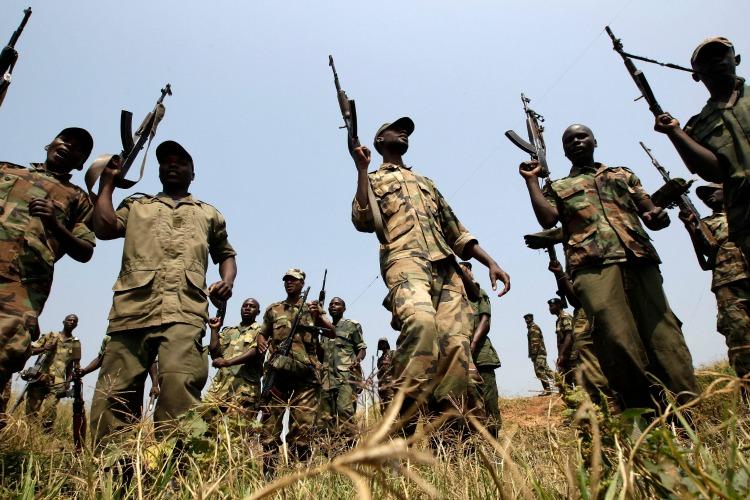
No fewer than 50 people, including women and children, were killed in an attack on Tuesday night at a site for internally displaced people in Savo, Ituri Province, in the Democratic Republic of the Congo (DRC), the UN said on Wednesday.
According to the UN Mission in the country (MONUSCO), the attack was carried out by members of the so-called Cooperative for the Development of the Congo (CODECO) – a loose association of various Lendu militia groups.
The head of the mission, Bintou Keita, strongly condemned the attack, that also left 36 injured.
MONUSCO dispatched a patrol to the site upon receiving an alert about the attack. They also notified national security forces as well as its community alert network.
Briefing newsmen in New York, the Secretary-General’s Deputy Spokesperson, Farhan Haq, said that UN peacekeepers exchanged fire with the assailants shortly after arriving on the scene.
The blue helmets also conducted joint operations with the Congolese army into the early morning, pushing the assailants out of the area and securing the site to prevent further immediate attacks.
In the meantime, humanitarian partners have started providing medical supplies.
According to the spokesperson, humanitarian officials are reporting that access by road is restricted due to insecurity and the delivery of humanitarian assistance is challenged.
The area is home to 600,000 displaced people.
In a report issued last week, the UN Joint Human Rights Office (UNJHRO) said that 6,989 cases of human rights violations were documented last year in the country, down nearly 12 per cent from 2020.
Around 60 per cent of the violations were carried out by armed groups in provinces affected by armed conflict, where at least 2,024 civilians, including 439 women, were victims of summary executions.
Besides CODECO, other significant armed groups, often acting with total impunity, include the Allied Democratic Forces (ADF) and Mai Mai.
State agents, including the national army, police and other security agencies, accounted for 35 per cent of the violations, including the extrajudicial killings of least 40 civilians.
According to news reports, because of this violence, the government decided in 2021 to place the provinces of Ituri and North Kivu under a “state of siege”, a measure giving exceptional powers to the army and police.
With 19.6 million people in dire need of assistance, the country continues to witness one of the most complex and long-standing humanitarian crises in the world. (NAN)

President Donald Trump on Sunday ordered a US naval blockade of the Strait of Hormuz in response to Iran’s “unyielding” refusal to give up its nuclear ambitions during peace talks in Islamabad.
While acknowledging that the marathon negotiations in Pakistan had gone “well” and “most points were agreed to,” Trump said Tehran had refused to concede on the issue of its nuclear program.
“Effective immediately, the United States Navy, the Finest in the World, will begin the process of BLOCKADING any and all Ships trying to enter, or leave, the Strait of Hormuz,” Trump said on his Truth Social platform.
“Any Iranian who fires at us, or at peaceful vessels, will be Blown To Hell!”
US Vice President JD Vance left Pakistan without a deal after weekend talks with a team led by Iran’s parliamentary speaker Mohammad Bagher Ghalibaf — the highest-level meeting between the two sides since the 1979 Islamic revolution.
Tehran’s delegation also included Foreign Minister Abbas Araghchi.
“We leave here with a very simple proposal, a method of understanding that is our final and best offer. We’ll see if the Iranians accept it,” Vance told reporters.
In two lengthy posts on Truth Social, Trump slammed Iran for promising to open the Strait of Hormuz, a strategic waterway through which a fifth of the world’s crude oil passes, and “knowingly” failing to deliver.
“They say they put mines in the water, even though all of their Navy, and most of their ‘mine droppers,’ have been completely blown up. They may have done so, but what ship owner would want to take the chance?” Trump said.
Iran had effectively blocked the Strait of Hormuz for weeks, since the United States and Israel launched a bombing campaign against the Islamic republic more than six weeks ago.
On Saturday, the US military announced that two US warships had transited the strait at the start of a mine clearance operation.
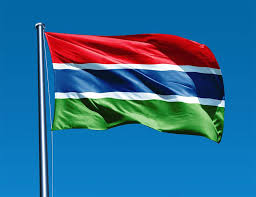
British barrister Martin Hackett has been appointed as The Gambia’s first special prosecutor to try those responsible for human rights abuses carried out during the 22-year rule of ex-President Yahya Jammeh, which ended when he went into exile in 2017.
Hackett will head a newly created office charged with dealing with the cases from a period characterised by widespread repression, enforced disappearances and extrajudicial killings.
The Truth, Reconciliation and Reparations Commission (TRRC) was set up to document the extent of the alleged abuses.
In its final report, handed to current President Adama Barrow in 2021, it identified those most responsible and recommended their prosecution.
The TRRC, which heard harrowing testimony from victims, former security operatives and other witnesses, also called for reparations to be paid to the victims, warning that failure to act risked entrenching impunity.
The TRRC has started phased compensation payments, starting with victims of abuses committed shortly after the 1994 coup when Jammeh first came to power.
But for many survivors, financial compensation is secondary to accountability.
Among the most notorious cases highlighted by the TRRC were the 2004 killing of journalist Deyda Hydara and the murder of more than 50 mainly West African migrants, executed by security forces after being wrongly accused of plotting a coup.
A handful of perpetrators have already been convicted abroad under the principle of universal jurisdiction, including former members of the notorious paramilitary unit and death squad known as “the Junglers” – some of whom have been jailed in Germany and the US.
The appointment of Hackett, who has previously served at the UN-backed Special Tribunal for Lebanon and who investigated war crimes committed by senior military commanders during the Kosovo war, is seen as a decisive step towards domestic accountability.
Attorney General Dawda Jallow was quoted as saying that Hackett had a four-year mandate and was chosen from a wide selection of candidates.
Jammeh, who refused to co-operate with the TRRC, only left power at the insistence of regional leaders.
They sent in troops to The Gambia when he refused to step down after his shock election defeat in December 2016.
Now aged 60, Jammeh has previously denied wrongdoing and is believed to be living in exile in Equatorial Guinea.
By Ademola Bakare
The Nigeria banking sector has witnessed significant recapitalization and consolidation exercises, dating back to 1952. The most recent were in 2004 that terminated in 2006, and 2010. Professor Charles Soludo, then governor of the Central Bank of Nigeria, raised the minimum capital benchmark from N2 billion to N5 billion.
The effort reduced the number of banks in Nigeria to 25 from 89, and Mallam Sanusi Lamido Sanusi, also a former governor, in 2010 established Asset Management Company {AMCON}, “bad bank” to ‘buy toxic assets off commercial banks, and recapitalized distressed financial institutions.That era was largely an abuse of banking industry ethics, hugely perpetrated internally by chief executives, and board members of many banks.
The Central Bank of Nigeria’s {CBN} just concluded effort was announced in 2024 with a two-year timeline, prescribing a new recapitalization regime of minimum capital benchmark of N500 billion, N200 billion, and N50 billion for commercial banks with international, national, regional licences respectively.
The new capital targets were ₦500 billion for international commercial banks, ₦200 billion for national commercial banks, ₦50 billion for regional commercial banks, ₦50 billion for national merchant banks, ₦20 billion for national non-interest banks, and ₦10 billion for regional non-interest banks
Recapitalization of banks in Nigeria is not novel, it has always been a regulatory measure employed by the Central Bank of Nigeria (CBN) to strengthen the financial system, protect depositor funds, and enhance the banking sector’s capacity to support economic growth. The first exercise was carried out in 1952 (Banking Ordinance), caused by the failure of indigenous banks. The then colonial government adopted tight regulations, raising the capital requirement for foreign banks to £400,000. The Banking Act of 1969, was another effort to strengthen banks. It raised the capital base to £1.5 million for foreign banks and £600,000 for indigenous commercial banks.
In 1997/1998 (Bank Failures) following widespread distress and failures within the sector, minimum benchmark capital was once again raised, which ultimately led to the failure of 26 banks.
The Olayemi Cardoso recapitalization programme which started on April 1, 2024 was considered a herculean odyssey deadline for the banks to bolster their capital bases. But the governor has been consistent and uncompromising with his policies. He said “the era of fragile balance sheets was over”. He wasn’t just desirous of bigger and fat figures on a ledger, he was seeking a financial ecosystem capable of financing huge infrastructure, and a $1 trillion economy envisioned by President Bola Tinubu’s administration, as well as structuring the sector to be able to withstand any shock associated with the volatile global economy.
As of March 31, 2026, 33 banks have met the new requirements, raising ₦4.65 trillion in new capital. These efforts aimed to strengthen Nigeria’s banking sector, improve resilience, and support economic growth. The programme was executed seamlessly, devoid of any rancour, and recorded a very strong participation from domestic and international investors, with 72.55 per cent of capital sourced locally and 27.45 percent from international markets. This demonstrated growing and sustained confidence in the Nigerian banking sector, and by extension, the Nigerian economy.
The concluded programme offers several implications and benefits for the Nigerian economy. Among which, but not limited are – increased lending capacity. With stronger capital bases, banks can lend more to businesses, particularly the small and medium enterprises (SMEs), and individuals yearning for capital to expand their businesses. Surely, this will strengthen financial stability as higher capital requirements will reduce the likelihood of bank distress and contagion, thereby promoting financial system stability.
For the $1 trillion economic aspiration of the government, a well-capitalized bank will attract more foreign investors to support Nigeria ‘s economic development, making it competitive. Larger banks are now, not a pack of local lenders, equipped, and can compete effectively with international banks, fostering innovation, and efficiency.
Among other benefits is economic stimulation, to ensure increased lending support for infrastructure development, industrialization, and job creation. With stronger shareholder net worth, banks performance will improve and the shareholders’ confidence boosted.
CBN’s strong regulatory framework employed by Olayemi Cardoso ensured that banks adopt more robust risk management practices, thereby reducing the risk of financial crises. The apex bank, he has often said, will continue to improve on governance, transparency, and accountability in the banking industry.
The recapitalization program when it was wrapped up earned commendation from industry players, and financial technocrats, who viewed the program as the prescription the economy required for its transformation.
However, not all banks operating in the country met the deadline. Some couldn’t, and are still continuing with the process of shoring up their capital adequacy. To these banks, the CBN assured the banking public, will remain functional.
Cardoso said, “Sustainable economic growth is unattainable without a resilient financial system. This recapitalisation ensures Nigerian banks can fund the scale of transactions needed to drive a $1 trillion economy”. Stressing that “the recapitalisation programme has strengthened the capital base of Nigerian banks, reinforced the resilience of the financial system and ensured it is well-positioned to support economic growth and withstand domestic and external shocks”.
The Olayemi Cardoso era will be etched in annals of banking sector history not for complexity of his monetary policies, but for clarity of his vision for the sector and the country.
Ademola Bakare, writes from Abuja.



JAMB Adjusts Arrival Time for 2026 UTME
ShareThe Joint Admissions and Matriculation Board has announced a slight adjustment to the arrival time for candidates sitting the 2026 Unified Tertiary Matriculation Examination, particularly...


Frimpong Dies after Robbery Attack on Team Bus
ShareGhanaian footballer Dominic Frimpong has been killed during an armed robbery on his club side Berekum Chelsea’s team bus as they returned from an away...
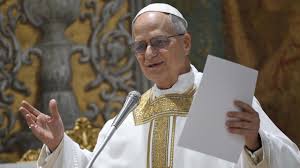

Leo Becomes First Pope to Visit Algeria at Start of Major Africa Tour
SharePope Leo XIV wants to “turn the world’s attention to Africa”, according to a senior Vatican official, as he embarks on a...

FG Opens Applications for Second Cohort of TVET
ShareBy Tony Obiechina, Abuja The Federal Ministry of Education has announced the commencement of applications for the second cohort of...


Customs Deploys AI Training to Boost Revenue Drive
ShareBy Tambaya Julius, Abuja The Comptroller-General of the Nigeria Customs Service, Adewale Adeniyi, has called for deeper collaboration between the Service and...

Insurance Gross Claims Rise to N724.5bn in Q4 2025
Share The Insurance Market Performance Report says the insurance industry recorded a spike in its gross claims hitting N725 billion...

Again, Suspected Herdsmen Invade Benue Communities, Kill 14
ShareFrom Attah Ede, Makurdi No fewer than 14 persons, including a mobile police officer, have been killed in renewed attacks...

ICPC Slams Fresh Nine-count Corruption Charge on El- Rufai
ShareBy David Torough, Abuja The Independent Corrupt Practices and Other Related Offences Commission has filed an amended nine-count charge against...


Justin Bieber Headlines Coachella with Nostalgia-fuelled Set
ShareJustin Bieber made a nostalgia-fuelled return to the major stage as Coachella’s much-anticipated headline act. The 32-year-old spent much of...

Sule Rewards First-Class Graduates, Honours Tanzania’s President at NSUK 8th Convocation
ShareBy Tambaya Julius, Abuja The Nasarawa State University, Keffi over the weekend celebrated its 25th silver jubilee anniversary and combined...