
POLITICS
EBSIEC Counters Reports of Voter Apathy during Ebonyi Council Polls

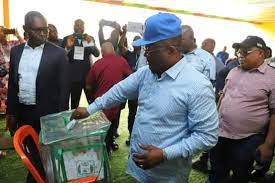
The Ebonyi State Independent Electoral Commisson has described the voter turnout at the July 30 Local Goverment (LG) Elections in the state as impressive.
The Chairman of the commisson, Mr Jossy Eze, said this on Thursday in Abakaliki, while presenting the Certificates of Return to the Chairmen-and-Councillors-Elect.
According to Eze, contrary to the report in a section of the media that the exercise was marred by voter apathy, the figures from the polls suggest that the turnout was impressive.
“It showed that the electorate are presently enlightened and know what they want.
“The electorate presently know the need to exercise their franchise to elect people they want and who would work for them,” he said.
The EBSIEC boss advised the elected officials to be magnanimous in victory toward their opponents in the polls.
“You should not see them as adversaries but partners in the desire to make the grassroots more viable.
“The way you handle affairs in your various areas would help to ensure effective representation of your councils,” he said.
He commended various stakeholders that contributed to the success of the exercise.
He said that the commission had been re-invigorated for effective service delivery.
Responding on behalf of others, the Ivo Chairman-Elect, Mr Emmanuel Ajah, thanked his people for electing him.
Ajah promised that he would reciprocate the gesture by working hard to improve their wellbeing.
“I especially thank the youths for their unflinching support all through the electioneering.
“I promise that with other stakeholders, we shall move our council forward,” he said.
Newsmen recall that APC clinched all the 13 Chairmanship and 171 Councillorship positions during the polls.
The election produced one Chairperson, Mrs Euphemia Nwali, for Ezza South LG.
The other Chairmen included Mr Ebere Nwogba (Abakaliki), Chidiebere Uzor (Onicha) and Chinedu Uburu (Ebonyi).
Others were Mr Chinonso Ajah (Ohaozara), Nnajiofor Ibiam (Afikpo North), Chima Ekuma-Nkama (Afikpo South), John Onwe (Ishielu), Stephen Nwankpa (Izzi) and Ajah (Ivo).
The rest included Mr Ikechukwu Odono (Ohaukwu), Sunday Nwankwo (Ikwo) and Chief Moses Nome (Ezza North). (NAN)



From Mike Tayese, Yenagoa
All Progressives Congress (APC) chieftain in Bayelsa State, Dr Kojo Sam, has vowed to deliver 100 percent of the votes for the re-election of President Bola Tinubu in the 2027 presidential election.
Dr Kojo Sam stated this during a consultative visit by the Chairman of Bayelsa APC, Hon Warman Weri Ogoriba, and members of the State Working Committee at his country home in Okpoama, Brass Local Government Area of Bayelsa State.
Kojo Sam, a businessman and philanthropist, declared that he is unwavering in his unalloyed support for President Tinubu and the All Progressives Congress and would ensure Bayelsa East is delivered to the President.
He explained that his support for the APC, which dates back to its formation in 2013, is predicated on the ideals and ideological direction of the party, which is geared towards improving the lives of Nigerians.
Dr Kojo commended President Tinubu for his bold economic reforms, which, according to him, are already yielding fruits, with stability in the macroeconomic indices in the country.
He dismissed efforts of opposition parties to make inroads in Bayelsa East, stressing that the people of Bayelsa East, especially in Nembe and Brass, are in full support of President Tinubu’s re-election.
Dr Kojo also applauded Governor Douye Diri for his leadership and peaceful disposition, which has strengthened the APC at the grassroots.
He seized the opportunity to commend Hon Ogoriba for conducting the affairs of the party in a transparent manner, which has given all members a sense of belonging.
‘’Today I have the privilege of hosting the APC Bayelsa State Executive Committee at my country home in Okpoama, Brass. We had a very productive and frank discussion on the future of the party in Bayelsa, strengthening our structures and promoting unity. I commend the leadership of Governor Douye Diri and the party chairman for the inclusive leadership which has strengthened the party. I want to assure the party that in 2027 President Bola Tinubu will coast to victory in Bayelsa East.
Hon Ogoriba, in his remarks, described Dr Kojo Sam as a critical stakeholder whose support for the APC has been instrumental in the several victories recorded by the party.
According to him, the consultative visit was to appreciate Dr Kojo Sam for his steadfast contributions, commitment and sacrifices towards the advancement of the party and its electoral fortunes.
Hon Ogoriba noted that the APC leadership in the state has total confidence in the ability of Dr Kojo Sam to galvanise the people of Bayelsa East towards the re-election of President Bola Tinubu.
He noted that the visit allowed the party leadership to deliberate with Dr Kojo Sam on strengthening the party at the grassroots, fostering greater unity among party stakeholders.
From Godwin Okah, Abakaliki
The Chairman of the All Progressives Congress (APC) in Ebonyi State, Chief Stanley Emegha, has warned party stakeholders in Onicha Local Government Area against fractionalization, urging them to unite and work for the party’s victory in all elective positions in the 2027 general elections.
Emegha said the APC could only consolidate its political strength in the council if its leaders and members put aside personal interests, embrace peace and strengthen the party’s structures ahead of the elections.
The APC chairman spoke while addressing stakeholders and leaders of the party from Onicha LGA and the Southern Senatorial District at the party’s state secretariat on Waterworks Road, Abakaliki.
The meeting, attended by serving and former political office holders as well as community and opinion leaders from various autonomous communities in Onicha, reviewed the challenges confronting the party and prospects for the 2027 elections.
Emegha appealed to stakeholders to jettison personal political ambitions capable of causing division, stressing that the APC remained one united and indivisible family.
He said: “There is a need for peace and unity among all our stakeholders. We must put the overall interest of the party above personal political pursuits. There should be no further factionalization because APC is one united family.”
The party chairman also commended APC candidates from Onicha LGA for their efforts in reaching out to the electorate but charged them to intensify their grassroots engagements ahead of the commencement of campaigns.
He said stronger interaction with voters at the grassroots would make mobilisation easier and further strengthen the party’s chances at the polls.
The Chairman of Onicha LGA, Ikechukwu Ogbofia, applauded the state leadership for convening the meeting, disclosing that he had earlier met with stakeholders in the council, where they agreed to work together in peace and unity.
Ogbofia assured the state chairman that similar meetings would be taken to all electoral wards in the council before the commencement of campaigns to consolidate unity among members.
Former Deputy Governor of Ebonyi State, Chigozie Ogbu, who spoke on behalf of Onicha stakeholders, promised that all outstanding issues among party leaders would be resolved amicably.
Ogbu also assured the APC leadership that the people of Onicha would vote massively for all the party’s candidates in the 2027 elections.
Former Onicha council chairman, Chidiebere Agwu Uzor, equally declared that the APC had no serious challenger in the local government.
He expressed confidence that the party would secure victory in all positions during the elections.
The meeting subsequently resolved that APC candidates from Onicha should immediately intensify grassroots engagement.
DAILY ASSETS reports that the party leadership explores further measures to strengthen its structures and resolve outstanding concerns ahead of the 2027 polls.
From Attah Ede, Makurdi
The Senate Minority Leader and Senator representing Benue South senatorial district, Abba Moro, on Saturday launched a campaign for his reelection for the 2027 general elections, just as the Benue South All Progressives Congress (APC) endorsed his re-election bid.
Moro, who is the candidate of the People’s Democratic Party (PDP), received endorsement from the members of the ruling All Progressives Congress APC as their sole candidate for the 2027 senatorial election in the zone.
Speaking during the launching which was held at Otukpo, Otupko Local Government Area (LGA), Senator Moro dared, governor Hyacinth Alia to show any projects his administration has sited in senatorial zone
He explained that despite Alia collecting huge amounts from the Federation Account, he has failed in his responsibility to cater for the needs of the people of Zone C, adding that as the representative of the people he would not shy away from pointing out to the governor his shortcomings.
The lawmaker observed that due to the neglect the people of the senatorial district were now looking up to him, as their representative at the NASS, to provide their needs, which ordinarily should be provided by the Alia administration.
According to Moro, APC and PDP in Zone C, were in a strategic alliance to ensure his return and secure a second term for President Bola Tinubu.
In his speech, the immediate past Governor of Benue State and leader of the Peoples Democratic Party (PDP) in the state and the North-Central region, Chief Dr. Samuel Ortom, assured the people of Benue South Senatorial District (Zone C) of the party’s capacity to provide purposeful and effective leadership for the zone and Benue State.
The former governor said the PDP had consistently delivered the dividends of democracy to the people of Zone C through the efforts of Senator Abba Moro, whom he described as a committed party man who has remained steadfast since the party’s inception.
He recalled that his administration executed and commissioned several projects across the state, stressing that some projects, including the Ochi Idoma Road, Commercial Road, and Armstrong Avenue were constructed and commissioned within his first term in office.
Chief Ortom further stated that his administration, during its eight-year tenure, completed and commissioned several landmark projects in Zone C, including the Ochi Idoma Palace.
He challenged the present administration in the state to showcase projects it had commissioned in Zone C, stating that the current government had relied heavily on “deceit and propaganda” despite receiving substantial allocations from the Federation Account.
Chief Ortom thanked the people of Zone C for identifying with the PDP and assured them that the party would not disappoint them.
He urged voters to support all PDP candidates, particularly the party’s governorship candidate, Chief Michael Kaase Aondoakaa, SAN, whom he described as a genuine and experienced administrator capable of providing effective leadership and tackling insecurity in the state.
According to him, the possibility of producing a governor from Zone C remains achievable if stakeholders, traditional rulers, and party leaders work together and make the necessary political arrangements.
The former governor also received a chieftain of the All Progressives Congress (APC) in Zone C, Barrister John Attach Ochoga and his supporters into the PDP, describing their decision as a significant boost to the party’s strength in the area.
In his remarks, Chief Michael Kaase Aondoakaa, governorship candidate of the PDP, who described the neglect of the people of the zone, exclaimed the Zone C has suffered underdevelopment under the Alia administration.
He assured the people of Zone C that their needs would be addressed when he becomes governor, in 2027.
The immediate past governor of the state, Chief Ortom, assured the people of Benue South, of the capacity of the PDP to provide purposeful and effective leadership for the zone and Benue State.
He pointed out that the party had consistently delivered the dividends of democracy to the people of Zone C through the efforts of Senator Abba Moro, whom he described as a committed party man who has remained steadfast since the party’s inception.
Ortom further stated that his administration had completed and commissioned several landmark projects in Zone C, including the Ochi’Idoma palace.
Ezekiel Adaji, Benue State chairman of the PDP, sounded a note of warning to “mushroom parties that we are taking over”, the state.
He also presented Senator Moro, all candidates of the party for the House of Representatives (HoR), and the eleven candidates for the Benue State House of Assembly (BNHA) elections for the 2027 elections in the zone with the party’s flags.
He also said confidently, “With you (Abba Moro) as a candidate I know all other candidates will fly; go and conquer for PDP.
Receiving Barr John Ochoga, and other decampees of the All Progressives Congress (APC), the PDP chairman, observed that there were no latecomers in PDP, and that they were all entitled to all privileges that every other PDP member is entitled to.
Speaking, Ochoga, noted that in the last three years, the Idoma people had not had it good, “why have the Idoma nation become the heavers of wood and fetchers of water.”


US Envoys Meet Zelensky in Ukraine after Talks with Putin in Russia
SharePresident Volodymyr Zelensky is holding talks with Donald Trump’s top envoys, in their first visit to Ukraine since Russia’s full-scale...


Court Sentences TV Presenter, 11 Others to Death in Egypt Drugs Case
ShareEgyptian television presenter Sarah Khalifa and 11 other people have been sentenced to death by hanging after being convicted of...
Amusan Misses Podium as Russell Wins Diamond League Crown
ShareAmerican hurdler Masai Russell claimed the Diamond League title in the women’s 100m hurdles after clocking a meet record of...
Fencing: Brou Wins 2026 FIE Satellite Sabre Viking Cup
ShareNigeria’s Inkosi Brou has won the 2026 FIE Satellite Sabre Viking Cup in Iceland, adding another international medal to the...
McColgan Wins London Big Half after Five Months Out
ShareEilish McColgan claimed her fourth victory at the Big Half in London on Sunday after returning to action following five...
Makinde Approves 32-seater, 18-seater Buses for Shooting Stars
ShareOyo State Governor, Seyi Makinde has approved the immediate release of two buses, a 32-seater and an 18-seater, to Shooting...
Ex-Leicester Striker Vardy Joins Burnley
ShareFormer Leicester City and England striker Jamie Vardy has joined Burnley until the end of the season. The 39-year-old, who...
Former Golden Eaglets Captain Tijani Joins Slovakian Club on Loan
ShareFormer Golden Eaglets captain Samson Tijani has joined Slovakian club FK Železiarne Podbrezová on loan for the 2026/27 season. The...
U-20 WWC: Falconets Ready to Make Big Statement— Aduku
ShareFalconets head coach Moses Aduku said his players are determined to make a big impact at the 2026 FIFA U-20...

FG Restates Commitment to Regional Trade Integration through ETLS
ShareThe Federal Government has restated its commitment to deepening regional trade integration and promoting exports through the ECOWAS Trade Liberalisation...