
Oil & Gas
Economic Cost of Road Accidents N450bn Annually – Minister


The Minister of State for Transportation, Sen. Gbemisola Saraki, on Wednesday said the economic cost of road accidents in Nigeria amounted to about N450 billion annually.
Saraki also said the recent approval granted the Nigerian National Petroleum Corporation (NNPC) to reconstruct 21 federal roads across the country was a direct response by government to the yearnings of commercial road users.
She spoke at the 2021 Major Oil Marketers Association of Nigeria (MOMAN) and Nigerian Association of Road Transport Owners ( NARTO) workshop in Lagos.
The workshop had as its theme, “Safety in Road Transportation of Petroleum Products in Nigeria: Short and Long Term Imperatives.
”The minister said data from the Federal Road Safety Corps ( FRSC) showed that 5,320 road crashes and 2,471 deaths were recorded in the first half of 2021 nationwide.
She said: “Most of the victims were young people who were in their prime, leaving behind families and loved ones.
“The economic cost of these accidents were not even taken into consideration and if you take it into consideration from our estimate it will be about N450 billion annually.”
According to her, about 52 per cent of these accidents were caused by over-speeding while other factors included bad roads, unqualified drivers, rickety trucks as well as substance and alcohol abuses.
Saraki said the federal government on it’s part was doing its best to rehabilitate the roads across the country which had suffered negligence for years by previous administrations.
She said government recognised that there was a direct link between transportation and the rising cost of food items in the country and was making efforts to address the situation.
Saraki said the 21 roads would be reconstructed by the NNPC at a cost of N621 billion.
“Of the 21 roads, nine were selected in the North-Central, three in the North-East, two in the North-West, two in the South-East, three in the South-South, and two in the South-West.
“The roads total 1,804.6 linear kilometers,” she added.
The minister called on state governments to also rise up to the challenge of fixing bad roads within their states to ameliorate the plight of Nigerians.
Also, Mr Adeyemi Adetunji, Group Executive Director, Downstream, NNPC, said the workshop was commendable, especially as there was need to curb petroleum products-related road accidents.
Adetunji said the NNPC would continue to work with all stakeholders to ensure safety in the transportation of petroleum products across the country.
The FRSC Corps Marshall, Dr Boboye Oyeyemi, said government was initiating several measures to improve safety in distribution of petroleum products.
Oyeyemi, represented by the Lagos Sector Commander, FRSC, Mr Olusegun Ogungbemide, said government had mandated the use of inflammable signs and retro-reflective tapes on trucks to enhance visibility.
He said government had also mandated the installation of speed limiting device on trucks effective February.
According to him, the measures include compulsory installation of safety valves on any tanker plying roads in Nigeria with full implementation beginning from March.
Oyeyemi added that on June 30, 2022 any tanker above 45,000 litres capacity would be prohibited from transportating liquid hydrocarbons.
On their parts, Mr Olumide Adeosun, Chairman, MOMAN and Alhaji Yusuf Othman, President, NARTO, said the workshop was part of collaboration between both groups to improve safety in distribution of petroleum products. (NAN)
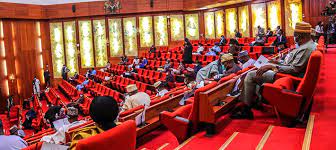


TotalEnergies EP Nigeria Limited has commenced drilling of the Akpo Far East B exploration well, days after its Country Chair and Managing Director, Matthieu Bouyer, announced at the 2026 Nigerian Association of Petroleum Explorationists (NAPE) annual conference and exhibition that the company was launching a new deep offshore drilling campaign in Nigeria.
The well, being drilled with the Noble BlackRhino rig, is the first deep offshore exploration well to be drilled in Nigeria in 10 years.
It is expected to be followed by exploration and appraisal wells at Egina South and on the PPL 2000 and PPL 2001 licences.Speaking during an executive panel at the 44th NAPE Annual International Conference and Exhibition in Lagos, Bouyer said the drilling campaign was evidence of improving investor confidence in Nigeria’s energy sector.
The conference, held from 8 to 12 November, focused on unlocking reserves growth through exploration, local capabilities and adaptive technology.“The attractiveness of Nigeria has returned in our portfolio,” Matthieu Bouyer told the conference.
He said Nigeria’s challenge was not the availability of resources and called for faster conversion of discovered resources into projects and production.
“We need to think fast,” he said, calling for supply-chain constraints and other barriers to investment decisions to be addressed more quickly.
The Akpo Far East B well forms part of a broader exploration programme that will extend to Egina South and PPL 2000 and PPL 2001. TotalEnergies and its partner, SAPETRO, signed a Production Sharing Contract for the two licences in September 2025 after they were awarded through Nigeria’s 2024 Exploration Round. TotalEnergies holds an 80% operating interest, while SAPETRO holds 20%.
TotalEnergies emerged as the successful bidder for PPL 2000 and PPL 2001 in December 2024. The company’s planned drilling on the acreage, less than two years after the award, highlights the pace at which it is progressing the new exploration opportunity.
At the NAPE session, Bouyer said improved transparency in Nigeria’s licensing process had enabled TotalEnergies to secure new acreage through a competitive bid round for the first time in more than a decade.
He also pointed to recent Federal Government reforms, including Executive Orders designed to improve the competitiveness of deepwater and non-associated gas projects, as factors supporting renewed investment.
“The Executive Orders are working,” he said, citing recent investment decisions on the Ima and Ubeta gas developments as evidence of progress.
Commenting on the drilling programme, Mr Bouyer said the Akpo Far East B well and the planned activity at Egina South and PPL 2000 and PPL 2001 demonstrated TotalEnergies’ confidence in Nigeria’s resource potential.
“This momentum goes hand in hand with the efforts of the Nigerian authorities to strengthen transparency and attract investment into the country,” he said.
He acknowledged the teams responsible for the fast-track mobilisation of the Noble BlackRhino and thanked the company’s partners, NNPC Limited, Meren, CNOOC International and SAPETRO, for their support.
The NAPE executive session also featured Aliko Dangote, President and Chief Executive of Dangote Group, and Austin Avuru, NAPE Fellow and Co-founder of Seplat Energy, among others. Discussions centred on the reforms, fiscal stability and government-industry collaboration required to accelerate investment and increase Nigeria’s oil and gas production.
From Dan Amasingha, Minna.
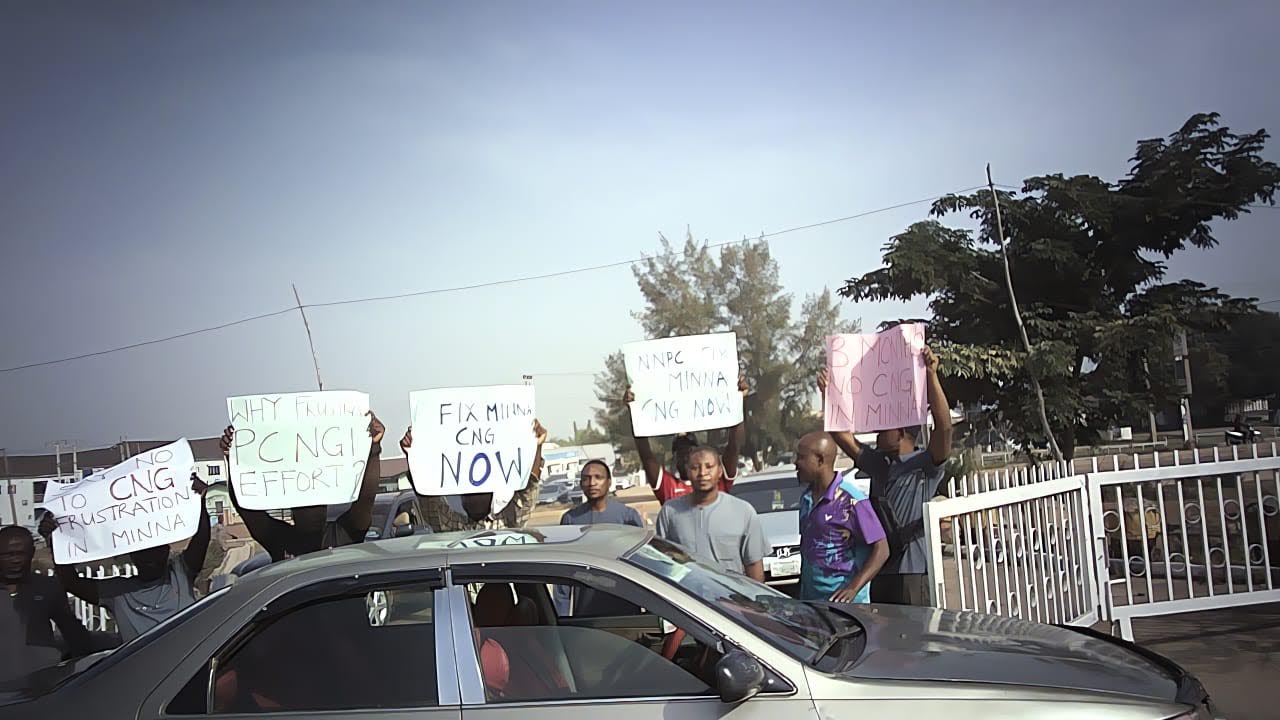
Angry vehicle owners on Sunday staged a peaceful protest at the NNPC Mega Station along the Western Bypass in Minna, Niger State, over the alleged three-month shutdown of the facility’s Compressed Natural Gas (CNG) dispensing service.
The protesters, who accused the station’s management of failing to address the persistent shortage, said the development had frustrated the Federal Government’s initiative to promote CNG as a cheaper alternative to Premium Motor Spirit (PMS), popularly known as petrol.
They lamented that despite investing hundreds of thousands of naira and, in some cases, over ₦1 million to convert their vehicles to run on CNG, they had been unable to access the product in the state capital for months.
Findings indicated that a component of the station’s CNG dispensing equipment had reportedly developed a fault but had allegedly remained unrepaired, leaving motorists who rely on the alternative fuel with little choice but to return to the more expensive petrol.
The persistent outage, the protesters said, had not only undermined the economic benefits of converting their vehicles but had also imposed additional financial burdens on vehicle owners already grappling with rising transportation and fuel costs.
Speaking during the protest, one of the motorists, Engr. Israel Ogbonnaya, described the situation as discouraging, alleging that repeated visits to the station to obtain explanations from the management had yielded no meaningful response.
“It is so discouraging that for three months now, the CNG station at NNPC Minna has not functioned. Imagine that since January, some people did conversion and have not recovered their money,” he said.
Ogbonnaya expressed disappointment that motorists had allegedly received no satisfactory explanation regarding the prolonged breakdown.
“The CNG broke down, nobody has spoken to us. We have come here several times demanding answers from the management, and nobody is talking.
“So, for now, we want to bring the attention of Nigerians and those in authority to the situation in Minna.
CNG is the heartbeat of the President. He commissioned a committee to look into this scheme, and these people are taking us for granted,” he added.
Another protester, Mohammed Doko Saidu, questioned the rationale behind encouraging motorists to convert their vehicles to CNG without ensuring the availability of adequate dispensing facilities to meet demand.
Saidu disclosed that he had spent more than ₦1 million converting his vehicle, only to discover that the product was unavailable in Minna.
“The frustrating aspect of all is that I just installed CNG, spending over a million naira, without a single gas in Minna; hoping that it is going to be fixed today, it is going to be fixed tomorrow, and up till this moment, there is nothing.
“Nobody is saying anything. The station is just lying fallow. In short, I had to disconnect some of the cylinders installed in my car because there is no gas.
What kind of government are we in? It is frustrating,” he said.
The protesters called on the NNPC Mega Station’s management and other relevant stakeholders to urgently repair the faulty equipment and restore CNG supply to Minna.
They warned that failure to resolve the problem could trigger another protest involving a larger number of aggrieved motorists, including commercial tricycle operators who also depend on CNG to reduce their operating costs.
The motorists maintained that the prolonged unavailability of the product had defeated the purpose of the conversion programme, forcing them to bear the cost of installing CNG systems while continuing to spend more on petrol.
The development raises concerns among affected motorists over the reliability of CNG supply infrastructure and the need for prompt maintenance of facilities established to support the Federal Government’s alternative-fuel initiative.
Efforts to obtain comments from the manager of the NNPC Mega Station were unsuccessful as of press time, while attendants on duty declined to speak on behalf of the management.
From Sylvia Udegbunam Enugu
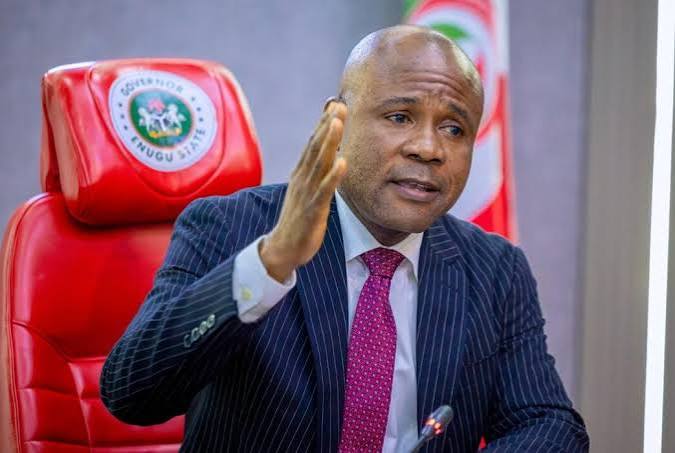
Governor of Enug State, Dr. Peter Mbah, has doubled down in his support for the removal of fuel subsidy by President Bola Tinubu’s administration, saying it was undebatable and inconceivable for anyone to imagine a return to the old order.
Mbah spoke at the “Meet the Candidates” town hall meeting organised by Afia TV in Enugu on Wednesday, where he also said that his administration had delivered good governance to the people of the state across all sectors.
He described it as a pathetic misconception of the country’s situation and the direction it was headed for anyone to talk about the reintroduction of fuel subsidy.
“If you reintroduce fuel subsidy today, we will lose ten times whatever we are currently trying to gain in terms of the removal of subsidy. The poverty rate that you are going to experience will be very high because the naira would be automatically devalued.
“We cannot go back to subsidy. And I do not think it is in the interest of the country for us to even debate that.
“Again, we should not even debate it because we do not want to send a signal to prospective investors that we are contemplating it. That would take us back. It is going to create panic in the system. It is going to get investors to pull back.
“Those that are coming in today to invest in that sector will become jittery. So, it is not even a subject to debate. It is something that we have moved on from, and we should be thinking about how to ensure that the natural benefits cascade to the households, create jobs and generate wealth for our people,” he said.
He said the nation should focus on how to further encourage private capital to flow, noting the growth the nation had experienced in the stock exchange space.
He added that Tinubu’s policies had stabilised the macro indicators, thus encouraging foreign direct investment.
“You can see quite a lot of funds coming into our country, not just portfolio investments, but also direct investments. It is also going to strengthen because the macro indicators are right,” he stated.
Mbah maintained that whereas fuel subsidy removal enables the government to target the less privileged, fuel subsidy as earlier practised benefited the rich more.
“By the way, I do not think the subsidy we practised before the President removed it was even the right one for the country because even the people we were looking at benefiting from it were only insignificantly benefiting from it. It was largely beneficial to our wealthy folks.
“But now, you can almost notice that the government is doing that in targeting the poor, using proceeds from subsidy removal. The government is aggressive on cash transfers. There is also the programme where the government is targeting 1,000 persons per ward across the entire country to be able to provide seed capital for them to become productive,” he added.
Meanwhile, on his stewardship so far, Mbah said his administration had kept faith with the people of Enugu State, delivering good governance across all sectors in line with his campaign manifesto.
He said the people of the state only needed to imagine where the state was before his inauguration as governor and where it is currently headed.
“Let us imagine the Enugu we knew four years ago. Let us just imagine an Enugu without Hotel Presidential. Let us imagine an Enugu without the International Conference Centre. Let us imagine an Enugu without Enugu Air. Let us imagine Enugu without the transport terminals, the 268 Smart Green Schools, 260 Type 2 Primary Healthcare Centres.
“You do not want them to imagine an Enugu without the International Hospital. You do not want them to imagine an Enugu without the CNG buses, the Nigergas. I think the list is endless.
“But I even think that we can stretch that imagination further because the work ahead will be more profound. Just imagine an Enugu where our children are receiving education that prepares them for the world because they have been imbued with evolving 21st-century skills. Imagine again an Enugu where you do not have any part of the city with an unpaved road.
“Also, imagine an Enugu in four years’ time that generates 660 megawatts of electricity; where we are able to provide 24-hour power supply; where you cannot come into your house and have the light off; and where people can run their businesses for a whole week without worrying about the cost of diesel. Just imagine an Enugu where you generate electricity and the people of Enugu are buying that at 120 naira because they own the coal that feeds the power plant.
“Imagine an Enugu where you now have to ride, not just on our CNG buses, but you have the monorail that can take you from point A to point B. Imagine an Enugu where you can fly from here to the United Kingdom, to the United States and other parts of the world,” he charged the electorate.
He urged the people to keep faith with the journey of greatness, growth and development, defending the gains of his first term and guaranteeing the promises of his second term by working for his re-election.
“If these imaginations capture our fancy, then we have a duty to fight for it. We do have a duty to continue to make sure that the bar does not come down and that the standard we have set in Enugu is sustained,” he concluded.



INEC Urges South-South Youths to Shun Electoral Violence Ahead 2027 Polls
ShareBy Orjime Moses, Abuja The Independent National Electoral Commission (INEC) has urged youths in the South-South to shun electoral violence,...
Nigeria’s Politics of Fear: Who Profits When Democracy Bleeds?
ShareBy Jude Dike Nigeria is approaching another general election, but something more troubling than the contest for political power is...

NAICOM Wants Improved Claims Settlement, Risk Management
ShareBy Tony Obiechina, Abuja The National Insurance Commission has called for improved claims settlement, stronger risk management, and greater accountability...
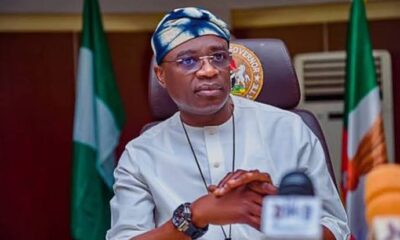

2027: Alia Mobilises Benue for Tinubu, APC Candidates
ShareBy Attah Ede, Makurdi Benue State Governor, Rev. Fr. Hyacinth Alia, has called on residents of the state to throw...
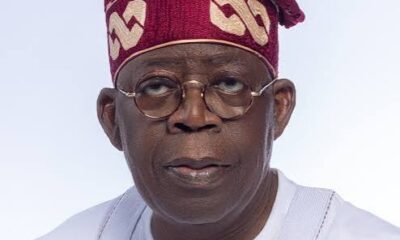

FG Targets 40 Per Cent Drop in Transport Fares
ShareBy David Torough, Abuja President Bola Tinubu has unveiled fresh measures to reduce the cost of transportation across Nigeria, targeting...
A Right to Life, But at What Cost?
ShareBy Oluwaleye Adedoyin Grace What is the value of a constitutional right that citizens struggle to enjoy? In Nigeria, the...
Bayelsa Oil Communities Accuse Renaissance of Withholding Contract Plan
ShareFrom Mike Tayese, Yenagoa More than 100 Oil-Producing Communities in Bayelsa, and their Representatives, has accused Renaissance Africa Energy Company...


Police Declare 25-Year-Old Okada Rider Missing in Lokoja
ShareFrom Joseph Amedu, Lokoja The Kogi State Police Command has declared a 25-year-old commercial motorcyclist, Siraka Auwal, missing. Auwal, a...
African Ministers Establish Common Communication Front, Revive Annual Continental Meetings
ShareBy David Torough, Abuja African Ministers of Information have called for a coordinated continental communication framework to combat misinformation, strengthen...
Delta Targets Higher Oil Production, Improved Host Community Benefits
ShareThe Delta Government has pledged to boost oil production, improve host community benefits and sustain peaceful operations in the state’s...