
Economy
EEDC to Embark on Mass Disconnection in South East

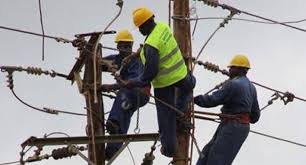
The Enugu Electricity Distribution Company (EEDC) says it will embark on mass disconnection of customers that have defaulted in payment of their electricity bills within the South East.
The Head, Corporate Communications of EEDC, Mr Emeka Ezeh, said in Enugu on Sunday that the exercise would take effect from Monday, Feb.
22.Ezeh noted that the exercise, which would last for the whole week, would be carried out simultaneously across EEDC’s 18 district offices across the South East, its franchise coverage area.
The EEDC spokesman said: “Customers are, therefore, advised to ensure they pay up their bills.
“They should make available the evidence of payment to officials of EEDC that will be visiting their homes/premises. This applies to both prepaid and postpaid customers.
“EEDC is committed to providing improved services to her customers and prompt payment of electricity bills enables the company sustain its operations, attend to faults and other power supply challenges.’’
Ezeh, however, urged customers and entire people of the South East to support EEDC to serve them better. (NAN)





By Tony Obiechina, Abuja
The Federal Government has reaffirmed its commitment to strengthening Nigeria’s bilateral relations with Germany, with renewed focus on economic cooperation, investment promotion, energy partnerships, and the effective implementation of existing agreements.
Minister of Budget and Economic Planning, Senator Abubakar Atiku Bagudu, made this statement during a visit to the Ministry in Abuja on Monday by the Ambassador of the Federal Republic of Germany to Nigeria, Stefan Rössel.
The minister welcomed the ambassador and his delegation, expressing Nigeria’s appreciation for Germany’s longstanding partnership and support for the country’s economic reform programme, particularly in the early stages of implementation.
He recalled that when German Chancellor Olaf Scholz visited Nigeria, the Federal Government was pursuing significant economic reforms that required support from international partners, including Germany, the World Bank, the International Monetary Fund and the European Union.
The minister said Germany’s support has contributed to Nigeria’s progress in its reform efforts, adding that the country remains grateful for the cooperation and assistance it has received from its development partners.
He also acknowledged Germany’s role in facilitating high-level engagements between the two countries, particularly in trade, investment and energy cooperation, noting that discussions during the Nigerian President’s visit to Germany advanced talks on key energy agreements.
Senator Bagudu further commended Germany’s commitment to multilateral cooperation and international engagement, emphasising the importance of sustained partnerships to address evolving global economic and political challenges.
He noted that Nigeria and Germany had built a strong foundation for bilateral cooperation over the years, with significant opportunities to expand their partnership in areas that support economic growth and development.
The minister disclosed that discussions had covered cooperation involving €25 million and €300 million in export credit guarantees, identifying these as important areas for continued engagement as Nigeria seeks to expand investment opportunities and strengthen its capacity to utilise available resources effectively.
According to him, Nigeria’s reform efforts have created an opportunity to place greater emphasis on attracting investment, strengthening productive capacity, and translating international partnerships into tangible economic outcomes.
He assured the German ambassador that the ministry was prepared to work closely with the German government and its relevant institutions to deepen bilateral relations and broaden areas of mutual interest.
Earlier, Ambassador Rössel expressed appreciation for the warm reception he received, describing the relationship between Nigeria and Germany as strong and longstanding.
The ambassador, who arrived in Nigeria a few weeks ago, reaffirmed Germany’s commitment to building on the partnership’s achievements and to exploring opportunities for further cooperation.
He acknowledged that both countries were operating in an increasingly complex global environment characterised by evolving strategic, political and economic challenges.
Despite these circumstances, Ambassador Rössel expressed confidence that the longstanding relationship between Nigeria and Germany would provide a solid foundation for addressing emerging issues and sustaining mutually beneficial cooperation in the years ahead.
He also welcomed the ministry’s readiness to continue working with Germany, noting the importance of maintaining established partnerships while adapting to evolving circumstances.
In her remarks, the Minister of State for Budget and Economic Planning, Dr Doris Uzoka-Anite, congratulated Ambassador Rössel on his appointment, welcomed him to Nigeria, and expressed the ministry’s readiness to collaborate with him and with relevant German agencies.
She emphasised the importance of translating bilateral agreements and shared commitments into practical outcomes, noting that effective implementation remained critical to achieving the partnership’s objectives.
Dr Uzoka-Anite assured the ambassador that the ministry would continue to facilitate collaboration and support efforts to ensure joint initiatives progressed efficiently and delivered meaningful results.
The Permanent Secretary of the Federal Ministry of Budget and Economic Planning, Dr Deborah Odoh, also welcomed the German delegation, describing Germany as a reliable partner whose technical expertise, knowledge exchange and experience had contributed to Nigeria’s development.
She said the ministry expects the ambassador’s tenure to create further opportunities to strengthen cooperation and to advance the longstanding relationship between the two countries.
The courtesy visit reaffirmed Nigeria and Germany’s shared commitment to sustaining bilateral engagement, deepening economic cooperation, and exploring opportunities for expanded investment and development collaboration.
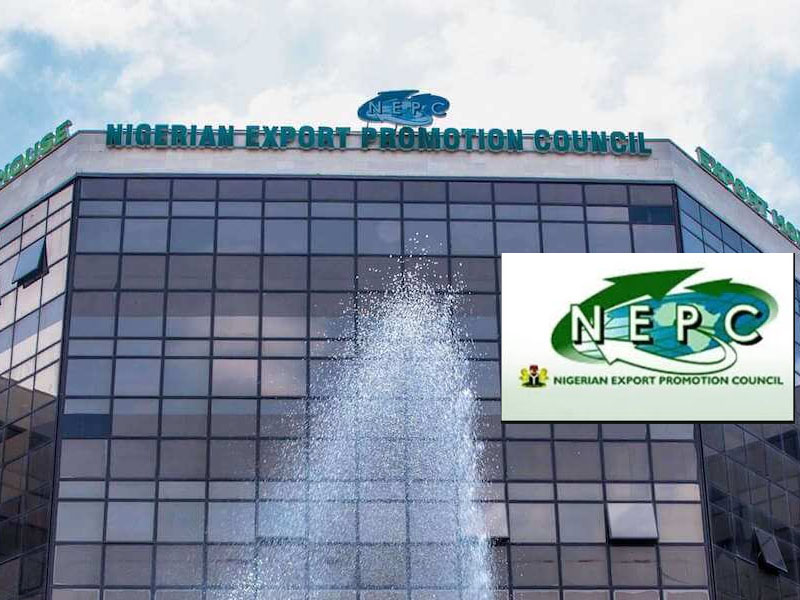
The Nigerian Export Promotion Council (NEPC) says exporters in Imo generated a total of 1,244,095 dollars as proceeds from export trade in 2025.
The Imo Coordinator of the council, Mr Anthony Ajuruchi, disclosed this during a follow-up engagement with cocoa farmers in the state on Thursday in Owerri.
50 cocoa farmers and exporters in Imo received 30 cocoa seedlings each in 2025 as part of interventions to boost production for export.
Ajuruchi said the amount was derived from proceeds of both formal and informal export transactions carried out by the farmers within the 2025 fiscal year.
He commended the Executive Director of NEPC, Mrs Nonye Ayeni, and the management team for their support and commitment to the growth of the export market in Imo and across the country.
According to him, the council recorded notable achievements in 2025, including the organisation of capacity-building programmes on non-oil export, product packaging and labelling.
“In addition to our interventions for cashew farmers, we conducted trainings on product development and adaptation, export contracts, market penetration, product certification and export documentation procedures.
“We also trained about 600 exporters and small and medium-scale enterprises,” he said.
Ajuruchi said the engagement with the cocoa farmers was aimed at obtaining feedback and brainstorming on strategies to increase production and export volume in 2026.
One of the beneficiaries, Mrs Sophia Orji, said the cocoa seedlings she received were doing well and had started fruiting after 17 months.
Another farmer, Mrs Mary Okeke, said her cocoa plants were thriving and appealed to NEPC to extend similar support to farmers during the rainy season.
Also speaking, Mr Canice Nze, Director of Produce in the Imo Ministry of Trade, Commerce and Investment, urged the farmers to register with the ministry to enable them benefit from cooperative structures and access possible government grants. (NAN)
By David Torough, Abuja
In line with the consumer-focused objectives of the Nigerian Communications Commission (NCC) and the Central Bank of Nigeria (CBN), the two regulators have drawn up a framework to address consumer complaints arising from unsuccessful airtime and data transactions during network downtimes, system glitches, or human input errors.
The framework is the outcome of several months of engagements involving the NCC, the CBN, Mobile Network Operators (MNOs), Value Added Service (VAS) providers, Deposit Money Banks (DMBs), and other relevant stakeholders.
According to the NCC, these engagements were prompted by a rising incidence of failed airtime and data purchases, where subscribers were debited without receiving value and experienced delays in resolution.
“The Framework represents a unified position by both the telecommunications and financial sectors on addressing such complaints. It identifies and tackles the root causes of failed airtime and data transactions, including instances where bank accounts are debited without successful delivery of services. It also prescribes an enforceable Service Level Agreement (SLA) for MNOs and DMBs, clearly outlining the roles and responsibilities of each stakeholder in the transaction and resolution process,” a statement by Head of Public Affairs of NCC, Nnen Ukoha said.
Under the new framework, where a purchaser is debited but fails to receive value for airtime or data—whether the failure occurs at the bank level or with an NCC licensee—the purchaser is entitled to a refund within 30 seconds, except in circumstances where the transaction remains pending, of which the refund can take up to 24 hours.
The framework further mandates operators to notify consumers via SMS of the success or failure of every transaction. It also addresses erroneous recharges to ported lines, incorrect airtime or data purchases, and instances where transactions are made to the wrong phone number.
Director of Consumer Affairs at the NCC, Mrs. Freda Bruce-Bennett in a comment on the development said the framework also establishes a Central Monitoring Dashboard to be jointly hosted by the NCC and the CBN. According to her, the dashboard will enable both regulators to monitor failures, the responsible party, refunds, and track SLA breaches in real time.
“Failed top-ups rank among the top three consumer complaints, and in line with our commitment to addressing these priority issues, we were determined to resolve it within the shortest possible time,” she said.
“We are grateful to all stakeholders—particularly the Central Bank of Nigeria and its leadership—for their tireless commitment to resolving this issue and arriving at this framework, and for ensuring that consumers of telecommunications services receive full value for their purchases.
“So far, pending the approval of management of both regulators on the framework, MNOs and banks have collectively made refunds of over N10 billion to customers for failed transactions” she explained .
Mrs. Bruce-Bennett further noted that implementation of the framework is expected to commence on March 1, 2026, once the two regulators have made final approvals, and technical integration by all MNOs, VAS providers and DMBs is concluded.


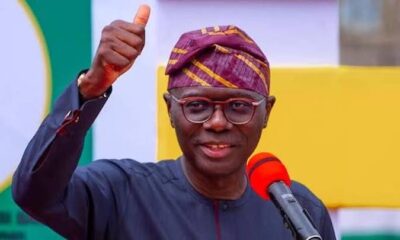

Sanwo-Olu Celebrates Prince Olusi at 90
ShareLagos State Govornor Babajide Sanwo-Olu of has described Prince Tajudeen Olusi, Chairman of the Governance Advisory Council of the Lagos...


Akwanga Set to Host Dignitaries for Spotlight Magazine Launch
ShareBy Tambaya Julius, Abuja Akwanga, Nasarawa State, is set to host prominent personalities from within and outside the state as...
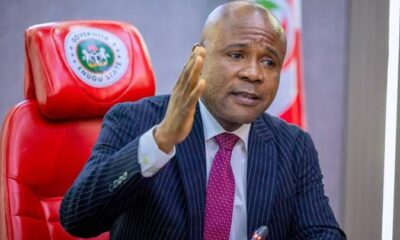

Mbah Tasks SEDC on Gas Pipeline, Support for Industrial Revolution
ShareFrom Sylvia Udegbunam, Enugu Enugu State Governor, Dr. Peter Mbah, has urged the South East Development Commission (SEDC) to prioritise...


PVCs of 2026 Registrants Not Available Yet — INEC
ShareThe Independent National Electoral Commission (INEC) said Permanent Voter Cards (PVCs) for persons who registered between Jan. 5 and July...
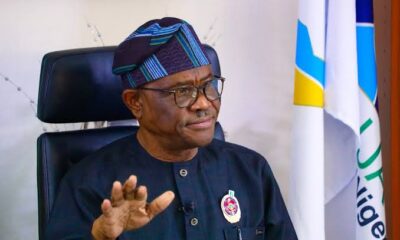

Rainbow Coalition: Wike Assures APC Governors Have Nothing to Fear
ShareBy Laide Akinboade Abuja Minister of the Federal Capital Territory (FCT), Nyesom Wike, has defended the emerging political coalition supporting...
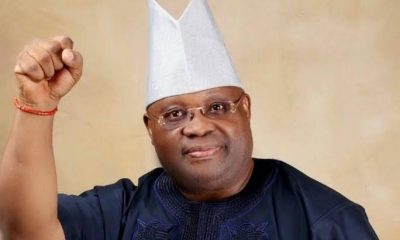

Group Welcomes Appointment of Adeleke as Tinubu’s Campaign Coordinator
ShareFrom Ayinde Akintade, Osogbo The Imole Campaign Council (TICC) has welcomed the appointment of Governor Ademola Adeleke as the Osun...


FG Raises Pensions from N12.15bn to N14.83bn for 241, 000 Retirees
ShareBy Tony Obiechina, Abuja The Director-General of the National Pension Commission (PenCom), Omolola Oloworaran, on Tuesday disclosed that more than...

Wike Accuses NLC of Politicizing FCT Teachers’ Strike
Share By Tambaya Julius, Abuja The Minister of the Federal Capital Territory (FCT), Nyesom Wike, has accused the Nigeria Labour Congress...

APC Unveils Revised 2027 Presidential Campaign Council, Retains Yari, DG
ShareBy Tambaya Julius, Abuja The All Progressives Congress (APC) has unveiled its revised Presidential Campaign Council for the 2027 general...

Tinubu’s Re-election: Don’t Allow Repeat of 2023, Tompolo Tells Lagos
ShareLeader of the PBAT Door-to-Door Movement, Government Ekpemupolo, has advised the people of Lagos State not to allow a repeat...