
Agriculture
el-Rufai Inaugurates Milk Farm Project for 1000 Households

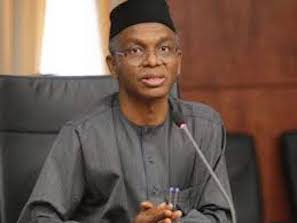
Kaduna state Governor, Nasiru El-Rufai on Friday, inaugurated a 1000 Household Milk Farm Project in Damau, Kubau Local Government Area of the state.
The governor, at the inauguration, said the project was a joint venture between the state government, Danish dairy giant Arla and Miyyetti Allah Cattle Breeders Association of Nigeria.
According to him, it will help expand national capacity to produce high quality milk and reduce over reliance on importation.
He said: “ We regard this as a pragmatic and sustainable solution to security challenges that now accompany the nomadic livestock production.
“The reserve when fully built, will have 1000 dairy farmers securing better livelihood in the five districts, with 200 households per district.
“It is with 2,800 cows per district making 14,000 across the five districts, while each livestock farmer will have 5hc of land complete with a farm house, cattle shed and irrigated land.’’
He explained that the project is designed to have other facilities including schools, police post, primary health centres, stores and market.
El-Rufai said it is a public private partnership which will provide solar power and water to the farms.
“The KDSG signed an MOU on Sept. 9, 2019 with Arla food to transform the livestock sector in the state.
“KDSG, with the support of Central Bank of Nigeria and Arla of Denmark agreed to invest in a project that will create jobs in the livestock sector to promote economic development.
“It will also help resolve security problems by demonstrating a viable alternative to the itinerant method of rearing of cattle and sheep.’’
He noted that they will infuse modern technology into the livestock production, improve yield and empower farmers and replace strife with prosperity
“The Damau farm will be open to every Kaduna State resident, also for people of any ethnicity and religion, to apply and make a living from livestock farming,’’ he said.
He said that same gesture will be replicated in all the gazetted grazing reserves in the state to eliminate nomadic livestock farming, educate the children and empower them economically in modernised diary production
“The KDSG will also offer Certificate of Occupancy to the 1,000 dairy cattle farmers for their farmland through sustainable cooperative with access to adequate water.
“While Arla food will also provide the needed commercial services and will purchase, collect, process and bring the local milk to the market
“In the near future, we envisage the emergence of yoghurt, water and livestock, cheese and meat production.’’
He commended Denmark for the investment and support and Central Bank for its single digit interest intervention fund.
In his remarks, the Kaduna State Chairman of the Miyyeti Allah Cattle Breeders Association of Nigeria (MACBAN), Haruna Usman, said it was a good initiative based on global system of grazing cattle.
Usman called on the Federal Government to replicate such projects across the 36 states to reduce crisis associated with local grazing method.
According to him, it will drastically reduce incessant conflicts and help settle herders in one community for the benefit of all.
Speaking at the event, the Ambassador of the Embassy of Denmark in Nigeria, Jesper Kamp said Nigeria has a fast growing population and the project would help the economy by creating more jobs for the people.
According to him, the development of the dairy sector will bring about positive benefit to the security situation by controlling the pastoralists while increasing food security.
He said the gesture will improve the lives of local farmers and sustainable development and growth.
He said the initiative will also improve security of lives and property, especially the age long farmer- herder conflict in the state and beyond.
According to him, the project will involve milk collection, training of local farmers, water and pasture provision.
He noted that the project will collaborate toward achieving the target of creating over 1000 thousand jobs in the next ten years.
Representative of Arla Food, Steen Hadsbjerg said the venture would engineer growth.
Mr Sabo Aminu, the Chairman of Kubau Local Government appreciated the governor for fulfilling his promise to the people of the community. (NAN)

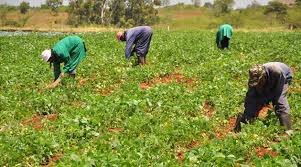
The Tomatoes Growers and Processors Association of Nigeria (TOPAN) has predicted a steady increase in the price of the produce between May and June 2026.
The Kaduna State Chairman TOPAN, Rabiu Zuntu, disclosed this in an interview recently in Lagos.
Zuntu noted that although there is no particular time for tomatoes planting season up north, seasonal weather variations can affect the production of the produce.
“Although we can plant tomatoes all-year-round, we cannot assure quality harvest all-year-round.
“Some farmers are harvesting now, while others are transplanting, and others are harvesting.
“Tomatoes are still available for sale but the price of the produce is gradually on the increase.
“Come May/June, the prices of tomatoes will be very expensive, so now is a good time to stock up the produce. There’s always a scarcity within that period.
“This is because of the nature of the weather in the north around that period, the weather is usually very hot and tomatoes cannot resist such hot temperature,” he said.
Zuntu said the price of tomatoes have started rising up in the north.
“A 50kg rafia basket of tomatoes sells from N20,000 as against N7,000 to N10,000 that was sold earlier in the year.
“While a crate of tomatoes up north is sold between N10,000 and N15,000 as against N5,000 to N6,500 sold earlier in the year.
“In most part of Kano State, where there is bumper harvest, they are rounding off their harvest. So, tomato is not that available there and most buyers have turned to where they can find it now, mostly within Kaduna State and some parts of Plateau State.
“So, that’s why the supply has decreased and the tomato supply and cost is determined by the law of demand and supply,” he said.
A 50kg basket of tomatoes in Lagos, at the moment, sells between N40,000 and N60,000 depending on the size and quality.
The Smallholder Women Farmers Organisation in Nigeria (SWOFON), Oyo State chapter, has said that the lack of irrigation facilities had become a major obstacle to dry season farming in the state.
The Chairperson of SWOFON in Oyo State, Atinuke Akinbade, said this in an interview in Ibadan on Monday.
Akinbade, who shared the experiences of women farmers in the state during the 2025 dry season, said that inadequate access to water for irrigation significantly affected the performance of many farmers during the period.
“It hindered many older farmers from participating in dry season farming and also prevented younger farmers from doing as much as they could in cultivating large acres of land,” she said.
Akinbade explained that farmers who managed to plant during the season struggled to access sufficient water to irrigate their farms, a situation worsened by the effects of climate change.
“Many farmers who depended on streams and wells to water their crops suffered major setbacks because those sources could not provide enough water for irrigation.
“Some farmers had to resort to buying water from commercial water tankers, which increased the cost of production, while at times it was even difficult to get water from the tankers,” she said.
The SWOFON chairperson warned that failure to address the problem could worsen food insecurity in the coming months.
“Even now, rainy season farming has not fully commenced because of the irregular rainfall pattern.
“This is a double burden, and if nothing is done, it may lead to serious hunger later,” she said.
Akinbade, however, acknowledged that the government had organised training for members of the association on home gardening.
She, however, said that little support was provided to address the challenges of dry season farming.
The chairman said that the home garden support package given to members consisted mainly of seedlings and one sprayer.
“They gave us two packs each of maize and pepper seeds, with six seeds in each pack, as well as one sprayer, so that we can grow food for household consumption,” she said.
Earlier, Oluwatoyin Oyedeji, SWOFON Coordinator in Oyo East, explained the severe hardship members of the organisation experienced in sourcing water for irrigation.
“Many farmers are already counting their losses because water was not available to irrigate their farms.
“Those who depended on streams and brooks were badly affected because many of them dried up, while the few that still had water had so little that farmers had to dig deeper into the ground in search of more,” Oyedeji said.
In the same vein, the Women Leader for farmers in Saki East, Musiliu Ashiru, said the absence of irrigation facilities also hampered dry season farming in her area.
According to her, many farmers still engaged in dry season farming have had to pay for water to keep their crops alive.
“Many of them buy water from the dam here to irrigate their crops. It has not been easy for them this year,” Ashiru said.
Nigeria’s agricultural sector has seen a significant surge in investment, rising 224 percent in one year amid escalating insecurity in the country.
Data from the National Bureau of Statistics (NBS) capital importation report showed that foreign direct investment (FDI) in the agric sector hit $167.
3 million in 2025, up 224 percent from $51. 7 million in 2024.On a quarter-on-quarter basis, investment into the sector surged 216 percent to $51.
2 million in the fourth quarter of 2025 from $16.2 million in the corresponding period of 2024.Prior to 2022, investments in the sector had grown consistently at an annual average of 82 percent since 2016, but then reversed in 2022 and continued to decline through 2024, before rebounding in 2025, according to BusinessDay’s analysis.
Experts in the sector attributed the surge to renewed investor interest amid favourable government policies, including importation waivers.
“The economic reforms that restored investors’ confidence and the government’s continuous support to the sector are major drivers of these investments,” said AfricanFarmer Mogaji, chief executive officer, Agbado Value-Chain Ltd
“Also, the country’s growing population always makes the industry attractive for investors, as people must eat. This increased the number of investors, domestically and foreign, who invested in the industry,” Mogaji said.
Nigeria’s agricultural industry experienced several shocks in 2025 that disrupted the food systems and hampered productivity.
High insecurity has significantly impacted farming activities in the country, with the situation intensifying in 2025, forcing many farmers to abandon their farmlands.
Prices of key inputs such as seeds, herbicides, pesticides, fertilisers, and agro machinery tripled in 2025 due to the naira devaluation and spikes in headline inflation.
The surge in production costs, combined with low food prices, eroded farmers’ ability to recover investments made during the 2025 season, leaving many with huge financial losses.
Similarly, the increasing impact of climate change on communities disrupted farming activities during the year. While no country is immune to the impacts of climate change, Nigeria is among the countries that are most vulnerable and least able to cope with the impacts of a changing climate.
The fishing industry, which is one of the sub-sectors of the agricultural industry, attracted a $5.1 million investment in 2025 from zero investments in 2024.
The sector grew by 2.92 percent in 2025 as its performance was significantly impacted by increased youth participation and rising investment in mechanised farming.



Joseph Undu Bags National Safety Personality Award in Lagos
ShareBy David Torough, Abuja Award-winning Nigerian journalist and security analyst, Joseph Saater Undu, has been shortlisted for the prestigious Safety...

FG Reaffirms Commitment to ACReSAL Project at Mid-Term Review in Kaduna
ShareBy David Torough, Abuja The Federal Ministry of Water Resources and Sanitation has reaffirmed its commitment to the successful implementation...

Mutfwang Holds Close Door with Former State Governors
ShareFrom Jude Dangwam, Jos Plateau State Governor, Caleb Mutfwang has convened a strategic meeting with former governors of the state towards addressing the security challenges bedevilling the state. The meeting held...

Lobi Stars Trim Squad to Push for Promotion
ShareThe Nigerian National League (NNL) side, Lobi Stars Football Club of Makurdi, has trimmed its squad and retained a few quality players to push for promotion to the...


Pope Criticises ‘Tyrants’ Who Spend Billions on Wars after Trump Spat
SharePope Leo has criticised leaders who spend billions on wars and said the world was “being ravaged by a handful of tyrants” in unusually forceful comments during a...


Nigerian Men Scared of Bold, Confident Women, Phyna Claims
ShareFormer Big Brother Naija winner, Josephine Otabor, popularly known as Phyna, has claimed that she is still single because Nigerian...

Residents Decry Persistent Power Outage in Abuja Community
ShareBy Raphael Atuu, Abuja Residents of Waru District in Apo, within Nigeria’s Federal Capital Territory, are raising the alarm over what they...

2027: Tinubu Meets Coordinators, Renews Plea for Unity, Rule of Law
ShareBy David Torough, Abuja President Bola Tinubu has called for unity, resilience and renewed commitment to nation-building, urging Nigerians to...

Gunmen Abduct 14 UTME Candidates in Benue Enroute Exams Centre
ShareFrom Attah Ede, Makurdi A wave of concern has trailed the ongoing Unified Tertiary Matriculation Examination (UTME) nationwide following the...


Army Honours Fallen Heroes as Brig. Gen. Braimah, Others Laid to Rest in Maiduguri
ShareFrom Muhammad Muhammad Al-amin, Maiduguri The Nigerian Army has conducted a solemn burial ceremony for Brigadier General Oseni Braimah, Captain...