
Foreign News
#EndSARS: UN Reiterates Call for ‘Maximum Restraint’ by Security Agents

Deputy Secretary-General Amina Mohammed has reiterated the UN’s call for maximum restraint in security forces’ response to the #EndSARS protests in Nigeria.
“The UN and I are following the protests in Nigeria calling for an end to human rights violations.
“I join the UN Secretary-General in stressing the importance of respect for peaceful protests and freedom of assembly, and call on the security forces to exercise maximum restraint,” she said on Twitter on Tuesday night.
The message is in response to a tweet by Afrobeat musician, Burna Boy, urging the UN to intervene shortly after security agents allegedly opened fire on protesters in Lagos.
“UN, Amina Mohammed, UN Watch, the situation in Lagos is now out of control!!!
“You guys need to intervene even though I know there’s a protocol. This is SERIOUS!!,” Burna Boy twitted.
Tuesday’s incident occurred five days after UN Secretary-General António Guterres advised security agencies not to use brute force against peaceful protesters.
Addressing newsmen through his spokesman, Mr Stephane Dujarric in New York, Guterres said he was keenly following the #EndSARS protests.
Stressing the importance of respect for peaceful protests and freedom of assembly, he urged the “security forces to exercise maximum restraint in the policing of the demonstrations.”
It is not clear those responsible for the shooting at the Lekki toll gate, where the protesters have laid siege for two weeks.
Reports say unspecified number of people were killed and injured in the shooting, which occurred at nightfall.(NAN)






The parliament in Ghana has approved a new bill criminalising homosexuality and the promotion of LGBTQ+ activities.
It proposes that identifying as lesbian, gay, bisexual, transgender or queer be punished by up to three years’ imprisonment.
The bill also introduces a “Duty to report” prohibited acts to police.Religious leaders have pressured President John Dramani Mahama, who still needs to ratify the legislation, to strengthen anti-gay laws since he came to power last year.
The ban has been sharply criticised by international organisations, including Human Rights Watch, which said it placed LGBTQ+ peoples’ lives at risk while also “encouraging citizens to surveil and denounce one another”.
Same-sex relationships have been banned in Ghana under laws dating from the British colonial era.
In an address to parliament, the bill’s sponsor Reverend John Ntim Fordjour said it would protect Ghanaian family and cultural values.
He said the new bans would make existing laws “more robust, more encompassing and more stringent in dealing with the practices of LGBTQI”.
Anyone who identifies as an “ally”, a general term for a supporter of LGBTQ+ people, could also face a prison sentence.
Exemptions were included for legal, media and healthcare professionals who report on LGBTQ+ issues or provide medical treatment or other services for gay people.
Human Rights Watch recommended the bill be abandoned in a formal submission to the constitutional and legal affairs committee scrutinising the legislation in the capital, Accra.
Ghana passed a similar bill in 2024 but it did not become law after former President Akufo-Addo failed to sign it amid legal challenges.
The current President Mahama has indicated he would support the bill’s passage, saying shortly after he took office that “I believe in the principles and values that only two genders exist – man and woman – and that marriage is between a man and a woman.”
Several African countries have cracked down on LGBTQ+ rights in recent years.
Senegal’s parliament approved similar legislation in March prescribing a maximum prison term of 10 years for sexual acts by same-sex couples and criminalising the ”promotion” of homosexuality.
Uganda introduced a death penalty for certain same-sex acts in 2023.
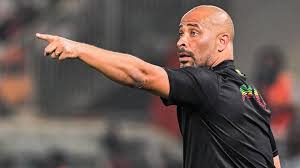
Super Eagles head coach Éric Chelle has demanded more work from his players despite the impressive victory over Zimbabwe.
Nigeria defeated the Warriors 2-0 in the semi-final of the Unity Cup at the Valley on Tuesday night.
Femi Azeez emerged the hero for the Super Eagles, scoring twice to guide the three-time African champions into the final, where they will face either Jamaica or Iran.
The 24-year-old who plays for Millwall FC in the English Championship, swiftly put the Super Eagles in the lead after only five minutes, when he finished off a great team move with a left-footed rocket that Zimbabwe goalkeeper Future Sibanda could not stop.
Alhassan Yusuf, Tochukwu Nnadi and Philip Otele all came close to increasing Nigeria’s lead afterwards.
Azeez netted his and Nigeria’s second of the night in the 62nd minute after beating Sibanda in the box following another swift team move, with Otele finding Terem Moffi who then located the Millwall man in the vital area.
Moffi also set up Azeez for the opening goal.
Chelle is expecting a better performance from his players in the final.
“This is only a friendly game. This is not the World Cup qualifier. They need to work hard,” Chelle said at his post-match interview after the game at The Valley in London.
“They need to try to understand what I want, what the technical staff want and the high level is difficult.
“So you see, we made some mistakes with the ball. For sure, you see tomorrow we will work out during training,” he said.
In Saturday’s final at the Valley, the Super Eagles will take on the winner of Wednesday’s second semi-final between last year’s runners-up Jamaica and India.

Ghana has welcomed Pope Leo XIV’s apology for the Catholic Church’s historic role in slavery, describing it as an “act of moral courage” that was important in the global pursuit of “truth, human dignity and justice”.
The Pope issued the clearest apology yet for the Church’s involvement in legitimising slavery and its delay in condemning it for centuries.
The apology was published on Monday in the Pope’s first major teaching document of his papacy, which also focused on the dangers of artificial intelligence (AI).
Ghana was a major hub for the transatlantic slave trade when millions of people were captured and loaded on to ships, never to return home.
Between the 16th and 19th Centuries, 12-15 million Africans were shipped to the Caribbean, with about two million dying during the journey.
Ghana has long been a leading efforts for compensation and apologies from Western nations for the slave trade.
The West African nation’s government said the Pope’s recognition of the painful past was an important step towards healing, reconciliation and a just society.
”[The apology] reinforces the growing global understanding that confronting historical injustices demands truth-telling and moral responsibility as essential foundations for justice and reconciliation,” its statement, released late on Tuesday, said.
The Pope’s apology was delivered in what is known as an encyclical – technically a letter to Catholic bishops, but which over recent decades have been how a pontiff passes on messages to the world.
In the papal letter – titled “Magnifica Humanitas” (“Magnificent Humanity”) – Pope Leo sincerely asked for pardon in the name of the Church, adding that it was “impossible not to feel deep sorrow when contemplating the immense suffering and humiliation endured by so many”.
Leo said Church authorities had at times responded to requests of rulers by “regulating and legitimising forms of subjugation, including the enslavement of [non-Christians]”.
He also acknowledged that earlier in the Middle Ages, ecclesiastical institutions had their own slaves.
“This constitutes a wound in Christian memory,” he said of the Church’s record.
In April, Pope Leo completed a 11-day, four-nation of Africa – his first visit to the continent as pontiff – and where he made several forthright remarks including lashing out at foreigners who exploit Africa’s wealth for profit.
Ghana said the Pope’s acknowledgment of the “painful history” was significant, at a time the world was having a “deeper reflection” on the effects of slavery and colonialism.
The country successfully pushed for a UN resolution in March, which recognised the enslavement of Africans as the “gravest crime against humanity”.
Submitted by Ghana’s President John Mahama and backed by the African Union, it aims to provide a pathway to healing and the payment of reparations.
It also seeks to address the enduring consequences of slavery like inequality and racial discrimination.
Ghana, which still has some of the forts that were used for holding captives under inhuman conditions as they waited to be shipped to the Americas by European powers, is due to host a conference in June to discuss the next steps following the adoption of the UN resolution.
On Tuesday, Human Rights Watch said the Pope’s apology marked an important step, but stressed apologies alone were not enough and that real reparative justice needed to go further.
Religious institutions, along with states and corporations that benefited from slavery, should “reckon seriously” with their histories and take part in reparative efforts, the rights group added.



2027 election: l Nwanyanwu emerges as ZLP Consensus Presidential Candidate
ShareBy Laide Akinboade, Abuja The Zenith Labour Party (ZLP) has endorsed its National Chairman, Chief Dan Nwanyanwu, as the party’s...
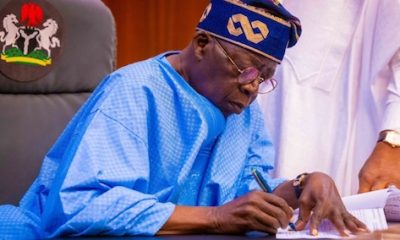

Three Years After: A Critical Evaluation of Tinubu’s Economic Reforms
ShareProf Uche Uwaleke As President Bola Ahmed Tinubu marked three years in office on May 29, 2026, Nigeria stands at a defining moment in...


Troops Neutralize Five Terrorists, Rescue 31 Kidnapped Victims in Katsina, Zamfara
ShareFrom Ifeanyichukwu Nwannah, Gusau Troops of Sector 2 Operation Fansan Yamma have rescued 31 kidnapped victims, neutralized five terrorists and dismantled several terrorists camps in a series of coordinated...
Arsenal Set Aside UCL Loss to PSG with Bus Parade Celebrating EPL Title
ShareTens of thousands of Arsenal fans put aside their pain at missing out on European glory as the club on Sunday celebrated...
Ghana’s Parliament Passes Anti-LGBTQ+ Bill
ShareThe parliament in Ghana has approved a new bill criminalising homosexuality and the promotion of LGBTQ+ activities. It proposes that identifying as lesbian, gay, bisexual, transgender or...
Kwara Community Clash Claims Two, Razes 10 Houses
ShareTwo people were killed, and about 10 houses were burnt in Ilesha Baruba, Baruten Local Government Area of Kwara State, on Saturday, after a violent clash involving an...

Declares No Faction in Nasarawa
ShareFrom Abel Zwanke, Lafia The Nasarawa State chapter of the Peoples Democratic Party (PDP) has declared that there is no faction within the party, insisting that...


Personal Loans Rise to N1.96trn in Jan 2026 – CBN
ShareBy Tony Obiechina, Abuja Personal loans granted by Nigerian banks rose to N1.96tn in January 2026, accounting for more than...


NNPC Records N481bn April Profit amid Strong Revenue Growth
ShareBy Tony Obiechina, Abuja The Nigerian National Petroleum Company Limited has recorded a significant month-on-month surge in performance, with revenue...


Oyo Abduction: Tinubu Orders Full-Scale Action After 16 Days of Agony
ShareBy David Torough, Abuja President Bola Tinubu has intensified efforts to secure the release of 46 abducted pupils and teachers...