
Featured
Enugu’s New Gaming Law Signals: A Turning Point for Nigeria’s Gaming Regulation

By Ejiofo Agada
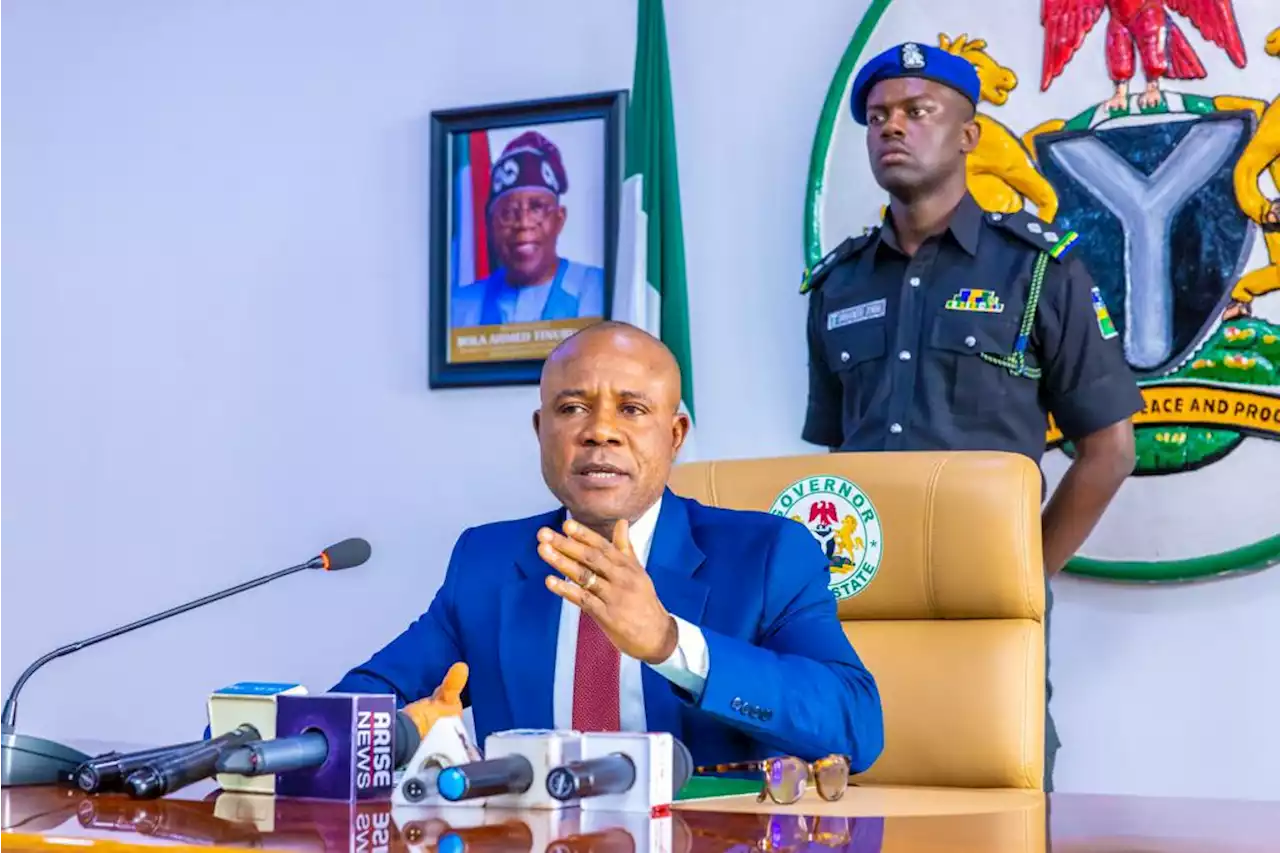
Enugu State has introduced one of the most comprehensive and forward-looking gaming regulatory frameworks in Nigeria with the enactment of its new Gaming and Lottery Commission Law. Far from a routine legislative update, the law establishes a practical, enforcement-driven system designed to address long-standing gaps in the regulation of gaming activities at subnational level.
As gaming continues to expand rapidly across Nigeria—spanning retail outlets, online platforms, and emerging digital formats—many regulatory frameworks have struggled to keep pace.
Enugu’s new law responds to this challenge by prioritizing visibility, compliance, and consumer protection, while creating room for innovation under clear regulatory oversight.One of the law’s most notable features is the introduction of a mandatory Gaming Approval Sign, which must be prominently displayed by all licensed operators. This requirement provides an immediate and visible way to distinguish licensed gaming outlets from illegal operations. For consumers, it offers a simple assurance of legitimacy. For regulators and law enforcement agencies, it simplifies identification and enforcement, reducing the ambiguity that has historically enabled illegal operators to thrive.
The law also establishes a structured Gaming Inspectorate with clearly defined statutory powers. Under this framework, designated monitoring and inspection officers are authorised to enter licensed premises, inspect gaming equipment, audit records, question suspected violators, and take enforcement action where necessary.
By granting legal immunity to inspectors acting in good faith, the law strengthens regulatory authority and ensures that enforcement is not undermined by intimidation or procedural loopholes.
Beyond compliance and enforcement, the new law places strong emphasis on social responsibility. It creates the Enugu State Gaming and Lottery Commission Charitable Trust Fund, funded primarily through unclaimed winnings and statutory good-cause contributions from licensed operators. The Trust Fund is dedicated to supporting education, health, psychological services, and other public-interest initiatives approved under the law.
This approach marks a shift in how gaming revenue is treated. Rather than relying on voluntary corporate social responsibility initiatives, the law embeds social impact directly into the regulatory framework, ensuring that gaming activities contribute measurably to community development and public welfare.
Crucially, the law is designed with the future of gaming in mind. It explicitly provides for the regulation of online and remote gaming, e-sports, virtual and augmented reality platforms, and blockchain-based gaming. By granting the Commission authority to license and regulate emerging technologies, the framework avoids the rigidity that has limited older gaming laws and positions Enugu to respond effectively to innovation without frequent legislative amendments.
The law also strengthens consumer protection through provisions on responsible gaming, data protection, underage gaming prevention, and transparent display of rules, odds, and winnings. These measures align Enugu’s framework with evolving international standards while reflecting local regulatory realities.
At a national level, the Enugu State Gaming Law enters the spotlight amid ongoing debates over the structure of gaming regulation in Nigeria, particularly the balance between federal oversight and state-level control. Enugu’s approach offers a practical model for decentralised regulation that is both robust and modern, combining visible compliance mechanisms, empowered enforcement, and structured social accountability.
In effect, the Enugu State Gaming and Lottery Commission Law goes beyond regulating gaming within the state. It establishes a benchmark for credible, transparent, and future-ready gaming regulation—one that other states, and potentially federal policymakers, may increasingly look to as Nigeria’s gaming sector continues to evolve.
By Tolu Aiyegbusi
As Artificial Intelligence (AI) continues to advance, creating highly realistic voices, faces, and even emotions, Nigerians are becoming vulnerable to scams, identity theft, and privacy violations.
Experts warn that the rapid adoption of AI technology has outpaced regulatory safeguards, leaving individuals vulnerable to digital manipulation.
At the same time, they stress that vigilance, improved digital literacy, and stronger laws can help citizens safeguard their privacy.
AI-generated deepfakes and synthetic media, once the realm of science fiction, have gradually become a powerful tool in the hands of cybercriminals.
According to global projections, deepfake files are expected to grow from approximately 500,000 in 2023 to nearly 8 million by 2025.
Fraud attempts using AI-generated content have surged more than 2,000 per cent over the last three years.
Detecting these digital replicas is extremely difficult, as humans correctly identify fake videos only 24 per cent of the time, according to studies.
Therefore, experts warn that without robust safeguards, AI could be weaponized to manipulate everything from personal finances to political narratives.
In Nigeria, where digital literacy is still developing, these threats are becoming more common.
“Identity hijacks,” in which someone’s likeness is used without their consent, are now becoming a growing concern in Nigeria.
For instance, in one notable case, Fatima Falana, a small business owner in Abuja, wired N50, 000 following a Zoom call she believed came from her former boss.
Unbeknownst to her, the call was an AI-generated deepfake that perfectly replicated her ex-boss’s voice and appearance.
Similarly, Ifeoma Jack, a Lagos-based entrepreneur, transferred N500, 000 after receiving a call from someone impersonating her brother.
“I was shaken,” she said. “I didn’t know what to do”.
These incidents reveal a global trend.
Indeed, in developed markets, surveys indicate that one in four people has received a deep fake voice call in the past year, while nearly a quarter are unsure if they can tell an AI-generated voice from a real one.
Senior citizens are more susceptible, often losing significant sums once deceived.
Moreover, in the United States, AI-related cybercrime cost an estimated $16.6 billion in 2024, marking a 33 per cent increase from 2023.
Across Africa, identity fraud has surged by 167 per cent, with Nigeria contributing a major share of these cases.
Overall, deepfakes now account for about 7 per cent of all fraud attempts, a dramatic rise from near-zero just a few years ago.
Experts say regulatory frameworks have struggled to keep pace with AI’s rapid evolution.
For example, while the EU AI Act, which came into effect in March 2026, mandates clear labeling of AI-generated content, many countries, including Nigeria, are still finalising laws to tackle these emerging threats.
In Nigeria, the National Digital Economy & E-Governance Bill, currently nearing enactment, will empower the National Information Technology Development Agency (NITDA) to shut down non-compliant platforms.
Additionally, it promotes “biometric sovereignty” by exploring blockchain-based proof of personhood protocols to ensure that digital interactions originate from real humans, not AI servers.
Until such measures are fully operational, the burden of privacy protection falls largely on individuals.
Cybersecurity experts emphasise that citizens must adopt practical measures to safeguard their identities.
In particular, families are now using ‘safe words’; or unique phrases spoken only in person to verify identities during phone calls.
Dr Aisha Mohammed, a cybersecurity expert at the University of Abuja, advised that “limit access to your personal data and be wary of suspicious calls, even from familiar voices.
“Use strong passwords, enable two-factor authentication, and keep security software updated.
“Your privacy is compromised when AI can recreate your voice, face, or identity without consent”.
Furthermore, she stressed that public education campaigns are crucial to ensuring citizens understand the evolving threats posed by AI-generated content.
Media experts warn that the impact of deepfakes extends beyond individual financial loss.
Dr James Olabode, a media studies professor at the University of Lagos, noted that the erosion of authenticity threatens public trust in information.
“If people can’t trust what they see or hear, what’s left?” he asked.
In addition, political deepfakes can fuel misinformation, inflame social tensions, and manipulate public opinion.
For instance, in 2022, a video purportedly showing a Nigerian politician making inflammatory remarks went viral, causing widespread outrage, only to be later identified as a deepfake.
Dr Samuel Adeyemi, AI researcher at the African University of Science and Technology, urged citizens to verify information before sharing it online.
“Use fact-checking tools and report any suspicious deepfake content to the authorities. Awareness and early reporting can reduce the impact of these attacks,” he said.
Legal experts stress that personal vigilance must be complemented by strong legislation.
Barrister Emeka Nwosu, a tech policy lawyer in Abuja, explained that digital “breadcrumbs”; from TikTok videos to LinkedIn photos, are being harvested by bots to create near-perfect AI replicas.
“Regulatory frameworks should mandate transparency in AI-generated content, impose penalties for malicious use, and ensure accountability from tech companies,” he said.
While AI offers efficiency and convenience, experts emphasise that citizens must cultivate a culture of digital caution.
Specifically, this includes limiting the sharing of personal information, educating families and employees about AI impersonation risks, and adopting verification measures like safe words or biometric confirmation.
Moreover, organisations handling sensitive data are urged to deploy AI-detection tools, continuously update cybersecurity protocols, and participate in public awareness campaigns.
The rise of AI-generated fakes also presents an opportunity to strengthen regulatory capacity.
Consequently, Nigeria’s government, in collaboration with cybersecurity and tech experts, is exploring national AI guidelines that will require companies to label synthetic media, implement user consent protocols, and report breaches promptly.
Experts believe that such initiatives, combined with public awareness, can reduce the frequency and impact of identity theft, online fraud, and reputational damage.
As AI continues to evolve, Nigerians are at a critical juncture.
By implementing proactive laws, fostering informed citizens, and adopting careful digital practices, the country can navigate this era without compromising privacy and security.
In the meantime, vigilance, skepticism, and strong digital literacy remain the first line of defense against the growing threat of AI-enabled fraud. (NAN)
Medical Misdiagnosis: A Silent Threat in Nigeria’s Healthcare System
By Victor Adeoti
Titiloye Aare’s near-fatal experience with a high blood pressure misdiagnosis highlights a critical flaw in Nigeria’s healthcare system, where medical errors put lives at risk and strain already limited resources.
For many patients in Nigeria, a visit to the hospital is expected to bring relief and healing.
However, growing cases of medical misdiagnosis are raising concerns among experts and patients alike, as wrong diagnoses expose individuals to dangerous treatments and life-threatening complications.
Aare recounted how a wrong diagnosis at a private hospital in February 2025 led to medication that caused her to lose consciousness and nearly cost her life.
She said she was in her shop in Osogbo when she suddenly felt dizzy and fainted while attending to a customer; she was rushed to a nearby private hospital, revived, and later diagnosed with high blood pressure.
Doctors immediately placed her on medication to lower her blood pressure.
However, in April of the same year, she experienced another dizzy spell and again lost consciousness.
She was rushed to a general hospital, where doctors discovered that the medication she had been taking had lowered her blood pressure below normal levels.
“When I asked the doctor why the medication caused me to faint, he explained that it had lowered my blood pressure below the normal range,” she said.
Doctors at the general hospital later informed her that she had been wrongly diagnosed at the first hospital.
Doctors later explained that her condition was vasovagal syncope, a medical condition caused by a sudden drop in heart rate and blood pressure, which reduces blood flow to the brain and leads to a brief loss of consciousness.
They warned that the continued use of medication prescribed to lower blood pressure could have severely reduced blood flow to her heart and brain, potentially resulting in death.
Aare’s experience reflects a growing concern about medical misdiagnosis in Nigeria.
While some patients survive to share their stories, others are not as fortunate.
Medical experts say accurate diagnosis is the foundation of effective healthcare.
When a condition is correctly identified, appropriate treatment can begin promptly, improving recovery and reducing complications.
Yet misdiagnosis—where a patient’s illness is wrongly identified or overlooked—remains a serious but often underreported problem in many parts of Nigeria.
In some cases, patients receive treatment for illnesses such as malaria or typhoid when the actual condition may be bacterial infections, viral diseases, or chronic conditions.
Misdiagnosis occurs when a healthcare professional incorrectly identifies a disease, delays its identification, or fails to detect it entirely.
This may result in wrong treatment or no treatment at all, often leading to prolonged illness, worsening conditions, unnecessary financial costs, and sometimes death.
A Consultant Paediatrician at Osun State University Teaching Hospital, Dr Funmi Adesokan, said many hospitals, particularly public ones, lacked the diagnostic equipment needed for accurate patient evaluation.
“This leads to delays in diagnosis or the inability to make a conclusive diagnosis. Public-private partnerships may help provide equipment, but improved government funding is essential,” she said.
Adesokan, however, cautioned that isolated mistakes should not define the entire healthcare system.
Similarly, a gynaecologist, Dr Nurudeen Iyanda, said many hospitals and clinics lacked modern diagnostic equipment required for accurate diagnosis.
“Many modern diagnostic tools, such as advanced laboratory equipment, imaging machines, and reliable testing facilities, are not available in many hospitals.
“Without proper equipment, healthcare providers often rely on symptoms alone, increasing the chances of error,” he said.
Dr Adeniyi Fasanu, Chairman of the Nigerian Medical Association (NMA) in Osun, said misdiagnosis is also fueled by a shortage of manpower.
“Many medical professionals have left the country due to poor remuneration and insecurity, leaving remaining doctors overworked and overstretched.
“The shortage has also created opportunities for unqualified individuals to operate medical facilities and treat unsuspecting patients.
“This is creating havoc in the health system,” he said.
Fasanu noted that the WHO recommends a doctor-to-patient ratio of 1:600, but in Nigeria one doctor may serve up to 2,500 patients.
He added that many government hospitals relied on obsolete equipment, making it difficult for doctors to practise effectively, and appealed to the government to prioritise the health sector and welfare of medical personnel.
On legal remedies, a lawyer, Mr Albert Akinwale, said victims of wrong diagnosis can seek redress in court under Nigerian law.
According to Akinwale, sections 303 and 343 of the Criminal Code provide that any act of negligence that endangers life or causes harm could attract criminal liability.
He said victims could also rely on the law of tort to claim medical negligence, breach of duty of care, and compensation for pain, suffering, and financial losses.
“Victims are protected under various provisions of Nigerian law, including the Criminal Code, Penal Code, and civil laws on negligence.
“Sections 15 and 16 of the Medical and Dental Practitioners Act provide for disciplinary procedures, including warnings, suspension, or striking off a doctor’s name from the medical register.
“The Medical and Dental Council of Nigeria (MDCN) also has the authority to discipline erring practitioners”, he said.
Akinwale urged patients who suspect misdiagnosis to seek a second medical opinion and explore legal or regulatory remedies where harm has occurred.
Public affairs analyst, Mr Olusegun Ayanda, said addressing misdiagnosis required coordinated efforts from government, healthcare institutions, and medical professionals.
Ayanda stressed the need for improved diagnostic infrastructure, investment in modern laboratories and equipment, continuous professional development programmes for healthcare workers, and recruitment of more professionals to reduce patient-to-doctor ratios.
Similarly, the Chief Medical Director of the Obafemi Awolowo University Teaching Hospital Complex (OAUTHC), Ile-Ife, called on the Federal Government to increase funding for the healthcare sector and improve the availability of modern medical equipment.
Okeniyi said the sector had long suffered from inadequate funding, resulting in limited resources for upgrading equipment, purchasing new medical supplies, and maintaining existing infrastructure.
According to him, the healthcare system requires adequate supplies, improved infrastructure, and a comprehensive overhaul of the remuneration structure for health personnel to align with global best practices.
The CMD noted that if indeed “health is wealth,” the country must invest more in the sector and implement mandatory continuous professional development programmes for healthcare workers to keep them updated with the latest medical knowledge and best practices.
Medical experts say misdiagnosis has consequences beyond individual patients. Families may spend significant sums on treatments that fail to address the actual illness.
Although misdiagnosis is a serious challenge, experts say it can be reduced through investment in medical infrastructure, improved training, stronger healthcare policies, and increased public awareness.
Obtaining an accurate diagnosis, as experts emphasise, is vital for effective treatment; it builds public confidence in Nigeria’s healthcare system and ensures citizens remain safe and healthy. (NAN)

TOP10 MAGAZINE NAMES DANU AS 2025 MAN OF THE YEAR
Nasiru Danu, OFR, Chairman of Casiva Limited and founder of NHD Foundation, has been named as
The Top10 Magazine’s Man of the Year 2025. He emerged from among many other distinguished personalities in a multi-stage rigorous selection and screening process.
In a letter conveying Alhaji Danu’s selection as the Man of the Year 2025, the Board of Editors of the Magazine said it was in recognition of his milestone accomplishments in the business world as well as his philanthropic gestures of touching lives in different ways. These, the givers of the award said, clearly stand him out not only as a father of compassion, but Nigeria’s philanthropic leader of the year 2025.
“We consider your successful journey in the business world and your record of service to humanity as a clear demonstration of your ranking as a great leader of excellence worthy of commendation, hence the decision of our management to accord you this special recognition as the Top10 Magazine’s Man of the Year 2025,” the letter said.
In his latest demonstration of philanthropy, Danu, the Sardaunan Dutse, in May 2025, extended his good deeds to the Jama’atu Izalatil Bid’ah Wa’iqamatis Sunnah (JIBWIS) Islamic Centre as he commissioned a N150 million project at the Centre in Abuja. The project is a furnished 11-room building that will serve as the Imam’s residence at the Islamic Centre in the Guzape area of Abuja. It was named in memory of his late father, Haladu Danu.
The Top10 Magazine is a monthly publication established in 2016 as a platform to celebrate excellence and people of excellence from all human endeavours.
The Top10 Man of the Year Award was also instituted the same year as an annual award by the magazine to recognize and honour one outstanding personality in a given year that has recorded landmark accomplishments in the Nigerian society.
This year’s recipient, Alhaji Danu, a man of untainted character and impeccable reputation, is renowned for his unwavering commitment to success. The Chairman and CEO of Casiva Limited consistently strikes gold in every venture he undertakes and has since solidified his status as a true titan of the oil and gas industry who navigates its complexities with the expertise derived from years of experience. Apart from his involvement in philanthropy and Casiva Limited, Alh. Danu is also involved in other organizations. This includes NHD Interbiz Projects Limited, a construction and civil engineering company, Chairman, Yenagoa Polo Club, Chairman, Nigerian Army Polo Resort, reflecting his diverse interests, member Board of Trustee Nigerian Army Polo, Chairman, NHD Farms Ltd, Chairman, Lubrik Construction Company.
Mr. Tony Iji, Publisher/Editor-In-Chief of The Top10 Magazine, said the award will be presented to Alhaji Danu at The Top10 Magazine’s Annual Excellence Awards night slated for December 7, 2025 which will be graced by crème de la crème of the society.
To mark this high-profile event, the magazine is putting together a special award edition to celebrate him and other awardees. The edition will chronicle in detail all his milestone accomplishments as an industry leader, philanthropist as well as his career and personal antecedents.
By Prosper Okoye, Abuja
The Anambra State Governor, Prof. Chukwuma Soludo, has said that the governors in the South Eastern states are collaborating to put an end to the proscribed Indigenous People of Biafra’s Sit-at-home order.
“Once we put in place the vigilante in the community, we are going to focus on opening up Anambra and ending the sit-at-home once and for all.
Because what had happened is that there are seven people pursuing a cow, but there are eight people chasing after those pursuing the cow, but now I think the reverse is becoming the case,” Soludo added in an Igbo proverb during a recent town hall meeting in Abuja.The Sit-at-home order is enforced throughout the southeastern states on Mondays, the 30th of May every year, and every other day that the leader of the IPOB, Nnamdi Kanu, is taken to court.
“Even though there are no killings in my area in Anambra, the news of the killings in other parts of the east makes people comply with the Monday sit-at-home order. People don’t open their shops in the big markets, and on the express, people don’t move freely. But in the inside areas, shops open, and people move about watching their backs,” a resident in Anambra, Ada, told DAILY ASSET.
Although the leader of the outlawed group, Emma Powerful, has denied IPOB’s role in enforcing the Monday’s sit-at-home order, and other violence in a recent media statement, the unknown gunmen still enforcing the order are tied to the group’s fighting arm, the Eastern Security Network.
However, DAILY ASSET learned that the “Unknown gunmen” are allegedly led by Asari Dokubo.
“Under former President Muhammadu Buhari, Nigeria’s Southeast region, once the most peaceful, suddenly exploded in a wave of inexplicable violence. Prisons, police stations, court houses, electoral commission offices, and random public establishments were attacked and razed by armed gangs. Individuals were kidnapped, hacked to death, or gunned down in broad daylight by hooded men who escaped without a trace. Dr. Chike Akunyili, husband of Late Prof Dora Akunyili, one-time Minister of Information and DG of NAFDAC, was gruesomely murdered by these men in an attack with no obvious aim other than to instill public fear. Many went missing and were never found, and gloom descended on the peoples of five states best known for their industry and enterprise.
“For years, not a single one of those crimes was solved, and not a single culprit was successfully apprehended and prosecuted by law enforcement operatives. Officially, fingers were promptly pointed at IPOB, the Biafra separatist organization, for every incident – sometimes even before investigations formally opened. IPOB vehemently denied these accusations, but government propaganda was too strong. Many soon believed the government and joined in demonizing IPOB for mindlessly turning the region into a war front. Gradually, though, everyone began to realize that there was something fishy in the official position.
“Federal and state authorities had all the means to nab the gangsters but preferred to issue increasingly sterile press statements instead. It soon became clear that the armed forces, police, and other official security agencies were either in cahoots with the criminals or consciously turning a blind eye to their activities. In villages across the Southeast and North Central regions, locals began to notice that whenever the Army and Police showed up for patrols, Unknown Gunmen or armed “herdsmen” followed shortly afterwards. It was as if the patrols were surveillance missions for the bad guys. So, villagers took the hint and scampered for safety whenever those who were supposed to protect them reported for duty. It was even law enforcement officials who coined the moniker, “Unknown Gunmen” (UGM) to describe criminal elements they were paid to hunt down.
“People with experience in security matters soon concluded that Nigeria was dealing with “false flag operations” – crimes deliberately committed (in this instance by secret agents of the state) to incriminate an innocent party to achieve some dark political objectives. The problem was: There was no concrete evidence or proof to show the world. Those who were supposed to gather evidence were busy covering the tracks of the criminals.
“Well, that mystery lasted until Asari Dokubo, the voluptuous and loquacious Niger Delta warlord, visited the Presidential Villa in Abuja as a guest of the new Nigerian leader, Bola Tinubu, only two weeks after the latter’s inauguration. At the end of his visit, Dokubo addressed a press conference from one of the chambers of the villa, a rare privilege accorded only to close allies of an administration.
“Unable to control his impulses whenever in front of cameras and microphones, Asari said several things that have since become subjects of controversy. One of the few which almost evaded public scrutiny holds the key to the mystery of the Unknown Gunmen. He said he was “in charge of security in six states of the federation,” and his boys were responsible for some of the successes in the security situation of the country for which the Armed forces often get credit.
“To add color to this sketchy claim, he recounted an actual operational experience in these words: “… my men and I discovered a camp in Imo with hundreds of vehicles. Where are the owners? If you want me to show you pictures, I will show you. We discovered their camp, kicked their asses, and sent them to where they belong.”
“For the avoidance of doubt, Dokubo boasted: “I am a participant in this war. I fight on the side of the government of the Nigerian state; in Plateau, in Niger, in Anambra, in Imo, in Abia, and in Rivers state and in Abuja. Today you’re traveling to Kaduna on this road, it’s not the army that makes it possible for you to travel to Abuja, or travel to Kaduna, vice versa. It is my men, employed by the government of the Nigerian state, stationed in Niger.”
“In those words, Asari Dokubo blew his own cover. He owned up to working in an undercover capacity or as a non-state actor in a sector which belongs exclusively to the Federal Government. He owned up to extra-judicial killings. He mentioned specific theaters of operation – Imo State and the Abuja-Kaduna highway. He named those who hired and paid him – “the government of the Nigerian state.” It was like a painter framing his masterpiece.
“Three of those states named by Asari Dokubo (Anambra, Imo & Abia) are in the Southeast. Two others and the Federal Capital Territory (Niger, Plateau, and Abuja) are in the Middle Belt. Another state (Rivers) is in the South-South. All named territories have one thing in common in the last few years – random, unsolved killings and attacks on members of the opposition, rural farming communities, and government facilities. Anambra, Imo, and Abia were the epicenter of unknown gunmen activities in the period leading up to the last elections. Niger and Plateau were the main theaters of operation for the so-called “Fulani herdsmen.” Kuje Prison within the FCT was attacked, and inmates set free.
“So, what exactly was Asari Dokubo’s “security brief” in a region (the Southeast) where Army and Police checkpoints adorn nearly every hundred meters of the highway? What was he doing in a state (Imo) where a special military task force was assigned to “crush” separatist agitations? What was he paid to do for a country that boasts about a dozen security agencies with hefty yearly federal appropriations? More still, what “contract” is Asari desperately lobbying to retain with the new administration of President Bola Tinubu, for which reason he broke all protocols of civility to support the Tinubu candidacy and gain his attention before and during the last elections? Why has he been so vociferous with his anti-Igbo rhetoric in courting the Tinubu camp – knowing that Igbophobia is one of the favorite weapons of the APC in its struggle to retain power after the failed Buhari years?
“If you read between the lines and fill in the blank spaces, all the fingers point in one direction – Asari Dokubo is the man behind the mask of Unknown Gunmen. He was recruited and paid by the Buhari Administration, working closely with the Imo State Governor (Hope Uzodimma), to help deal with the threat of Biafra in Southeast Nigeria by unconventional means. Asari Dokubo, in turn, recruited, coordinated, and paid the men who carried out all those killings and criminal activities to blackmail IPOB and ESN. Plus, at least some of the mysterious attacks on villagers and facilities in the Middle Belt region.
“That’s what he meant when he boldly said, “I am a participant in this war.”
The trouble with people who talk too much is that they ultimately talk themselves into trouble. Asari Dokubo has now talked himself into deep trouble – beyond being broke. Not only has he antagonized the armed forces, which he was recruited to “help,” he has also given away the identity of the evil masquerade terrorizing the neighborhood.
“In trying so hard to corner the next “security contract” after squandering what he was earlier paid for hatchet jobs under President Buhari, Melford Asari Dokubo Goodhead has given away his own secret position. He is like a drunken and unprofessional sniper who uses his weapon indiscriminately. His enemies can see clearly where the deadly shots are coming from. His position in the bushes is no longer a mystery. The sniper himself is now a sitting duck. It’s only a matter of time before he too is sniped. That’s the way the cookie crumbles,” the source noted.
Meanwhile, the Enugu State governor, Peter Mbah, has been making efforts to stop the sit-at-home order enforced in the state. This includes the threat to sanction business owners that comply with the order by closing down their businesses and calls to arrest Emma powerful.
Military Victories:
Furthermore, the military has recently announced that some IPOB fighters were killed in Delta state, while others were arrested, and arms were recovered. This announcement sparked numerous comments on social media, with most questioning the truthfulness of the report, including a tweet by Emma Powerful dismissing the report as mere propaganda against the IPOB.



NPERA Deepens Transparency, Accountability in Port Sector
ShareBy David Torough, Abuja The Nigerian Ports Economic Regulatory Agency (NPERA), has reiterated its commitment to transparency, accountability and responsible...
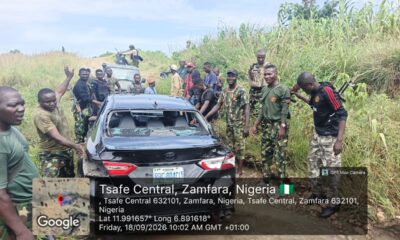

Troops Rescue Wounded Civilians, Recover 117 Cows, Stolen Vehicle in Zamfara
ShareBy David Torough, Abuja Troops of Sector 2, Operation FANSAN YAMMA, have recorded a series of operational successes in Zamfara...

Minister Warns Envoys against Unguarded Comments Ahead 2027 Elections
ShareThe Minister of Foreign Affairs, Ambassador Bianca Odumegwu-Ojukwu, has warned foreign diplomatic missions against making unguarded comments, disparaging remarks or...

Shettima Holds Northern Governors in High Regard, Aide Clarifies
ShareSenior Special Assistant to the President on Media and Communications, Stanley Nkwocha, said Vice President Kashim Shettima holds northern governors...

World Bank Mobilises $112bn Private Capital in FY26
ShareThe World Bank Group said it mobilised a record 112 billion dollars in private capital in fiscal year (FY) 2026,...

Oluremi Welcomes FOPSHAN’s Endorsement of Tinubu for Second Term
ShareThe First Lady, Sen. Oluremi Tinubu on Thursday in Abuja, welcomed the endorsement of the President for a second term...


Why APC Govs Oppose Wike — Tinubu’s Ex-spokesman
ShareA former South-East spokesman to President Bola Tinubu, Denge Onoh, has attributed the growing face-off between the Minister of the...
Nigeria, State Capture and the Implications on 2027 Elections
ShareBy Uche Igwe An interesting trend is going on in Nigeria in the name of democracy. Many observers have noticed...

Wike, His Rainbow Coalition and the Politically Lazy Governors
ShareBy Hajia Hadiza Mohammed Nyesome Wike, the current Minister of the Federal Capital Territory (FCT) will go down in Nigeria...


2027: INEC Appeals for Peaceful Conduct, Promises Neutrality
ShareThe Independent National Electoral Commission (INEC) has appealed to political parties, candidates and voters to ensure peaceful conduct before, during...