
NEWS
Ex-IYC President Attributes Rise in Human Trafficking, Drug Abuse to Poverty, Others


From Mike Tayese, Yenagoa
A former President of the umbrella body of the Ijaw Youths Council (IYC) and Chieftain of the All Progressives Congress (APC), in Delta State, Dr. Chris Ekiyor has identified poverty, the hunger for quick alliance and lack of accountable government as reasons for the worrisome increase in cases of human trafficking, drug abuse and Gender based violence in the country.
Ekiyor, who made this known on Monday in Yenagoa during the the maiden edition of Association of Women Against Gender Based Violence (AWAGBV) Teenage Summit with the theme ” Raising Teenage Ambassadors against Human Traffickers and propagators of domestic violence”, said lot of desperation among this young one to find a part way to quick living by wanting to travel abroad at the risk of their lives and get involved in drug abuse, prostitution, drug trafficking has spiked the dangerous living in the society. Ekiyor, who hold Ph.D in Public Health and served as a former Patani local government council, however called on women groups and female politicians to consistently served as mentor to the girl and boy child and shape their mind against social vices that will destroy their future.The head of Public Enlightenment for the State command of the National Agency for the Prohibition of Trafficking in Persons (NAPTIP), Wariebi Sambo, while reading the key note address from the former Director-General of the Agency, Dame Julie Okah-Donli,noted that for human trafficking to take place, there must be three basic elements, the act, the means and the purpose.According to him, “The act is the recruitment stage where someone comes to the neighborhood with an enticing word, flashy cars, looking for prey. That is the recruitment stage coming to people with convincing words”.He said the second aspect of it is the means which is by deception and for what purpose? We also have internal and external traffickers.Traffickers are not written in the face, it could be anybody that is why NAPTIP is telling the people to speak up when they see the Red Flag.””When somebody comes to you to say I want to take you abroad but tell you don’t tell anybody, is a red flag. And because of this African belief that virtually everybody is a witch so that they will not disrupt the movement is a trick used by traffickers, they tell the victims to take an oath which we call a control mechanism. When you see all these things, the best thing is to report that is why NAPTIP is there for you”.In her welcome address, the President of the Association of Women Against Gender Based Violence (AWAGBV) Barr Dise ogbise Goddy Harry said, Gender Based violence, human trafficking and drug abuse has become a threat to human existence and dangerous to the safety of the society if it is not urgently nip in the bud.She pointed out that summit organised by the group AWAGBV, is to further create awareness against issues of gender based violence, human trafficking and drug abuse, “we are here to hear from professionals who knows there business in human trafficking, the business of gender based violence with wonderful panelists to deal with the issues on how we can chart a way forward”.
The police command in Bauchi State, said it has apprehended a housewife over alleged killing of her co-wife following a domestic violence incident in Bauchi metropolis.
This was contained in a statement by the spokesman of the command, SP Nafiu Habib, on Monday in Bauchi.
He said that the command detained the suspect (name withheld) on Sept.
27 for alleged culpable homicide following a domestic incident at Tafawa Balewa Housing Estate in Bauchi.Habib said that on Sept. 27, at about 4:05 p.m., the Police C-Division, Bauchi, received credible information that there was a domestic incident between two wives residing in the same household belonging to their husband.
He said that preliminary investigation revealed that the 33-year-old suspect, who is the second wife, allegedly acting under hallucinations, struck the first wife with pestle on the forehead, and the victim fell unconscious.
“Upon receipt of the report, detectives attached to C-Division immediately mobilised to the scene.
“The scene was documented, and the victim was rushed to the Specialist Hospital, Bauchi, where she was certified dead by a medical doctor. The corpse has been deposited at the hospital mortuary for autopsy,” he said.
Habib said that the police recovered the pestle used in committing the offence.
He quoted the Commissioner of Police, Sani-Omolori Aliyu, as directing the transfer of the case to the State Criminal Investigation Department (SCID) for discreet investigation and prosecution.
Aliyu condoled with the bereaved family and cautioned against domestic violence.
The CP also advised husbands to seek timely medical and psycho-social support for members of their families exhibiting mental health challenges. (NAN)
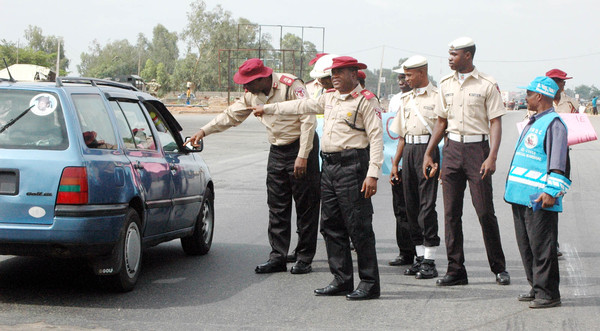
The Federal Road Safety Corps (FRSC) has deployed more than 170 ambulances across the country as part of efforts to strengthen emergency response and rescue operations on Nigerian roads.
The Corps Public Education Officer (CPEO), Osondu Ohaeri, disclosed this on Monday in Abuja, while responding to questions on the operational capacity of the corps emergency ambulance network and its response to Road Traffic Crashes (RTCs).
Ohaeri said the FRSC had the largest number of ambulances among emergency response agencies in Nigeria, with more than 170 ambulances and 60 Zebra points across the country.
He said the figure should however not be interpreted as the number of ambulances currently operational or serviceable as of September 2026.
According to him, an accurate current figure of serviceable ambulances will require the latest fleet-status report from the corps medical and rescue office.
He explained that the figures demonstrated the scale of the corps emergency response network, while the availability of individual ambulances was managed operationally based on their location, condition and assignment.
On the adequacy of the ambulances for emergency rescue, he said the corps continued to maintain and deploy its assets as part of its emergency response responsibilities, stressing that the status of individual vehicles could vary depending on their operational condition and assignment.
The CPEO said the corps was also focused on improving its emergency response capacity, particularly by strengthening rescue deployment and collaboration with other relevant agencies.
He also said that the corps had historically recorded an average response time of about 15 minutes under its documented emergency-response programme.
He cautioned against presenting the figure as the current nationwide average without updated operational data.
According to him, response time varies depending on several factors including the location of a crash, traffic congestion, distance from the nearest ambulance point and accessibility of the crash scene.
He added that the accuracy and timeliness of information provided by callers could also affect the speed with which rescue teams reached crash scenes.
Other factors he said include the possibility of emergency teams responding to other incidents simultaneously.
Ohaeri stressed that the corps had identified faster response to road traffic crashes and other emergencies as one of its management priorities in 2026.
He said efforts were therefore ongoing to strengthen rescue deployment and inter-agency collaboration to improve emergency response to road crashes.
He added that the FRSC remained committed to improving emergency rescue operations, strengthening the deployment of its resources and working with relevant stakeholders to ensure better outcomes for road crash victims.
He reiterated that complaints concerning emergency response, evacuation, treatment of victims or other forms of alleged misconduct should be channeled through the appropriate authorities for investigation and necessary action.
The CPEO further assured that the corps would continue to strengthen its emergency response mechanisms as part of broader efforts to reduce the consequences of road traffic crashes and improve the safety of road users nationwide.(NAN)

The Nigerian Bar Association (NBA) has decried the spate of security challenges currently confronting Plateau and other parts of Nigeria.
The Chairman of Jos Branch of the association, Morgan Dung, said this during a joint news conference on Monday in Jos.
Dung spoke on behalf of the Jos, Bukuru and Pankshin branches of the association.
The chairman particularly decried the recent attacks and killings in Mangu, Barkin-Ladi, Riyom, Bokkos, Bassa, Wase and Kanam Local Government Areas (LGAs) of the state.
Dung, who described the continuous killings of innocent residents as “unfortunate and unacceptable”, called on the Federal Government and the security agencies to tackle the menace.
“The protection of lives and property remain the most fundamental responsibility of government as contained in section 33 of the 1999 Constitution as amended.
“NBA frowns at the inability of the government to prevent the continuous loss of lives and property in Plateau and beyond.
“We particularly condemn the recent killing of members of community vigilantes at their duty posts in Mangu, Barkin-Ladi, Riyom, Bokkos and Bassa LGAs
“We call on the government and security agencies to bring the perpetrators to book. This menace must also stop,”he said.
Dung, however, commended president Bola Tinubu over his recent visit to Plateau and the move to establish State Police in the country.
He further called on the government to sponsor an executive bill to fully domicile security issues under the concurrent legislative list.
Dung urged the government to properly and adequately equip security agencies, strengthen border surveillance and secure all forests serving as hideouts for bandits and other criminal elements.
The chairman also commended Gov. Caleb Mutfwang for revamping Operation Rainbow, a state-owned security outfit and training of 2,000 personnel of the neighbourhoods watch.
He, however, called for the licensing of Operation Rainbow to operate with kinetic facilities, implement the anti-land grabbing law and provide structures for police division and forward operation bases in the state.
Dung advised security agencies to deploy more personnel and equipment to flashpoints in the state, insisting that such a move would ensure prompt response to threats.
The chairman, who called on the judiciary to ensure timely dispensation of terrorism cases, advised governors to sign death warrants of convicted terrorists to serve as a deterrent to others.
He pledged NBA’s readiness to promote access to justice, document evidence of atrocities and pursue public interest litigation to ensure accountability (NAN)




Police Detain Woman for Alleged Killing of Co-wife in Bauchi
ShareThe police command in Bauchi State, said it has apprehended a housewife over alleged killing of her co-wife following a...

FRSC Deploys 170 Ambulances Nationwide for Emergency Rescue
ShareThe Federal Road Safety Corps (FRSC) has deployed more than 170 ambulances across the country as part of efforts to...

NBA Decries Rising Insecurity in Plateau, Urges Urgent Action
ShareThe Nigerian Bar Association (NBA) has decried the spate of security challenges currently confronting Plateau and other parts of Nigeria....


Benue Begins Compilation of Out-of-school Children
ShareThe Benue Government has begun compilation of out-of-school children as part of efforts to improve child protection and access to...
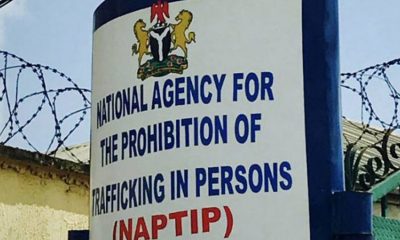

NAPTIP Uncovers Suspected Baby Trafficking Ring in C’River
ShareThe National Agency for the Prohibition of Trafficking in Persons (NAPTIP) has uncovered an alleged child trafficking operation involving newborn...


Kaduna Pensioners Applaud Uba Sani over N3.65bn Gratuity, Death Benefits
ShareThe Kaduna State Chapter of the Nigeria Union of Pensioners (NUP) has commended Gov. Uba Sani for approving N3.65 billion...


FG Calls for Urgent Action to Protect Nigeria’s Rivers
ShareThe Federal Government has called for integrated management of Nigeria’s rivers, forests, wetlands and watersheds to safeguard water resources, public...

FCCPC Calls for Improved Capacity Building on Competition Reporting, Matters
ShareThe Federal Competition and Consumer Protection Commission (FCCPC) says there is a need for sustained capacity building in competition reporting...

Fire Guts Customs Western Marine Command Office in Lagos
ShareFire gutted the Nigeria Customs Service (NCS) Western Marine Command office in Apapa, Lagos, on Monday, destroying property worth millions...


Fuel Price Hike Reduces Sales, Increases Cost of Doing Business — Traders
ShareSome traders in the Federal Capital Territory (FCT) have expressed concern over the impact of the recent fuel price increase...