
BUSINESS
Excise Duty on Tobacco, Alcohol Can Boost Nigeria’s Revenue by N600bn – World BankBy


Tony Obiechina, Abuja
The World Bank has said that Nigeria can grow its revenue significantly and generate N600bn annually by increasing the excise duties on tobacco and alcohol as recommended in the National Development Update report.
A Senior Tax Specialist of the bank, Rajul Awasthi disclosed this on Thursday at a virtual discussion on domestic revenue mobilisation.
Awasthi stated that Nigeria has one of the lowest excise duty rate on tobacco and alcohol in Africa, adding that Nigeria’s duty rate on cigarettes is lower than the standard set by the Economic Community of West African States.
He therefore advised the Federal Government to either adopt the excise standards for tobacco and alcohol recommended by the ECOWAS or Kenya to boost the country’s revenue from tax.
He added that this kind of tax increase will not impact the majority of the population or low income earners bbut improve the ease of tax compliance monitoring.
“On excise, what we see is that Nigeria has one of the lowest excise rates on alcohol and cigarettes, on cigarettes, they are even lower on the ECOWAS target.
“ So if Nigeria were to adopt the same rate of excise duty that Kenya has adopted, they can raise significant amount of revenue. Similarly, if they are to adopt EOWAS, standard, that will also raise the revue significantly, what is more important is that this two sources will not impinge on consumption growth, in fact these harm goods, so taxing them is actually good from the health perspective.
“Excises on tobacco and alcohol, do not impact the vast majority of people and compliance can be monitored much more easily by the compliance agencies. If the measures outlined in our report are implemented, these excise duty on tobacco and alcohol can raise more that 600bn naira a year.”
He further advised the FG to embrace tax policies that doesn’t endanger investments, jobs or the growth of the economy.









By David Torough, Abuja
Fuel prices across Nigeria have surged close to the N1,000 per litre mark, triggering concern among motorists and businesses, as regulators attribute the development to market forces while energy experts warn that global tensions could push prices even higher.
The Nigerian Midstream and Downstream Petroleum Regulatory Authority (NMDPRA) said fluctuations in the pump price of Premium Motor Spirit (PMS), popularly known as petrol, were the result of supply and demand dynamics under the country’s fully deregulated downstream petroleum sector.
Speaking in Abuja, the authority’s spokesperson, George Ene-Ita, said variations in fuel prices across retail outlets were not due to regulatory interference but reflected prevailing market conditions.
According to him, Nigeria has been operating a fully deregulated petroleum products market since the inception of the current administration, allowing market forces to determine pricing.
“Pump price vagaries are purely as a result of market dynamics,” Ene-Ita said, adding that deregulation was designed to encourage competition, efficiency and increased investment in the downstream oil and gas sector.
Across several cities, petrol prices have risen sharply in recent days. While the product previously sold between about N875 and N880 per litre in some locations, independent marketers now sell it for between N960 and N1,000 per litre or more. Stations operated by the Nigerian National Petroleum Company Limited (NNPC Ltd.) have also adjusted prices to around N960 per litre in many outlets.
In Lagos, checks showed prices ranging between about N1,005 and N1,040 per litre at different filling stations, with motorists scrambling to secure supplies amid fears of further increases.
Energy experts say the rising prices are largely driven by developments in the global oil market, particularly the recent surge in crude oil prices linked to geopolitical tensions in the Middle East.
The Chief Executive Officer of the Centre for the Promotion of Private Enterprise, Dr Muda Yusuf, said the cost of crude oil remains the most critical factor influencing petrol prices.
He explained that global crude prices had jumped from about 65 dollars per barrel to nearly 92 dollars within a short period, raising the cost of refined petroleum products worldwide.
Yusuf noted that even domestic refineries were affected because crude oil used for refining was typically priced at international market benchmarks.
He added that although the Dangote Refinery is located in Nigeria, a significant portion of the crude it processes is sourced externally, making it vulnerable to global price volatility.
“About 70 per cent or more of the crude used by the refinery is sourced externally,” he said.
Despite the rising prices, Yusuf said the refinery had improved Nigeria’s energy security by stabilising supply and reducing the likelihood of the fuel shortages and long queues that once plagued the country.
“If we did not have the Dangote Refinery, the situation would likely have been much worse. Petrol could be selling for about N1,500 per litre or more,” he said.
Similarly, energy policy expert Prof. Ken Ife said Africa’s heavy dependence on imported petroleum products continued to expose the continent to global price shocks.
He said Nigeria currently had about 445,000 barrels of crude allocated for domestic refining but stressed that local refineries still required more consistent crude supply to operate at optimal capacity.
The National President of the Petroleum Products Retail Outlets Owners Association of Nigeria (PETROAN), Dr Billy Gillis-Harry, also warned that escalating tensions around the strategic Strait of Hormuz were pushing global petroleum prices upward.
He explained that the maritime corridor accounts for nearly 30 per cent of global crude shipments and that persistent attacks and hostilities in the region pose significant risks to global energy supply chains.
According to him, before the crisis escalated petrol sold at about N774 per litre, but prices have since climbed to between N950 and N970 per litre, while diesel has risen sharply from about N950 to nearly N1,400 per litre.
He warned that if geopolitical tensions persist, petrol prices could approach N1,500 per litre while diesel may exceed N2,000 per litre, with severe implications for transportation, manufacturing and inflation.
Economic analyst Dr Chijioke Ekechukwu urged the Federal Government to mitigate the impact by supplying crude oil to local refineries at subsidised rates.
He said such a policy would allow refineries to produce and sell petroleum products locally at relatively stable prices while the country continues exporting crude oil at international market rates.
Ekechukwu also called for stricter enforcement of domestic crude supply obligations and tighter border controls to curb the smuggling of refined petroleum products to neighbouring countries.
According to him, strengthening local refining and safeguarding domestic supply will help shield Nigerian consumers from sudden price shocks in the global energy market.
Experts agree that until global oil prices stabilise and geopolitical tensions ease, Nigerians may have to contend with continued volatility in fuel prices.

PalmPay, a financial technology company, says it will bridge the gender gap in tech through a three-day digital finance and technology training programme for young Women.
This was part of activities to commemorate the International Women’s Day (IWD) 2026.
The company, in a statement on Tuesday in Lagos, said the initiative, tagged “Purple Woman 3.
0”, was designed to equip women with practical and job-ready skills needed to thrive in the digital economy.PalmPay noted that the training, scheduled to hold from March 5 to March 7, would bring together 100 selected women aged between 18 and 30 through a competitive application process.
It explained that participants would undergo intensive, hands-on training in digital finance and technology, facilitated by industry experts, to enhance their employability and career prospects.
According to the company, the programme aligns with the theme of International Women’s Day 2026, which focuses on the need to empower women through access to skills and opportunities.
PalmPay, since its launch in 2024 and through the Purple Woman initiative, had trained 150 women in key areas such as Data Analysis, Software Engineering and Product Management.
It noted that outstanding participants in the 2026 edition would also have the opportunity to secure internship placements with the company for practical industry experience.
The firm reiterated its commitment to supporting women’s inclusion in technology through continuous capacity-building programmes.
Smart Cash Payment Service Bank says it is removing transaction charges and paying competitive interest on savings to address the cost barriers that keep some Nigerians outside the formal financial system.
At the media launch of its zero-transaction-charge and daily interest payments on savings service in Lagos on Tuesday, the bank said the move is a practical step toward easing the financial pressure on low-income earners, traders and small business owners.
According to the bank, the service, tagged “No Be Cho Cho Cho”, signals a shift from promises to practical action under the regulatory framework of the Central Bank of Nigeria (CBN).
Its Managing Director, Ayotunde Kuponiyi, explained that millions of small traders and micro businesses still operate outside the banking system, often because of cost and trust concerns.
He said removing transaction fees was one way to lower the entry barrier and encourage wider participation in the digital economy.
Kuponiyi said, “For many small traders, those small charges matter. They may look insignificant, but over a month they reduce income. By removing them, we are saying your money should work for you, not against you.
“Financial inclusion is about real people; the woman selling in the market, the artisan, the small business owner. When they can save securely and move money freely, they grow their businesses and create jobs.
“This is not a short-term campaign. It is part of our long-term commitment to make digital banking accessible and affordable.”
He added that the bank’s savings product pays interest daily and does not penalise customers for frequent withdrawals, a feature he said was designed with informal earners in mind.
Ada Uba, Head of Legal and Company Secretary of Smart Cash, said the bank, a subsidiary of Airtel Nigeria, received its payment service banking licence in 2022 and had since focused on expanding access to simple and affordable financial services.
She said the new campaign was designed to help more Nigerians connect to formal banking without feeling burdened by routine charges.
Also, Head of Product and Partnerships, Oti Omaghomi, said the zero-charge policy applies to peer-to-peer transfers, transfers to other banks and bill payments.
He explained that customers could open accounts digitally using their National Identity Number or Bank Verification Number, in line with CBN regulations.
According to him, the bank leverages the nationwide network of its parent company to reach customers even in rural communities.
“We understand that access is not just about having an app. It is about coverage, reliability and simplicity. That is why we built the onboarding process to be straightforward and inclusive,” he said.
On trust and security, Omaghomi assured customers that transactions are monitored round the clock, with automatic reversals for failed transfers.
“Banking runs on trust. We have a 24-hour monitoring system and clear processes to resolve failed transactions quickly. Customers should feel confident that their funds are protected,” he said.
Also speaking, another official, Obianuju Onwidi, said users who buy Airtel airtime or data through the platform receive instant cashback, in addition to free transfers and savings interest.
“The goal is simple; remove the fear, remove the hidden charges, and give customers value. When people feel respected by their bank, they stay,” she said.




Protesters Demand Review of NRS Executive Director Appointments Over Alleged Breach of Law
ShareBy David Torough, Abuja A coalition of civil society activists on Monday staged the second phase of a peaceful protest...
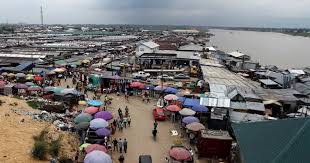

Chinese Construction Truck Kills Six in Benue
ShareFrom Attah Ede, Makurdi No fewer than six passengers have died in a fatal road accident involving an 18-seater Benue Links bus and a...

Table Tennis Championship: 250 Players for Alabi Memorial in Osun
ShareNo fewer than 250 players from across the country are expected to participate in the 6th Michael and Felicia Alabi Memorial Table Tennis Championship scheduled to...


Pope Leo XIV Urges Dialogue as Iran, Israel Tensions Escalate
SharePope Leo XIV on Sunday appealed to nations involved in the escalating Middle East conflict to recognise their moral responsibility to pursue peace,...


IGP Appoints Placid as New Police Spokesperson
ShareThe Inspector-General of Police, Olatunji Disu, has approved the appointment of Anthony Placid as the new Force Public Relations Officer. The outgoing FPRO, Benjamin Hundeyin, confirmed the appointment in...


Niger Directs Political Appointees Seeking 2027 Offices to Resign March 23
ShareFrom Dan Amasingha, Minna The Niger State Government has directed all political appointees and public office holders who intend to contest elective positions in the 2027 General Elections...

ShareDisCos Generate N207bn from Power Bills in December – NERC The Nigerian Electricity Regulatory Commission (NERC) says electricity Distribution Companies...


Terrorists Strike in Sokoto as Troops Record Gains in Benue, Taraba
ShareBy David Torough, Abuja Renewed attacks by armed groups and intensified military counter-operations defined the security situation across parts of...

Fuel Prices Climb Toward N1,000 Per Litre as Global Oil Shock Hits Nigeria
ShareBy David Torough, Abuja Fuel prices across Nigeria have surged close to the N1,000 per litre mark, triggering concern among...


NFSS Launches war against Terrorism
ShareDetermined to end terrorism and other related criminal activities in Nigeria, the Nigeria Forest Security Service (NFSS) has created a...