
Entertainment/Arts/Culture
Fave Emerges Spotify Equal Music Artiste for March

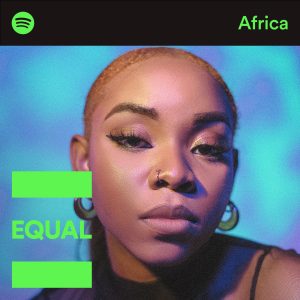
Music streaming giant, Spotify, has announced Nigerian rising star, Fave, as its latest Equal Africa Ambassador for the month of March.
Spotify’s Head of music for Sub-Saharan Africa, Phiona Okumu, made the announcement in a statement on Wednesday.
The announcement came off the back of Fave’s popularity and fame since the release of her breakthrough hit single, Baby Riddim, which was released in September 2021 through emPawa Africa.
“Spotify welcomes Fave in joining the EQUAL programme’s list of fierce African women making waves in music, as part of its bid to foster gender equality and provide a platform to celebrate influential female artistes in Africa.
“Our aim with the EQUAL Music Programme is to shine a light on remarkable young women in Africa, who are finding their feet through music.
“ We remain committed to levelling the playing field for female creators, by giving emerging and established artistes equal opportunities on our platform.
“Fave exudes character and confidence, and we are proud to showcase her,” she said.
According to her, the artiste is talented and she understands the power of social media and make her way to the spotlight through it.
Okumu stated that Fave hit the spotlight after she posted a freestyle of her song, N.B.U (Nobody But You), a blend of upbeat pop and Afro, that soared across playlists and social media during the COVID-19 lockdown.
She noted that the song received shares across social media and became an instant hit, prior to its release.
Okumu describes the 22-year-old singer as a burgeoning Nigerian Afro R&B singer, whose charming music style is attracting the big guns in the entertainment industry.
According to her, the charming music style has placed her on the same level as other young female artistes like Tems and Ayra Starr.
They are becoming the next generation of female artistes in Nigeria, each bringing with them their own style of music.
Responding, Fave said: “It is easy to come across, or even be directly involved in a conversation on the subject of female artistes and the widely believed stereotype that women cannot give their 100 per cent to music.
“This is because there are other things that occupy their time, based on societal norms like family and kids.
“ Stereotypes like this already influenced how people in the industry view women on a broader scale.
“You almost get the vibe that people think the success of a female artiste can only be short-lived.
“ Of course, defects like this are not general but they do exist.
“Male domination, I believe, is something that can only be filtered away by our outstanding success as women, in our fields of excellence and talent.
“I am honoured to be part of the EQUAL programme with women, who plan to change the world,” she said.
Also, emPawa, Africa’s Co-founder and Head of Label Services, Ikenna Nwagboso, concludes this way;
“We will continue to seek, recognise and amplify the female voices we have in the African music space, so that the next generation of female artistes can believe and have many influences to look up to.”
Fave’s breakout track, “Baby Riddim”, will be featured on the EQUAL AFRICA and Equal global playlist. (NAN)


Afrobeats singer Spyro has revealed that 16 years of perseverance and struggle in the music industry finally paid off three years ago, attributing his success to divine intervention.
In a social media post, Spyro shared his testimony, recalling a period of profound struggle and disappointment that preceded his breakthrough.
He explained that it was at this critical juncture that his fortunes changed.
Following his past struggles, the singer now encourages others facing similar challenges, urging them to hold on to their dreams and never give up.
He attributes his turnaround to God, who transformed his life and propelled him to success three years ago.
Spyro wrote, “If someone had told me 3 years ago that I would become this fly, I would have argued it, and now I look at my life, and all I can say to someone reading this is please don’t give up…
“I have been in the industry hustling for 16 years, and I was at my lowest when JESUS changed it all, and that same JESUS is still in the business of changing lives, JUST BELIEVE.”

Afrobeats star Asake has reiterated his unwavering loyalty to his former label boss and mentor, Olamide, amid speculation of a fallout between the two artists.
Despite removing YBNL from his Instagram bio and unfollowing Olamide in December 2024, Asake in a recent interview with YouTuber Korty EO, emphasised that his perception of the rapper remains unchanged, stating, “Till the world ends, Baddo will always be Baddo.
The way I saw Baddo yesterday is the same way I see him today, and that will be the same way I will see him tomorrow, even if I become the president of America or Zimbabwe. Baddo will always be Baddo”.This development followed reports that Asake’s contract with YBNL may have expired, with the singer opting for independence rather than renewing the deal.
While neither Asake nor Olamide has publicly addressed the situation, industry insiders believe the split was amicable.
Asake has consistently credited Olamide for changing his life, and his latest comments reaffirm their enduring professional and personal bond.
Nigerian chef Gbolabo Adebakin, known as Chef Gibbs, has urged deliberate global rebranding of Nigerian cuisine to challenge misconceptions and present local dishes as nutritious, diverse, and competitive.
Adebakin said during an interview yesterday in Lagos that stronger culinary education and cultural storytelling was needed to project Nigerian dishes to the world.
He described food as a powerful cultural export and a critical tool for tourism development, noting its universal role in human interaction.
“Food is the oldest form of tourism. From the beginning of time, food has been served with every single moment, every party, every meeting, every celebration,” he said.
The chef, however, said Nigerian cuisine, though gaining international attention, remained widely misunderstood due to poor representation and lack of proper guidance on how it should be prepared and consumed.
Adebakin, convener of the Nigeria Food Summit, said that beyond showcasing meals, the rebranding initiative should focus on correcting widespread misconceptions about Nigerian cuisine, often described as too fatty, heavy, or dense.
According to him, the process of rebranding also involves teaching proper ways to eat and pair local dishes, a gap increasingly evident in viral social media trends.
“If you go on social media today, you see a lot of TikTok trends, and some of those challenges are actually not properly done because a lot of people do not know about Nigerian food.
“So, it’s our responsibility as culinary practitioners to educate people on how exactly to eat the food, how to pair the food, how to serve the food,” he said.
He noted that initiatives, already gaining traction through inbound tours and social media, were aimed at rebranding efforts.
“We’re letting people know that our food is very communal, very nutritious, very rich,” he said.
Citing an ongoing initiative by the Special Adviser to the Lagos State Governor on Tourism, Arts and Culture, Idris Aregbe, in which he has participated for about six years, he noted that giving tourists’ immersive experiences had been highly impactful.
Adebakin added that immersive experiences such as allowing foreign guests to participate in traditional cooking techniques like pounding yam helped to deepen their appreciation for the culture and effort behind Nigerian meals.
He said such moments highlighted the skill and intentionality involved in local food preparation.
He added that the activity had consistently drawn positive reactions from international participants, many of whom expressed surprise at the diversity and presentation of Nigerian dishes.
Recounting a previous engagement, he said: “They told us that they never knew that Nigerian food could be done this way or could taste this way or that they could experience Nigerian food this way.”
Adebakin said such feedback underscored the growing role of culinary diplomacy in shaping Nigeria’s global image.
He urged stakeholders to continue to leverage food as both a cultural bridge and an economic asset.



TB screening outreach: Experts screened over 800 people
ShareBy Laide Akinboade, Abuja Experts in health sector on Friday, screened over 800 people for Tuberculosis (TB), in some selected...


PINL Urges Communities to Take ownership of Oil,Gas Assets within their Environment,
ShareFrom Mike Tayese, Yenagoa Pipeline Infrastructure Nigeria Limited (PINL) has called for stronger collaboration with host communities to enhance the...


Amnesty Programme is Now on its Right Path, Ex-agitators
ShareFrom Mike Tayese, Yenagoa Niger Delta Ex-Agitators Forum (Phase 3) on Friday made it clear that the 30,000 ex-agitators in...


Niger Delta Investment Summit Set to Unlock Regional Opportunities
ShareFrom Mike Tayese, Yenagoa Plans are underway to host a major investment forum aimed at unlocking economic opportunities and accelerating...

From Strategy to Results: Why Every Organization Needs an Efiko – Barrow
ShareBy Raphael Atuu, Abuja Every organization, it seems, needs an Efiko.That was the bold assertion from Omagbitse Barrow as he...


APC Convention: FG Shutsdown Secretariat, Orders Workers Stay at Home
ShareBy David Torough, Abuja Ahead of the All Progressives Congress (APC) national convention in Abuja, the Federal Government has ordered...

Soldiers Eliminate Six Bandits in Sokoto, Zamfara, Kebbi
ShareTroops of Sector 2, Operation FANSAN YAMMA, have intensified coordinated offensives against terrorist enclaves across Sokoto, Zamfara, and Kebbi states, killing at least six suspected bandits and recovering arms...


IOC Bars Transgender Athletes from Women’s Olympic Events
ShareThe International Olympic Committee has announced a new policy limiting eligibility for the female category at Olympic events to biological...


Out of School Children Climb to 273m Globally – UNESCO
ShareThe number of children and young people out of school worldwide has climbed to 273 million, the UN Educational Scientific and Cultural...

FAAN Outlines Airport upgrades, Private Funding Push
ShareThe Managing Director of the Federal Airports Authority of Nigeria, Olubunmi Kuku, has outlined efforts to bridge long-standing infrastructure deficits at Lagos airports. Kuku spoke...