
NEWS
FCT-IRS Decries Wrongful Remittance of Taxes

Laide Akinboade, Abuja
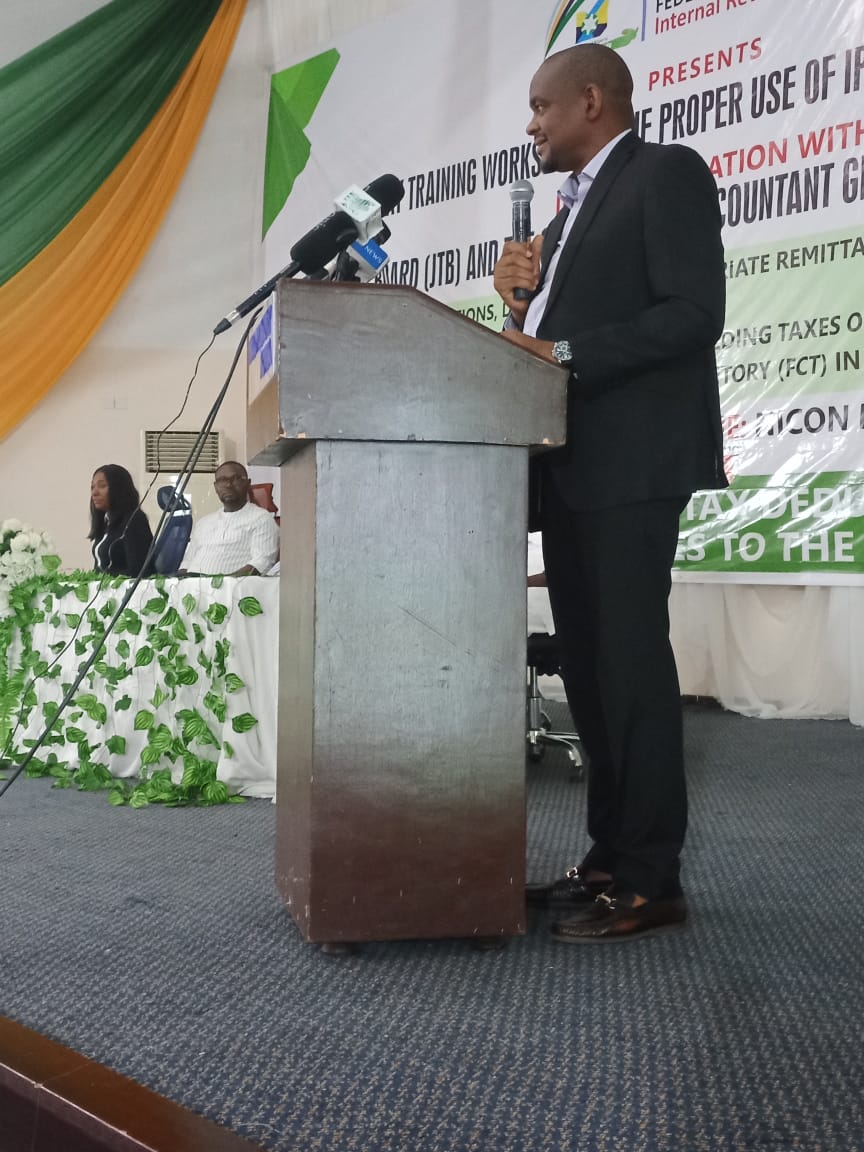
The Acting Executive Chairman of the Federal Capital Territory Internal Revenue Service (FCT-IRS), Haruna Abdullahi, has sounded an alarm over the incorrect remittance of taxes intended for his organization to the Federal Inland Revenue Service (FIRS).
The Chairman also criticized the practice of paying personal income taxes, which are meant for FCT-IRS, to other states within the federation.
Abdullahi raised these concerns while speaking at a two-day workshop held on Tuesday in collaboration with the Joint Tax Board and the Office of the Accountant General of the Federation.
The workshop aimed to ensure the proper utilization of the IPPIS and GIFMIS platforms.It should be noted that the Integrated Payroll and Personnel Information System (IPPIS) and the Government Integrated Financial Management Information System (GIFMIS) are platforms utilized for financial transactions and taxation in the public sector.
The Chairman emphasized that tax remittances were significant pillars of the financial system. They serve as a critical revenue source required for economic development, the promotion of wealth redistribution, and contributing to the overall welfare of society.
He stated, “This engagement is vital to rectify the misallocations of past tax remittances.
“I would like to emphasize that the Federal Capital Territory Internal Revenue Service (FCT-IRS) exists to serve the people of the FCT, just as the FIRS exists to serve the entire nation. We are not competitors but collaborators in the larger scheme of national development.
“To the FIRS, we say, let fairness and justice prevail. We believe in your institution’s dedication to just and fair practices.
“Therefore, we request that you join us in this crucial endeavor to correct these past mistakes and ensure that the FCT-IRS receives what is rightfully due to it,” he appealed.
Highlighting that the anomalies resulted from inaccurate data entries on the platforms, distorting financial records and depriving rightful states of their due resources, Abdullahi lamented, “The resources wrongly allocated in the past could have been better utilized to foster growth and development in the FCT, thereby benefiting the residents of our great capital.”
He thus urged desk officers to be meticulous in their duties, double-checking every data entry, form completion, and tax remittance to ensure they are directed to the correct organization.
The Chairman of the FCT Chapter of the Chartered Institute of Taxation of Nigeria, Dr. Kennedy Iwundu, explained in his remarks that the Value Added Tax (VAT) component of tax should be remitted to states, specifically FCT-IRS for the FCT, while the withholding tax component is payable to FIRS.
Iwundu advised desk officers to always request two tax identification numbers (TINs) in order to make payments for the two tax components.
He called on the tax organizations to adhere to the principles of simplicity and certainty in order to facilitate easy payments. He cautioned that without such adherence, taxpayers would be further discouraged from filing tax returns.
Workshop participants included account officers from Ministries, Departments, and Agencies of the government who posed questions on various issues affecting the two payment platforms, such as overpayments, underpayments, and incorrect data entry into the systems, among others.











The World Health Organization (WHO) has recommended a wider range of safe and effective contraceptive options, including emergency contraception, longer-lasting implants and potential future methods for men, to expand informed reproductive choices globally.
WHO said in a statement on Wednesday that the expanded options were needed because an estimated 164 million women seeking to delay or avoid pregnancy were not using contraception, highlighting access gaps worldwide.
“The new publication, ‘WHO guidelines on expanding contraceptive options,’ is designed to help countries broaden access to contraceptive methods supported by the best available scientific evidence and enable informed choices globally.
“The guideline provides alternative ways of using existing contraceptive methods, including allowing combined oral contraceptive pills to be taken continuously for up to one year or extended periods of six months.”
According to WHO, the guideline also supports the use of contraceptive implants for up to five years, a recommendation that could reduce replacement procedures, clinic visits and associated costs significantly.
“For emergency contraception, WHO recommends mifepristone as an additional option, to be taken as soon as possible and within five days after unprotected sex, based on evidence supporting safety and effectiveness.
“Mifepristone at doses ranging from 10 to 50 milligrams is likely to be as safe and effective as other established emergency contraceptive methods when used for emergency contraception,” it said.
WHO quoted Dr Pascale Allotey, Director of its Department of Sexual, Reproductive, Maternal, Child and Adolescent Health and Ageing, as saying contraception should not be treated as one-size-fits-all intervention.
According to Allotey, expanded contraceptive choices should consider convenience, invasiveness, behaviour, reliability and accessibility, enabling people to choose a method, change it when necessary, or discontinue its use freely.
“Expanding contraceptive options also requires identifying methods for which available evidence remains insufficient, noting that further research is needed on the safety of ormeloxifene.
“The guideline recommends against adding quinestrol-containing contraceptive pills to national family planning programmes, citing limited evidence and reports of serious adverse events associated with the method.
“Beyond existing methods, WHO is working to expand contraceptive choices for men, who currently have relatively few methods under their control, principally condoms, withdrawal and vasectomy.
“In spite of the limited number of male-controlled methods, WHO noted that about 30 per cent of couples globally rely on a male method, underscoring the potential importance of expanding options.”
According to the statement, WHO research also challenges assumptions about willingness to use male contraception, with more than 75 per cent of surveyed couples saying they would consider it.
“More than 85 per cent of women surveyed said they would trust their male partners to take responsibility for contraception, according to findings from a cross-sectional study conducted globally.
“To support development of new male contraceptives, WHO has developed its first Target Product Profile, outlining characteristics future methods should meet, including safety, effectiveness, acceptability and affordability,” it said.
According to WHO, the product profile will provide researchers, funders and developers with clearer direction while supporting development of a contraceptive market reflecting people’s needs and preferences.
“Several hormonal and non-hormonal male contraceptive methods are currently being researched, with promising candidates in advanced clinical trials, raising the possibility of new reversible male contraceptives becoming available soon.
“We will continue supporting countries to update their policies and family planning programmes in line with the best available scientific evidence and expanded contraceptive options,” WHO said.(NAN)
The Federal Government has assured Nigerians that no effort will be spared to secure lives, livelihoods, and dignity across the country.
Secretary to the Government of the Federation (SGF), Sen. George Akume, gave the assurance on Wednesday in Abuja, at a meeting of the Nigeria Inter-Religious Council (NIREC) with the theme “Shared Sacred Flourishing in Nigeria.
”Conveying President Bola Tinubu’s message to the council, Akume acknowledged that the nation has continued to face deep and painful challenges.
He highlighted how violence, characterised by widespread banditry, kidnappings, communal clashes, and terror attacks has inflicted severe trauma on communities across Nigeria.
The SGF said tha Tinubu deeply appreciates the co-chairmen of NIREC, the Sultan of Sokoto, Alhaji Muhammad Sa’ad Abubakar III, and the President of the Christian Association of Nigeria (CAN), Archbishop Daniel Okoh, for their unwavering commitment to peace.
“Our nation is still passing through the thorny path of diverse challenges.
“Violence has left deep wounds. We have lost beloved relations, teachers, traders and parents while too many of our children have known fear at school gates.
“None of these tragedies is acceptable to the government. The assurance from the President is that every Nigerian will be adequately protected and no effort will be spared.
“In the words of the President, this government will not relent until every Nigerian can live, work, travel, and dream in safety,” Akume said.
To achieve this goal, the SGF revealed that the Armed Forces, police and other security agencies have significantly intensified their joint operations across all zones.
“These ongoing campaigns are specifically designed to dismantle criminal networks, root out non-state actors, and fully reclaim every inch of Nigerian territory.
“Beyond physical operations, the government is enhancing intelligence gathering, improving rapid response capabilities, and strengthening security around vulnerable soft targets like churches, mosques, markets, and schools through the Safe School Initiative,” he said.
Recognising that military action alone is insufficient, Akume emphasised that security remains a shared responsibility requiring strong support from civil society.
He called directly on religious and traditional figures to leverage their influence, speak with a unified voice, and actively dismantle divisive extremist narratives.
“All religions must condemn the barbaric tactics of bandits and terrorists because they debase humanity and violate all that our faiths stand for. We must stand together today saying: enough is enough,” he said.
The SGF urged faith leaders to foster mutual tolerance within their congregations, champion respect for all places of worship, and prevent socio-economic frustration from souring into ethnic or religious hatred.
He further tasked community leaders with proactively mediating local disputes before they escalate into violence, while strictly warning against letting places of worship become arenas for political thuggery as elections draw near.
“Please issue the clear, unambiguous public message: that politics belongs in the ballot, not at the altar or mosque,” he said.
Commending past diplomatic efforts, Akume praised the peace accord signed in August 2026 by over 50 prominent Muslim and Christian leaders under the joint Muslim World League and NIREC initiative.
Looking toward upcoming electoral cycles, he announced that NIREC would host state-level peace forums before the close of 2026.
He explained that the forum would bring together police commands, officials of the Independent Electoral Commission, and local interfaith leaders to identify flashpoints and secure commitments to post-election calm.
He pledged that the Federal Government would continue funding regional peacebuilding workshops, supporting youth and women peace caravans, and combating targeted disinformation campaigns designed to provoke religious tension.
Akume highlighted plans to establish direct liaison desks between security agencies and NIREC to facilitate the real-time exchange of critical threat intelligence.
“Let me also emphasise the link between peace and progress: “No community can develop when fear stalks its streets.
“Every hour of peace is a business that can flourish”. (NAN)
From Rabiu Sanusi, Kano
The Kano State Ministry for Public Procurement, Projects Monitoring and Evaluation (MPPPME) has conducted an inspection of ongoing and newly commenced development projects across Bagwai and Shanono Local Government Areas as part of its continued efforts to ensure quality, compliance, accountability and value for money in the execution of government projects.
The monitoring exercise covered no fewer than 38 projects across the two local government areas, with the technical team of the Ministry assessing the level of implementation, quality of work, adherence to specifications and other relevant contractual requirements.
The inspection team was led by the Honourable Commissioner, Nura Ma’aji Sumaila, who personally inspected the take-off of the Shanono Modern Information and Communication Technology (ICT) and Computer-Based Test (CBT) Centre Project.
The inspection provided an opportunity for the Ministry’s technical team to assess the commencement of the project, review the initial construction activities and engage relevant stakeholders and contractors on the need to adhere strictly to approved specifications, standards and timelines.
Briefing journalists during the inspection, Commissioner Ma’aji Sumaila disclosed that the Kano State Government had awarded contracts worth approximately ₦27.806 billion for the construction of modern ICT and CBT centres across all 44 Local Government Areas of the State.
According to him, the initiative is designed to expand access to digital facilities at the grassroots, strengthen ICT infrastructure and provide students and other residents with improved access to Computer-Based Testing and other digital services.
He explained that the establishment of the centres across the State would contribute to bridging the digital divide between urban and rural communities, while also making e-examinations more accessible and convenient for students, particularly those in underserved areas.
The Commissioner stressed that the Ministry would continue to monitor the projects from commencement through completion to ensure that public funds were judiciously utilised and that projects delivered to communities met the required quality and technical standards.
The MPPPME team had inspected 17 development projects in Bagwai Local Government Area, with a combined contract sum of ₦6,012,384,733.40.
The projects inspected covered various sectors and included the repair of two ARMCO culverts, supply and installation of solar-powered streetlights, renovation of schools, construction of a 5-kilometre dual-carriage road, construction of a neighbourhood security watch office, among other development interventions.
The team also visited the site of a dam project in Bagwai, inspected hand-pump boreholes and assessed several other ongoing projects across the local government area.
During the inspection, the Commissioner and the Ministry’s technical personnel examined the physical progress of the projects and interacted with contractors and other relevant stakeholders, reiterating the importance of delivering projects in accordance with approved designs, specifications, quality standards and contractual obligations.
The inspection is part of the Ministry’s ongoing project monitoring activities aimed at strengthening transparency and accountability in public procurement, ensuring value for money and promoting the timely delivery of sustainable infrastructure for the people of Kano State.
The MPPPME, under the leadership of Comrade Nura Ma’aji Sumaila, has continued to intensify field inspections across the State to provide independent technical oversight and ensure that government projects translate into tangible development outcomes for communities.
It was contained in a statement issued by Ministry information officer Sagir Ado Abubukar where it was made available to Journalists.




Police Deny Shooting Motorcyclist in Kwara
ShareThe Kwara State Police Command has denied shooting a 23-year-old motorcyclist, Abdurasaq Lukman, during a stop-and-search operation around Oyun Bridge,...


WHO Expands Contraceptive Options
ShareThe World Health Organization (WHO) has recommended a wider range of safe and effective contraceptive options, including emergency contraception, longer-lasting...
Insecurity: FG Promises Continues Action for Safety of all Nigerians
ShareThe Federal Government has assured Nigerians that no effort will be spared to secure lives, livelihoods, and dignity across the...


From Accusation to Execution: Nigeria’s Mob Justice Crisis
ShareBy Mukhtar Dambatta In Nigeria, an accusation of theft can turn a calm crowd into a dangerous mob within minutes....
The Middleman Economy: Why Nigerians Pay More and Earn Less
ShareBy Dovish Okojie Whether you are buying food in the market, renting a house, importing goods, securing a contract, or...


NGX Invest Expands Primary Market Access Through New Subscriptions Channel
ShareThe Nigerian Exchange Group (NGX Group) has introduced a WhatsApp subscription channel on its NGX Invest platform to expand access...


Davido, Dangote Showcase Nigeria’s Creative, Industrial Strength in New York
ShareAfrobeats artiste, David Adeleke, popularly known as Davido, has joined business mogul, Aliko Dangote, at New York’s Times Square, where...

Oyedele Calls for Affordable Capital to Finance Africa’s Infrastructure
ShareBy Tony Obiechina, Abuja The Minister of Finance and Coordinating Minister of the Economy, Taiwo Oyedele, has called on the...
Shanono ICT, CBT Centre Project Begins as MPPPME Conducts Initial Inspection
ShareFrom Rabiu Sanusi, Kano The Kano State Ministry for Public Procurement, Projects Monitoring and Evaluation (MPPPME) has conducted an inspection...

SEDC Flags Off South East Agro-Development Programme in Enugu
ShareFrom Sylvia Udegbunam, Enugu Enugu State Governor, Dr. Peter Mbah, on Tuesday, officially flagged off the South East Agro-Development Programme...