
NEWS
FCT Squanders N200m Monthly on Redundant Supervisors

By Emmanuella Akwaya, Abuja
Even as schools in the Federal Capital Territory (FCT) suffer acute shortage of teachers, the administration, instead of employing, has resorted to keeping old teachers who have crossed retirement age.Every month, the administration pays them a whooping N200 million wages.
Investigation shows that the administration has 591 of such officers who gulp the aforementioned wages. The least officers are on Grade Level 10 with a salary of N120,000 each. The highest are on Grade Level 17 with the salary of N756,400 each. There are 37 officers on Grade Level 17. They take home a total of N27,986,800 (see table below for detail).S/NoGLTotalSalary/Month (N)Total Salary/Month (N)11733756,400.0027,986,800.00216140420,000.0058,800,000.00315161398,000.0064,078,000.00414102230,000.0023,460,000.0051358199,000.0011,542,000.0061264160,000.0010,480,000.0071033120,000.003,960,000.00 200,066,800.00Table shows salaries of 468 education officers under the Harmonised Retirement Age for Teachers in FCT It is said that the salary of one of such staff can employ as many as seven fresh teachers.A school manager lamented saying while government has failed to recruit young and willing hands into the classroom, it has come up with a policy that makes old, weak, sickly and tired hands tooccupy space while energetic, ambitious and job seeking youths are abandoned.Mass recruitment of teachers was last done many years ago. Over the years, administrations indulged in what they called Replacement where they bring in relatives, friends, political associates of those in power as teachers who are mostly not qualified.As a result, many junior and senior secondary schools now rely on teachers engaged by parents. Half of those teaching in FCTA schools is in the employ of the Parent-Teacher-Association (PTA).To be able to pay the PTA Teachers, as they called, Headteachers put different levies on parents.The revised retirement policyFollowing pressure from the Nigeria Union of Teachers (NUT), the Federal Government in 2021 extended retirement age for teachers in public schools to 65 from 60.Former President Muhammadu Buhari signed the Harmonised Retirement Age for Teachers in Nigeria Act passed by the National Assembly.Section 1 of the Act clearly states that teachers in Nigeria shall compulsorily retire on attainment of 65 years of age or 40 years of pensionable service, whichever is earlier.Section 3 of the Act provides that the Public Service Rule or any Legislation that requires a person to retire from the Public Service at 60 years of age or after 35 years of service shall not apply to teachers in Nigeria.This raise in the retirement age and service years is pursuant to Section 58(2) of the 1999 Constitution as amended.The FCT situationFCTA domesticated the New Retirement Age and Length of Service for Education Officers across Ministries, Departments and Agencies (MDAs).However, the administration gave conditions,saying that the officers will prove to be medically fit and would return to the classroom to teach at that age.A circular entitled Re: Guidelines on the Implementation of the New Retirement Age and Length of Service for the Teaching Profession on Nov. 23, 2021 specified eligibility viz: the officer must be — within the education cadre recognized in the scheme of service; registered with the Teachers Registration Council of Nigeria (TRCN); medically fit as ascertained by a qualified medical doctor; must not be under any disciplinary process.The circular signed by Muhammad Bashir, Director, Human Resource Management, FCTA, for the Permanent Secretary at the time maintained that education officers to be taken must apply and be screened by a committee set up by management.“All successful applicants will be deployed to serve as teachers in schools or Quality Assurance Officers,” the circular specified.The scheme took effect on January 1, 2021. The circular directed, “Officer who should have retired, having attained the mandatory retirement age of 60 years of service by 1st January, 2021 and desires to extend his/her service is required to submit his/her application not later than 16th December 2021.”Following this, many officers were recruited but contrary to the guidelines given by FCTA. They were not posted to classrooms. They were rather posted to the Quality Assurance Department where some of them hardly show up.A staff of the department who confided in our reporter stated that majority of the officers nurse one ailment or the other and seldom go to work.“What this means is that they’re not in the classroom, nor are they in the Quality Assurance Office. All this is happening when every month the administration parts with millions of taxpayers’ money in the name of paying salaries…” the personnel noted. It’s an absurdityReacting to this, a one-time Executive Secretary of the National Commission for Colleges of Education (NCCE) described the situation as absurd saying the FCTA’s action is detrimental to education. He urged parents to petition the minister.In his words, “Experience will expire. Some of these people are afraid of the computer.”Government may not be giving money for the oversight.”It is like what we saw at NCCE. We had no money to go on accreditation exercise.“We had to put the bill on the colleges. But why would you go to superintend someone who foots your bills? Now I hear that they carry bags of provosts.“It’s like the police. If they have no vehicles to chase criminals, there is nothing they can do,” he told our reporter.
They give envelopsA beneficiary of the service years elongation policy who would not give her name lamented the dearth of teachers in public schools in FCT.According to her, “I pulled my son out when I discovered that PTA Teachers who were mostly youth corps on national service were teachers in his school. ‘What experience had they? I cringed.'”She said apart from shortage of teachers, many children crawl on the floor because classrooms in schools on the outskirts of Abuja lack desks.The officer who is serving in the quality control unit lamented that even though reports on the poor school situation have been tendered, authorities appear unperturbed.”Every week reports are sent. To my knowledge, the last time massive recruitment of teachers was done in FCT was 2011. Many teachers have left the classroom yet there are hardly replacements.”What they [authorities] do is Replacement which does not help,” she stated.She said government has stopped funding their supervisory activities.”They argue that it is normal work we do so we don’t need any support. What we do is to go for supervision in groups. If an officer has a car, he carries others. If there is no car, we hire a vehicle and jointly pay.”It is tough. Sometimes we get to where the motor vehicle cannot proceed – bad roads.“We trek if the distance is not long. If it is long, we take motorcycles.“The encouraging thing however is that school heads normally give us envelops [money]. But that does not stop us from being objective in our reports.” Wike has not recruited yetThe FCT Minister, Nyesom Wike has not recruited any teachers since assumption of office.The minister appears obsessed with rehabilitation of roads. He has been criticised for neglecting other sectors especially health and education which residents crave.The senator representing the capital territory, Mrs IretiKingibe recently took a swipe at the minister over this. The minister responded saying she will lose her seat in the next parliamentary poll.
A dire situation
There are 205 junior schools covered by the FCT Universal Basic Education (UBE) programme and 88 senior schools under the FCT Secondary Education Board.Records show that there are about 4,000 FCTA teaching staff in junior secondary schools for the UBE programme. This translates to 20 teachers per school, i.e. 20 teachers to take 18 subjects for JSS 1, JSS 2 and JSS 3.It must be noted that there are subjects to be compulsorily taught every day. With an average of six arms per class and each arm having Mathematics and English Language taught in five sessions of 40 minutes per week, and other subjects taught in two sessions of 40 minutes per week, it means each arm has 42 hours of teaching per week.It should be noted that each year (eg JSS 1) has 42 hours by six arms equalling 252 hours of teaching every week. This further translates to a total of 756 teaching sessions for JSS 1, JSS 2 and JSS 3. This invariably means 20 teachers having a total of 37.8 sessions of 40 minutes each for Years 1, 2 and 3 respectively.This is definitely too much work load for anyone to handle hence the engagement of PTA teachers who are paid less than peanuts. In 2001 a report produced by FCTA tagged “Teacher (Manpower) Requirement for Junior Secondary Schools” showed that there was a shortfall of 5,001 teachers across the 126 junior secondary schools in FCT at the time.The statistics showed that JSS SabonGari, Gwagwalada alone lacked 150 teachers. JSS Jikwoyi in the municipal council though needed 132 teachers while JSS Kubwa 1 was without 101 teachers. ADJSS was minus 96 teachers, JSS Kubwa 2 was minus 89, JSS Zuba77 teachers and JSS Peyi 71 teachers. The school with least problem was JSS Mamagi with a shortfall of six teachers.What this means is that all FCT schools could not offer or partially offered many subjects on the curriculum. The picture has not changed since then. In fact, it might be worse due to population surge. Government aware of situationA headteacher who did not want to be named here said the Education Secretariat of FCTA is aware of the problems because every month, school heads send reports to management, giving the situation in their schools.She painted the gloomy picture: “In UBEB, very few teachers are young. Many are old. In a whole term, a child pays N3,500. From this, we pay PTA teachers.“Last employment was in 2016. Only 300 teachers were employed. There are 17 subjects taught by different teachers in my school. Many subjects have no teachers. Classes are without seats. Children sit on the floor.”The headteacher observed that the new policy has added another problem in the entire education management system in FCT.“Upon reaching the original retirement age of 60, some education officers are reluctant to leave their positions and return to classroom as stipulated in the in the new policy.“This breeds conflict between the education officers and the younger ones who are desirous to take the directorate positions. It’s a serious problem,” she concluded.
Beyond shortage of teachers
A parent who declined to be named lamented that the problem in public schools in FCT is not limited to shortage of teachers. School facilities like classrooms, furniture, audio-visual aids are grossly inadequate. In some communities, children sit under trees to receive instructions. The children are highly vulnerable to the elements.
“Where classrooms are available, they are dilapidated. These problems cut across both urban and rural schools. Different FCT ministers gave contracts for projects that were not executed or uncompleted.
“Go to the Kubwa, Nyanya, Bwari, Kwali, Abaji, you’ll see same problem of old and outdated structures. For long, the FCT administration has ignored its schools. We are tired of paying levies,” he stated.
He appreciated the administration for embarking on renovation of school structures.
He however called on the minister to equally give serious consideration for the problem of inadequate teachers in the classrooms.
“Without delay, he should tackle this thing about teachers massively leaving classrooms to become quality controllers whereas there is nothing to control. If there’re no teachers in the classroom, what can they control?” he asked.
He called on the administration to review its implementation or completely abandon the Harmonised Retirement Age for Teachers in Nigeria Act because it is counterproductive in FCT.
Efforts to reach the FCT Minister failed. The Chief Press Secretary (CPS) to FCTA, Mr Tony Ogunleye declined to speak on the matter, saying, “It’s under the Education Secretariat.”
Similarly, the Public Relations Officer of the secretariat, Mr Kabiru Musa would not talk. In his words, “It’s a policy matter.”

By Tony Obiechina, Abuja
The Chairman of the Revenue Mobilisation, Allocation and Fiscal Commission (RMAFC), Dr. Mohammed Bello Shehu has charged Directors and Heads of Departments (HODs) to demonstrate commitment, accountability and professionalism in the discharge of their duties to ensure the successful implementation of the Performance Management System (PMS) in the Commission.
The Chairman gave the charge at the signing of Performance Contracts by Directors and Heads of Departments at the Commission’s headquarters in Abuja.
He described the exercise as more than the signing of official documents, noting that it represented a covenant of accountability and a commitment to delivering on the Commission’s strategic objectives through improved productivity and measurable results. He also noted that the initiative aligned with the Federal Government’s Renewed Hope Agenda under President Bola Tinubu, which prioritises institutional efficiency, good governance and improved service delivery.He explained that the PMS represents a deliberate shift from routine administrative activities to a result-oriented system that measures institutional and individual performance against clearly defined objectives. He noted that the Commission had recorded significant progress towards its implementation through the development of a dedicated IT platform, organisation-wide staff training, capacity building for PMS champions, management sensitisation sessions and change management initiatives.
He emphasised that the system was not designed to be punitive but to empower officers, clarify responsibilities, identify capacity gaps and promote fairness in performance assessment. He therefore urged Directors and HODs to ensure that departmental targets and key performance indicators were realistic, measurable, time-bound and aligned with the Commission’s strategic objectives.
Shehu assured staff of management’s commitment to providing the necessary support and enabling environment, while urging all officers to embrace the initiative and make accountability, professionalism and improved service delivery their guiding principles.
The Chairman of the Personnel Matters Committee (PMC) and Federal Commissioner representing Cross River State, Ntufam Eyo-Nsa Whitley, described staff as the driving force behind the success of the Commission, urging them to demonstrate discipline, diligence, emotional intelligence and dedication to their responsibilities. He encouraged officers to take the performance management exercise seriously and give their best towards achieving the Commission’s objectives.
He further urged staff to support one another, embrace the reform process and avoid attitudes that could undermine teamwork and institutional progress. Hon Ntufam called on the PMS champions to demonstrate commitment and provide guidance to their colleagues, stressing that collective responsibility, discipline and effective implementation would ensure the success of the initiative.
In his address, the Secretary to the Commission, Comrade Tosin Adeyanju, described the signing ceremony as a significant milestone in the Commission’s history, marking the transition from intention to action, planning to execution, and traditional performance evaluation to a modern, data-driven performance management system. He appreciated the Chairman’s leadership and the Commissioners’ support, while acknowledging the critical roles of Directors and HODs in driving the transformation.
He urged management staff to take ownership of their performance agreements and ensure regular engagement, feedback and monitoring to achieve the desired results. He stressed that the success of the PMS would depend not merely on signing the contracts but on the Commission’s ability to translate agreed targets into improved productivity, efficiency and measurable institutional achievements.
The Director overseeing the Administration and Human Resource Department, Alhaji Ahmed Rufai Gidado, explained that the Commission had undertaken a series of activities towards the implementation of the Performance Management System and that the signing of the performance contracts represented a major milestone in the process, marking the transition from preparatory activities to the implementation phase.
In his lecture on The Role of Performance Management in Public Sector Transformation, Mr. Nwachukwu John, Head of Economy Team Performance Management at the Office of the Head of the Civil Service of the Federation (OHCSF), commended RMAFC for the progress recorded in adopting the PMS framework. He noted that the Commission’s commitment demonstrated its readiness to embrace public service reforms and align individual responsibilities with institutional and national development objectives.
He explained that the PMS was designed to connect the responsibilities of individual officers with departmental targets, the Commission’s strategic plan and the Federal Government’s priorities. He urged Directors and HODs to ensure that performance contracts were cascaded to other levels of staff through regular engagement and feedback, emphasising that the system was a productivity tool rather than a promotion exercise.
The National Drug Law Enforcement Agency (NDLEA), Kaduna State Command, said it secured 18 convictions and arrested 130 suspects for drug-related offences in October.
The command also said it filed seven new charges and seized 2,015.
688 kilogrammes of illicit drugs and psychotropic substances during intensified operations across the state.The Command Press Officer, Assistant Superintendent of Narcotics Sani Garba, disclosed this in a statement issued on Thursday in Kaduna.
Garba said the operations, conducted under the leadership of the State Commander, Maijama’a Mohammed, also led to the dismantling of 46 drug distribution joints across the state.
He said cannabis sativa accounted for the largest quantity of substances seized, with 1,967.107 kilogrammes.
Other seizures included 42.94 kilogrammes of tramadol, 5.464 kilogrammes of various psychotropic substances, 0.154 kilogrammes of methamphetamine and 0.023 kilogrammes of cocaine.
He listed some of the other substances seized as diazepam, rohypnol, pentazocine, codeine, pregabalin and ketamine.
According to him, the dismantled drug joints were located in Kakuri, Kudenden, Gonin-Gora, Black Street, Badarawa, Narayi, Kabala West, Karji, Tirkaniya, Kantiaga, Tudun Wada, Nasarawa, Unguwan Dosa, Kawo and Television, among other locations.
Garba said the command had also sustained its drug demand reduction activities through counselling, treatment, rehabilitation and public sensitisation.
He disclosed that five clients successfully completed their counselling, treatment and rehabilitation programmes during the period, while 12 others received brief interventions.
He added that 314 persons underwent drug integrity tests as part of efforts to address substance abuse.
The spokesperson said the command was combining enforcement operations with preventive interventions to address both the supply and demand sides of the drug problem.
He quoted the State Commander as urging residents to provide timely and credible information to assist the agency in identifying drug dealers, traffickers and distribution networks.
He stressed that tackling drug abuse and illicit drug trafficking required collective efforts, urging members of the public to cooperate with NDLEA operatives.
He reaffirmed the command’s commitment to sustaining operations and expanding its counselling, treatment and rehabilitation initiatives to address drug abuse in the state. (NAN)
By Sunday Adelaja
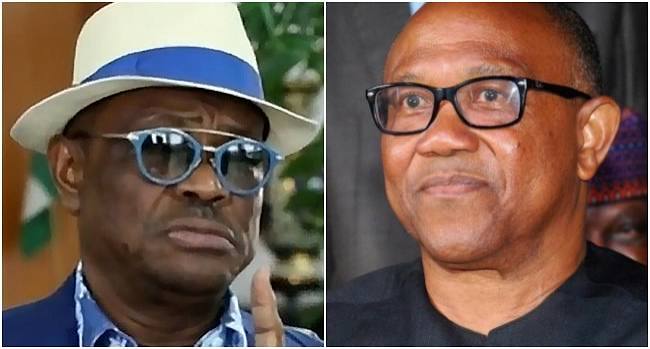
My goal in this article is to go beyond promoting a particular candidate like I did in the past. This time I am trying to dissect the intricacies of political science in Nigeria.
I am trying to analyse and bring out nuggets that could benefit all political players in the future.Unfortunately, from the comments I have seen so far, most people tend to be quick to judge the articles from the perspective of partisanship.
Their view is often black and white. It is either the article is for their preferred candidate or they are against it. If you’re not for us, then you’re against us, they say.That is unfortunate. Because these articles are all about hidden truths; secrets that are hidden to those directly involved in the politicking process in Nigeria. It will take someone detached from the realities on the ground to be able to see and pinpoint these facts. If taken seriously, these articles could help shape a better political future, especially for the opposition politicians and the future aspirants to the highest political posts in our beloved country.
In this particular article I’ll like to encourage my Obidient followers not to be in a hurry to condemn this piece, but be careful in analysing the facts I present, perhaps they will be able to learn a few things that might help their political future.
Now, let the journey begin
What Obi Could Have Done After 2023
The most consequential question is what could have happened immediately after the 2023 election.
Rather than allowing the Obidient phenomenon to remain primarily centered on the personality of Peter Obi, it could have been converted into a permanent civic-political organisation.
For example:
A national structure
Six geopolitical zones, State organisations, Local government chapters, Ward organisations, Polling-unit volunteers, Professional associations, Diaspora chapters, Policy and research institutions, Candidate development.
The movement could have recruited people not merely to support Obi, but to build a political philosophy around: Productivity; education; infrastructure; security; healthcare; industrialisation; constitutional reform; anti-corruption; entrepreneurship; national unity.
That would have transformed personal popularity into institutional capital.
The distinction is important because political movements survive leaders only when the institution becomes larger than the individual.
Wike’s Real Political Lesson
The most interesting lesson from Wike is therefore not necessarily that his policies or political choices are superior. It is his understanding of leverage.
Wike has repeatedly demonstrated a willingness to operate outside conventional political alignments.
In 2023, he remained a PDP governor while refusing to support the PDP presidential candidate.
In the current political environment, he remains associated with the PDP while serving in Tinubu’s APC-led government and organising a coalition supporting Tinubu’s presidential re-election.
This demonstrates a particular political philosophy: Party membership is one source of power; relationships are another.
Wike appears to place considerable emphasis on the second.
And that is where the Obi comparison becomes powerful. Obi’s political capital was largely horizontal: Millions of people who felt connected to a national idea.
Wike’s capital has been more vertical: Political leaders connected to political structures.
Tinubu’s capital is both: vertical organisation + horizontal alliances.
The strongest political architecture generally requires both. That is why I am not going to focus on Tinubu in this article. From my calculations, the incumbent president is going to easily win the 2027 election. However I focus on Obi and Wike because they are for the future of Nigerian politics as individuals. What they do after the 2027 elections will determine their places in history of Nigerian politics.
A politician needs people who love the message and people who can organise the machinery.
The Critical Lesson from 2023
The 2023 election should therefore be studied not only as an election that Obi lost, but an extraordinary demonstration of political market demand.
INEC recorded more than six million votes for Obi.
The subsequent collapse of Labour Party’s electoral performance in many governorship contests showed that presidential popularity did not automatically translate into a durable statewide political organisation.
That gap between electoral enthusiasm and organisational infrastructure is perhaps the most important lesson.
What does this mean for Obi and Wike’s future?
Rather than predicting who will become Nigeria’s president, the more useful question is: What would each man have to demonstrate to become a viable national presidential contender?
For Obi, the critical question is whether his enormous personal following can become a durable national organisation capable of recruiting political leaders, winning legislative and governorship contests, building structures across the North and South, and maintaining unity beyond the presidential campaign.
Obi’s political trajectory has already changed significantly: he moved from the Labour Party into the broader opposition realignment.
For Wike, the question is different. His strength is political organisation and elite relationships. The unresolved question is whether the Rainbow Coalition can develop broad, durable popular legitimacy across Nigeria, rather than functioning primarily as a network of political actors supporting a particular presidential candidate.
Those are fundamentally different challenges.
The Real Contest in 2027 and Beyond: Popularity Versus Organisation
Nigeria’s political history suggests that neither mass popularity nor elite organisations alone are sufficient.
A candidate needs: Popular legitimacy grassroots organization elite alliances cross-regional acceptability financial resources credible candidates polling-unit machinery a compelling national message the ability to negotiate coalitions.
Tinubu’s political journey illustrates the importance of building these layers over a long period. Wike’s current Rainbow Coalition illustrates the power — and potential limits — of cross-party elite coordination. Obi’s 2023 campaign demonstrated how rapidly a candidate can mobilise millions of voters without initially possessing a comparable traditional party structure.
The historical question now is whether either model can acquire the missing pieces.
Conclusion: The Lesson is Bigger than Obi, Wike or Tinubu
The deepest lesson from these three political careers is that political capital has different forms.
Peter Obi demonstrated the extraordinary power of mass mobilisation.
Nyesom Wike has demonstrated the importance of political leverage, coalition-building and relationships across party boundaries.
Bola Tinubu demonstrated the value of long-term institution-building, succession planning and political alliances.
The most consequential political organisation would theoretically combine the strengths represented by all three models: Obi’s ability to inspire millions + Wike’s ability to negotiate across political structures + Tinubu’s long-term capacity to build and maintain a political machinery.
Whether Nigeria’s future political actors can create such a synthesis will be more consequential than the personality of any single politician.
And that may be the most important lesson of the 2023 election: Winning millions of votes is political capital; converting those votes into institutions, leaders, structures and enduring alliances is political power.
These articles are not for the masses, they are not for popularity contests. But like they say, a word is enough for the wise. If these four series articles helps some future generations of Nigerian politicians even if only one person, then it would have been worth the efforts.
Sunday Adelaja is a Nigerian born leader, transformation strategist, pastor and innovator. He was based in Ukraine.
Political Intimidation, Opposition Rights and the Battle for Nigeria’s Presidency In 2027
By Yasir Shehu Adam
The African Democratic Congress (ADC) presidential campaign flag-off in Sokoto State on Wednesday, November 4, 2026, was more than an ordinary political gathering. It was an event that exposed growing political tensions ahead of the 2027 general elections and raised important questions about political freedom, democratic participation and the treatment of opposition parties in Nigeria.
Led by former Vice-President Atiku Abubakar, the campaign attracted thousands of supporters, political leaders and party stakeholders. Among the prominent figures present were former Sokoto State Governor Aminu Waziri Tambuwal, former Minister of Transportation Rotimi Amaechi and other ADC leaders. The large crowd that welcomed Atiku reportedly turned his journey from the airport to the campaign venue into a three-hour movement through the city.
However, behind the political excitement was a series of controversies that nearly overshadowed the campaign. The ADC had initially scheduled the flag-off for October 31 but postponed it to November 4, citing planning and coordination considerations. The postponement came amid allegations that the Sokoto State Government was frustrating the party’s preparations, including claims that hotels were instructed to deny accommodation to visiting delegates. These allegations were disputed by an APC support group, which argued that hotel demand was influenced by a traditional title conferment ceremony scheduled in the state. The competing explanations deserve proper examination rather than political assumptions.
More seriously, the ADC raised concerns about alleged attacks on its members and restrictions on its political activities. The party also alleged that its governorship candidate, Manir Muhammad Dan’iya, was attacked by personnel of state-owned security outfits. The controversy extended to the sealing of a building previously used as the party’s office.
However, the Sokoto State Government defended its action, explaining that the property had ownership issues involving the defunct Savannah Bank and that intervention was necessary to prevent further violence. These explanations must be independently examined, because neither political accusations nor government statements should replace transparent investigations.
On November 3, Atiku Abubakar made another serious allegation, accusing the Department of State Services (DSS) of allegedly mobilising protesters to create disturbances capable of providing grounds for imposing a curfew and stopping the ADC campaign.
He claimed that some individuals were being assembled around Koko Road in Sokoto to cause disorder. However, these allegations had not been independently verified by the time of reporting. The DSS subsequently rejected the accusation and announced that its Director-General had ordered an investigation. The agency also maintained that its operatives had protected the ADC governorship candidate during an earlier incident in Sokoto, in which two DSS personnel were reportedly injured.
This development raises an important question: can Nigeria genuinely guarantee equal political rights for all parties, regardless of whether they belong to the ruling party or opposition? Democracy cannot survive where political participation depends on the approval of those in power.
The right to peaceful assembly, freedom of association and freedom of movement are fundamental constitutional rights. Security agencies must therefore remain professional, neutral and committed to protecting every Nigerian, irrespective of political affiliation. Equally, political parties must be prepared to provide credible evidence whenever they make serious allegations against public institutions.
Beyond the controversy, Atiku used the Sokoto campaign to present his political promises ahead of the 2027 presidential election. He pledged to tackle insecurity, address economic hardship, restore fuel subsidy and reopen the nation’s borders for legitimate business.
His running mate, Rotimi Amaechi, also criticised the Tinubu administration over the country’s economic situation. These promises may attract Nigerians who are dissatisfied with the current economic conditions, but the real question is whether the ADC has practical and sustainable plans to achieve them. Nigerians have heard several political promises before. What they need now are clear policies, realistic implementation strategies and measurable commitments.
The Sokoto campaign has therefore presented the ADC with both an opportunity and a responsibility. Atiku and his political associates must demonstrate that their proposed alternative is different from the political practices they criticise.
They must explain how they intend to address insecurity, unemployment, inflation, poverty and the growing cost of living. Restoring fuel subsidies, for instance, requires clear explanations about financing, implementation and long-term economic consequences. Political speeches alone cannot provide the answers Nigerians are looking for.
Similarly, the ruling APC and the Sokoto State Government must understand that opposition parties are not enemies of the state. A government that believes in democracy should have no reason to fear peaceful political competition.
If the ADC’s allegations are false, the appropriate response is to present evidence and allow independent investigations to establish the facts. If any public official or security personnel is found to have abused their authority, those responsible must be held accountable under the law.
Ultimately, the 2027 presidential election should not be a contest of intimidation, political propaganda, personality attacks or the mobilisation of crowds alone. It should be a contest of ideas, competence, credible leadership and workable solutions to the problems confronting Nigerians.
The people of Sokoto, like millions of Nigerians across the country, deserve the freedom to support any political party of their choice without fear, threats or harassment. Atiku Abubakar and the ADC must also understand that a successful campaign is not measured only by the size of the crowd but by the credibility of the promises made and the confidence they can build among voters.
As Nigeria moves towards another general election, one principle must remain unquestionable: democracy belongs to the people, not to the ruling party. No government should use public institutions to silence legitimate opposition, and no opposition party should use unverified allegations to undermine public confidence.
The real battle for 2027 should be about who can genuinely make Nigeria work for its people.
Yasir Shehu Adam (Dan Liman) Journalist and Writer, Bauchi State.



RMAFC Chairman Tasks Directors, Others on Accountability, Productivity
ShareBy Tony Obiechina, Abuja The Chairman of the Revenue Mobilisation, Allocation and Fiscal Commission (RMAFC), Dr. Mohammed Bello Shehu has...

NDLEA Secures 18 Convictions, Arrests 130 Suspects in Kaduna
ShareThe National Drug Law Enforcement Agency (NDLEA), Kaduna State Command, said it secured 18 convictions and arrested 130 suspects for...
Gen Z No Longer Think for Themselves, Ayra Starr’s Mother Blames Social Media
ShareNene Aderibigbe, mother of Nigerian singer Ayra Starr, has criticised the influence of social media on Gen Z, claiming that...


Davido, Chioma Arrive in Style for Zlatan, Davita’s Wedding in Morocco
ShareNigerian music star, Davido, and his wife, Chioma Adeleke, have arrived in style in Marrakesh, Morocco, for the wedding celebration...
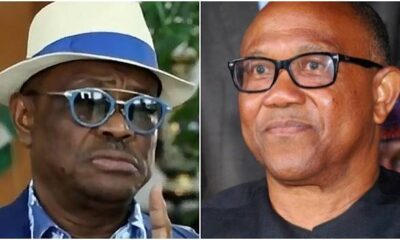

Lessons from the 2023 Presidential Elections: Obi Vs Wike
ShareBy Sunday Adelaja My goal in this article is to go beyond promoting a particular candidate like I did in...
Certificates Without Jobs: The Uncomfortable Reality of Nigeria’s Education System
ShareBy Idris Rufai Welcome to Nigeria, where young people are highly educated, professionally qualified and, unfortunately, increasingly experienced in the...

FG Generates N33tn Revenue in 10 Months – Oyedele
ShareBy Tony Obiechina, Abuja The Federal Government generated N33tn in revenue between January and October 2026, while about 90 per...


Terrorists Flee Strongholds, Military Block New Bases – DHQ
ShareBy David Torough, Abuja The Defence Headquarters (DHQ) has dismissed reports and suggestions of a ceasefire with Boko Haram terrorists,...


Court Nullifies Mark-led ADC Leadership, Atiku’s 2027 Candidacy
ShareBy David Torough, Abuja The Federal High Court in Abuja has nullified the leadership of the African Democratic Congress (ADC)...
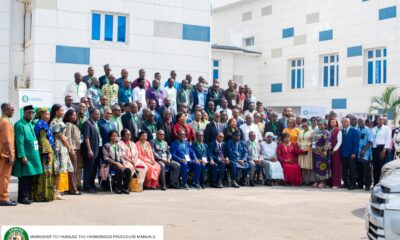

WAHO Advances Regional Health Integration Through Standardised Procedure Manuals
ShareBy David Torough, Abuja The West African Health Organization (WAHO) has commenced a regional workshop in Abuja to finalize procedural...