
NEWS
FCT Strengthens Referral System for Better Healthcare Accessibility


Dr Adedolapo Fasawe, FCT-HES Mandate Secretary, said on Monday that the Federal Capital Territory has strengthened its health system as patients are now documented electronically.
Fasawe said this in Abuja during a two-day Area Council Dissemination meeting on United States Agency for International Development – Integrated Health Programme (USAID IHP) project in the FCT.
According to her, the five years USAID IHP expanded technical support to Nigeria is designed to champion reduction in child and maternal morbidity and mortality in FCT.
“Due to the intervention of IHP, we have almost perfected our referral system; when people go to the primary healthcare centres, they will be documented electronically and can be referred without stress.
“We have more than 60 sets of closed user telephones donated to us through the project.
“Now our two referral system is very smooth because, before a patient is taking from one spot to the other, somebody will be excepting the person at the other end,” she said.
On maternal mortality, Fasawe said that the present administration had zero tolerance for it.
According to her, IHP has helped in ensuring that no woman dies due to childbirth complications.
“The project helped us to look at low hanging fruits and the only way to reduce maternal mortality is by education, advocacy and sensitisation,” she said.
Fasawe said that FCT had made health insurance free for pregnant women that resident in the territory.
“If you are pregnant, register for health insurance, and your delivery as well as the baby, for the first year of the child will be taken care of,” she said.
Fasawe said that the territory was faced with death of Human Resources in health system and as such was transferring skills and training community health workers to mount those primary health centres.
“We have a lot of infrastructure in the FCT but we don’t have enough human resource to man the places.
“The project has supported us to train community people to give out the basics
“In terms of drugs, we are strengthening our drugs revolving system and we will make sure that at no point in time you go to any primary healthcare centres, they will tell you there are no drugs.
“We have drugs in almost all the centres that people access,” she said.
Dr Yakubu Mohammed, Ag. Executive Secretary, FCT Primary Health Care, said that the objective of the project was to strengthen health systems supporting Primary Health Care (PHC) services.
Mohammed said that it would also improve access to primary health care services and increase quality of PHC.
“This will help to implement priority PHC interventions, to strengthen the health leadership and ward-level health systems as well as strengthen engagement with the government.
Reports says that USAID IHP is USAID’s expanded technical support to Nigeria to rapidly scale-up proven reproductive, maternal, newborn and child health, nutrition and malaria (RMNCH+NM) interventions.
It targets improved access to and increased quality of primary health care service delivery.
IHP interventions had presence in Ebonyi, Bauchi, Kebbi, Sokoto states, as well as the FCT and supports health policies and systems at the federal level. (NAN)
From Francis Sadhere, Delta
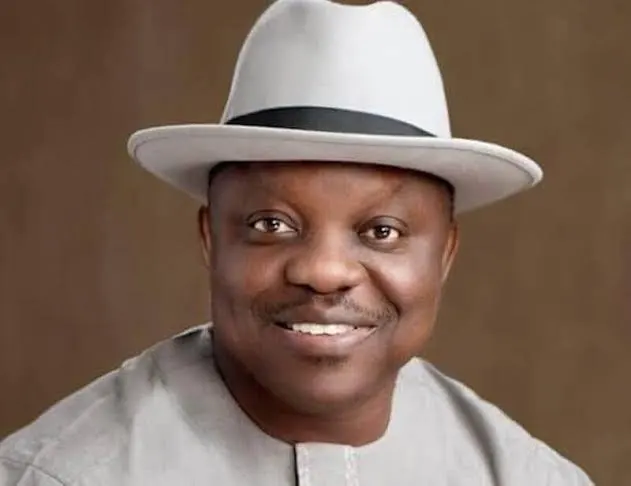
Former Governor of Delta State, Dr. Emmanuel Eweta Uduaghan, has died. He was 71.
Uduaghan, who governed the state from 2007 to 2015, reportedly passed away on the morning of Monday, October 19, 2026.
His death was announced in a statement signed by Toju Anire Uduaghan on behalf of the family, which described his passing as a devastating loss to the family, Delta State and Nigeria.
The family said the former governor was a beloved father, brother, uncle and patriarch, whose life and service touched many people across the state and the country.
“His passing has left us devastated. Words can hardly express the depth of our sorrow at the loss of a man who meant so much to our family and whose life and service touched countless others across Delta State and Nigeria,” the statement said.
Uduaghan held several key positions in the Delta State Government before becoming governor. He served as Commissioner for Health from 1999 to 2003 and Secretary to the State Government from 2003 to 2007.
He subsequently emerged as governor in 2007 and remained in office until 2015, during which the family said he demonstrated commitment to the human and infrastructural development of the state.
The family described his death as a profound loss, noting that he was a source of strength, a father figure and a respected elder whose memories and legacy would remain cherished.
“We are grateful to Almighty God for his life, his service, and the legacy he leaves behind,” the statement added.
The family prayed for the repose of his soul and divine comfort for relatives, friends, associates, former colleagues and others mourning his death.
“Your memory will forever remain in our hearts, and your legacy will endure in the lives of those you touched,” the family said in its farewell message.
Uduaghan’s death marks the loss of a former leader who occupied prominent positions in Delta State’s political and administrative history.
The family concluded its announcement with a prayer for his peaceful repose, saying, “May your gentle soul rest in perfect peace. Amen.”
From Mike Tayese, Yenagoa
The Nigerian Content Development and Monitoring Board (NCDMB), in partnership with Heritage Energy Operational Services Limited (HEOSL) and Global Oceon Engineers Nigeria Limited, has launched a Human Capacity Development programme to train 48 Nigerians in subsea engineering.
The kick-off ceremony took place over the weekend in Port Harcourt, Rivers State, as part of the Board’s efforts to address critical skills gaps and strengthen indigenous technical expertise in the oil and gas industry.
The programme combines six months of classroom instruction with six months of structured on-the-job training, giving participants specialised knowledge and practical experience in subsea engineering.
The curriculum covers risers and hydrodynamics engineering, offshore structures design and engineering, pipeline engineering, and computer-aided design and drafting (AutoCAD).In his keynote address, the Executive Secretary of NCDMB, Engr. Felix Omatsola Ogbe, FNSE, represented by the General Manager, Human Capacity Development, Emelle Alexis, said the programme would equip the trainees with the technical expertise required for complex subsea operations and the safe, efficient and reliable operation of modern oil and gas facilities.
“Today marks the beginning of a transformational journey for 48 young Nigerians in a highly specialised field that demands precision, discipline and accountability. Through intensive classroom instruction and structured on-the-job training, the participants will gain hands-on experience in subsea engineering,” he said.
Ogbe stressed that subsea operations require technical competence, professionalism and an unwavering commitment to safety.
“The competencies you acquire through this programme are critical to the safe, efficient, reliable and environmentally responsible operation of modern oil and gas facilities. Beyond technical proficiency, the training is designed to develop your problem-solving skills, teamwork, professionalism and commitment to safety,” he stated.
The Executive Secretary urged the trainees to make the most of the opportunity and demonstrate the discipline and commitment required to succeed in the industry. He expressed confidence that they would emerge with the skills and professional standards needed to contribute to the sector.
In his remarks, the Manager, Nigerian Content Development at Heritage Energy, Felix Osiwo, reaffirmed the company’s commitment to indigenous skills development. He noted that a skilled Nigerian workforce is essential to delivering current and future energy infrastructure projects and sustaining industry growth.
Earlier in his welcome address, the Managing Director of Global Oceon Engineers Nigeria Limited, George Ebuh, represented by Engr. Ifedolapo Aderibigbe, described the programme as a strategic investment by Heritage Energy, NCDMB and Global Oceon in developing indigenous subsea engineering expertise. He noted that skilled local professionals are vital to the safe and reliable operation of offshore and deepwater infrastructure.
The trainees expressed appreciation for the opportunity to acquire specialised subsea engineering skills, identifying safety training and AutoCAD as important areas of learning. The programme is part of NCDMB’s Top 10 Field Readiness Human Capacity Development initiatives, designed to address critical skills gaps in the oil and gas industry. It supports the Board’s efforts to develop specialised Nigerian expertise for offshore and deepwater operations, facilitate technology transfer and increase local participation in high-value industry activities.
The ceremony was attended by representatives of NCDMB, Heritage Energy Operational Services Limited and Global Oceon Engineers Nigeria Limited, as well as the trainees, facilitators and other industry stakeholders.
By Laide Akinboade, Abuja
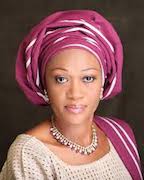
The first lady Senator Oluremi Tinubu, at the weekend urged all Nigerian Christians to ensure they are united and cooperate.
Tinubu stated this at the CAN 50th anniversary celebrations in Abuja, where Tinubu and four former Presidents and Head of State, were among prominent Nigerians honoured for their contributions to the Christian community and the country.
Tinubu received the Christian Icon Award, while former Heads of State, Generals Yakubu Gowon and Olusegun Obasanjo, former President Goodluck Jonathan and former Vice President Yemi Osinbajo received the Pillar of Faith Award.
Other awardees included Secretary to the Government of the Federation, Senator George Akume; Senate President Godswill Akpabio; Deputy Speaker of the House of Representatives, Benjamin Kalu; and governors Sheriff Oborevwori of Delta, Monday Okpebholo of Edo and Seyi Makinde of Oyo states.
Tinubu in her keynote address said fifty years of service to God and humanity in any organisation is no small achievement.
“It is certainly worth celebrating”, she said.
The theme for the celebration is ‘Working Together in Faith’.
She noted that the theme that Christians must remain united in faith and common purpose resonates with the prayer of our Lord Jesus Christ, quoting John 17:21–22.
Senator Tinubu said, “In addition, Ephesians 4:4–6 reminds us that there is one body and one Spirit, just as we were called in one hope; one Lord, one faith, one baptism; and one God and Father of all, who is above all, and through all, and in you all.
“I pray that, just as Christ prayed for the saints, all the Christian blocs and denominations will continue to remain united in Jesus’ name”.
In his welcome address the President of CAN, Archbishop Daniel Okoh, warned that internal divisions and failure to speak against injustice could weaken the church’s role in national development.
Okoh traced CAN’s establishment to August 1976, when church leaders came together to create a common platform for Christians to address issues affecting the church and the country.
He described the association’s five-decade journey as evidence of the commitment of successive Christian leaders to unity, despite differences in doctrine and church traditions.
He, however, acknowledged that the organisation had experienced periods of suspicion, prejudice and marginalisation among some of its constituent groups.
Okoh said successive administrations had worked to overcome such divisions and promote equal rights and privileges for the different Christian traditions represented in the association.
He identified the Christian Council of Nigeria (CCN), Christian Pentecostal Fellowship of Nigeria/Pentecostal Fellowship of Nigeria (CPFN/PFN), Organisation of African Instituted Churches (OAIC), TEKAN/ECWA and other constituent groups as part of CAN’s broad membership.
The CAN president warned against conduct capable of reversing the progress made towards Christian unity, particularly divisive and inflammatory exchanges on social media.
He emphasised that the association belonged to all Christians, urging members to take ownership of its activities rather than leave its growth solely to elected and appointed leaders.
On CAN’s role in national affairs, Okoh said the association had, over the past 50 years, spoken on religious freedom, justice, good governance, corruption, insecurity, humanitarian intervention and national development.
He challenged the church to strengthen its advocacy in the coming decades by ensuring that its positions were courageous, constructive and supported by credible evidence.
He said CAN must continue to defend human dignity, constitutionalism, democratic institutions, religious freedom and the welfare of vulnerable Nigerians.
Among those requiring greater attention, he listed internally displaced persons, out-of-school children, unemployed youths, farmers denied access to their farmlands by insecurity, women facing violence and victims of human trafficking.
“The church must speak!” he declared, calling on Christians to translate their faith into practical compassion, public advocacy and service to humanity.
However, he cautioned that the church must base its interventions on truth, credible evidence and responsible analysis rather than rumours or partisan interests.
On relations between government and religious institutions, Okoh advocated what he called “critical collaboration”, arguing that the church should support policies that advance the common good while challenging injustice and demanding accountability from public officials.
“The appropriate model is critical collaboration, meaning, collaborate where common good requires it, challenge where justice requires challenge, commend where government does well and warn where government fails, while maintaining the church’s independence,” he said.
He further urged CAN to strengthen its capacity for research, advocacy, humanitarian services and engagement with national development issues.
According to him, the church’s agenda for the next 50 years should include environmental protection, climate resilience, ethical technological development and the preservation of human dignity.
Okoh maintained that Nigeria possessed the human resources and resilient communities needed to overcome its challenges, but stressed that progress depended on responsible leadership, accountability and practical action.
He called on political leaders to protect citizens, respect the Constitution, account for public resources and strengthen national institutions.
He also urged Christians to complement prayers for Nigeria and its leaders with active participation in nation-building.
“The message to the church must be equally clear: pray for Nigeria, pray for those in government, speak for Nigeria, serve Nigeria, build Nigeria and heal Nigeria,” he said.
The CAN president expressed confidence in Nigeria’s future, saying the golden jubilee should serve as a springboard for renewed commitment to unity, integrity and national development.
Meanwhile, Makinde used the anniversary to urge Christians to take a more active role in politics, warning that withdrawing from the political process would limit their ability to influence governance and national transformation.
Speaking with journalists at the event, the Oyo State governor challenged the perception that politics was inherently dirty, urging believers to participate in shaping policies and leadership decisions.
He said Christians must not remain on the sidelines while expecting the country to change.
Makinde drew lessons from the biblical accounts of Samuel and David, arguing that the shortcomings of political leaders should not discourage believers from seeking positions where they could contribute to society.
He recalled that Samuel emerged despite the misconduct of Eli’s sons, while David served in King Saul’s palace despite being anointed as Israel’s future king.
“I will use this opportunity to encourage our Christian brothers and sisters all across the country to brace up and participate in the agenda to transform Nigeria, to reset our country,” he said.
The governor identified poverty as Nigeria’s most pressing challenge, insisting that economic hardship, rather than religious differences, should be the priority of national discourse.
“Our problem is actually not religious. Our problem in this country is poverty, grinding poverty,” he said.
He urged leaders and citizens to focus on practical measures to reduce poverty and improve living conditions, stressing that meaningful national transformation would require sustained efforts to address the economic difficulties confronting Nigerians.



Former Delta Governor, Uduaghan Dies at 71
Share From Francis Sadhere, Delta Former Governor of Delta State, Dr. Emmanuel Eweta Uduaghan, has died. He was 71. Uduaghan,...


Attempted Suicide in Nigeria: Legislative Reform, Economic Hardship and the Right to Human Dignity
ShareBy Oluwaleye Adedoyin Grace Should a person who survives a suicide attempt be punished or helped? This question challenges Nigeria’s...

UBA Scores Legal Victory in N156bn Stallion Debt Case
ShareBy Tambaya Julius, Abuja United Bank for Africa (UBA) Plc has secured a favourable judgment in its N156 billion debt...

Nigeria Customs, Afreximbank Push Regional Border Modernisation
ShareBy Tambaya Julius, Abuja The Nigeria Customs Service (NCS) and the Customs administrations of Benin and Cameroon are working with...

NCDMB Heritage Energy Train 48 Nigerians in Subsea Engineering
ShareFrom Mike Tayese, Yenagoa The Nigerian Content Development and Monitoring Board (NCDMB), in partnership with Heritage Energy Operational Services Limited...
CAN: Tinubu Tasks Christians on Greater Unity
ShareBy Laide Akinboade, Abuja The first lady Senator Oluremi Tinubu, at the weekend urged all Nigerian Christians to ensure they...
Maka Oganiru Begins Operations, Pledges Africa’s Investment-ready Projects
ShareBy Tony Obiechina, Abuja New Africa-focused advisory firm aims to connect high-potential opportunities with global capital, institutional investors and strategic...

FG Tadks Varsities on Specialised Health Degree Programmes
ShareBy Tambaya Julius, Abuja The Federal Government has urged vice-chancellors of Nigerian universities to introduce degree programmes that address critical...

Presidency, Makinde Clash Over Alleged ₦250bn NLNG Fund for States
ShareBy Tambaya Julius, Abuja The Presidency has dismissed claims by Oyo State Governor Seyi Makinde that the Federal Government is...

UBA Wins N156bn Debt Recovery Case Against Stallion Group
ShareThe Court on Friday ruled in the Bank’s favour on all issues and granted all its prayers. United Bank for...