
Agriculture
FCTA Distributes Fishery Inputs to 60 Farmers to Boost Fish Production

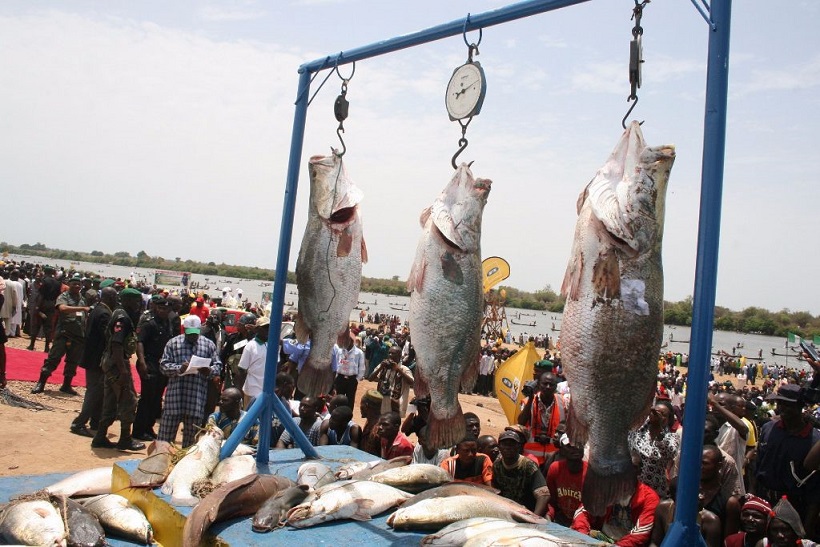
The Federal Capital Territory Administration (FCTA) has distributed assorted fishery inputs such as fish fingerlings and fish feed to 60 farmers to start fish production in various communities in the territory.
Mandate Secretary for the FCT Agriculture and Rural Development Secretariat, Alhaji Abubakar Ibrahim, said this at the inauguration of Sensitisation Workshop on Diversification of Aquaculture Production and Employment of Fish Farmers in FCT.
The event held at the FCTA Exhibition Hall, on Thursday in Abuja. Ibrahim said the workshop was to sensitise fish farmers on the need to diversify fish production and embrace new fish varieties other than the popular catfish species.
He said that available records showed that Catfish production accounted for about 80 per cent of all farmed fish in Nigeria, making the country largest producer of Catfish in sub-Saharan Africa.
Ibrahim, however, said with rapid growth and development of fisheries and aquaculture industry, there had been a sharp rise in the consumption of edible fish. He said this could be attributed to urbanisation, change in lifestyle of families and medical benefits associated with its consumption.
Ibrahim said fish farmers in Nigeria were hard working and resilience and had placed the country amongst the leading fish producing countries of the world. He said it was imperative that they began to expand their activities to accommodate other fish varieties which would grant them greater patronage and more income. “It is against this background that the Secretariat through the Department of Fisheries is inaugurating this sensitisation workshop.“The aim of the workshop is not only exposing Fisher folks to other fish varieties such as (Tilapia niloticus and Hoterotis Niloticus) but train them on effective production techniques for house-hold consumption and commercial purposes,” he said.
Ibrahim said that the secretariat would ensure that Department of Fisheries deployed its technical expertise to follow-up the progress of the participants to achieve the objective of the initiative. “I want to assure you that the secretariat will leave no stone unturned towards ensuring the success of the Grass root Developmental Initiatives of the FCT Minister of State, Dr Ramatu Aliyu,” he said.
Ibrahim said that the minister established the FCT Aquaculture and Allied Trades Centre for Women and Youth in Kwali in 2019.He said the centre had since establishment, boosted catfish production in the FCT and had already started training farmers on the production of assorted fish varieties.
Earlier, the FCT Director, Department of Fisheries and Aquaculture, Mrs Ifeoma Okeke, said the fisheries sub-sector contributed to both FCT and National economy through employment and income generation.
She said the subsector also reduced poverty, improved foreign exchange earnings and provided raw materials for the animal feed industry. Okeke said that over 10 million Nigerians were actively engaged in primary and secondary fisheries operations. The News Agency of Nigeria (NAN) reports that the 60 beneficiaries drawn from the Six Area Councils of FCT are given starter packs. (NAN)


Some residents in Lagos State have expressed concern over the recent surge in the price of tomatoes, forcing many households to adopt alternatives.
The residents made their views known in separate interviews on Wednesday in Lagos.
A market survey showed that a 50kg basket of tomatoes now sells between N115,000 and N125,000, compared to between N35,000 and N40,000 recorded last month.
Olachi Igwe, a resident of Ago Palace, said the scarcity and high cost of tomatoes had disrupted her household’s meal plans.
“I contacted my usual vendor, but she said tomatoes were scarce and difficult to source.
“A small bowl we used to buy for between N3,500 and N4,000 now sells for as high as N6,000 to N7,000, when available.
“For now, my family will resort to palm nut stew (ofe akwu) until prices stabilise,” she said.
Another resident, Mercy Okeleye of FESTAC, said although her family prefers fresh tomatoes, rising prices have forced her to consider cheaper options.
“I cannot do without fresh tomatoes because of the taste, but I may have to buy broken ones, popularly called ‘esha’, which are relatively cheaper.
“I do not consider tomato paste a suitable substitute because it is not purely made from tomatoes,” she said.
Also speaking, Tope Babalola from Dopemu, said she might adjust her cooking methods if prices remain high.
“I have not bought tomatoes in over a month, but if the price is still high, I will use more onions and peppers.
“I will not resort to artificial additives; I prefer natural ingredients for my meals,” she said.
Joan Ogugua, another resident, said she had already switched to tomato paste to cope with the situation.
“I asked my son to buy tomato paste for our meals. I cannot justify spending excessively on fresh tomatoes when other basic needs must be met,” she said.
Also, Oge Ugwu, a civil servant at Lekki, said she would resort to cucumber stew with the recent price hike.
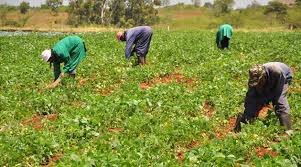
The Tomatoes Growers and Processors Association of Nigeria (TOPAN) has predicted a steady increase in the price of the produce between May and June 2026.
The Kaduna State Chairman TOPAN, Rabiu Zuntu, disclosed this in an interview recently in Lagos.
Zuntu noted that although there is no particular time for tomatoes planting season up north, seasonal weather variations can affect the production of the produce.
“Although we can plant tomatoes all-year-round, we cannot assure quality harvest all-year-round.
“Some farmers are harvesting now, while others are transplanting, and others are harvesting.
“Tomatoes are still available for sale but the price of the produce is gradually on the increase.
“Come May/June, the prices of tomatoes will be very expensive, so now is a good time to stock up the produce. There’s always a scarcity within that period.
“This is because of the nature of the weather in the north around that period, the weather is usually very hot and tomatoes cannot resist such hot temperature,” he said.
Zuntu said the price of tomatoes have started rising up in the north.
“A 50kg rafia basket of tomatoes sells from N20,000 as against N7,000 to N10,000 that was sold earlier in the year.
“While a crate of tomatoes up north is sold between N10,000 and N15,000 as against N5,000 to N6,500 sold earlier in the year.
“In most part of Kano State, where there is bumper harvest, they are rounding off their harvest. So, tomato is not that available there and most buyers have turned to where they can find it now, mostly within Kaduna State and some parts of Plateau State.
“So, that’s why the supply has decreased and the tomato supply and cost is determined by the law of demand and supply,” he said.
A 50kg basket of tomatoes in Lagos, at the moment, sells between N40,000 and N60,000 depending on the size and quality.
The Smallholder Women Farmers Organisation in Nigeria (SWOFON), Oyo State chapter, has said that the lack of irrigation facilities had become a major obstacle to dry season farming in the state.
The Chairperson of SWOFON in Oyo State, Atinuke Akinbade, said this in an interview in Ibadan on Monday.
Akinbade, who shared the experiences of women farmers in the state during the 2025 dry season, said that inadequate access to water for irrigation significantly affected the performance of many farmers during the period.
“It hindered many older farmers from participating in dry season farming and also prevented younger farmers from doing as much as they could in cultivating large acres of land,” she said.
Akinbade explained that farmers who managed to plant during the season struggled to access sufficient water to irrigate their farms, a situation worsened by the effects of climate change.
“Many farmers who depended on streams and wells to water their crops suffered major setbacks because those sources could not provide enough water for irrigation.
“Some farmers had to resort to buying water from commercial water tankers, which increased the cost of production, while at times it was even difficult to get water from the tankers,” she said.
The SWOFON chairperson warned that failure to address the problem could worsen food insecurity in the coming months.
“Even now, rainy season farming has not fully commenced because of the irregular rainfall pattern.
“This is a double burden, and if nothing is done, it may lead to serious hunger later,” she said.
Akinbade, however, acknowledged that the government had organised training for members of the association on home gardening.
She, however, said that little support was provided to address the challenges of dry season farming.
The chairman said that the home garden support package given to members consisted mainly of seedlings and one sprayer.
“They gave us two packs each of maize and pepper seeds, with six seeds in each pack, as well as one sprayer, so that we can grow food for household consumption,” she said.
Earlier, Oluwatoyin Oyedeji, SWOFON Coordinator in Oyo East, explained the severe hardship members of the organisation experienced in sourcing water for irrigation.
“Many farmers are already counting their losses because water was not available to irrigate their farms.
“Those who depended on streams and brooks were badly affected because many of them dried up, while the few that still had water had so little that farmers had to dig deeper into the ground in search of more,” Oyedeji said.
In the same vein, the Women Leader for farmers in Saki East, Musiliu Ashiru, said the absence of irrigation facilities also hampered dry season farming in her area.
According to her, many farmers still engaged in dry season farming have had to pay for water to keep their crops alive.
“Many of them buy water from the dam here to irrigate their crops. It has not been easy for them this year,” Ashiru said.




Police Deny Shooting Motorcyclist in Kwara
ShareThe Kwara State Police Command has denied shooting a 23-year-old motorcyclist, Abdurasaq Lukman, during a stop-and-search operation around Oyun Bridge,...


WHO Expands Contraceptive Options
ShareThe World Health Organization (WHO) has recommended a wider range of safe and effective contraceptive options, including emergency contraception, longer-lasting...
Insecurity: FG Promises Continues Action for Safety of all Nigerians
ShareThe Federal Government has assured Nigerians that no effort will be spared to secure lives, livelihoods, and dignity across the...


From Accusation to Execution: Nigeria’s Mob Justice Crisis
ShareBy Mukhtar Dambatta In Nigeria, an accusation of theft can turn a calm crowd into a dangerous mob within minutes....
The Middleman Economy: Why Nigerians Pay More and Earn Less
ShareBy Dovish Okojie Whether you are buying food in the market, renting a house, importing goods, securing a contract, or...


NGX Invest Expands Primary Market Access Through New Subscriptions Channel
ShareThe Nigerian Exchange Group (NGX Group) has introduced a WhatsApp subscription channel on its NGX Invest platform to expand access...


Davido, Dangote Showcase Nigeria’s Creative, Industrial Strength in New York
ShareAfrobeats artiste, David Adeleke, popularly known as Davido, has joined business mogul, Aliko Dangote, at New York’s Times Square, where...


Oyedele Calls for Affordable Capital to Finance Africa’s Infrastructure
ShareBy Tony Obiechina, Abuja The Minister of Finance and Coordinating Minister of the Economy, Taiwo Oyedele, has called on the...
Shanono ICT, CBT Centre Project Begins as MPPPME Conducts Initial Inspection
ShareFrom Rabiu Sanusi, Kano The Kano State Ministry for Public Procurement, Projects Monitoring and Evaluation (MPPPME) has conducted an inspection...


SEDC Flags Off South East Agro-Development Programme in Enugu
ShareFrom Sylvia Udegbunam, Enugu Enugu State Governor, Dr. Peter Mbah, on Tuesday, officially flagged off the South East Agro-Development Programme...