
NEWS
FG Evaluates NPRGS Beneficiaries, Implementers

By Tony Obiechina, Abuja
The Federal Government has held an evaluative workshop with the beneficiaries and implementers of the National Poverty Reduction and Growth Strategy (NPRGS) programme in Awka, Anambra State.
The Workshop, which was aimed at engaging with stakeholders and beneficiaries of the program to elicit insight into their satisfaction and suitability of the program, in line with the Renewed Hope agenda of the current administration which emphasizes effective service delivery for good governance.
Addressing participants at the workshop, the Permanent Secretary, Federal Ministry of Budget and Economic Planning, Dr.
Emeka Vitalis Obi said that the program being a key government initiative designed to accelerate national development by lifting 100 million Nigerians out of poverty within a decade through four core pillars namely: macroeconomic stabilization, industrialization, trade and growth and redistributive programs reaffirms the Federal Government’s unwavering commitment to fostering inclusive economic growth, job creation and national prosperity.Dr. Obi further disclosed that recent field Evaluation findings carried out, highlighted a 25-30% increase in crop yields, over 60% of Technical Education and Training (TVET) graduates securing employment/started businesses and enhanced rural road infrastructure which had significantly boosted economic activities and access to essential services.
“This evaluation workshop will be used to triangulate the report of the field valuation’’, he maintained.
Noting the import of the workshop, the Permanent tasked the implementing agencies and beneficiaries to engage in constructive discussions on how the government could define the approaches to implement and enhance the effectiveness of the NPRGS and ensure that its impact remained far-reaching, inclusive and sustainable.
The Permanent Secretary of Economic Planning, Anambra State, Chinyere Nwabachili, emphasized that the success of the program not only hinged on the strategies implemented but also on the collaborative efforts between government, development partners, Civil Society Organizations and the participating communities.
In her words, “Your insights, experiences and feedback will be crucial in shaping the future of these programs. Let us remain committed to the vision of a prosperous, equitable nation, where economic growth leads to the well-being of all citizens, especially the most vulnerable’’.
Also speaking, one of the consultants for the program, from Finestyle Human Resources Ltd. Ebere Chukwuemeka, explained that the training could not have come at a better time as the recent global recession had worsened unemployment and poverty levels in developing countries. Beneficiaries were trained on: Tailoring and Fashion designing, Plumbing, Baking and confectionaries, Cassava Processing, Painting, Bead making, Soap making, Solar-Power installation, etc.
The training contained various sessions like: Classrooms, simulation/practical exercises, group discussions and hands -on exercises. He therefore called for a bigger cash grant with a loan component for women and youths in order to improve their living standards and also keep them productively engaged.
In a brief interview with journalists, one of the beneficiaries, a fashion designer, Madam Ifeoma Nweke, testified that the start- off fund she received after her training enabled her to purchase necessary working tools for her shop. This went a long way in improving her efficiency on the job and generating more income for her family
Highlights of the event were presentation of papers on the programme implementation processes by implementers: Department of Rural Development, Federal Ministry of Agriculture and Food Security, Industrial Training Fund /Technical Education and Training (ITF /TVET), National Directorate of Employment (NDE), National Productivity Center (NPC) and on-the -site visitation of beneficiaries at their various locations.

By Tony Obiechina, Abuja
The Monetary Policy Committee (MPC) of the Central Bank of Nigeria (CBN) has retained the benchmark interest rate at 23 per cent, citing the need to consolidate gains in inflation moderation amid emerging risks from election-related spending, increased festive season expenditure and global energy price uncertainties.
The CBN Governor, Olayemi Cardoso, announced the decision on Tuesday at the end of the committee’s 308th meeting, held on November 23 and 24, 2026, in Abuja, with 10 members in attendance.
Cardoso said, “The Committee decided as follows: retain the Monetary Policy Rate at 23 per cent.
”The committee also retained the Standing Facilities Corridor at plus 50 and minus 300 basis points around the Monetary Policy Rate (MPR). It maintained the Cash Reserve Requirement (CRR) for deposit money banks at 45 per cent, merchant banks at 16 per cent and non-Treasury Single Account public sector deposits at 75 per cent.
The decision follows the 350-basis-point reduction in the benchmark interest rate from 26.5 per cent to 23 per cent in September 2026. The apex bank had earlier reduced the rate by 50 basis points in February before retaining it at subsequent meetings ahead of the September adjustment.
Explaining the decision, Cardoso said although headline inflation had moderated for five consecutive months, the committee considered prevailing economic developments and potential inflationary pressures that could undermine the progress recorded.
He said the anticipated increase in spending associated with the end-of-year festive season and election-related activities could stimulate aggregate demand and exert upward pressure on prices.
The committee also expressed concern over the ongoing conflict in the Middle East, which could sustain pressure on global energy prices, as well as adverse weather conditions that could disrupt food production and supply.
According to the latest Consumer Price Index report released by the National Bureau of Statistics (NBS), Nigeria’s headline inflation rate declined to 14.06 per cent in October 2026 from 14.63 per cent in September, representing a reduction of 0.57 percentage points.
Core inflation also fell to 10.78 per cent from 12.95 per cent, while food inflation moderated to 19.13 per cent from 19.59 per cent, reflecting easing price pressures on processed food and farm produce following the commencement of the harvest season.
Cardoso attributed the sustained moderation in inflation to exchange rate stability, improved monetary policy transmission and the impact of the CBN’s restrictive monetary policy stance.
He also disclosed that economic activities had continued to expand, with the Composite Purchasing Managers’ Index rising from 53 points in September to 53.2 points in October, indicating improved performance across the industrial, agricultural and services sectors.
Responding to questions from journalists, the governor said the September interest rate adjustment was yielding the intended results, noting that interbank lending rates were moving closer to the lower band of the Standing Facilities Corridor.
He added that rates on Open Market Operations instruments and Treasury bills had moderated, while the gap between the benchmark interest rate and prevailing market rates had narrowed considerably.
Cardoso also disclosed that credit to the private sector was gradually recovering, expressing satisfaction with the improvement in lending activities.
He explained that the September adjustment was designed to align the benchmark interest rate with prevailing market realities and improve monetary policy transmission, rather than signal a departure from the bank’s restrictive monetary policy stance.
On concerns over recent pressure on the naira and the decline in external reserves, the CBN governor described the developments as temporary and largely seasonal, expressing confidence in the sustainability of exchange rate stability.
Nigeria’s gross external reserves stood at $54.02 billion as of November 17, 2026, providing cover for 10.26 months of imports of goods and services.
Cardoso attributed the recent foreign exchange market volatility to year-end portfolio adjustments by foreign investors, increased demand for foreign exchange by domestic businesses seeking to hedge against future risks and rising election-related expenditure.
He further disclosed that diaspora remittances exceeded $900 million in the preceding month, adding that Nigeria’s current account surplus and sustained remittance inflows would strengthen the country’s external buffers.
The governor assured Nigerians that the apex bank would continue to deploy available policy measures to preserve exchange rate stability.
On the recently signed Memorandum of Understanding between the CBN and the Nigerian National Petroleum Company Limited (NNPCL), Cardoso said the agreement followed months of consultations between both institutions.
He explained that the partnership was designed to improve transparency in the management of oil-related foreign exchange inflows, deepen the foreign exchange market, strengthen external reserves and support the financing of energy projects.
According to him, the CBN would also deploy its advisory expertise and convening power to support the operations of the national oil company.
Looking ahead to 2027, Cardoso reaffirmed the apex bank’s commitment to policy consistency, stronger coordination between fiscal and monetary authorities, sustained banking sector stability and further improvements in monetary policy transmission.
He reiterated that achieving single-digit inflation remained the bank’s overriding objective.
The committee projected a positive outlook for the domestic economy, supported by improved crude oil production and sustained expansion across the agricultural, industrial and services sectors.
However, it cautioned that elevated global energy prices, trade policy uncertainty, supply chain disruptions, cyber threats and diminishing fiscal space remained significant risks to the global economic outlook.
The committee maintained that sustaining the gains in price stability would require continued policy discipline and vigilance against emerging domestic and external inflationary pressures.

By Orjime Moses, Abuja
A concerned son of the Urhobo Nation, Austin Obule Emovworho, has warned political leaders in Delta State against using Urhobo and Isoko youths as instruments of political violence ahead of the 2027 general elections.
Emovworho, who expressed concern over recent killings and attacks involving youths during political activities in the state, said no political ambition or public office was worth the loss of young lives.
He urged Delta State Governor, Sheriff Oborevwori, to ensure a thorough and impartial investigation into the incidents and bring those responsible to justice.
He also called on political leaders and aspirants to discourage political thuggery, intimidation and the exploitation of youths for partisan interests.
Emovworho appealed to the Urhobo Progress Union (UPU), Isoko Development Union (IDU), traditional rulers and community leaders to promote unity and strengthen relations between the two ethnic groups.
He urged Urhobo and Isoko youths at home and in the diaspora to reject political violence and embrace dialogue, tolerance and peaceful political participation.
He said his appeal was not against any political party but aimed at protecting lives and preventing partisan politics from dividing communities.
“Our youths are not political weapons, and their lives must never become the price of political ambition. Enough of political killings and youth exploitation,” he said.
He commiserated with families who lost loved ones, wished the injured speedy recovery and called for lasting peace and unity across Urhobo and Isoko communities.
By David Torough, Abuja
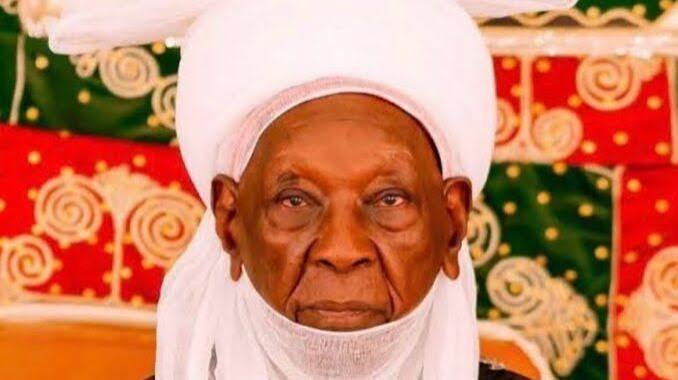
The Katsina State Government has suspended all official engagements and travels of the Emir of Daura, Alhaji Umar Faruk Umar, following allegations of sexual assault levelled against the traditional ruler by a Polish tourist, Mirka Czee.
The government also announced the constitution of an investigative committee to establish the facts surrounding the incident and recommend appropriate action.
The decision was announced on Tuesday in a statement issued by the state Commissioner for Information and Culture, Dr Bala Salisu-Zango, on behalf of Governor Dikko Umaru Radda.
According to the statement, the governor expressed serious concern and displeasure over the allegations, which have generated widespread reactions following the circulation of a video on social media.
Radda subsequently directed the immediate establishment of a committee to investigate the claims and advise the state government on the appropriate course of action.
As part of the measures pending the conclusion of the investigation, the government ordered the suspension of the Emir’s official engagements and travels.
The statement assured residents that the government would take the matter seriously and fully implement the committee’s findings and recommendations.
It added that justice would be served, while urging members of the public to remain calm, law-abiding and continue their normal activities to avoid any breakdown of public peace.
The controversy followed the circulation of a video in which Czee accused the Emir of touching her breasts without her consent during a visit to his palace in Daura.
The tourist, who was born in the Czech Republic, alleged that she was left alone with the monarch after being shown around the palace and its surroundings.
She claimed that during the encounter, the Emir held her hand, hugged her and kissed her on the cheek before allegedly touching her breasts without her consent.
Czee reportedly captured part of the encounter using Meta smart glasses and subsequently released the footage on social media, explaining that she decided to speak publicly about her experience to raise awareness about unwanted touching and sexual misconduct.
However, the Daura Emirate Council said it was reviewing the viral footage to establish its authenticity and determine whether it had been manipulated or artificially generated.
The council’s spokesperson, Ibrahim Daura, said the video would be examined before the traditional institution made an official pronouncement.
An unnamed source at the Emir’s palace also denied the allegation, insisting that no such incident occurred during the tourist’s visit.
Meanwhile, Amnesty International Nigeria has called on the Katsina State Government and the police to ensure a transparent and independent investigation into the allegation.
The rights organisation’s position underscores growing calls for an impartial inquiry capable of establishing the facts and ensuring accountability.
Although the state government has pledged to implement the committee’s recommendations, it has yet to disclose the membership of the investigative panel or specify when its report will be submitted.
The investigation is expected to determine the next steps by the state government as public attention remains focused on the allegations involving one of the most prominent traditional institutions in Katsina State.



Court Nullifies Omo-Agege’s NDC Senatorial Candidacy
ShareFrom Francis Sadhere, Delta The Federal High Court sitting in Warri, Delta State, has nullified the nomination of former Deputy...


APC Mourns 15 Supporters Killed In Zamfara Road Accident
ShareBy Orjime Moses, Abuja The All Progressives Congress (APC) has mourned 15 of its members and supporters reportedly killed in...
Ortom ‘Ranched’ Benue People in IDP Camps Instead of Cattle – Tondo
ShareFrom Attah Ede, Makurdi Former Benue State Commissioner for Lands and Survey, John Tondo, has criticised former Governor Samuel Ortom...


2027: INEC Chairman Seeks Stronger Security Cooperation Ahead Of Elections
ShareBy Orjime Moses, Abuja The Chairman of the Independent National Electoral Commission (INEC), Prof. Joash Ojo Amupitan, SAN, has called...


CBN Retains Interest Rate at 23 Per Cent
ShareBy Tony Obiechina, Abuja The Monetary Policy Committee (MPC) of the Central Bank of Nigeria (CBN) has retained the benchmark...


2027: Emovworho Warns Delta Politicians Against Exploiting Youths
ShareBy Orjime Moses, Abuja A concerned son of the Urhobo Nation, Austin Obule Emovworho, has warned political leaders in Delta...

Katsina Suspends Daura Emir, Orders Probe into Sexual Assault Allegation
ShareBy David Torough, Abuja The Katsina State Government has suspended all official engagements and travels of the Emir of Daura,...

Makarfi Chairs DAILY ASSET 10th Anniversary, Awards
ShareBy David Torough, Abuja Former Kaduna State Governor, Senator Ahmed Mohammed Makarfi, has accepted the invitation to chair the 10th...


Customs Unveils Novara to Spotlight Officers’ Challenges
ShareBy Tambaya Julius, Abuja The Nigeria Customs Service (NCS) has unveiled a 79-episode television drama series, Novara, to showcase the...

FCT Upgrades 20 PHCs Under World Bank-supported IMPACT Project
ShareBy Laide Akinboade, Abuja The Federal Capital Territory Administration (FCTA) has upgraded 20 Primary Health Centres (PHCs) across the territory...