
NEWS
FG Flags-off Dualisation of Benin-Ekpoma-Auchi-Okpella-Okene-Ajaokuta Road Project

From Joseph Ebi Kanjo, Benin
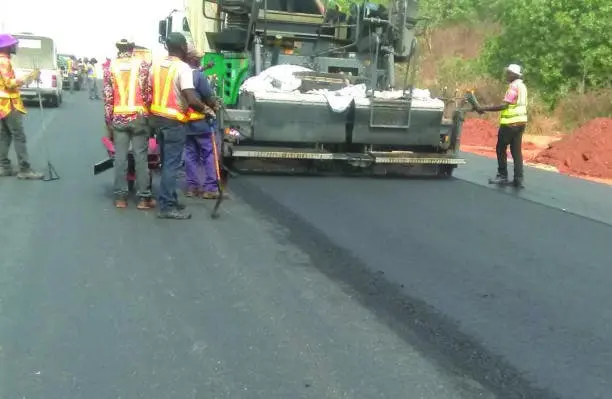
President Bola Tinubu has officially flagged-off the dualisation of sections two to four of the Ekpoma-Auchi-Okpella-Okene-Ajaokuta Expressway, saying the road project is strategic to transforming the socio-economic activities in Edo and Kogi states.
Represented by the Minister of Works, Dave Umahi, at the event held in Ekpoma, Esan West Local Government Area of Edo State, President Tinubu reiterated his administration’s commitment to making federal roads across the country motorable, thereby enhancing national development.
According to him, the Ekpoma-Auchi-Okpella-Okene-Ajaokuta corridor is of critical economic importance, linking Edo and Kogi states and serving as a major route for the movement of goods and people.
“This road is part of the Renewed Hope Agenda of President Tinubu. It is a signature project that will open up this axis for economic and social development. Roads constructed under this administration will stand the test of time, lasting over 50 years,” Tinubu assured.
The President praised Governor Monday Okpebholo for his developmental strides, including the ongoing flyover project at Ramat Park in Benin City.
He also commended the governor’s proactive approach to infrastructure development.
“As long as you keep working for Edo people, continue the good work. Those heading to court are simply wasting their time.
“The partnership between Governor Okpebholo and Senator Adams Oshiomhole has paid off.
“Together, they presented a compelling case to the President, and today, Edo people’s long-standing dream is a reality,” Umahi added.
Speaking at the ceremony, former Edo State Governor, Adams Oshiomhole, praised President Tinubu for prioritizing durable infrastructure.
“Previous administrations made us believe that Nigerian roads could not last beyond 10 years. Today, under President Tinubu’s leadership, we are witnessing roads designed to last between 50 and 100 years. This is how sustainable growth is achieved,” Oshiomhole said.
Oshiomhole, who is currently representing Edo North Senatorial District at the Senate noted that the dualisation of the road would enhance socio-economic activities between Edo and Kogi states, boosting commerce, transportation, and regional integration.
On his part, governor of Edo State, Monday Okpebholo, described the flag-off as a turning point for Edo State.
The governor recounted his participation in protests over the poor state of the road and thanked President Tinubu for coming to the rescue.
“As someone who resides along this corridor, I understand the pains of the people. Today, that story has changed. Edo people are now experiencing meaningful development,” Okpebholo stated.
He also paid tribute to Comrade Oshiomhole for his relentless advocacy.
“Oshiomhole stood by me and insisted that this road must be fixed. Today, that determination has paid off,” he added.
Looking ahead to future elections, Governor Okpebholo called on Edo people to show appreciation through their votes.
“2027 will be the time to thank President Tinubu and the APC for the transformation we are witnessing today,” he declared.
The governor revealed that the dualized road would feature three lanes, easing traffic and boosting economic activities in the region.
Also speaking at the event, Governor Usman Ododo of Kogi State, represented by his deputy, Joel Salifu, commended President Tinubu for embarking on a project that would spur regional development.
“This long-awaited road project brings light and hope to communities along this corridor. Once completed, it will ease movement, enhance trade, and foster development in both Kogi and Edo States,” Salifu said.
He described the road as a symbol of renewed connectivity between the two states and a testament to the Federal Government’s commitment to national development.
Stakeholders believe that when completed, the road will not only serve as a key transport link but also stimulate investment, tourism, and industrial growth, further integrating Edo and Kogi States into Nigeria’s economic landscape.
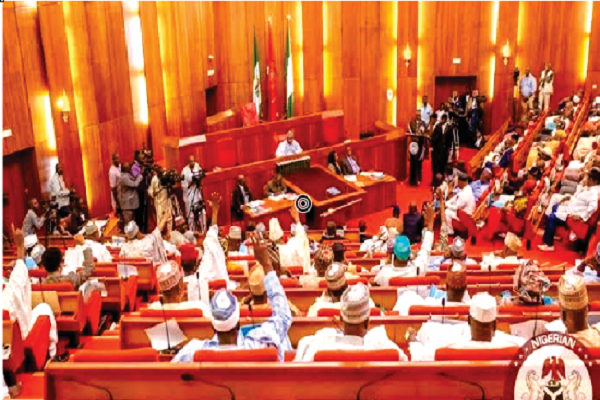
The Senate on Tuesday passed a bill extending the implementation of the capital component of the 2025 Appropriation Act from September 30 to December 31.
The bill, according to the upper chamber, seeks to provide additional time for ministries, departments and agencies (MDAs) to complete all ongoing capital projects.
The bill, sponsored by the Senate Leader, Opeyemi Bamidele (Ekiti Central), was read for the first time and subsequently considered for second reading after the suspension of the relevant Senate Rule.
Leading debate on the bill, Bamidele said the extension would provide the legal and administrative window required to fully implement projects for which funds had been appropriated and released.
He said that capital budget implementation involved procurement, contract execution, mobilisation, certification of works and payment processes, among other procedures.
The senate leader said several infrastructure and development projects across the country were at various stages of completion and required additional time for implementation.
According to him, allowing the existing implementation deadline to lapse can create difficulties for MDAs in completing projects for which resources had already been appropriated and released.
Bamidele added that the extension would help prevent projects from becoming abandoned and ensure that appropriated resources were deployed for their approved purposes.
The senate leader stressed that the extension would not amount to a relaxation of accountability, fiscal responsibility or legislative oversight.
He said that MDAs would remain required to comply with the appropriation act, financial regulations, procurement laws and other applicable statutes.
Contributing, the Deputy Senate President, Sen. Barau Jibrin, said the extension was important to prevent the proliferation of abandoned projects across the country.
Jibrin urged the senators to support the bill, saying it would provide an opportunity for ongoing projects funded under the 2025 appropriation to be completed.
The Minority Leader, Abba Moro (Benue South) also supported the extension but urged senators to avoid unnecessary comparisons with previous administrations during debates on budget implementation.
Moro said the focus should remain on creating the necessary conditions for the government to implement its programmes and projects.
The bill was subsequently committed to the Committee of Supply, which considered and approved amendments to the relevant provisions.
The senate, thereafter, passed the bill at third reading, extending the implementation of the capital component of the 2025 appropriation act to December 31.
The Senate President, Godswill Akpabio, thanked senators for their contributions, saying the extension would facilitate payment for contracts and completion of projects covered by the 2025 capital appropriation.
He urged relevant authorities to utilise the extended period to complete necessary contractual obligations and infrastructure projects for the benefit of Nigerians.(NAN)
The Federal Government said Nigeria’s hosting of the 2026 Creative Africa Nexus (CANEX) Weekend will attract investment, deepen market access and accelerate growth in the country’s creative economy.
Minister of Industry, Trade and Investment, Dr Jumoke Oduwole, stated this in Abuja on Tuesday at a news conference on preparations for the event scheduled for Lagos from Nov.
5 to Nov. 8.Oduwole said more than 10,000 participants were expected at the event, expressing confidence that Nigeria would surpass previous attendance records.
She said CANEX 2026 would provide a major platform for Nigerian and African creative entrepreneurs to interact with investors, financiers, distributors and international markets.
“For the Government of the Federal Republic of Nigeria and all states of the Federation, CANEX is much more than a celebration of African creativity. It is a platform for trade, investment, enterprise and market access,” she said.
The minister said Nigeria’s strength in music, film, fashion, literature, visual arts, gastronomy, sports and technology made the country well positioned to host the continental creative economy gathering.
According to her, the Federal Government is positioning the creative industries as an important component of its broader trade and export agenda towards achieving a one-trillion-dollar economy.
Oduwole noted that global trade was increasingly generating value through services, technology, content, intellectual property and culture, rather than relying solely on physical goods.
“Nigeria is already a major source of African music, film, fashion and creative content. The opportunity before us is to capture more of the economic value generated by that creativity,” she said.
She explained that CANEX would connect creators and creative businesses with finance, investors, distribution networks, technology and international markets.
“Today, our message is simple: we want to see partnerships formed, financing mobilised, intellectual property commercialised, businesses entering new markets and Nigerian creative enterprises scaling beyond our borders,” Oduwole said.
The minister said Lagos would become a meeting point for Africa and the global creative economy during the event, with all 36 states and the Federal Capital Territory expected to have dedicated pavilions.
She said the pavilions would provide opportunities for the states and the FCT to showcase their creative assets, enterprises and investment opportunities to local and international participants.
Oduwole added that designated deal rooms would facilitate business engagements, investment discussions and commercial partnerships between investors and operators in the creative sector.
She said the Federal Government was working with state governments, the private sector and the African Export-Import Bank (Afreximbank) to ensure that CANEX 2026 produced tangible economic opportunities.
According to her, the preparations reflect a whole-of-government approach involving institutions responsible for foreign affairs, finance, customs, immigration, health, transportation and security.
Oduwole said Nigeria’s hosting of CANEX would also mark the event’s first outing in West Africa, further strengthening the country’s profile as a hub for African trade, investment and enterprise.
She disclosed that Lagos would also host the Intra-African Trade Fair (IATF) in 2027, describing it as Africa’s largest trade fair.
The minister said the two platforms would provide opportunities to showcase Nigerian products, connect businesses with African markets and demonstrate investment opportunities across various sectors of the economy.
Also speaking, the Inspector-General of Police, Olatunji Disu, said the Nigeria Police Force had been integrated into the planning process from the outset to guarantee adequate security during the event.
Disu said effective security arrangements would be central to the successful hosting of CANEX 2026, particularly because of the anticipated influx of international delegates into Lagos.
He assured that security considerations were being incorporated into the preparations to ensure that participants, businesses and other stakeholders could engage in the programme in a secure environment.
Similarly, the Minister of State for Foreign Affairs, Amb. Sola Enikanolaiye, said his ministry was collaborating with the Ministry of Industry, Trade and Investment and other relevant agencies to drive international participation.
Enikanolaiye said information on CANEX 2026 would be circulated through diplomatic missions in Nigeria and Nigerian missions abroad to broaden awareness and attract participants from different countries.
He added that the ministry was working with immigration authorities to facilitate efficient visa processing for international delegates expected to attend the event.
The minister described CANEX as a strategic platform for Nigeria to project its creative industries as instruments of soft power and cultural diplomacy.
The Federal Government said the event would feature music, film, fashion, gastronomy, literature, visual arts, sports and technology.
CANEX 2026 will also feature investment, financing and market-access engagements aimed at deepening commercial opportunities, strengthening creative enterprises and expanding Nigeria’s participation in the global creative economy.(NAN)
SO
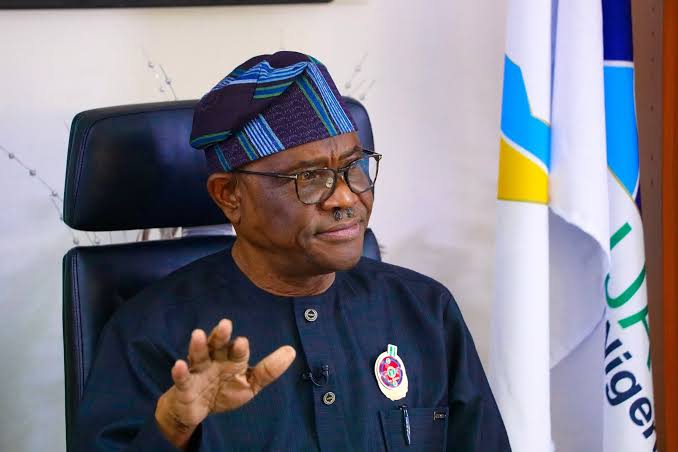
The Minister of the Federal Capital Territory (FCT), Nyesom Wike, has approved the award of contracts for the digitisation of the FCT High Courts, with the project expected to commence within two weeks.
General Counsel and Mandate Secretary, FCT Legal Services Secretariat, Salman Dako, disclosed this on Tuesday in Abuja after the FCT Administration Executive Council meeting chaired by Wike.
Dako said the approval was aimed at transforming the administration of justice in the territory by replacing the existing manual record-keeping system with a modern and automated judicial management platform.
He explained that the digital transformation project would cover 67 courtrooms across the FCT, providing the courts with electronic recording and case management facilities.
“The scope of this project is the digitalisation of the High Courts in the FCT, including digital transformation and implementation of an electronic court recording and case management system.”
Dako said the initiative would ensure that the High Courts transitioned from handwritten court records to digital documentation and electronic management of cases.
“Meaning that we are transitioning the High Court from manual recording to digital recording, and electronic case management,” he said.
He noted that the FCT judiciary had, over the years, faced challenges associated with handwritten court notes, manual filing procedures and the physical tracking of cases, which could contribute to delays in the administration of justice.
Dako explained that the newly approved contract was designed to address those challenges by introducing technology-driven processes capable of improving the speed, accessibility and organisation of judicial records.
“Transitioning to digital court management will resolve the persistent challenges linked to manual documentation and handwritten records,” he said.
He added that the system would also enable legal practitioners and litigants to embrace electronic case filing, thereby reducing dependence on physical documents and manual procedures.
“I believe that this will be a very great improvement for us. Some judicial divisions have already started this outside the FCT, so I think this is the future and it is time we go along this route,” Dako said.
He further disclosed that the contract period was two weeks, after which progress on the implementation of the digitalisation programme was expected to become visible,
He added that the initiative was expected to set a new benchmark for judicial efficiency and court administration in the nation’s capital. (NAN)




Tinubu Submits NDDC 2026 Appropriation Bill
SharePresident Bola Tinubu has submitted the 2026 Statutory Budget Proposal of the Niger Delta Development Commission (NDDC) to the House...


Senate Passes Bill Extending 2025 Capital Budget Implementation to Dec 31
ShareThe Senate on Tuesday passed a bill extending the implementation of the capital component of the 2025 Appropriation Act from...
CANEX 2026 to Unlock Investment, Jobs in Nigeria’s Creative Economy — FG
ShareThe Federal Government said Nigeria’s hosting of the 2026 Creative Africa Nexus (CANEX) Weekend will attract investment, deepen market access...


NNPC Posts N7.2trn Profit amid Revenue Decline
ShareThe Nigerian National Petroleum Company Ltd. (NNPC Ltd.) recorded N7.2 trillion Profit After Tax (PAT) in 2025, a 33 per...

Wike Approves Contracts for Digitization of FCT High Courts
ShareThe Minister of the Federal Capital Territory (FCT), Nyesom Wike, has approved the award of contracts for the digitisation of...

OPay Names Top 10 Teams in N18m National Innovation Challenge
ShareIn a bid to empower young Nigerians with the skills, opportunities and support needed to build solutions for real-world challenges,...


CBN Sets Agenda for Post-Recapitalisation Banking
ShareBy Tony Obiechina, Abuja The Central Bank of Nigeria (CBN) said recent reforms in the foreign exchange market, monetary policy...

Gunmen Abduct 18 Women in Benue, 47 Niger Farmers
ShareFrom Attah Ede, Makurdi, and Dan Amasingha, Minna Fresh fears over the worsening insecurity across the country emerged on Tuesday...


NASS Extends 2025 Capital Budget Again, Adjourns to Oct 13
ShareBy David Torough, Abuja The National Assembly on Tuesday extended the implementation of the capital component of the 2025 Appropriation...


Police Detain Woman for Alleged Killing of Co-wife in Bauchi
ShareThe police command in Bauchi State, said it has apprehended a housewife over alleged killing of her co-wife following a...