
Education
FG in Land-Swap Deal to boost Literacy Education in Kano

By Eddy Ochigbo, Abuja
In a renewed move to enhance sustainable growth in education, the federal government has concluded plans to embark on 13 new infrastructure projects at the National Mass Literacy and Adult Education Commission (NMEC), Kano Centre, through Public/Private Partnership (PPP).
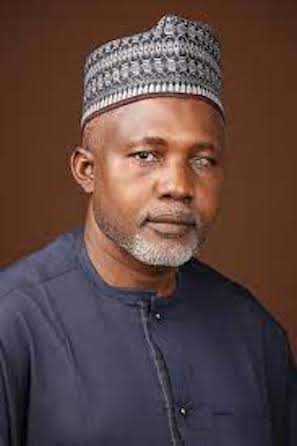
Minister of State for Education, Dr Yusuf Sununu, disclosed this on Tuesday at a stakeholders’ engagement and sensitisation meeting in Abuja to kick start the proposed land-swap deal for the development of critical infrastructure in Kano.
According to him, the public private partnership project would mark a turning point in literacy education of adults across the country, regretting that it was unfortunate that Nigeria still had a significant number of adults who are either illiterate or have limited literacy skills.
This major challenge, he said hinders the nation’s overall development and progress.“This is another milestone and progress in the ministry, and we will be having it with private public partnership, and this is also part of President Bola Tinubu’s eight-point agenda.Government cannot do it alone and everyone of us needs this as stakeholders to bring development and move the country forward. We have a regulation guiding us which we will use to ensure that the plots that have laid fallow over the years are put to best use in our time,” he said.
While stressing the need to regulate teaching in the country, specifically to guide teaching and teaching practice, Sununu revealed that the 13 new infrastructure projects – semi-detached two and three bedroom bungalows, state-of- the-art classrooms, clinic, library, hostels, a lecture theatre and recreational facilities, among others – would change the fortunes of the National Mass Literacy and Adult Commission, Kano centre, which has been lying fallow in the last 39 years.
“The projects would not only enhance learning at the centre, but would also provide a conducive environment for entrepreneurship in the centre. The Kano Centre of the National Mass Literacy Centre plays a crucial role in addressing this challenge by providing literacy education to adults across the country.
However, to effectively fulfil its mandate and reach more people, it is essential to have the necessary infrastructure and resources in place. This is where the proposed development of 13 critical infrastructures through land swap Public-Private Partnership comes into play. Through this innovative approach, we will be able to leverage the expertise, resources and capabilities of the private sector to create modern and functional learning facilities for the Centre,” Sununu enthused.
On his part, the Executive Secretary, NMEC, Prof. Simon Akpama, expressed confidence that through collective efforts and sustained collaboration between the public and private sector the growth of education would make a significant impact on the lives of a cross section of Nigerians. He said the initiative would also empower youths and adults to contribute their quota to national development.
Meanwhile, DAILY ASSET gathered that MASLAHA Homes and Development Limited, a leading Kano-based Real Estate company, which proposed the land-swap deal, has the capacity to design, finance and build the 13 new critical education infrastructure and assets for the Kano Centre of National Mass Literacy within the scheduled timeframe.
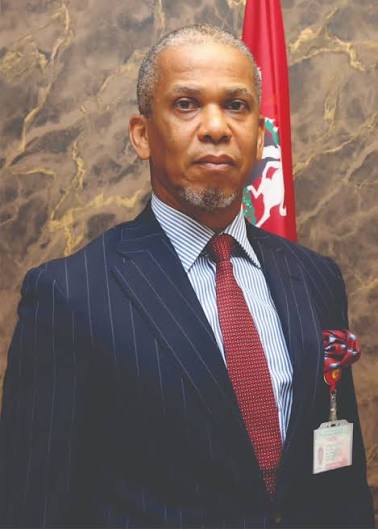
The University of Agriculture, Orerokpe Bill, sponsored by Senator Ede Dafinone, representing Delta Central Senatorial District, has passed through its third reading in the Senate.
Dafinone announced the development in a statement, describing the passage of the bill as a major step towards expanding access to education, promoting agricultural development and creating opportunities for young people in Delta State.
The senator said the proposed institution would help unlock the agricultural potential of the area while providing greater educational opportunities for future generations.
“This is more than the passage of a bill; it is a statement of purpose, a promise of progress, and an investment in generations yet unborn,” he said.
Dafinone urged constituents and other stakeholders to sustain their support for the proposed university, stressing the need to translate the legislative milestone into lasting benefits for the people.
He said the initiative was aimed at strengthening education, encouraging agricultural innovation and creating opportunities that would benefit generations to come.
“The future of our children is too important to leave to chance. Together, let us champion education, drive agricultural innovation, create opportunities, and build a legacy that generations will celebrate,” the senator said.
He described the passage of the bill as a significant milestone in the effort to advance development in Delta Central and expressed optimism about the vision behind the proposed institution.

A Kwara based Public Affairs Analyst, Comrade Ishowo Olanrewaju, weekend called on the Kwara State government to urgently convert the recently established Kwara State University of Education (KWASUED) to a specialised medical university to address the worsening and chronic shortage of doctors and other healthcare professionals in the state hospitals.
He therefore cited the Bayelsa Medical University in Bayelsa State, the state University of Medicine and Applied Sciences in Enugu State, and the University of Medical Sciences in Ondo State as existing examples.
Ishowo made the call in Ilorin while speaking with newsmen on the sidelines of the incessant strike embarked upon by medical doctors in the state hospitals.
Ishowo however expressed concern over the shortage of medical personnel in the state, noting that the available doctors were already overstretched and overwhelmed by the sheer volume of patients they were required to attend to daily.
He lamented that this situation made industrial action embarked upon by the doctors particularly troubling.
He argued that the state government should have prioritised a medical university over a university of education, insisting that Kwara’s more pressing challenge was the severe shortage of healthcare professionals rather than educators.
According to him, existing institutions, including the University of Ilorin, Kwara State University (KWASU) and Al-Hikmah University, already have faculties of education that produce graduates annually.
He added that several public and private colleges of education across the state also train teachers.
“The number of educators we produce far exceeds what we need or can employ. Our challenge is not a lack of teachers. It is a dangerous shortage of doctors, nurses and other medical professionals.
“That reality should have informed the government’s decision when it was considering establishing a new university,” he said.
Ishowo maintained that establishing a specialised medical university would help build a steady supply of doctors and other healthcare professionals to meet the state’s needs and serve other parts of the country.
“To address the persistent shortage of doctors and other medical personnel, I am calling for the conversion of KWASUED into a specialised medical institution,” he said.
He also proposed scholarships for Kwara indigenes admitted to the proposed institution, with beneficiaries required to sign a five-year service bond to work in the state after graduation before seeking opportunities elsewhere.
Ishowo said the arrangement would help retain locally trained medical professionals and strengthen the state’s healthcare system.
“Let the government provide scholarships for Kwara indigenes who want to study medicine and other related health courses, and bond them to serve the state for five years post-graduation.
“This is how we begin to systematically solve the shortage of medical personnel that has plagued us for years,” Ishowo noted.
He further stated that some state governments across Nigeria had already recognised the value of dedicated medical universities and taken steps to establish them.
According to Ishowo, “The Lagos State government is also pursuing plans to establish a standard one university of medicine and health sciences to tackle the doctor and healthcare worker deficit in the state.
“These states identified a need and responded to it strategically. Kwara can and should do the same. The conversion of KWASUED into a specialized medical university will be a response to a documented crisis that is costing Kwarans their health and their lives.”

The Joint Admissions and Matriculation Board (JAMB) has warned universities against issuing admission letters to candidates, insisting that only admissions processed through its Central Admissions Processing System (CAPS) are legally recognised.
The Board said universities had no statutory authority to issue official admission letters, warning that candidates who accept admission offers outside the approved system risk obtaining documents that may not be recognised for official purposes, including mobilisation for the National Youth Service Corps (NYSC).
JAMB Registrar, Prof. Segun Aina, gave the warning when he received a delegation from Veritas University, Bwari, Abuja, during a courtesy visit to his office.
Aina said the Federal Ministry of Education had expressly directed that all admissions into tertiary institutions be processed through CAPS, stressing that any admission conducted outside the platform was illegal and invalid.
He explained that JAMB remained the only body statutorily empowered to issue official admission letters to candidates seeking entry into universities, polytechnics and colleges of education across the country.
The registrar expressed concern that candidates often assume admission letters purportedly issued by universities are authentic simply because they carry the institutions’ identities.
He urged universities engaging in the practice to desist, while directing them to ensure that candidates obtain the appropriate admission documents from JAMB.
Aina further stressed that institutions could not substitute their own admission letters for the official documents issued by the Board after candidates had accepted their offers on CAPS.
He warned that admissions not processed through the approved platform would not be recognised for purposes such as NYSC mobilisation, underscoring the need for institutions and candidates to comply with established admission procedures.




OPay Provides Update on Planned NYSE IPO, Reaffirms Normal Business Operations
Share From Tony Nwachukwu, Lagos Fintech company OPay has announced the postponement of its planned public offering on the New...


Aba Commercial Smart City Celebrates COO, Mazen Kalassina at 39
ShareBy David Torough, Abuja Aba Commercial Smart City has celebrated its Chief Operating Officer (COO), Engr. Mazen Kalassina, on his...

Rebuilding Public Trust in Government Borrowing: The Case for Scaling Up Sukuk Financing in Nigeria
ShareBy Uche Joe Uwaleke The recent request by President Bola Tinubu to the National Assembly for approval to raise $20.52...

2027: Buba Yakub Mobilises Adamawa Support for Tinubu, APC
ShareFrom Yagana Ali, Yola The Director-General of the Nigerian Technical Aid Corps (NTAC), Rt. Hon. Yusuf Buba Yakub, has called...


2027: FOOG Women Coordinator Urges Nigerians to Support Tinubu’s Re-election Bid
ShareBy Francis Sadhere, Warri Chief (Mrs) Esther Orighomisan Okotie-Eboh, Coordinator of Felix Omagbemi Ogbe Group (FOOG) Women Support Group for...


Troops Neutralise 217 Terrorists, Rescue 349 Kidnap Victims, Arrest 333 Suspects in Oct
ShareBy David Torough, Abuja The Armed Forces of Nigeria (AFN) say troops neutralised 217 terrorists and other criminals, rescued 349...


2027: Tompolo Mobilises Support for Tinubu in Ogun, says Economy Stabilising
ShareThe Grand Patron of the PBAT Door-to-Door Movement, Government Ekpemupolo, has called on the people of Ogun State to massively...

Henry Okeke Commends Mbah for Clearing Pension Arrears in Enugu
ShareBy Raphael Atuu, Abuja Barrister Henry Nnanna Okeke, a member of the Governing Council of Enugu State Polytechnic, Iwollo, has...


2027: ADC Urges ECOWAS to Insist on Credible Elections in Nigeria
ShareThe National Chairman of the African Democratic Congress (ADC), Sen. David Mark, has urged the Economic Community of West African...


Obi Promises Emergency Measures on Security, Corruption, Poverty
SharePresidential candidate of the Nigeria Democratic Congress (NDC), Peter Obi, has promised emergency measures to tackle insecurity, corruption, hunger and...