
Agriculture
FG Predicts Boost in Food Production through Cassava Bio-ethanol Programme


By Tony Obiechina, Abuja
The Federal Government said yesterday that the implementation of the cassava bio-ethanol value chain project would enhance food production, increase youth employment and significantly reduce poverty in the country.
The Permanent Secretary, Federal Ministry of Finance, Budget and National Planning,
Mr Nebeolisa Anako disclosed at a three-day Sensitisation Workshop on the Strategic Implementation of the Bio-ethanol Project held at the Nasarawa State University, Keffi.
Anako who was represented by Dr.
Lanre Adekanye, Director, International Cooperation in the Ministry, noted that Nigeria, at this time, needs an approach that will increase food production, youth employment, and increased growth through the provision of industrial feedstock and exportable products to boost the economy.He explained that to achieve this laudable objective, one of the strategic pathways is the development of cassava bio-ethanol value chain in the country, adding that it has become more imperative, given the recent removal of subsidy on petroleum products, re-evaluation of the Naira through the merging of official and non-official exchange windows.
“One of the aspirations of the Federal Government is to bring about higher Gross Domestic Product (GDP) growth and to significantly reduce unemployment by creating meaningful opportunities for the youth.
“Thus, the Bio-economy Policy aims at promoting sustainable economic growth and development by creating a Bio-based economy that will contribute to the job creation, poverty reduction, and increased access to food and energy.
“This will be achieved through the development of the cassava Bio-economy, as well as other Bio-resources.
“”Development of the Bio-economy value chain is a veritable pathway to assuage the economic impacts on citizens and for sustained development,” the Permanent Secretary stressed.
Recall that bio-economy is the knowledge-based production and use of molecular biology of plant and animal origin and processes to create a wide range of products and services across all sectors of the economy.
Anako further explained that the essence of the three-day sensitisation workshop for the North-Central Region was to develop the modalities for the implementation of the Bio-ethanol project as well as identify the key stakeholders required for the implementation of the entire value chain.
He noted that the implementation of the Bio-economy Policy would employ a Triple-Helix Knowledge Transfer Partnership which would include the Academia, Research and Development Institutes, Farmers, the Private Sector and Government MDAs as well as the Civil Society, Development Partners and Development Finance Institutions.
In his remarks, the Vice Chancellor of Nasarawa State University, Prof. Suleiman Mohammed, said the North Central Region has a rich agricultural heritage, adding that cassava stands as one of the most vital and versatile crops to unlock opportunities, create jobs and foster inclusive growth.
Mohammed pointed out that in the face of global challenges posed by climate change and increasing demand for sustainable energy solutions, cassava bio-ethanol presents a unique opportunity to significantly reduce the carbon footprint and foster greener future.
Also speaking, Prof. Olumuyiwa Jayeoba, President of the Association of Deans of Agriculture in Nigeria (ADAN), said the Association was chosen to implement the pilot project which involves massive seed stock production and farm-level research as well as value chain development, including bio-entrepreneurship in the emerging economic development.
Jayeoba assured of the readiness of ADAN to coordinate and implement the pilot phase of the project, adding that the Association had put “a structure that allows for full implementation of the project, including bio-entrepreneurship and curriculum development.”
Prof. Ken Ife, the Consultant of the Cassava Bio-ethanol Value Chain Project, said only 7 percent of Nigerian graduates get jobs after graduation, adding that there was an urgent need to create new initiatives aimed at addressing youth unemployment in the country.
He underscored the need to engage universities with a view to producing young bio-entrepreneurs and extension service agents.

Some residents in Lagos State have expressed concern over the recent surge in the price of tomatoes, forcing many households to adopt alternatives.
The residents made their views known in separate interviews on Wednesday in Lagos.
A market survey showed that a 50kg basket of tomatoes now sells between N115,000 and N125,000, compared to between N35,000 and N40,000 recorded last month.
Olachi Igwe, a resident of Ago Palace, said the scarcity and high cost of tomatoes had disrupted her household’s meal plans.
“I contacted my usual vendor, but she said tomatoes were scarce and difficult to source.
“A small bowl we used to buy for between N3,500 and N4,000 now sells for as high as N6,000 to N7,000, when available.
“For now, my family will resort to palm nut stew (ofe akwu) until prices stabilise,” she said.
Another resident, Mercy Okeleye of FESTAC, said although her family prefers fresh tomatoes, rising prices have forced her to consider cheaper options.
“I cannot do without fresh tomatoes because of the taste, but I may have to buy broken ones, popularly called ‘esha’, which are relatively cheaper.
“I do not consider tomato paste a suitable substitute because it is not purely made from tomatoes,” she said.
Also speaking, Tope Babalola from Dopemu, said she might adjust her cooking methods if prices remain high.
“I have not bought tomatoes in over a month, but if the price is still high, I will use more onions and peppers.
“I will not resort to artificial additives; I prefer natural ingredients for my meals,” she said.
Joan Ogugua, another resident, said she had already switched to tomato paste to cope with the situation.
“I asked my son to buy tomato paste for our meals. I cannot justify spending excessively on fresh tomatoes when other basic needs must be met,” she said.
Also, Oge Ugwu, a civil servant at Lekki, said she would resort to cucumber stew with the recent price hike.
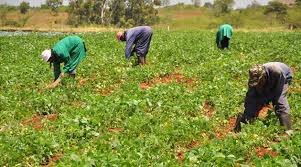
The Tomatoes Growers and Processors Association of Nigeria (TOPAN) has predicted a steady increase in the price of the produce between May and June 2026.
The Kaduna State Chairman TOPAN, Rabiu Zuntu, disclosed this in an interview recently in Lagos.
Zuntu noted that although there is no particular time for tomatoes planting season up north, seasonal weather variations can affect the production of the produce.
“Although we can plant tomatoes all-year-round, we cannot assure quality harvest all-year-round.
“Some farmers are harvesting now, while others are transplanting, and others are harvesting.
“Tomatoes are still available for sale but the price of the produce is gradually on the increase.
“Come May/June, the prices of tomatoes will be very expensive, so now is a good time to stock up the produce. There’s always a scarcity within that period.
“This is because of the nature of the weather in the north around that period, the weather is usually very hot and tomatoes cannot resist such hot temperature,” he said.
Zuntu said the price of tomatoes have started rising up in the north.
“A 50kg rafia basket of tomatoes sells from N20,000 as against N7,000 to N10,000 that was sold earlier in the year.
“While a crate of tomatoes up north is sold between N10,000 and N15,000 as against N5,000 to N6,500 sold earlier in the year.
“In most part of Kano State, where there is bumper harvest, they are rounding off their harvest. So, tomato is not that available there and most buyers have turned to where they can find it now, mostly within Kaduna State and some parts of Plateau State.
“So, that’s why the supply has decreased and the tomato supply and cost is determined by the law of demand and supply,” he said.
A 50kg basket of tomatoes in Lagos, at the moment, sells between N40,000 and N60,000 depending on the size and quality.
The Smallholder Women Farmers Organisation in Nigeria (SWOFON), Oyo State chapter, has said that the lack of irrigation facilities had become a major obstacle to dry season farming in the state.
The Chairperson of SWOFON in Oyo State, Atinuke Akinbade, said this in an interview in Ibadan on Monday.
Akinbade, who shared the experiences of women farmers in the state during the 2025 dry season, said that inadequate access to water for irrigation significantly affected the performance of many farmers during the period.
“It hindered many older farmers from participating in dry season farming and also prevented younger farmers from doing as much as they could in cultivating large acres of land,” she said.
Akinbade explained that farmers who managed to plant during the season struggled to access sufficient water to irrigate their farms, a situation worsened by the effects of climate change.
“Many farmers who depended on streams and wells to water their crops suffered major setbacks because those sources could not provide enough water for irrigation.
“Some farmers had to resort to buying water from commercial water tankers, which increased the cost of production, while at times it was even difficult to get water from the tankers,” she said.
The SWOFON chairperson warned that failure to address the problem could worsen food insecurity in the coming months.
“Even now, rainy season farming has not fully commenced because of the irregular rainfall pattern.
“This is a double burden, and if nothing is done, it may lead to serious hunger later,” she said.
Akinbade, however, acknowledged that the government had organised training for members of the association on home gardening.
She, however, said that little support was provided to address the challenges of dry season farming.
The chairman said that the home garden support package given to members consisted mainly of seedlings and one sprayer.
“They gave us two packs each of maize and pepper seeds, with six seeds in each pack, as well as one sprayer, so that we can grow food for household consumption,” she said.
Earlier, Oluwatoyin Oyedeji, SWOFON Coordinator in Oyo East, explained the severe hardship members of the organisation experienced in sourcing water for irrigation.
“Many farmers are already counting their losses because water was not available to irrigate their farms.
“Those who depended on streams and brooks were badly affected because many of them dried up, while the few that still had water had so little that farmers had to dig deeper into the ground in search of more,” Oyedeji said.
In the same vein, the Women Leader for farmers in Saki East, Musiliu Ashiru, said the absence of irrigation facilities also hampered dry season farming in her area.
According to her, many farmers still engaged in dry season farming have had to pay for water to keep their crops alive.
“Many of them buy water from the dam here to irrigate their crops. It has not been easy for them this year,” Ashiru said.




UBA Wins N156bn Debt Recovery Case Against Stallion Group
ShareThe Court on Friday ruled in the Bank’s favour on all issues and granted all its prayers. United Bank for...


Senator Abba Moro: It is Time to Go Home
ShareBy Cleopas Agada For seven years in the National Assembly, what has Benue South actually felt? For a man who...


NCDs Fastest-growing Disease Burden in Nigeria — Pate
ShareThe Coordinating Minister of Health and Social Welfare, Prof. Muhammad Pate, said Non-Communicable Diseases (NCDs) have become one of the...


2027: Adeleke Inaugurates Aare Asejere’s Campaign Council
ShareFrom Ayinde Akintade, Osogbo The Governor of Osun State, Senator Ademola Adeleke, yesterday charged newly inaugurated members of the Osun...


INEC Seeks Stakeholders’ Collaboration for Credible, Peaceful Elections
ShareThe Independent National Electoral Commission (INEC) has reaffirmed its commitment to strengthen collaboration with the National Orientation Agency (NOA), security...


Reps Reject Child Marriage, Demand Protection of Girl Child
ShareBy Ubong Ukpong, Abuja The House of Representatives on Thursday unanimously called for urgent and coordinated actions to protect Nigerian...


Court Awards N125, 000 Cost against Odumodublvck
ShareAn Abuja High Court on Wednesday awarded N125, 000 against a rapper, Tochukwu Ojogwu, popularly known as “Odumodublvck”, for asking...


Hunger Changed My Mind, Timini Egbuson on Embracing YouTube movies
ShareNollywood actor Timini Egbuson has reflected on his changing perception of YouTube movies, joking that he might have struggled financially...


Peller Announces Livestream with Peter Obi
SharePopular Nigerian TikTok streamer, Hamzat Adelaja, popularly known as Peller, has announced an upcoming livestream with the presidential candidate of...


Nigeria’s inflation drops from 15.39 Per Cent to 14.63 Per Cent in September
ShareBy Tony Obiechina, Abuja The National Bureau of Statistics (NBS) on Thursday disclosed that Nigeria’s inflation has eased from 15.39...