
FEATURES
FG Rolls Out Strategic Plan to Lift the Vulnerable Population

By Kehinde Akintola
Life expectancy in Nigeria has been put at 55 years, data.worldbank.org listed this, while it varies from one country to the other. One of the strains of life expectancy, in any society, depended on social welfare.
This could be built on the basic challenges of life, food, shelter, health and clothing. Genetic reality is strong; however, access to health care nutrition plays important roles.A robust social welfare system in any country would address these challenges and better the lives of the people, particularly, the vulnerable. This category of people, when empowered would increase public access to good health care services and ensure basic nutritive value to their diet.
Advanced climes with a high life expectancy rate of between 70 and 80 years conveniently become examples of this.In Australia, life expectancy hits 83, same with Norway. Living in the United Kingdom, offered 81 years life expectancy while the United States and Algeria offered 79 and 77 respectively.
To boost the quality of life of Nigerians, the Ministry of Humanitarian Affairs Disasters Management and Social Development (FMHADMSD) developed a 5-year strategic plan for social development across the country.
The strategic plan, built on seven pillars and focused on gearing the Nigerian vulnerable persons to “Lead an Inclusive and Innovative Futures-Thinking Ecosystem, (L.I.F.E).”
This is composed of seven tools to re-tweak the social infrastructure and strengthen it to make the social welfare space responsible and relevant to the Nigerian vulnerable population.
In the 86-page Strategic Road Map document, the ministry listed Strengthening policies and institutional frameworks; building evidence-based systems for transparency and accountability and ensuring enhanced programme delivery through effective Monitoring and Evaluation Mechanisms.
The other aspects of retooling the social framework, according to the strategic plan was to: “Optimize funding and resourcing opportunities: create and maintain strategic partnerships, collaborations and disability inclusion and implementation of a robust humanitarian coordination system for improved strategic communication and governance.”
An important aspect of the strategic plan was it’s mainstreaming of the sustainable development goals and integration of social initiative and investment programmes. The scientific approach was designed to simplify the complex maze of social welfare needs in the country.
Significantly, the Roadmap recognized that the success of the Ministry and the actualization of the enumerated strategies was dependent on effective coordination and synergy of actions, else, the beautiful document, like all others before it, would be ineffective but massed-up with dust of history in various shelves.
There is a marriage of the various stakeholders national and relevant international support for its realization. The strategic document noted that “This framework establishes clear linkages and relationships of every stakeholder involved in the humanitarian sector that forms the focal point of the Ministry’s mandate.
“The Roadmap also includes a section that aligns the Ministry’s strategies and humanitarian projects with the priority areas of the Federal Government captured in the National Development Plan (NDP). In addition to the above, the Roadmap also establishes a link amongst the seven strategic pillars with the Sustainable Development Goals (SDGs), the National Social Investment Programme and other humanitarian initiatives.
“The expectation is that the full implementation of the strategic thrusts/pillars of the Roadmap, will ensure that the Ministry delivers on its core objectives and ensures that a significant verifiable number of the poor are lifted out of poverty within the implementation time frame.
All these highlighted the need to build a seamless structure, which would ensure effective outputs and outcomes within the Ministry and across its agencies, thereby, emphasizing the smooth implementation of interventions that will support the mandates and objectives of respective agencies and social development programmes.
It would be important to note that the ministry which was established in August 2019, has deployed about N4.5 billion for research and development in the social welfare sector and has gotten the approval of the President in assent to the 2022 appropriation Act, to plow N7.6 billion for research and development purposes for the economic subsector in Nigeria.
This would be because an efficient structure would also enable the integration & localization of the Humanitarian Peace Development Nexus targeted at facilitating the provision of long-term development assistance in Nigeria.
Some of these interventions captured in the 2022 budget include: National Counseling strategy; definition of social protection floors; empowerment programmes for Persons with Disabilities (PWD) development of national unified social register; upkeep of trainees and strengthening activities at social welfare, rehabilitation and other centres.
These Interventions and other programmes are expected to bring succor and relief to the vulnerable citizens of this nation and also boost socio-economic development through enhanced service delivery.
Arising from various in-depth analysis and extensive National engagements, dialogue and critical brainstorming with all tiers of government and humanitarian actors to adopt a pragmatic way forward, was a unanimous decision to produce a working document that will serve as a clear plan with an all encompassing capacity of coordinating, promoting, monitoring and guiding the Ministry.
The network, on the government side, encapsulates for implementation of the social welfare programmes through, National Agency for the Prohibition of Traffick in Person, (NAPTIP) National Commission for Refugees, Migrants and Internally Displaced Persons (NCFRMI), National Commission for Persons With Disabilities (NCPWD) and the newly created National Senior Citizens Centre (NSCC).
To Lead an Inclusive and Innovative Futures-Thinking Ecosystem for the Nigerian vulnerable population has the Northeast Development Commission (NEDC) National Emergency Management Agency (NEMA), the National Social Investment Programme (N-SIP) and the National Sustainable Development goal.
These agencies and programmes are what would be the drivers of what the Vice President, Professor Yemi Osibanjo, who lauded the five year development plan said was the cornerstone of the President Muhammadu Buhari Administration to boost the social structure of Nigeria.
It would be a waiting session for keen observers, to note the impact of these in projects in the next few years, starting from the record at the end of this year, would mark an investment of N7.660 billion into social welfare market geared towards research and development.
This year would be special to observers, who are aware that for this year alone, the ministry has earmarked N7,660,196,307 for its research and development to bolster social welfare programmes and initiatives.
The impact on the social welfare firmament in the nation and the life of Nigerians who would have been mainstreamed to its programme and would be less strained as the vulnerable population would have less pressure on other members of the family that are burdened by their vulnerable realities.
An investment of this magnitude would change the narrative of access to better health conditions to Nigerians, particularly, the vulnerable community scattered around the country.
Sustained development agenda on a carefully planned social service as has been done by the Federal Ministry of Humanitarian Affairs, Disaster Management and Social Development, would no doubt contribute to the social stability of some vulnerable persons.
It would be impactful, when implemented, as targeted programmes are geared towards various categories of Nigerians in these categories.
Nigerians would want to see the impact of a N7.660 billion budget on research and development of the sector with empirical evidence of the investment especially in various sectors of life, as it relates to access to health care, good nutritional valued access, and other care.
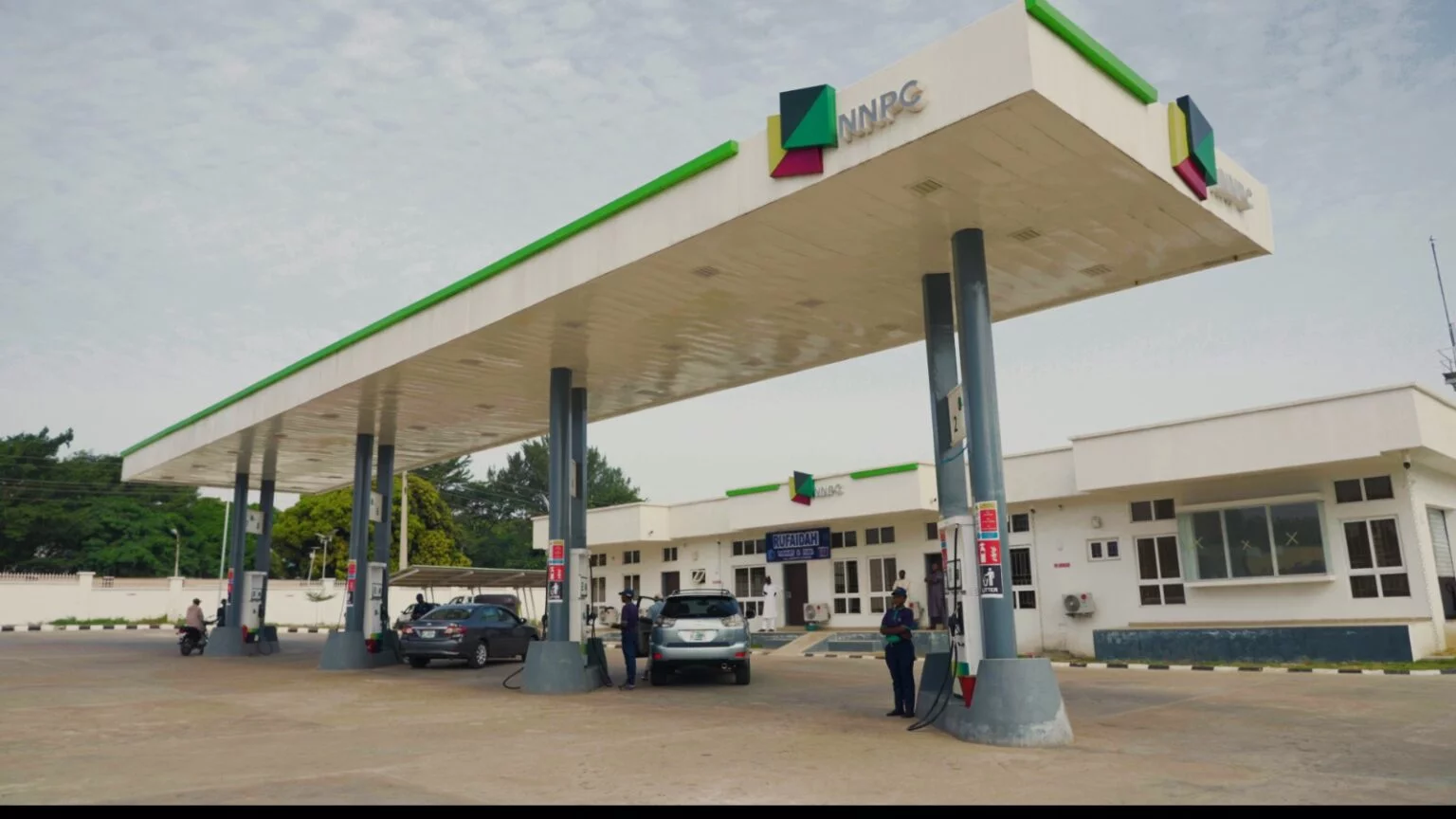
NNPCL’s New Culture of Transparency, Discipline Strengthens Financial Performance
By Enam Obiosio
The Nigerian National Petroleum Company Limited (NNPCL) is recording stronger financial and operational outcomes as its new culture of transparency, accountability, and capital discipline continues to take hold.
This shift is being reinforced by the company’s decision to publish audited financial statements, hold earnings calls, and open its books to independent analysts.
One of the analysts who reviewed the 2024 results, former Chief Financial Officer and Chairman of M.E Consulting Limited, Mr. Victor Eromosele, provided an independent breakdown that is shaping public understanding of the company’s progress.
In a media chat, Mr. Eromosele explained that he converted the N45.1 trillion revenue and N5.4 trillion profit into dollars to ensure comparability given the recent movement in the naira.
“The first thing I did was to convert it to the United States dollars because we all know what has happened to the naira recently,” he said.
“If you look at it in dollars you would find out that the top line instead of N4.5 trillion is actually 31.1 billion dollars. The bottom line instead of N5.4 trillion is actually 3.7 billion dollars.”
His analysis placed NNPCL beside global peers such as Chevron and ENI. While Chevron posted 193 billion dollars and ENI 198.7 billion dollars in revenue, NNPCL’s strength emerged in its efficiency.
“If you compared the bottom line with that of the top line which is the margin, you would find a situation where NNPCL for example is at 11.8 percent, while ENI is at six percent and Chevron is at nine percent,” he noted.
“Looking at the figures, it shows NNPCL did better.”
He also highlighted 56 percent asset growth and a 28 percent return on capital employed, up from 23 percent the previous year; metrics he described as healthy and consistent with investment grade performance.
These indicators reflect the broader reforms under the Petroleum Industry Act, including the shift from a government revenue collector to a commercially structured energy company that pays taxes, royalties, and dividends clearly and independently.
The company now publishes IFRS-compliant audited accounts, reinforcing visibility and external validation.
According to Mr. Eromosele, once the numbers are assessed on a stable global baseline, “one can say NNPCL actually did well.”
NNPCL continues to strengthen transparency, operational discipline, and global competitiveness in line with its long-term transformation agenda.

FEATURES
Victor Okoli: The Young Nigerian Tech Founder Building Digital Bridge Between Africa and America

Victor Chukwunonso Okoli, founder of Vnox Technology Inc. (USA) and Vnox Limited (Nigeria), is steadily emerging as one of the most promising new voices in global travel-tech. His mission is clear: bridge the technological gap between Africa and the United States, redefine global travel systems, and empower a new generation of skilled youths through innovation-driven opportunities.
In a statement issued in Onitsha, Anambra State, by Vnox Limited (Nigeria), the company emphasized Okoli’s growing influence as a Nigerian international graduate student contributing meaningfully to U.
S. innovation. His rising travel-technology platform, FlyVnox, currently valued at an estimated $1.7 million, is positioning itself as a competitive player in the global travel ecosystem.Okoli explained that Vnox Technology was founded to “train, empower more youths, create global employment opportunities, and drive business growth through our coming B2B portal inside the FlyVnox app.” The platform’s new B2B system aims to support travel agencies, entrepreneurs, and businesses across Africa and the diaspora—giving them access to modern tools, previously inaccessible technologies, and global opportunities.
Several young men and women are already employed under the expanding Vnox group, with more expected to join as the brand grows internationally.
Born and raised in Eastern Nigeria, Okoli’s early life exposed him to the realities and frustrations faced by international travelers and diaspora communities. After moving to the United States for graduate studies, he transformed those experiences into a bold technological vision—building systems that connect continents and create seamless mobility for users worldwide.
At the center of that vision is the FlyVnox app, a modern airline-ticketing platform built with global users in mind. Combining American engineering precision with African mobility realities, FlyVnox offers international flight search, multi-currency support, secure payments, transparent pricing, and a clean, intuitive interface.
Beyond FlyVnox, Okoli has built a growing tech ecosystem under Vnox Technology Inc., which oversees several innovative ventures, including: Vnox TravelTech Solutions LLC (FlyVnox App), VnoxPay (fintech), VnoxShop / Zyrlia (e-commerce)
VnoxID / Nexora (digital identity and smart business card solutions)
Vnox Limited (Nigeria) anchors African operations, media services, and talent development—ensuring the brand remains rooted in its home continent even as it grows globally.
Okoli’s work has broad significance for both Africa and the United States. He represents the powerful impact of immigrant entrepreneurship on global competitiveness—creating new jobs, driving innovation, strengthening U.S.–Africa commercial ties, and contributing to the development of practical, scalable technologies.
The statement concludes that Vnox Technology is a brand to watch. As FlyVnox gains international traction and the Vnox group expands its footprint, Victor Okoli stands as a symbol of a rising generation: African-born, globally minded, and building technologies that connect and serve the world.

From Leo Zwanke, Lafia
In Nigeria’s evolving governance, few leaders have gained as much recognition for reform-driven innovation at the subnational level as Governor Abdullahi Sule of Nasarawa State. From fiscal prudence to industrialisation, agricultural transformation to human capital development, the engineer-turned-technocrat has steadily positioned Nasarawa as a model for how subnational governments can translate macroeconomic reforms into tangible benefits for their citizens.
At the recent Nigeria Development Update (NDU), organised by the World Bank in Abuja with the theme “From Policy to People: Bringing the Reform Gains Home,” Governor Sule was a panellist alongside national and international development leaders.
He was introduced as a governor whose economic insight and governance style exemplify how reform implementation at the grassroots can sustain the federal government’s policy direction.“Governor Sule represents the bridge between Nigeria’s macroeconomic reforms and how these policies are domesticated at the state level,” said Shubham Chaudhuri, the World Bank Country Director for Nigeria. “He’s not only talking about reforms; he is implementing them in ways that citizens can feel.”
Before venturing into politics, Abdullahi Sule built a career in engineering, energy, and industry—serving as Managing Director of Dangote Sugar Refinery and leading other private sector initiatives. His private sector exposure, as many observers note, shaped his pragmatic approach to governance.
“The Governor came into office with a technocrat’s mind,” noted Dr. Ahmed Mohammed, an economist and lecturer at Nasarawa State University, Keffi. “He understands that policy documents mean little unless they are converted into livelihood gains.”
That philosophy—bridging policy with the people—is evident across his governance initiatives, aligning seamlessly with the World Bank’s recent development theme.
Agriculture remains Nasarawa’s economic backbone, engaging over 70 percent of its population. Governor Sule’s administration has revitalised the sector through targeted mechanisation, input distribution, and market linkage interventions.
Through partnerships with the African Development Bank (AfDB) and the World Bank’s Agro-Climatic Resilience in Semi-Arid Landscapes (ACReSAL) project, the state has distributed modern tractors, improved seedlings, and irrigation facilities to thousands of farmers.
In Yamaltu Deba, a community in Awe Local Government Area, farmer Mallam Abdullahi Umar explained how the tractorisation scheme has transformed their operations.
“Before, we used hoes and cutlasses. It took us two weeks to plough a hectare. Now, with tractors, we do that in one day. Our yields have doubled,” he said proudly.
Governor Sule himself often emphasises the need for “commercially viable farming” and “agriculture as a business, not a subsistence activity.” His administration has created a framework for farmer clusters, linking smallholder producers with large-scale processors, thereby addressing one of Nigeria’s major agricultural bottlenecks—post-harvest loss.
These interventions are not isolated. They feed into the national agenda of improving food security, generating rural employment, and reducing inflation. In Nasarawa, farmers are reporting higher incomes and expanded market access, a reflection of the governor’s commitment to inclusive growth.
Often called the “Home of Solid Minerals,” Nasarawa State is richly endowed with tin, lithium, barite, and other minerals. Yet, for decades, the sector remained largely informal, with little contribution to state revenue.
Governor Sule has changed that narrative through policy reforms that encourage private sector participation and responsible mining. Under his administration, Nasarawa has developed a solid minerals development policy, created a one-stop investment office, and attracted both domestic and foreign investors.
Earlier this year, the governor led an investment mission to India, where he met with industrial leaders and promoted opportunities in Nasarawa’s mining, energy, and agricultural value chains. The result was a flurry of interest from companies seeking to establish operations in the state.
“Governor Sule’s investment drives are opening Nasarawa to the world,” said Mr. Nabil Saleh, a consultant in mining development. “For the first time, there’s a clear structure and transparency around mining licences, community agreements, and environmental safeguards.”
In Karu and Keffi, local youths who previously relied on artisanal mining now participate in formalised mining cooperatives supported by state-led training programmes. This not only ensures environmental safety but also helps the state retain a greater share of mining revenue.
Additionally, Governor Sule’s administration has set up an Industrial Development Plan anchored on the establishment of industrial parks in Lafia, Doma, and Karu. The parks are designed to host agro-processing, mineral refining, and light manufacturing industries. This initiative ties directly into the World Bank’s message of translating macro-level reforms into job creation and improved livelihoods at the subnational level.
Economic reforms cannot thrive without functional infrastructure. In Nasarawa, infrastructure development has been a cornerstone of the Sule administration.
From the dualisation of major highways connecting the state to Abuja, to the ongoing construction of feeder roads linking rural communities with markets, the administration has prioritised roads as key drivers of commerce.
The Mararaba–Udege–Uke feeder road, completed in 2024, now connects thousands of farmers to urban markets, significantly reducing transport costs and spoilage.
“It used to take us two hours to reach Lafia with our goods; now it’s less than 40 minutes,” said Mrs. Asabe Luka, a tomato farmer from Obi LGA. “We no longer lose our produce on bad roads.”
Power and energy are also central to Nasarawa’s reform narrative. Through collaboration with the Nigeria Electrification Project (NEP) and independent power producers, the state is expanding rural electrification, powering small businesses and industries.
Governor Sule’s energy policy aims to make Nasarawa a net supplier of power to neighbouring states, leveraging its hydro and solar potential.
“Access to power is central to our industrial ambition,” the governor said at a recent state economic forum. “Without energy, reforms remain theoretical. That’s why we’re integrating renewable energy solutions into our development plan.”
For Governor Sule, economic growth is only sustainable when accompanied by human capital development. The state has, therefore, increased investment in education, healthcare, and social protection programmes.
In 2025, the governor flagged off the integrated Measles-Rubella and Polio Immunisation Campaign in Akwanga, with support from UNICEF and the World Health Organisation (WHO). This campaign, which is said to reaching over 1.37 million children, was part of the administration’s wider commitment to preventive healthcare.
“We are determined to eliminate vaccine-preventable diseases and ensure that every child in Nasarawa can live a healthy life,” Governor Sule declared during the flag-off.
The state has also revitalised its primary healthcare centres, constructed new hospitals, and initiated the Nasarawa Health Insurance Scheme (NHIS), which now covers over 120,000 residents.
In education, Nasarawa has built and renovated hundreds of classrooms, recruited teachers, and introduced digital learning tools in partnership with donor agencies.
Mrs. Rachael Musa, a teacher in Keana, described how digital education is changing learning outcomes:
“We now use tablets to teach basic science and mathematics. The children are more interested, and parents are beginning to value education even more.”
The Nasarawa State Scholarship Board has been revamped to ensure fair and transparent allocation of bursaries, especially for female students pursuing science and technology courses.
According to the chief press Secretary to the Governor, Ibrahim Addra who noted that the Nasarawa State Governor, His has been honoured with the prestigious Platinum Award and recognition as Education Ambassador in Lagos Nigeria.
He said the honour bestowed on Governor Sule is at the instance of the Independent Newspaper which referenced the Governor’s “investment, advocacy and promotion of child education in Nasarawa State which resonate across the country.”
In a letter notifying the Governor of the award, Independent Newspaper said, “If Sir Ahmadu Bello were to look back from his grave, he would no doubt be proud of Governor Abdullahi Sule for sustaining the legacy of free primary education.”
The award ceremony was held on Thursday, October 9, 2025, at the Eko Hotel and Suites, Victoria Island, Lagos.
Governor Sule has since expressed gratitude to the Daily Independent for recognising the efforts of his administration to give the education sector the deserved attention through huge budgetary provision, innovation, supervision, and uncommon commitment.
These social investments and Educational Reforms directly support the World Bank’s reform agenda, which emphasises human capital as the foundation of economic transformation.
Under Governor Sule, Nasarawa has emerged as one of the most fiscally disciplined states in Nigeria. The State Fiscal Transparency, Accountability, and Sustainability (SFTAS) initiative—a joint programme of the Federal Government and the World Bank—ranked Nasarawa among the top-performing states in financial reporting, budget transparency, and citizens’ engagement.
The administration has digitised the state’s revenue collection system, introduced e-procurement, and created a Public Procurement Bureau to monitor contract awards. These reforms have improved public trust and investor confidence.
“Governor Sule’s approach to governance is evidence-based,” noted Dr. Joy Adamu, a governance analyst. “His administration publishes budget details online and invites civil society to track spending. That’s rare in many states.”
The 2025 budget, valued at over ₦149 billion, focuses heavily on capital expenditure, targeting agriculture, infrastructure, and education. The governor has described it as a ‘budget of continuity and consolidation’, aimed at completing legacy projects and sustaining fiscal reforms.
The Nigeria Development Update’s message is the need to ensure that macroeconomic reforms such as subsidy removal, foreign exchange unification, and fiscal tightening translate into visible improvements in citizens’ welfare.
Governor Sule’s Nasarawa model aligns perfectly with this philosophy. His state’s economic agenda mirrors national priorities while remaining locally driven.
“Reforms must touch the lives of people directly,” the governor said during the World Bank panel. “That is why we design our programmes to impact farmers, traders, miners, and small businesses, not just government statistics.”
By investing in production, transparency, and human capital, the Sule administration demonstrates that subnational governments can serve as catalysts for national reform success.
In Nasarawa, the story of reform is not just told in government memos—it’s lived by ordinary people.
In Doma, cassava processor Mrs. Maimuna Adogi recounted how a state grant enabled her to expand her processing mill.
“Before the grant, I employed only two people. Now, we are ten. I can feed my family and even save for my children’s school,” she said.
In Keffi, youth entrepreneur Tanimu Musa described how the Nasarawa Enterprise Development Scheme (NEDS) helped him scale his small welding business.
“The state gave us training and small loans. Now I get contracts from local construction firms,” he explained.
These micro-level testimonies echo the theme of “From Policy to People,” proving that reforms are only successful when their impact is measurable in people’s lives.
Governor Abdullahi Sule’s reform trajectory provides a powerful case study in how subnational leaders can domesticate and sustain national reforms. His administration’s blend of technocratic precision, fiscal responsibility, and citizen-focused programmes stands out in Nigeria’s subnational governance landscape.
As Nigeria seeks to stabilise its economy and build inclusive growth, the Nasarawa model offers valuable lessons in investing in sectors that touch people directly, agriculture, education, and health, while pursuing transparency and accountability as the foundation for investor trust, and engaging communities in policy design and delivery.
From the fields of Doma to the classrooms of Keana, and the mining pits of Udege to the industrial estates in Lafia, the gains of reform are becoming visible.
In the words of the governor himself: “When people begin to feel government policies in their pockets and in their homes, that’s when reforms become meaningful. That’s what we are doing in Nasarawa.”


Nigeria Clinches Bronze in Judo at 4th African Youth Games
ShareTeam Nigeria clinched a bronze medal in judo at the ongoing 4th African Youth Games after winning the 63kg category bout against Zimbabwe. The...

NCDMB Set to Attain 100 Per Cent Local Content in Africa
ShareBy Eddy Ochigbo, Abuja The Nigerian Content Development Management Board (NCDMB) has reaffirmed its determination to increase the current from...


Trump Expands US Travel Ban to Five More Countries
SharePresident Donald Trump has expanded a US travel ban, barring nationals of five additional countries and people travelling on Palestinian Authority-issued documents from entering the US. The White...


Farouk Ahmed, Gbenga Komolafe Resign after Dangote Petition
ShareBy Eze Okechukwu, Abuja President Bola Tinubu has nominated new chief executives for Nigeria’s two foremost petroleum regulatory agencies following the resignation...

NLC Stages Nationwide Strike over Insecurity
ShareLabour Takes Nationwide Protest to Streets over Insecurity The Nigeria Labour Congress (NLC) yesterday led a nationwide protest across major...

Presidency Transmits N43.5trn 2026 Appropriation Bill to Reps
SharePresident Bola Tinubu yesterday, transmitted the appropriation (Repeal and Re-enactment Bill 2024/2025 bill to the House of Representatives for consideration and expected approval...

SMEDAN Unveils MSMEs New Policy in 2026, Targets Funding Expansion
ShareThe Small and Medium Enterprises Development Agency of Nigeria (SMEDAN) said it will deepen business formalisation, expand access to affordable financing and unveil a new national MSMEs policy in 2026....


NCDMB set to Attain 100% Local Content in Africa
ShareBy Eddy Ochigbo The Nigerian Content Development Management Board (NCDMB) has reaffirmed its determination to increase the current from 56%...

The Man Rotimi Makinde: A True Progressive by All Standards
ShareBy Kolapo Ogundare It is impressive to note that many well-meaning Nigerians are now coming out, recounting several good deeds...
FG, NBS Launch Nationwide MICS7 Survey
ShareFrom Francis Sadhere, Delta The Federal Government of Nigeria, through the National Bureau of Statistics (NBS), has officially launched the...