
Economy
FG to Establish N15trn Infraco Plc for infrastructure development – Buhari

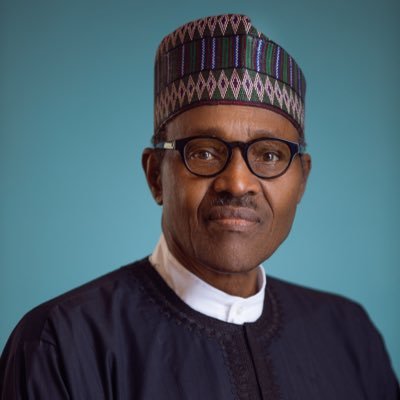
President Muhammadu Buhari has approved the establishment of Infraco Plc, a world-class infrastructure development vehicle wholly focused on Nigeria with a capital structure of N15 trillion.
The president revealed this on Saturday in a broadcast to mark this year’s Democracy Day.
He expressed optimism that the company, when fully functional, would address the nation’s infrastructural deficits and subsequently transform the economy.
He also disclosed that his administration had succeeded in accelerating infrastructure development through sensible and transparent borrowing, improved capital inflow, improving and increasing revenue through capturing more tax bases and prudent management of investment proceeds in the Sovereign Wealth Fund.
According to him, the rail system is not left out as the Itakpe-Warri standard gauge rail was completed and commissioned 33 years after construction began.
He stated that the Lagos-Ibadan double track railway line, which he inaugurated on June 10, 2021, had commenced operations.
“We are focused on ensuring that our infrastructure drive is key to economic growth and one that can be felt by every Nigerian. Building critical infrastructure in our ports is also opening up opportunities for the Nigerian economy.
“My approval for four new seaports using a Public-Private-Partnership approach is hinged on growing the Nigerian economy.
“These four sea ports; Lekki Deep Sea Port, Bonny Deep Sea Port, Ibom Deep Sea Port and Warri Deep Sea port, will create massive job opportunities and foreign investment inflows.
“We have worked at deepening our Eastern ports leading to success like having three container ships berth at Calabar port, a first in 11 years.
“Similarly, on October 30, 2019, an LPG tanker operated by NLNG berthed in Port Harcourt, the first time an LPG ship is berthing at any of the Eastern Ports.
“As we invest in these new assets, we have also made strides in ensuring that they are secured and protected.
“In this regard, I am also pleased to note the launch of the NIMASA Deep Blue project – which is an Integrated National Security and Waterways Protection Infrastructure that I recently commissioned.
“This initiative is designed to add to the layer of security we have to safeguard our maritime sector,’’ he added.
The president also listed the achievements of his administration in the agricultural sector to include the Anchor Borrowers Programme which resulted in sharp decline in the nation’s major food import bill from 2.23 billion dollars in 2014 to 0.59 billion dollars by the end of 2018.
According to him, rice import bill alone also dropped from one billion dollars to 18.5 million dollars annually.
He observed that Anchor Borrowers initiative had supported local production of rice, maize, cotton and cassava.
He revealed that government financed 2.5 million small-holder farmers cultivating about 3.2 million hectares of farmland all over the country and created 10 million direct and indirect jobs.
“Several other initiatives, namely AgriBusiness/Small and Medium Enterprise Investment Scheme, the Non-oil Export stimulation Facility, the Targeted Credit Facilities operated across the 774 Local Governments.
“In the manufacturing sector the CBN – BOI N200 billion facility financed the establishment and operations of 60 new industrial hubs across the country, creating an estimated 890,000 direct and indirect jobs,’’ he added.
The president noted that the Central Bank of Nigeria’s N50 billion Textile Sector intervention Facility increased capacity utilisation of ginneries from 30 per cent to nearly 90 per cent.
According to him, the Economic Sustainability Plan – the nation rebound plan for the COVID-19 pandemic developed in 2020, is currently being executed.
He said the plan was primarily focused on the non-oil sector, which had recorded phenomenal growth contributing over 90 per cent to the GDP growth in Q1 2021.
“Though marginal we have recorded GDP growth over two quarters; Q2 2020 and Q1 2021. This is evidence of a successful execution of the ESP by the Federal Government.”
Buhari stated that his administration’s vision of pulling 100 million poor Nigerians out of poverty in 10 years had been put into action and could be seen in the National Social Investment Programme; “a first in Africa and one of the largest in the world where over 32.6 million beneficiaries are taking part.
“We now have a National Social register of poor and vulnerable households, identified across 708 local government areas, 8,723 wards and 86,610 communities in the 36 States and the FCT’’.
He further maintained that the administration’s conditional cash transfer programme had benefited over 1.6 million poor and vulnerable households comprising more than eight million individuals, saying “this provides a monthly stipend of N10,000 per household’’.
The president revealed that he recently approved the National Poverty Reduction with Growth Strategy Plan that augments existing plans to further reduce poverty in the country.
He said: “As at the end of 2020, the Development Bank of Nigeria had disbursed N324 billion in loans to more than 136,000 MSMEs, through 40 participating Financial Institutions.
“I am to note that 57 per cent of these beneficiaries are women while 27 per cent are the youth,’’ he said. (NAN)






The Nigerian Export Promotion Council (NEPC) says exporters in Imo generated a total of 1,244,095 dollars as proceeds from export trade in 2025.
The Imo Coordinator of the council, Mr Anthony Ajuruchi, disclosed this during a follow-up engagement with cocoa farmers in the state on Thursday in Owerri.
50 cocoa farmers and exporters in Imo received 30 cocoa seedlings each in 2025 as part of interventions to boost production for export.
Ajuruchi said the amount was derived from proceeds of both formal and informal export transactions carried out by the farmers within the 2025 fiscal year.
He commended the Executive Director of NEPC, Mrs Nonye Ayeni, and the management team for their support and commitment to the growth of the export market in Imo and across the country.
According to him, the council recorded notable achievements in 2025, including the organisation of capacity-building programmes on non-oil export, product packaging and labelling.
“In addition to our interventions for cashew farmers, we conducted trainings on product development and adaptation, export contracts, market penetration, product certification and export documentation procedures.
“We also trained about 600 exporters and small and medium-scale enterprises,” he said.
Ajuruchi said the engagement with the cocoa farmers was aimed at obtaining feedback and brainstorming on strategies to increase production and export volume in 2026.
One of the beneficiaries, Mrs Sophia Orji, said the cocoa seedlings she received were doing well and had started fruiting after 17 months.
Another farmer, Mrs Mary Okeke, said her cocoa plants were thriving and appealed to NEPC to extend similar support to farmers during the rainy season.
Also speaking, Mr Canice Nze, Director of Produce in the Imo Ministry of Trade, Commerce and Investment, urged the farmers to register with the ministry to enable them benefit from cooperative structures and access possible government grants. (NAN)
By David Torough, Abuja
In line with the consumer-focused objectives of the Nigerian Communications Commission (NCC) and the Central Bank of Nigeria (CBN), the two regulators have drawn up a framework to address consumer complaints arising from unsuccessful airtime and data transactions during network downtimes, system glitches, or human input errors.
The framework is the outcome of several months of engagements involving the NCC, the CBN, Mobile Network Operators (MNOs), Value Added Service (VAS) providers, Deposit Money Banks (DMBs), and other relevant stakeholders.
According to the NCC, these engagements were prompted by a rising incidence of failed airtime and data purchases, where subscribers were debited without receiving value and experienced delays in resolution.
“The Framework represents a unified position by both the telecommunications and financial sectors on addressing such complaints. It identifies and tackles the root causes of failed airtime and data transactions, including instances where bank accounts are debited without successful delivery of services. It also prescribes an enforceable Service Level Agreement (SLA) for MNOs and DMBs, clearly outlining the roles and responsibilities of each stakeholder in the transaction and resolution process,” a statement by Head of Public Affairs of NCC, Nnen Ukoha said.
Under the new framework, where a purchaser is debited but fails to receive value for airtime or data—whether the failure occurs at the bank level or with an NCC licensee—the purchaser is entitled to a refund within 30 seconds, except in circumstances where the transaction remains pending, of which the refund can take up to 24 hours.
The framework further mandates operators to notify consumers via SMS of the success or failure of every transaction. It also addresses erroneous recharges to ported lines, incorrect airtime or data purchases, and instances where transactions are made to the wrong phone number.
Director of Consumer Affairs at the NCC, Mrs. Freda Bruce-Bennett in a comment on the development said the framework also establishes a Central Monitoring Dashboard to be jointly hosted by the NCC and the CBN. According to her, the dashboard will enable both regulators to monitor failures, the responsible party, refunds, and track SLA breaches in real time.
“Failed top-ups rank among the top three consumer complaints, and in line with our commitment to addressing these priority issues, we were determined to resolve it within the shortest possible time,” she said.
“We are grateful to all stakeholders—particularly the Central Bank of Nigeria and its leadership—for their tireless commitment to resolving this issue and arriving at this framework, and for ensuring that consumers of telecommunications services receive full value for their purchases.
“So far, pending the approval of management of both regulators on the framework, MNOs and banks have collectively made refunds of over N10 billion to customers for failed transactions” she explained .
Mrs. Bruce-Bennett further noted that implementation of the framework is expected to commence on March 1, 2026, once the two regulators have made final approvals, and technical integration by all MNOs, VAS providers and DMBs is concluded.

By Tony Obiechina, Abuja
The Budget Office of the Federation has reaffirmed the integrity of Nigeria’s newly enacted Tax Reform Acts, cautioning against what it described as governance by speculation and unverified claims following allegations of post-passage alterations.
In a statement on Wednesday, the Budget Office said it had taken note of concerns raised by the Minority Caucus of the House of Representatives, stressing that the sanctity of the law is central to constitutional democracy and not a mere procedural formality.
According to the Office, any suggestion that a law could be altered after debate, passage, authentication, and presidential assent without due process would strike at the core of the Republic and undermine citizens’ right to be governed by transparent and stable laws.
However, it warned that democratic integrity is also endangered by the careless amplification of unverified claims. “A nation cannot be governed by insinuation or sustained on circulating documents of uncertain origin,” the statement noted, adding that public confidence, once shaken by speculation, is often difficult to restore.
The Budget Office emphasized that both government and citizens share a common interest in truth, clarity, and due process, noting that public finance depends heavily on trust in the legality and clarity of fiscal laws. It welcomed the decision of the National Assembly to investigate the allegations, describing institutional inquiry, not conjecture as the appropriate response to claims of illegality.
On public access to the law, the Office agreed that Nigerians and the business community are entitled to clear and authoritative texts of all laws they are required to obey. It clarified, however, that the authenticity of legislation is determined by certified legislative records and official publication processes, not by informal or viral reproductions.
The statement also underscored the importance of separation of powers, warning that claims suggesting Nigeria is being governed by “fake laws,” if not backed by established facts, risk eroding confidence in democratic institutions.
At the same time, it stressed that legislative scrutiny should not be dismissed by the executive, noting that oversight is a constitutional duty, not an act of hostility.
From a fiscal perspective, the Budget Office said legal certainty is essential for revenue projections, macroeconomic stability, budget credibility, and investor confidence. While it is not the custodian of legislative records, it maintained that uncertainty around operative tax provisions directly affects economic planning.
To restore confidence, the Office proposed a set of measures, including the publication of verified reference texts in a single public repository, orderly access to Certified True Copies for stakeholders, clear public explanations where discrepancies are alleged, and strict alignment of all implementing regulations with authenticated legal texts.
Addressing calls for suspension of the tax reforms, the Budget Office cautioned against allowing prudence to slide into paralysis. It argued that properly implemented tax reform is necessary to reduce dependence on borrowing and inflationary financing, while easing indirect burdens on vulnerable citizens.
“Where clarification is required, it must be provided; where correction is required, it must be effected; where investigation is required, it must proceed,” the statement said, adding that governance and reform should not be stalled by unresolved conjecture.
The Office concluded by describing taxation as a democratic covenant that binds citizens and the state, insisting that compliance depends on transparency and trust. It called on political actors to protect institutions as much as positions, urging citizens and businesses to rely on verified sources and resist the spread of unauthenticated information.
The statement was signed by Tanimu Yakubu, Director-General of the Budget Office of the Federation, who reaffirmed the agency’s commitment to fiscal transparency, institutional integrity, and reforms that advance national prosperity while safeguarding citizens’ rights.



Protesters Demand Review of NRS Executive Director Appointments Over Alleged Breach of Law
ShareBy David Torough, Abuja A coalition of civil society activists on Monday staged the second phase of a peaceful protest...


Chinese Construction Truck Kills Six in Benue
ShareFrom Attah Ede, Makurdi No fewer than six passengers have died in a fatal road accident involving an 18-seater Benue Links bus and a...

Table Tennis Championship: 250 Players for Alabi Memorial in Osun
ShareNo fewer than 250 players from across the country are expected to participate in the 6th Michael and Felicia Alabi Memorial Table Tennis Championship scheduled to...


Pope Leo XIV Urges Dialogue as Iran, Israel Tensions Escalate
SharePope Leo XIV on Sunday appealed to nations involved in the escalating Middle East conflict to recognise their moral responsibility to pursue peace,...


IGP Appoints Placid as New Police Spokesperson
ShareThe Inspector-General of Police, Olatunji Disu, has approved the appointment of Anthony Placid as the new Force Public Relations Officer. The outgoing FPRO, Benjamin Hundeyin, confirmed the appointment in...


Niger Directs Political Appointees Seeking 2027 Offices to Resign March 23
ShareFrom Dan Amasingha, Minna The Niger State Government has directed all political appointees and public office holders who intend to contest elective positions in the 2027 General Elections...
ShareDisCos Generate N207bn from Power Bills in December – NERC The Nigerian Electricity Regulatory Commission (NERC) says electricity Distribution Companies...

Terrorists Strike in Sokoto as Troops Record Gains in Benue, Taraba
ShareBy David Torough, Abuja Renewed attacks by armed groups and intensified military counter-operations defined the security situation across parts of...

Fuel Prices Climb Toward N1,000 Per Litre as Global Oil Shock Hits Nigeria
ShareBy David Torough, Abuja Fuel prices across Nigeria have surged close to the N1,000 per litre mark, triggering concern among...


NFSS Launches war against Terrorism
ShareDetermined to end terrorism and other related criminal activities in Nigeria, the Nigeria Forest Security Service (NFSS) has created a...