
Agriculture
FG Trains 120 Akwa Ibom Women on Modern Cassava Cultivation

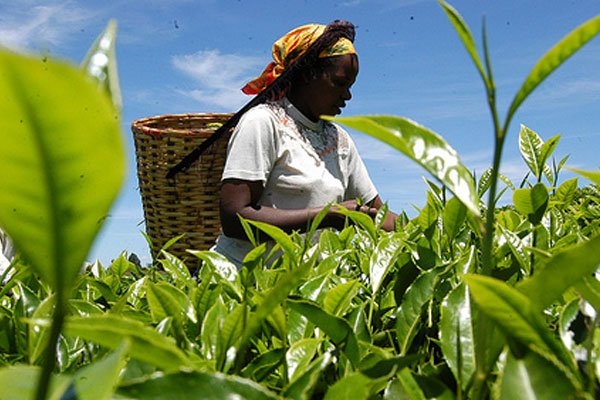
The National Agricultural Land Development Authority (NALDA) on Monday in Uyo trained 120 women from four Local Government Areas of Akwa Ibom on improved methods of cassava cultivation.
The training was facilitated by the State Coordinator of NALDA, Mr Imoh Imoh, to introduce women to modern ways of cultivating cassava for value addition.
Imoh said that the Federal Government, under the leadership of President Muhammadu Buhari, was keen on agricultural development to ensure food sufficiency in the country.
He said that the women were selected from Abak, Ini, Obot Akara and Oruk Anam LGAs of the state.
The coordinator said that improved methods of cassava cultivation was to achieve increased yields, which must begin with selection of high quality planting materials.
Imoh said that the training would expose the participants to modern methods of growing and processing cassava for better yields and profit.
He urged the women to count themselves lucky for being the first set of farmers selected from millions, to benefit from the training.
“Most cassava farmers are either not aware of available modern technologies for growing and processing cassava or lacked the ability to use them.
“The training will be useful to farmers and add value that will enhance farmers knowledge and capacity to improve efficiency of their cassava production and increase profit,” Imoh said.
Dr Bennedict Eka, the Resource Person, said that cassava plant cultivation could be done between March and April in Akwa Ibom, while the second planting season could be done in October every year.
Eka told the trainees that cassava could be planted manually or using mechanized methods, adding that for effectiveness and optimum plant operation of cassava, mechanization and planting on ridges were recommended.
He reminded participants that during the planting of cassava, they should handle the stem with care and ensure that the buds point upwards, stressing that this was where the cutting sprouts.
He advised that to ensure improved cassava yields, farmers must plant good cuttings on loamy soil with good spacing.
“The use of good agronomic practices that eliminate the use of chemicals or fertilisers can guarantee good yields of cassava at low cost and at same time be friendly to the environment.
“A good agronomic practice starts with selecting varieties that are high yielding and by sourcing healthy planting materials from specialised institutions,” Eka said.
Speaking to the News Agency of Nigeria (NAN), two of the trainees, Mrs Destiny Uwem and Mrs Nseneno Umanah , said they would apply the knowledge learnt during the training in their cassava planting this farming season.
The cassava farmers thanked the federal government and its agency for organising the training to equip them with modern ways of cassava cultivation. (NAN)
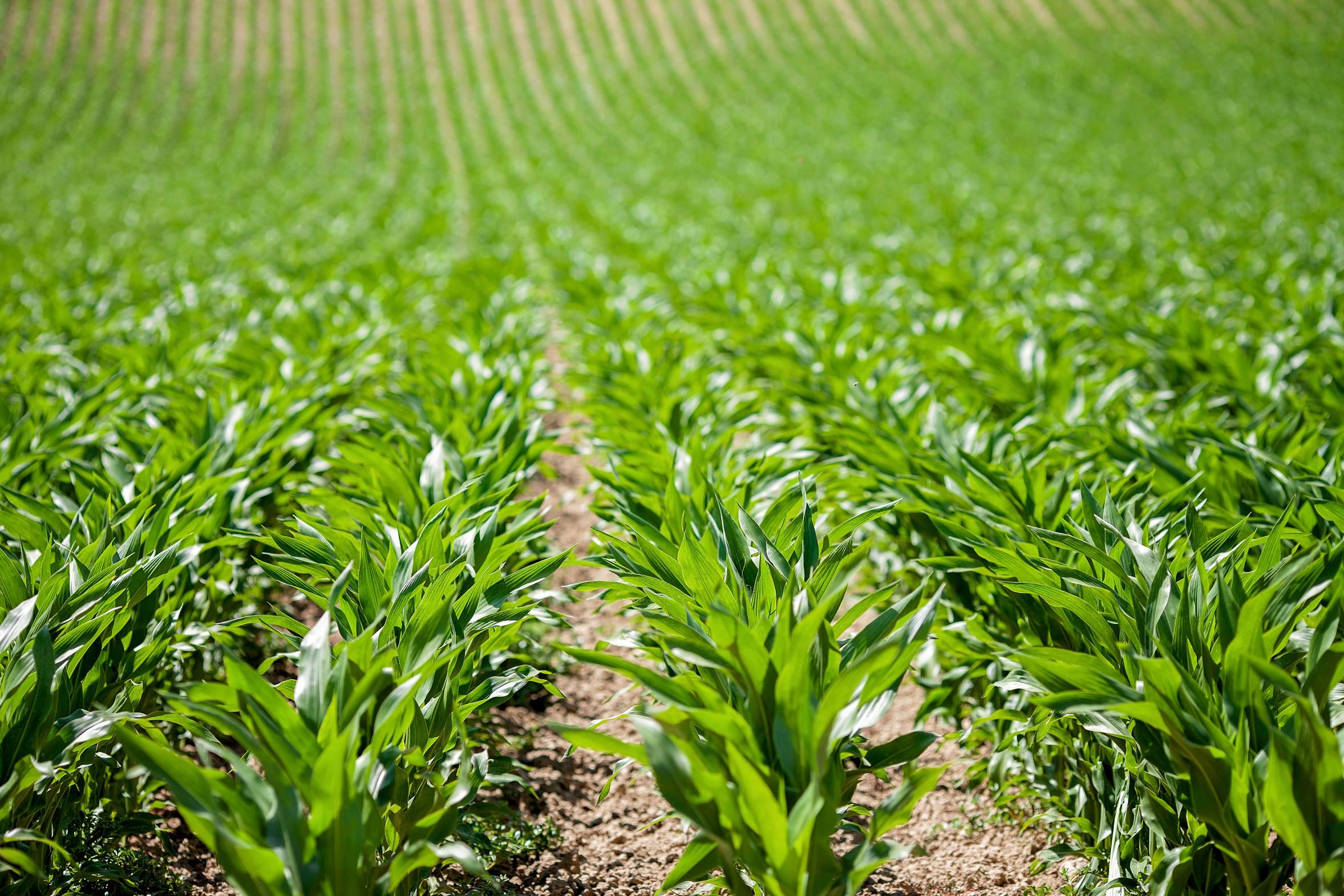
The Federal Government has called for more partnerships with private sector operators in the transformation of the Correctional Farm Centres into highly productive agricultural hubs.
Minister of Interior Dr. Olubunmi Tunji-Ojo, stated yesterday in Abuja at a stakeholder dialogue on Optimising Correctional Farm Centres and Public-Private Partnership (PPP) Pathways for Inmate Reformation, organised by Hope Behind Bars Africa (HBBA), in collaboration with the Nigerian Correctional Service, with funding support from the European Union/International IDEA.
Tunji Ojo, represented by the Permanent Secretary, Federal Ministry of Interior, Dr.
Magdalene Ajani said these partnerships are the engines that would drive the scale of change needed, modernise infrastructure, and enrich rehabilitation programmes in the Nigerian Correctional Service (NCS).He said: “It is an undeniable reality that government resources alone cannot fully unlock the vast potential lying dormant within our correctional system.
“The chest scale of the vision we hold calls for a synergy of strength. This is where the Public Private Partnership (PPP) transitions from being a mere policy option to an indispensable strategic imperative.
“PPP is a powerful vehicle for sustaining development, allowing us to fuel government policy, leadership, and oversight with the private sector’s innovation, operational efficiency, and capital. When structured with intention and integrity, these partnerships create shared values.
“Nigeria is a nation blessed with immense agricultural potential; our correctional farm centres can and should be transformed into highly productive agricultural hubs.”
In her opening remarks, Funke Adeoye, Executive Director, Hope Behind Bars Africa (HBBA), said through one of the projects of the organisation-Farming Justice Project, that HBBA has been working to reposition correctional farm centres as structured, rehabilitation-focused agricultural hubs that contribute to food security within and outside prison while strengthening correctional productivity and reintegration outcomes.
Adeoye pointed out that her organisation has integrated reformation with agriculture to achieve multiple outcomes, such as addressing food insecurity within custodial centres, equipping inmates with practical skills, and reducing reoffending, which remains at the heart of the criminal justice system’s purpose.
Commenting on the implementation of the Farming Justice Project, she said, “We are currently working across multiple custodial centres, including Dukpa Custodial Centre, Kuje Custodial Centre, Kirikiri Female Custodial Centre, and Oko Custodial Centre.
“Within these facilities, residents are actively engaged in structured mind-reformation training, covering behavioural change, financial literacy, crop cultivation, and the cultivation of second chances.
“They are also participating in structured agricultural production, growing crops such as pepper, okra, watermelon, ugu, green pepper, and sweet corn.
“We have established fish ponds, the latest of which is at Kuje Custodial Centre.
“To date, the project has reached direct beneficiaries across multiple centres: in Edo State, 95 residents and 5 officers; in Abuja, 222 residents and 18 officers; and in Lagos, 448 individuals.
“Beyond these direct participants, the indirect impact is even more remarkable; families, local communities and supply chains are all experiencing the ripple effects of increased food production, skill transfer, and entrepreneurship.”
She disclosed that the goal of the project is to transform correctional agriculture from an under-utilised function into a structured pathway for rehabilitation, reintegration, and national development.
Adeoye, therefore, reiterated the need for partnerships that would drive innovative solutions, transform lives, and help in the realisation of the true essence of the correctional system.
In his welcome address, Sylvester Ndidi Nwakuche, Controller General, Nigerian Correctional Service (NCS), said the NCS currently operates 18 farm centres and 10 cottage industries, covering a total landmass of approximately 10,000 hectares across the country.
Nwakuche said the Service runs 12 agricultural projects, five piggery projects, nine fishery projects, and 11 poultry projects across its facilities in Nigeria.
He said: “These activities are not only vital for supporting inmate welfare and contributing to food production, but also serve as a practical platform for skills acquisition and vocational training.
“By aligning our programmes with market realities, we can ensure that inmates acquire relevant employable skills that will enable them to reintegrate successfully into society upon release.”
ActionAid Nigeria and other stakeholders have faulted the proposed N1.45 trillion allocation to the Federal Ministry of Agriculture and Food Security (FMAF) in the 2026 budget.
The stakeholders include the Smallscale Women Farmers Organisation in Nigeria (SWOFON), the Community of Agriculture Non-State Actors (COANSA), and Young Farmers in Nigeria (YoFiN).
They made their position known at a news conference in Abuja on Tuesday while presenting an analysis of the Federal Government’s proposed 2026 agriculture budget.
The conference reviewed funding priorities under the National Agrifood Systems Investment Plan (NASIP 2025–2027) and the National Agricultural Technology and Innovation Policy (NATIP 2022–2027).
It also reflected recommendations from the National Stakeholders Consultative Meeting on the 2026 agriculture budget.
The stakeholders recommended that the National Agricultural Development Fund (NADF) be granted first-line charge status and included as a statutory allocation to enable it to effectively fulfil its mandate.
The joint presentation was delivered by Wakilat Okeji of SWOFON, Gift Adamu of YoFiN, and Tosin Zuberu and Dr Gbenga Arokoyo of COANSA.
Okeji said the 2026 Appropriation Bill proposed N1.45 trillion for the FMAF, representing 2.48 per cent of the total proposed N58.47 trillion national budget.
She said that when combined with the allocation to the Ministry of Livestock Development, the agriculture sector’s share rises slightly to 2.59 per cent.
According to her, this represents a decline compared to 2025 when the agriculture sector accounted for 4.62 per cent of the federal budget.
“The reduction is reflected in overall planned expenditures to MDAs within NASIP and NATIP programme areas, whose total allocation declined by 15.26 per cent from N10.497 trillion in 2025 to N8.896 trillion in the 2026 proposal,” she said.
Arokoyo also recommended that the National Agricultural Development Fund be granted first-line charge status and included as a statutory allocation.
He said the fund’s current allocation of N94.14 billion, representing 99.46 per cent of its total budget, raises concerns about fiscal balance, sectoral equity, and strategic impact.
Arokoyo noted that N89.09 billion of the allocation is concentrated in a single project, the Renewed Hope Fertiliser Support Programme (RH-FSP).
“While fertiliser support is important, such disproportionate spending on one input risks undermining the broader Renewed Hope Agenda and fails to address structural constraints facing smallholder farmers,” he said.
He recommended reducing the allocation to the RH-FSP to N10 billion and redirecting the remaining funds to other critical areas with broader impact.
These include improving access to affordable credit, targeted support for women and youth farmers, scaling labour-saving technologies, expanding access to diverse farm inputs, and reducing post-harvest losses.
Other priority areas include investment in processing and storage facilities, farmer training programmes, improved market access, and strengthened agricultural extension services.
Arokoyo also called for increased investment in irrigation development and Climate Resilient Sustainable Agriculture (CRSA), also known as agroecology.
He noted that CRSA was essential for building resilience against climate shocks and ensuring long-term food security.
According to him, a more balanced and diversified investment strategy would strengthen accountability and maximise the developmental impact of the NADF.
Zuberu added that Nigeria might struggle to achieve food and nutrition security if funding is not properly prioritised and implemented promptly in key agricultural areas.
He listed priority areas to include extension services, credit access, support for women and youth farmers, irrigation development, labour-saving technologies, and climate-resilient agricultural practices.
The Amede Autonomous Community in Eha-Amufu, Enugu State, has commended the International Fund for Agricultural Development-Value Chain Development Programme (IFAD-VCDP) for improving the livelihoods of rural farmers.
The community made the commendation at a civic reception, held on Tuesday in honour of the Enugu State Programme Coordinator of IFAD-VCDP, Dr.
Edward Isiwu.In a speech at the event, a member of the Organising Committee, Victor Odoabuchi, said the ceremony was a platform to express the community’s appreciation for IFAD-VCDP interventions.
Odoabuchi also said that the programme had brought meaningful development to the community and improved rural farmers’ welfare.
“It is with great joy and deep appreciation that I stand before you today, on behalf of the good people of Amede, to welcome everyone to this reception in honour of Dr Edward Isiwu.
“This gathering reflects our profound gratitude for the remarkable gesture and impactful intervention of the IFAD programme in our community.
“Today’s event is not merely a reception; it is a celebration of meaningful collaboration and the positive transformation that the programme has brought to Amede,” he said.
According to him, IFAD-VCDP commenced operations in Amede in 2021 through the support of Prof. Hillary Edeoga, with sensitisation and mobilisation of farmers, leading to the registration of active participants.
Odoabuchi listed several achievements of the programme in the community to include the construction of wells, establishment of a functional rice mill and development of 50 hectares of farmland for cultivation.
He said that the programme also constructed two culverts and a mini-bridge linking farming communities, thereby improving access to farmlands and neighbouring villages.
He further said that farmers had benefited from the distribution of agro-inputs, such as fertilisers, herbicides, improved seeds and equipment, including tricycles, water pumping machines, cassava processing machines, threshers and winnowers.
He said that IFAD-VCDP had also provided training programmes for farmers on Good Agricultural Practices, business plan development and nutrition-based cooking techniques.
A farmer in the community, Chief Matthias Edeh, acknowledged the programme’s positive impact but appealed for the repair of a damaged Onu-Uro culvert that was making movement difficult for farmers during the rainy season.
Edeh also called for additional support to fully equip the rice mill to enhance rice processing in the community.
Another farmer, James Ibeh, urged the programme to establish irrigation facilities to enable farmers to cultivate rice during the dry season.
Responding, Isiwu expressed appreciation for the honour bestowed on him and the programme by the community.
He described the gesture as a demonstration that IFAD-VCDP interventions were making meaningful impacts on rural communities.
“I feel so elated by this community.
“Many communities appreciate what we do, but this one decided to organise a special reception.
“The people have shown us that the projects executed here are working and being put to good use,” he said.
Isiwu said that IFAD-VCDP had constructed a rice mill, mini-bridges, a market and an aggregation centre in the community, as well as developed 50 hectares of farmland.
He also said that the programme was exploring the introduction of mini-irrigation schemes to support dry-season rice farming in the area due to the availability of water bodies.
He told the community that some of their requests had already been captured in the programme’s annual work plan and budget and would be implemented as approved.
Isiwu said the programme remained committed to improving farmers’ productivity and sustaining livelihoods in rural communities across the state.


Ododo Inaugurates Ultra-Modern Hospital in Kabba, Bunu
ShareFrom Joseph Amedu, Lokoja Kogi State Governor, Usman Ododo on Tuesday inaugurated privately built Southward Hospital and Diagnostic Centre in Edumo, Kabba/Bunu Local Government...

Sri Lanka Issues Fuel, Energy Conservation Guidelines amid Mideast Tensions
ShareSri Lanka has issued guidelines to government institutions on the prudent use of fuel and energy amid possible disruptions to fuel imports caused by escalating...


FG Seeks Partnership to Relocate Urban Custodial Centres
ShareThe Minister of Interior, Dr. Olubunmi Tunji-Ojo, has urged all levels of government to collaborate in relocating custodial centres overtaken by urbanisation....


2027: INEC Unveils Draft Guidelines for Political Parties
ShareThe Independent National Electoral Commission (INEC) on Tuesday unveiled the draft 2026 Regulations and Guidelines for Political Parties, ahead of the...
Prosperity Cup 2026: Correctional Centre Team Secures Ticket to Next Round
ShareFrom Mike Tayese, Yenagoa The Okaka Correctional Centre team, Liberty FC have qualified for the next round of Nigeria’s biggest...


Zenith Bank Appoints Okwudili Executive Director
ShareZenith Bank Plc has announced the appointment of Kennedy Okwudili as an Executive Director of the bank, effective May 1....


EFCC, ICPC Bare Fangs on Political Heavyweights Ahead 2027 Polls
ShareBy David Torough, Abuja Nigeria’s anti-corruption landscape intensified yesterday as coordinated actions by key enforcement agencies placed two prominent political...


FG Tenders Apology over Nationwide Power Outages, Pledges Stable Supply
ShareBy David Torough, Abuja The Minister of Power, Adebayo Adelabu, has said that the current power outages across Nigeria are...


Troops Uncover Terrorists’ Burial Ground, Nab High-profile Collaborators in North-East
ShareTroops of Operation Hadin Kai have uncovered a suspected terrorist burial ground and apprehended high-profile collaborators in sustained operations across...


Expert Cautions Students against Over-reliance on AI
ShareAn Information and Communication Technology (ICT) expert, Abiona Solomon, has cautioned students against over-reliance on Artificial Intelligence (AI), urging them...