
NEWS
FG Unveils $500m Research Fund, Sanctions Honorary Degree Abuse

By Tony Obiechina, Abuja
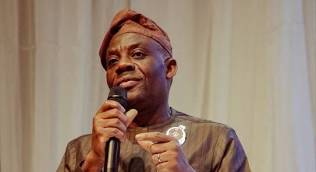
The Federal Government has approved a sweeping reform package aimed at strengthening Nigeria’s research ecosystem and restoring integrity to academic honours, following decisions reached at the Federal Executive Council (FEC) meeting of April 30 presided over by President Bola Tinubu.
Central to the reforms is the creation of a $500 million annual National Research and Innovation Development Fund, designed to provide sustainable financing for research, innovation, and the commercialisation of discoveries across universities, research institutions, and the private sector.
Briefing State House correspondents, the Minister of Education, Tunji Alausa, described the initiative as a “Game-changer” that would address longstanding challenges such as fragmentation, weak coordination, and duplication in Nigeria’s research landscape.
According to him, the fund will operate as a flexible agency under the Ministry of Innovation, Science and Technology, with a leadership structure comprising a Chief Executive Officer, three Executive Directors, and a General Counsel. It will be supervised by the National Council on Research and Innovation, chaired by the Vice President and comprising key government officials, academia, and private sector stakeholders.
Alausa explained that funding will be disbursed through a merit-based and competitive process, with strict performance benchmarks and annual reporting requirements for beneficiaries. Priority areas include food security, healthcare, and environmental sustainability.
He added that the fund, backed by a dedicated first-line charge, aligns with the administration’s ambition to grow Nigeria into a $1 trillion economy by unlocking the potential of local researchers and innovators. The Attorney-General has been directed to prepare an executive bill for submission to the National Assembly to provide legal backing for the initiative.
In a related development, the government also approved a new policy regulating the award and use of honorary degrees by Nigerian universities, introducing strict measures to curb abuse, politicisation, and commercialisation.
Under the policy, recipients of honorary degrees are prohibited from prefixing “Dr” to their names in any official, academic, or professional context. Instead, they must clearly indicate the honorary nature of the award by appending designations such as “Honoris Causa” after their names.
Alausa warned that misrepresentation of honorary degrees as earned academic qualifications would now be treated as academic fraud, attracting legal and reputational consequences.
The policy further restricts honorary awards to four categories—Doctor of Laws (LL.D.), Doctor of Letters (D.Lit.), Doctor of Science (D.Sc.), and Doctor of Humanities (D.Arts)—and bars institutions without established PhD programmes from conferring such honours.
The Minister of State for Education, Suwaiba Ahmad, noted that the policy gives legal backing to the 2012 Keffi Declaration, which previously lacked enforcement power.
To ensure compliance, the National Universities Commission will monitor institutions, sanction violators, and publish an annual list of legitimate honorary degree recipients. The government also plans to work with the media to discourage the improper use of academic titles.
The twin reforms signal a coordinated effort by the Federal Government to boost innovation-driven development while safeguarding the credibility of Nigeria’s academic system.
Meanwhile, the Joint Action Committee (JAC) of non-teaching university staff says its ongoing nationwide strike will be suspended on Monday.
JAC comprises the Non-Academic Staff Union of Educational and Associated Institutions (NASU) and the Senior Staff Association of Nigerian Universities (SSANU).
The JAC decision was contained in a circular jointly issued in Abuja on Wednesday by Peters Adeyemi, NASU General Secretary, and Mohammed Ibrahim, SSANU National President respectively.
The circular was addressed to all branch chairmen of NASU and SSANU in universities and inter-university centres across the country
The committee recalled that the unions had engaged in a series of meetings with government officials since the strike commenced on May 1, 2026.
It added that discussions focused on demands of members and conclusion of the renegotiation of the 2009 agreement.
It said another crucial meeting was held on Tuesday with the FGN Expanded Renegotiation Committee, chaired by Alhaji Yayale Ahmed.
“The government committee acknowledged further review of the government’s earlier offer requires approval from President Bola Ahmed Tinubu.”
The committee said it considered the appeal by the government for suspension of the ongoing strike to allow negotiations to continue.
“The committee acknowledged the government’s commitment that renegotiations, including review of CONTTA, would be concluded within two weeks.
“Branch leaders are hereby urged to note this appeal and convene congresses to report the above, for the suspension of the strike, effective from Monday May 11, 2026, while other engagement with relevant stakeholders continue,” it said.
JAC also acknowledged receipt of appeal letters from the Expanded Tertiary Institutions Renegotiation Committee and withdrawal of the 30 per cent CONTTA increase.
The committee expressed appreciation to all members for total compliance during the industrial action and urged them to remain united.
From Joseph Amedu, Lokoja
A yet to be identified gunmen suspected to be armed terrorists have attacked two communities in Kogi state killing one resident and injuring two others.
The affected communities are Edede and Ojapata communities both in Oganenigu, Dekina local government of Kogi state.
The gunmen who stormed the communities at about 3:30pm on Tuesday shot dead one Nasiru Ulayi and also razed several residential houses in Ojapata and Edede, rendering many homeless and forcing them into displaced camps.
In a similar attack, gunmen ambushed two members of the local Vigilante in Onitcha-Igo in Ofu local government of the state.
The vigilante members who were on routine patrol unconsciously walked into the ambush and the gunmen opened fire on both of them.The vigilante members skillfully escaped the rain of bullets, but were fatally wounded during the attack.
DAILY ASSET learnt that the vigilante men were rushed to the Federal University Teaching Hospital (FUTH) Lokoja for urgent medical attention.
One of the victims is said to be currently undergoing surgery as the medical personnel battle to treat bone fracture.
Eye witness said there are growing activities of kidnappers in the affected communities. “The kidnappers in this local communities are brazen and determined to flourish in their trade not minding the presence of security”
However, the Kogi State Police Command is yet to confirm the incident as efforts to reach the Police Public Relations Officer Afusat Oyiza Saliu failed.
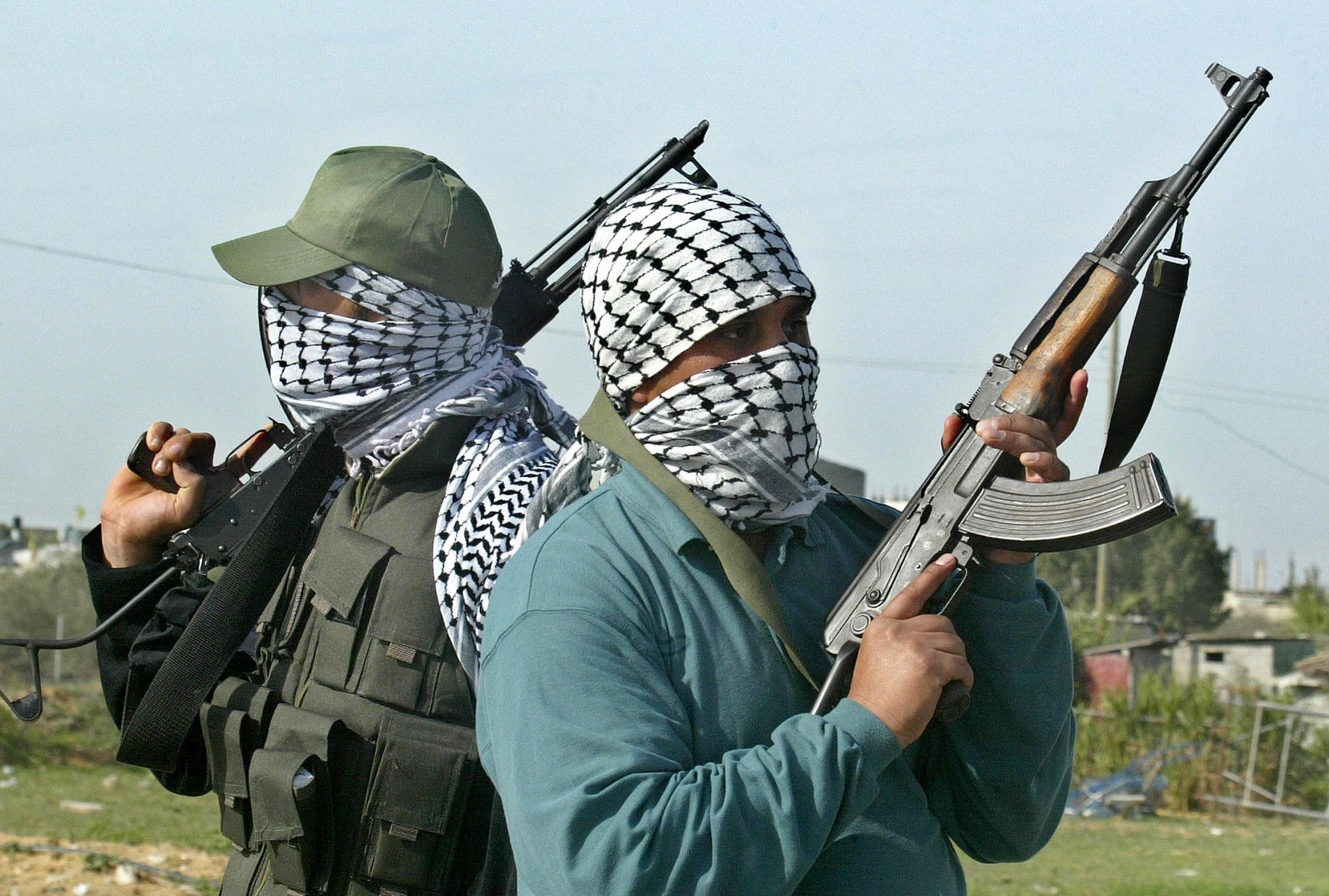
The Chadian armed forces on Tuesday said that 23 soldiers were killed and 26 hurt in an attack by Islamist militant group Boko Haram on a base on the shores of Lake Chad.
Army spokesman Issakha Acheikh Chanane said that the attack late on Monday on the island of Barka Tolorom in Lake Chad was repelled by Chadian forces and that “a significant number of militants were neutralized.
”Chadian President Mahamat Idriss Déby Itno called the attack “cowardly” in a post on Facebook.
“In the face of barbarism, Chad stands firm, united, and unyielding,” the president said.
“Obscurantism will never prevail over the Republic. We will continue the fight with renewed determination until this threat is eradicated.”Boko Haram, which was founded in Nigeria in West Africa, has been carrying out repeated attacks in the neighbouring Central African countries of Chad and Cameroon for years.
The islands in Lake Chad in the common border area of the three countries are now the militia’s main retreat.
The worst attack in Chad occurred in March 2020 on the Bohoma peninsula, where around 100 soldiers were killed.
By Tony Obiechina, Abuja
Dangote Cement Plc delivered a strong first-quarter performance in 2026, with cement and clinker exports from Nigeria rising by 71.6 per cent as the company expanded its footprint across Africa.
The cement giant disclosed in its unaudited Q1 2026 financial results that it completed 10 clinker shipments from Nigeria to neighbouring markets during the period, reinforcing its status as Africa’s leading cement exporter.
Group installed production capacity also climbed to 55 million tonnes per annum (MTA) across the continent, while total sales volumes grew by 13.8 per cent year-on-year.
This growth was driven by an 11.
5 per cent increase in Nigerian operations and a 19.5 per cent rise across pan-African markets.Group Managing Director and Chief Executive Officer, Arvind Pathak, described the performance as an exceptional start to the year.
According to him, revenue rose by 20.4 per cent year-on-year to ₦1.198rn, while earnings before interest, taxes, depreciation and amortisation (EBITDA) increased by 22.8 per cent to N567.1bn.
He said the company’s disciplined cost management and efficient operating model were instrumental in converting sales growth into stronger profitability.
Profit before tax for the quarter stood at N421.1bn, marking a 35 per cent increase from N311.9 billion recorded in Q1 2025. Earnings per share also rose significantly to N19.14 from N12.29.
Pathak highlighted the rapid expansion of the company’s export business, noting that growing clinker shipments from Nigeria further strengthened Dangote Cement’s strategic leadership in regional trade.
He also revealed progress on key expansion projects, including the newly commissioned 3MTA grinding plant in Côte d’Ivoire, alongside ongoing projects in Itori, Ethiopia, and other strategic African markets.
The company aims to increase total production capacity to 80MTA by 2030 as part of its long-term growth strategy.
Dangote Cement currently operates 35.25MT capacity in Nigeria, with major plants located in Obajana, Ibese, Gboko, and Okpella.
Through sustained investment in local manufacturing, the company has successfully transformed Nigeria from a cement-importing nation into a net exporter, supplying clinker and cement to countries across West and Central Africa.
With resilient demand across its markets and ongoing expansion initiatives, Dangote Cement says it remains optimistic about maintaining strong growth and delivering long-term shareholder value throughout 2026.

Fresh Terrorists Attack Kills One, Injures Two in Kogi
ShareFrom Joseph Amedu, Lokoja A yet to be identified gunmen suspected to be armed terrorists have attacked two communities in Kogi state killing one resident and injuring two others. The...
Prosperity Cup: Okoroma United Battles Akinima-Biogbo FC in Final Match
ShareFrom Mike Tayese, Yenagoa Akinima/Biogbo FC of Ogboloma in Yenagoa Local Government Area and Okoroma United from Okoroma in Nembe LGA will battle for the ₦30,000,000...


Boko Haram Militants Kill 23 Soldiers in Chad
ShareThe Chadian armed forces on Tuesday said that 23 soldiers were killed and 26 hurt in an attack by Islamist militant group Boko Haram on a base on...


Military Debunks Poor Feeding Claims in North-east
ShareThe Theatre Command North East Joint Task Force, Operation HADIN KAI, has described the poor feeding of troops in operational theatres as misleading. The theatre...


Residents Groan Under Rising Tomato Prices, Seek Alternatives
ShareSome residents in Lagos State have expressed concern over the recent surge in the price of tomatoes, forcing many households to adopt alternatives. The residents made their views known...


Dangote Cement Grows Exports by 71.6 Per Cent, Posts N421bn Profit
ShareBy Tony Obiechina, Abuja Dangote Cement Plc delivered a strong first-quarter performance in 2026, with cement and clinker exports from...


Akume, CAN Rally Faith, Traditional Leaders Towards 2027 Polls
ShareBy Laide Akinboade, Abuja The Secretary to the Government of the Federation, George Akume and the President of the Christian...

FG Unveils $500m Research Fund, Sanctions Honorary Degree Abuse
ShareBy Tony Obiechina, Abuja The Federal Government has approved a sweeping reform package aimed at strengthening Nigeria’s research ecosystem and...
We should not weaponize faith but rather harnessed as a force for peace – CAN
ShareBy Laide Akinboade, Abuja The Christian Association of Nigeria (CAN), on Wednesday, appealed that faith should not be weaponized rather...
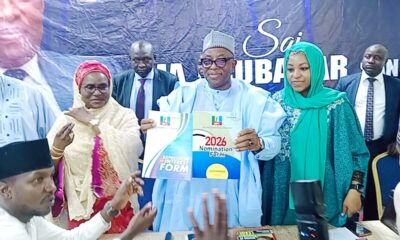

Bauchi Guber: I’ll Serve With Greater Focus, Efficiency Impact – MA Abubakar
ShareBy Mike Odiakose, Abuja Former Bauchi State governor, Mohammed Abdullahi Abubakar, SAN, has assured the people of the state that...