
NEWS
FG’s Technical C’ttee Releases New Housing Data, Pegs Deficit at 15m Units

By Raphael Atuu, Abuja
The National Housing Data Technical Committee, inaugurated by the Federal Ministry of Housing and Urban Development, has released new housing sector data indicating that Nigeria’s housing deficit for 2025 stood at “14.
925” million housing units, underscoring the scale of the country’s housing challenge and the urgent need for data-driven interventions.The data was presented by Dr. Taofeek Olatinwo, Chairman of the National Housing Data Technical Committee and Director at Nigeria Mortgage Refinance Company (NMRC), during a technical session at the 14th National Council on Lands, Housing and Urban Development, which held in Ilorin from 19th to 23rd January 2026.
According to the presentation, recent analysis conducted under the National Housing Data Programme offers more scientific estimates compared to unverified figures touted over the last few years.
The data, which focused on the number of persons per room as a standard for determining deficit, highlights persistent supply gaps driven by rapid population growth, urbanisation pressures, limited access to long-term housing finance, land and title constraints, and inadequate housing supply across several regions.
Housing Minister Ahmed Musa Dangiwa commended the committee for finally putting the issue of Nigeria’s housing data to rest. “One of the biggest gaps in our sector has been the absence of reliable, centralized, and actionable housing data. Without data, planning becomes guesswork; investment becomes speculative; and tracking progress becomes difficult,” he said.
In his presentation, Dr. Olatinwo explained that the deficit estimates were derived from multiple validated data sources, including national household surveys, population and housing census data, and housing adequacy indices developed under international best practice frameworks.
“Reliable housing data is fundamental to solving Nigeria’s housing problem. Accurate measurement of the housing deficit allows government, lenders, developers, and investors to plan effectively, allocate resources properly, and design sustainable interventions that expand access to affordable housing,” he said.
The presentation forms part of the broader work of the National Housing Data Technical Committee, a multi-agency platform inaugurated by the Federal Ministry of Housing and Urban Development and coordinated by NMRC, in collaboration with National Bureau of Statistics, National Population Commission, Central Bank of Nigeria, Federal Mortgage Bank of Nigeria, Federal Housing Authority, and other key housing sector institutions.
Under the programme, the Committee is leading efforts to establish the National Housing Data Centre, a central platform designed to aggregate, standardise, and disseminate housing and mortgage market data to support policy formulation, housing delivery planning, and long-term housing finance development.
The new deficit figures reaffirm the scale of Nigeria’s housing challenge and strengthen the case for coordinated reforms in land administration, housing supply, infrastructure development, and mortgage finance expansion.
The National Council on Lands, Housing and Urban Development serves as the highest intergovernmental policy forum on housing and urban development in Nigeria, bringing together federal and state governments to deliberate on sector priorities, reforms, and implementation strategies.
By Laide Akinboade, Abuja
The Christian Association of Nigeria (CAN) at the weekend, dismissed a misleading opinion and related social media claims alleging that the Sultan of Sokoto, His Eminence Muhammadu Sa’ad Abubakar, was invited to serve as “Royal Father of the Day” at the proposed foundation laying ceremony of the Ecumenical Chapel at the Nnamdi Azikiwe International Airport, Abuja.
In a statement issued by the Media Office of CAN in Abuja.
They said no invitation was extended to the Sultan, this was in response to the rapid spread of the claim across social media and opinion platforms, where it has drawn attention and stirred concern about possible religious tension.
CAN’s intervention seeks to correct the narrative and steady public perception before it escalates.
The statement reads in part, “We state, firmly and without equivocation, that no such invitation was extended to the Sultan by CAN. This claim is false.
“For the record, the material in question was made public by the Office of the Secretary to the Government of the Federation (SGF) and not from CAN. At no point did CAN release any such invitation.
“Beyond its inaccuracy, the narrative appears deliberately framed to provoke religious sensitivities and manufacture controversy where none exists. At a time when national unity requires careful stewardship, such distortions are reckless and unacceptable.
“CAN remains unwavering in its dual commitment: to uphold the integrity of Christian faith and worship, and to promote peaceful coexistence and mutual respect among all Nigerians. These are not competing values; they are complementary responsibilities”.
The statement noted, “However, truth must never be sacrificed on the altar of sensationalism. The suggestion that the Sultan was assigned any role in the ceremonial proceedings is entirely unfounded and should be dismissed in its entirety.
“We therefore call on the media, opinion leaders, and the general public to act with responsibility: verify before amplifying, question before believing, and prioritise facts over virality.
“Let it be clearly and finally stated: the Sultan of Sokoto was not invited. The story in circulation is the handiwork of mischief makers and should be disregarded”
By David Torough, Abuja
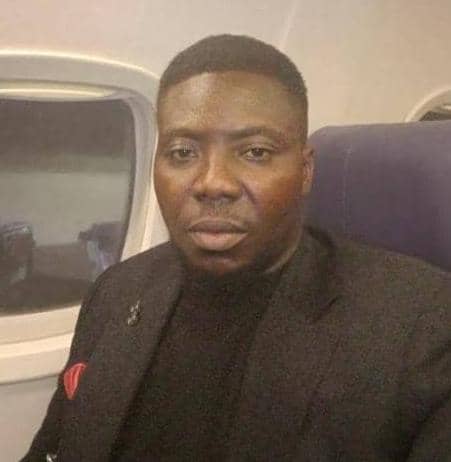
Award-winning Nigerian journalist and security analyst, Joseph Saater Undu, has been shortlisted for the prestigious Safety Personality Award at the 13th Nigeria Safety and Security (NSAS) Awards and Lecture, scheduled to hold on April 29, 2026, in Lagos.
The honour, organised by Safety & Security Watch Magazine under the auspices of the Media Centre for Promotion of Safety Awareness, is part of activities marking the International Labour Organization’s World Day for Safety and Health at Work.
According to the award selection panel, Undu was chosen in recognition of his “Outstanding contributions to health, safety, security and environment,” particularly through his investigative journalism and detailed reporting on criminality and national security issues.
The organisers also commended his deep understanding of Nigeria’s security architecture and his role in promoting public safety awareness.
With over 14 years of experience in mainstream journalism, Undu has built a reputation as a leading voice in crime, defence, and anti-corruption reporting.
He has worked with major national dailies, including Champion Newspapers, Vanguard Newspapers, and Daily Independent Newspapers, before transitioning to Abuja as a senior correspondent.
Undu is a Biographer and current president of Tiv Youth Organization (TYO) Abuja Chapter. He founder of the Benue Journalists’ Forum of Nigeria.
He is also an accomplished author, with works such as Positude: The Change We Need and Giant Footprints, a biography of former Inspector General of Police Usman Alkali Baba.
A recipient of the Golden Pen Award and an international poetry laureate, Undu has earned multiple recognitions for his contributions to media and literature.
In 2018, he was conferred with the traditional title “Ivaan I Tiv” (The Arrow of Tiv) by the Tiv Traditional Council in Lagos.
The 2026 NSAS Awards will feature lectures and discussions centered on the theme, “Promoting a Healthy Psychosocial Workplace,” with notable experts and policymakers expected to participate.
From Jude Dangwam, Jos
Plateau State Governor, Caleb Mutfwang has convened a strategic meeting with former governors of the state towards addressing the security challenges bedevilling the state.
The meeting held on Thursday at the News Government House Little Rayfield had the presence of former Governor Samuel Bitrus Atukum, former Governor Fidelis Tapgun, former Governor Joshua Dariye, former Governor Jonah David Jang and Former Governor Simon Lalong respectively.
Mutfwang maintained that the high-level engagement critically reviewed the prevailing security situation, particularly the recent violent attacks in rural communities across the state.
He noted that discussions were focused on fostering sustainable peace, strengthening unity, and promoting harmonious coexistence among all residents.
According to Governor Mutfwang, “I convened a strategic meeting with distinguished leaders and former Governors of Plateau State on Tuesday at the Government House, Little Rayfield, Jos. The meeting deliberated extensively on matters concerning the well-being, welfare, progress, and overall prosperity of the people of Plateau State.
“The high-level engagement critically reviewed the prevailing security situation, particularly the recent violent attacks in rural communities across the state. Discussions were focused on fostering sustainable peace, strengthening unity, and promoting harmonious coexistence among all residents.
“The leaders collectively resolved to pursue justice for all and to establish robust frameworks that reflect the enduring courage, discipline, hospitality and patriotism of the Plateau people within the Nigerian project,” he stated
The Governor reiterated that, “Emphasis was also placed on rebuilding fractured relationships and restoring trust, with the aim of reinforcing Plateau State’s longstanding identity as the Home of Peace and Prosperity,” says Mutfwang.



Sultan wasn’t invited to Ecumenical Chapel Event – CAN
ShareBy Laide Akinboade, Abuja The Christian Association of Nigeria (CAN) at the weekend, dismissed a misleading opinion and related social...
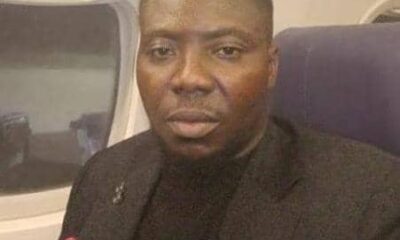

Joseph Undu Bags National Safety Personality Award in Lagos
ShareBy David Torough, Abuja Award-winning Nigerian journalist and security analyst, Joseph Saater Undu, has been shortlisted for the prestigious Safety...
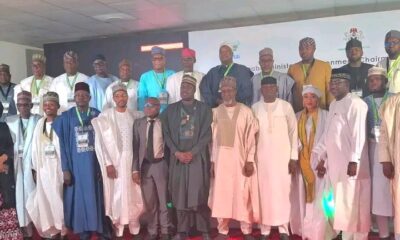

FG Reaffirms Commitment to ACReSAL Project at Mid-Term Review in Kaduna
ShareBy David Torough, Abuja The Federal Ministry of Water Resources and Sanitation has reaffirmed its commitment to the successful implementation...
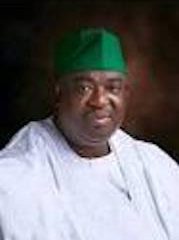

Mutfwang Holds Close Door with Former State Governors
ShareFrom Jude Dangwam, Jos Plateau State Governor, Caleb Mutfwang has convened a strategic meeting with former governors of the state towards addressing the security challenges bedevilling the state. The meeting held...

Lobi Stars Trim Squad to Push for Promotion
ShareThe Nigerian National League (NNL) side, Lobi Stars Football Club of Makurdi, has trimmed its squad and retained a few quality players to push for promotion to the...


Pope Criticises ‘Tyrants’ Who Spend Billions on Wars after Trump Spat
SharePope Leo has criticised leaders who spend billions on wars and said the world was “being ravaged by a handful of tyrants” in unusually forceful comments during a...


Nigerian Men Scared of Bold, Confident Women, Phyna Claims
ShareFormer Big Brother Naija winner, Josephine Otabor, popularly known as Phyna, has claimed that she is still single because Nigerian...

Residents Decry Persistent Power Outage in Abuja Community
ShareBy Raphael Atuu, Abuja Residents of Waru District in Apo, within Nigeria’s Federal Capital Territory, are raising the alarm over what they...
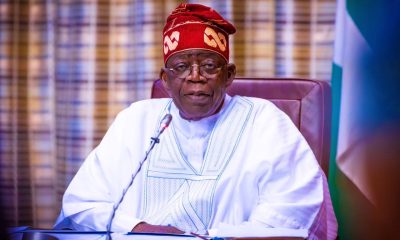

2027: Tinubu Meets Coordinators, Renews Plea for Unity, Rule of Law
ShareBy David Torough, Abuja President Bola Tinubu has called for unity, resilience and renewed commitment to nation-building, urging Nigerians to...


Gunmen Abduct 14 UTME Candidates in Benue Enroute Exams Centre
ShareFrom Attah Ede, Makurdi A wave of concern has trailed the ongoing Unified Tertiary Matriculation Examination (UTME) nationwide following the...