
BUSINESS
FirstBank Introduces 1st Humanoid Robot to Engage Customers


FirstBank Nigeria Ltd. has launched a humanoid robot, an industry first, at its Adetokunbo Ademola VI, Lagos Digital Experience Centre (DXC) Branch, to engage customers.
Mrs Folake Ani-Mumuney, Group Head, Marketing and Corporate Communications, FirstBank, said in a statement on Thursday in Lagos.
The statement said that the robot was among the phased configuration of the bank’s state-of-the-art digitally led self-service branch.
According to the statement, the robot is equipped with video banking and Artificial Intelligence (AI), taking on the role of friendly branch staff.
“In furtherance to its role in providing innovative financial solutions in Nigeria, First Bank of Nigeria Ltd., Nigeria’s premier financial institution and financial inclusion services provider, has announced the launch of a humanoid robot, the first of its kind in the financial services space in Nigeria.
“The robot is equipped with video banking and artificial intelligence, taking on the role of friendly branch staff.
“The robot can engage customers through conversations as well as through a touch screen strapped to its chest.
“The services performed by the robot include responding to customer inquiries on cash deposits, withdrawals and ATM cards.
“The robot also aids complaint management as customers can log a complaint via QR with feedback generated within the advised time.
“The humanoid robot also keeps customers up-to-date with happenings about the Bank, including product launches and upgrades designed to strengthen the customer experience and satisfaction.
“The robot is a one-stop point to keep customers informed about the Bank. It also effectively manages customers’ accounts,” the statement said.
The statement quoted Dr Adesola Adeduntan, the Chief Executive Officer of FirstBank Group, as expressing his delight at the initiative.
“The addition of the humanoid robot to our state-of-the-art Digital Experience Centre represents a purposeful stride towards transforming the banking landscape in the country and further showcases the priority we give to innovation within the Bank.
“With its advanced capabilities, the robot is designed to elevate the quality of our customers’ lives in today’s rapidly evolving digital world.
“Our unwavering dedication to delivering unparalleled banking services remains steadfast, as we leave no stone unturned in innovating to fulfil our customers’ needs,’’ he said.
The introduction of the humanoid robot is among the phased configuration of the Bank’s state-of-the-art digitally led self-service branch called Digital Experience Centre, which launched in December 2021.
Another humanoid robot will also be deployed in the Bank’s next and second Digital Experience Centre, soon to be announced in the coming months. (NAN)




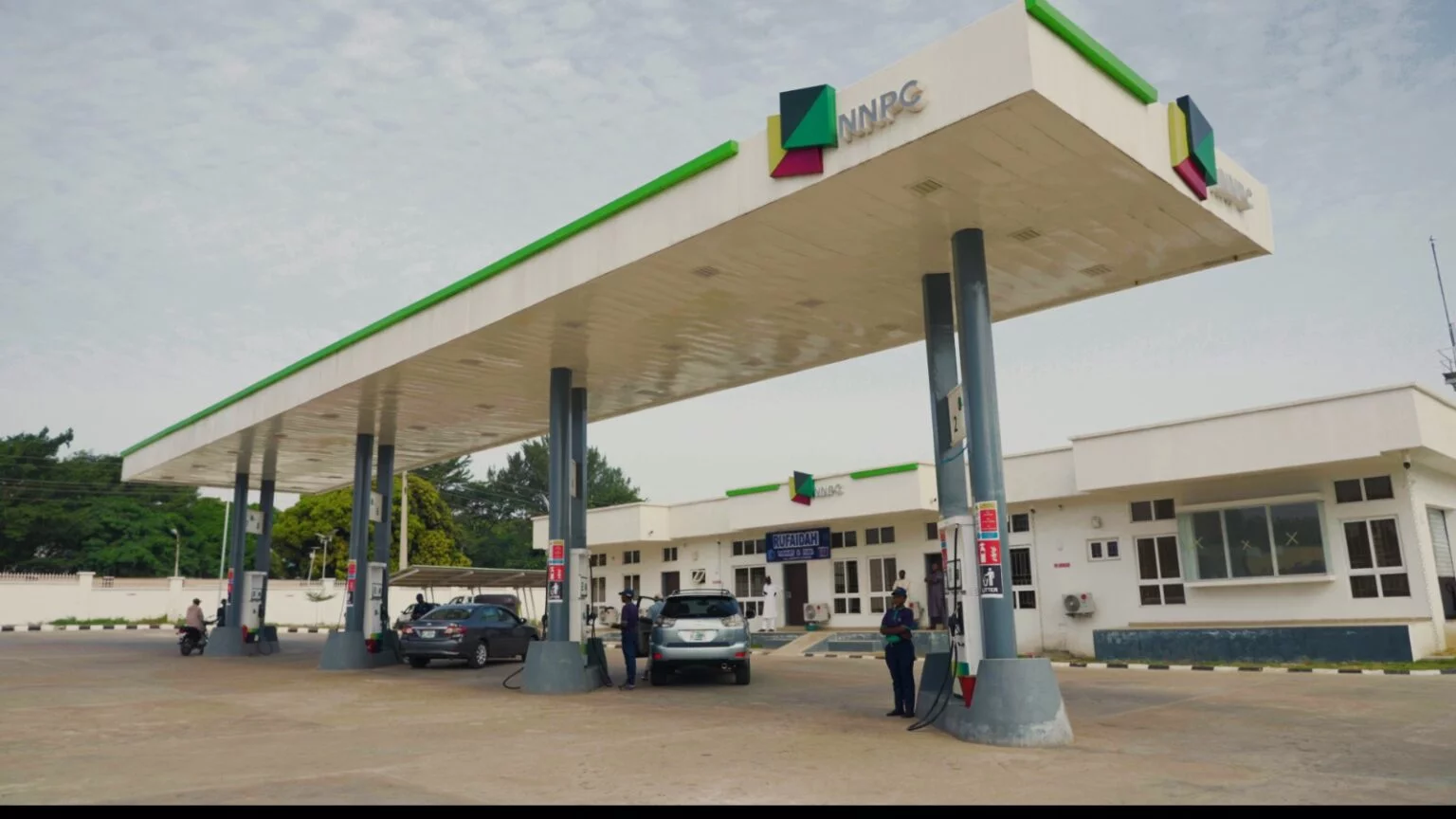
The Nigerian National Petroleum Company Ltd. (NNPC Ltd.) recorded N7.2 trillion Profit After Tax (PAT) in 2025, a 33 per cent increase from N5.4 trillion.
Group Chief Executive Officer, Bayo Ojulari, disclosed this on Tuesday in Abuja at a media briefing after the company’s AGM and second Earnings Call.
Revenue declined to N34.
5 trillion from N45.1 trillion in 2024.Ojulari attributed the 24 per cent revenue decline to lower crude oil prices and reduced product volumes following market deregulation.
He said earnings per share rose to N35.
90 from N27.07, while return on equity improved by 200 basis points to 16 per cent.The company’s declared dividend increased by 35 per cent to N5.8 trillion, while taxes, royalties and other government remittances rose 39 per cent to N22.3 trillion.
“Stronger earnings in spite of this pressure demonstrate the resilience of NNPC Limited’s operations,” Ojulari said.
He said profit grew because NNPC had improved its operations and maintained discipline across its businesses.
Ojulari said crude oil and condensate production reached a five-year peak of 1.77 million barrels per day.
He added that gas supply reached a three-year high of 7.2 billion standard cubic feet per day.
“Stronger performance gives NNPC Limited more capacity to invest, contribute to public revenue and strengthen Nigeria’s energy security,” he said.
On infrastructure, Ojulari said the mainline of the Ajaokuta-Kaduna-Kano gas pipeline had been completed.
He said work was ongoing on tie-ins to delivery points, beginning with Abuja, followed by Ajaokuta and Kaduna.
According to him, the next milestone is to commence gas flow through the pipeline to industries and power plants.
Ojulari said the company completed the Obiafu-Obrikom-Oben (OB3) gas pipeline in 2026 after several years of challenges.
On the refineries, he said prospective partners under NNPC’s technical equity partnership model had conducted a three-month onsite review.
He said more than 34 engineers participated in the review, adding that NNPC was now concluding the report.
Ojulari said the company was targeting self-sustaining and profitable refineries, with a pathway expected to be defined soon.
He reaffirmed NNPC’s target of producing two million barrels of crude oil daily by 2027 and three million barrels by 2030.
He said gas production targets were 10 billion cubic feet per day by 2027 and 12 billion by 2030.
“NNPC plans to mobilise over 60 billion dollars of investment across the energy value chain,” he added.
Ojulari said more than 1,000 newly recruited professionals joined NNPC in 2025 under its Talent to Value programme.
He said the recruits completed a one-year internship and training programme before being deployed across the company. (NAN)
The Federal Competition and Consumer Protection Commission (FCCPC) says there is a need for sustained capacity building in competition reporting and issues.
The Executive Vice Chairman of FCCPC, Tunji Bello, said this in a statement made available to the News Agency of Nigeria (NAN) in Abuja on Sunday.
Bello described competition matters as a relatively new area in the country adding that it required specialised knowledge among journalists, regulators and other stakeholders.
He said that competition law and consumer protection regulations had made stakeholders’ education a priority for the commission.
Bello said that the FCCPC recently supported the training of judges through the National Judicial Institute (NJI) to deepen understanding of competition-related matters.
He noted that members of the judiciary also required exposure to the nuances of the emerging field.
“We recognised that because it is a new terrain, the judges themselves are not familiar with the nuances.
”So we brought in experts on competition,” he said.
Bello stressed that the media had a critical role in promoting public understanding of competition and consumer protection issues.
“If FCCPC is becoming more known to the public, it is as a result of the kind of publicity you have given us,” he said. (NAN)

Fire gutted the Nigeria Customs Service (NCS) Western Marine Command office in Apapa, Lagos, on Monday, destroying property worth millions of Naira.
The fire, which reportedly started at about 10:23 a.m. from an electrical surge in the conference room, spread to other sections of the building.
Officers on duty made frantic efforts to contain the fire before officials of the Lagos State Fire and Rescue Service arrived at about 10:45 a.
m.The Deputy Comptroller of Customs, Timothy Jonah, who just resumed at the Command, to take over the affairs from his predecessor, described the incident as unfortunate.
He said: “I just resumed duty to take over, only to witness this fire outbreak.
“Every challenge, though negative, is an opportunity to strengthen our operations.
“In the meantime, we will set up a committee to investigate the cause of the fire.”
He commended the swift response of the personnel on duty and their collaboration with the fire service, saying measures would be taken to strengthen safety protocols and prevent a recurrence. (NAN)



Insecurity: FCTA Completes Ushafa, Saburi Divisional Police Headquarters, 10 Underway
ShareBy Laide Akinboade, Abuja In order to boost security, the Federal Capital Territory Administration (FCTA) on Wednesday said it has...

2027: I ‘ll Resign As Minister If Tinubu Loses FCT, Rivers – Wike
ShareBy Laide Akinboade, Abuja The Minister of the Federal Capital Territory (FCT), Nyesom Wike, has declared that he will step...


JAMB Extends Deadline for 2021–2025 Outstanding Admissions to Nov 30
ShareThe Joint Admissions and Matriculation Board (JAMB) has extended the deadline for candidates with outstanding admission offers from the 2021...


BIPC Board Inspects Taraku Mills Preparatory to Test Running
ShareFrom Attah Ede, Makurdi The Board of Directors of the Benue Investment and Property Company Limited (BIPC) has inspected the...


UBEC Renovates 287 Schools, over 4,000 Classrooms Nationwide
ShareThe Universal Basic Education Commission (UBEC) said it has renovated 287 schools and more than 4,000 classrooms across the country...

Nigeria at 66: FG Declares Thursday, Public Holiday
ShareThe Federal Government has declared Thursday as a public holiday to mark Nigeria’s 66th Independence Anniversary. The Minister of Interior,...


Tinubu Signs 2025 Budget Amendment Bill
ShareBy David Torough, Abuja President Bola Tinubu has signed the Appropriation (Amendment) (No. 4) Bill, 2025, extending the implementation period...

NAN Backs Insurance Sector’s Transformation Agenda, hails NAICOM
ShareBy Tony Obiechina, Abuja The National Association of Nigerian Students (NANS) National Secretariat, the umbrella body representing over 40.1 Million...


Don Calls for More Investment in Entrepreneurship/Innovation in Nigeria
ShareFrom Joseph Amedu, Lokoja A Professor of Entrepreneurship and Corporate Strategy at the Federal University, Lokoja, John Alabi has called...


Tinubu Submits NDDC 2026 Appropriation Bill
SharePresident Bola Tinubu has submitted the 2026 Statutory Budget Proposal of the Niger Delta Development Commission (NDDC) to the House...