
NEWS
Flight Delays, Cancellations: Assessing Nigeria’s Efforts to Improve Air Travel


By Gabriel Agbeja
In spite of arriving on time, checking in, and waiting at the boarding gate, many air travelers in Nigeria are increasingly met with sudden announcements of flight delays or cancellations.
Consequently, flight disruptions have become one of the most persistent challenges plaguing Nigeria’s domestic aviation industry.
While delays and cancellations are not peculiar to Nigeria, their frequency has continued to generate concern among passengers, airlines, regulators and other stakeholders.
Capt.
John Ojikutu, Chief Executive Officer of Centurion Security and Safety, said in an interview with the News Agency of Nigeria that domestic market encroachment was a primary cause of frequent flight delays and cancellations.“If the commercial agreement was included in the Bilateral Air Services Agreement (BASA) during the era of Nigeria Airways, why did Nigeria Airways not fly to Gatwick, whereas British Airways (BA) was permitted to include Abuja and Lagos as part of its designated routes under the BASA?
“Why was Arik refused Heathrow but only Gatwick? I don’t know how you can convince me with language of the foreign airlines’ incursion rights into our domestic market with the help of our political office holders.
“Tell me why BA and VK from the UK operate to Lagos and Abuja, why Emirates, Qatar, and Etihad operate to Lagos, Abuja, and Kano, and especially why Ethiopian Airlines operates to all five Nigerian international airports.
“You consider these as a right in the Nigerian commercial agreement with the countries of these foreign airlines.
“How many of our 15 domestic airlines can fly daily to our five international airports if you still have not seen these ‘rights’ as incursions into the domestic airline market?” he queried.
Meanwhile, the Minister of Aviation and Aerospace Development, Mr Festus Keyamo, has placed considerable emphasis on engagement with industry stakeholders as part of efforts to address operational challenges.
In August 2026, Keyamo convened an emergency stakeholders’ meeting involving aviation unions, airline operators and government agencies following industrial tensions that disrupted flight operations.
Among the resolutions was a plan for the Nigeria Civil Aviation Authority (NCAA) and other aviation-agency heads to obtain payment schedules from airlines with outstanding statutory obligations, taking into consideration the airlines’ operating costs and prevailing economic realities.
Keyamo, who had said in many fora that airlines must meet their financial and regulatory obligations, affirmed that excessive financial pressure on operators can also threaten their ability to maintain sustainable operations.
“The Federal Government’s challenge is consequently to create an environment in which airlines can remain financially viable while passengers receive dependable services.
“At the centre of the effort is the NCAA, which is responsible for regulating the industry and protecting the interests of air travelers.
“Such measures are important because effective regulation goes beyond monitoring safety. It must also ensure that airlines provide reliable services and properly manage passengers when disruptions occur, ’’ he said.
Nevertheless, data released by the NCAA recently revealed that it recorded 4765 light delays and 36 cancellations in the month of August.
The regulator, in its summary of domestic airline flight disruption operations in the country for August revealed that 15 carriers operated 7,961 flights during the month, with roughly six in every 10 flights failing to operate on schedule.
“Air Peace recorded the highest number of delayed flights, with 1,330 of its 1,864 flights delayed, representing 71.4 per cent of its operations.
“United Nigeria Airlines recorded the highest delay rate among the carriers, with 943 of its 1,231 flights delayed, representing 76.6 per cent. The airline also recorded eight cancellations, the highest number during the month.
“Enugu Air followed with 582 delays out of 878 flights, representing 66.3 per cent, in addition to four cancellations.’’
It said Value Jet recorded 435 delays from 767 flights, representing 56.7 per cent, while Aero had 246 delays out of 469 flights, or 52.5 per cent.
Also, Green Africa recorded 114 delays from 226 flights, representing 50.4 per cent, while Overland had 139 delays out of 239 flights, or 58.2 per cent.
“Ibom Air recorded 254 delays from 560 flights, representing 45.4 per cent, while Max Air had 204 delays from 336 flights, or 60.7 per cent.
“Rano Air recorded 216 delays from 503 flights, representing 42.9 per cent, while Arik had 188 delays from 301 flights, or 62.5 per cent.
“Xe Jet recorded 40 delays from 127 flights, representing 31.5 per cent, while Binani had 22 delays from 57 flights, or 38.6 per cent.’’
NCAA stated that Umza Air recorded the best performance among the carriers, with 52 delays from 403 flights, representing 12.9 per cent, and no cancellations.
NCAA reported that 2,801 delayed flights were set back by 16 minutes to an hour, and 1,322 flights were delayed for one to two hours.
“Another 407 flights were delayed for between two and three hours, while 235 experienced delays of three hours or more.
“Air Peace accounted for 108 of the 235 longest delays, followed by Enugu Air with 46 and United Nigeria with 41; NG Eagle recorded no operations during the period,’’ it said.
More so, NCAA has issued stern warnings to airlines over spate of flight delays, crew shortages and other consumer-related infractions, urging them to align flight schedules with available aircraft and crew.
The Director General of Civil Aviation (DGCA), Capt. Chris Najomo, gave the admonition during separate interactive sessions with Air Peace and Max Air, held at the NCAA Corporate Headquarters in Abuja recently.
Najomo questioned the effectiveness of the buffer in view of recurring delays and cancellations being experienced, while acknowledging weather, diversions and airport restrictions as possible causes.
He underlined the need for contingency planning and effective passenger communication.
The NCAA Director, Public Affairs and Consumer Protection, Mr Michael Achimugu, said authority monitoring had revealed instances where passengers were left without adequate information or assistance.
He reminded Air Peace of its obligations to provide refreshments after two hours, meals after six hours, and accommodation, refunds and compensation where applicable.
He also raised concerns over flight merging and urged prompt responses to consumer complaints.
Responding, the Chief Operating Officer at Air Peace, Oluwatoyin Olajide, disclosed that the airline had 20 aircraft – five Aircraft on Ground (AOG) and 15 serviceable.
Olaide added that Air Peace deliberately operated 80 to 85 flights daily to maintain a buffer for disruptions.
She attributed disruptions to technical issues, including bird-strike damage, component shortages and a cracked windshield, as well as weather and airport restrictions.
Olaide said that Air Peace provided hotel accommodation and assistance to affected passengers.
At the Max Air session, the General Manager, Ground Operations/Business Development, Mr Raymond Omadiagbe, disclosed that three Boeing 737 aircraft were available for domestic operations.
He said that all serviceable, with only two being operated due to crew limitations, the international fleet comprised two Boeing 747s and one Boeing 777 undergoing checks.
Omadiagbe said Max Air had reduced its schedule to match available resources in addition to discontinuing late-night Kano operations following passenger feedback.
Observers say the recent interventions by the Federal Government, the NCAA, airlines and other stakeholders show that the problem is receiving attention.
Nonetheless, the August disruption figures demonstrate that much more remains to be done.
Experts say the true measure of progress for Nigeria’s aviation industry lies not in how swiftly stakeholders manage flight delays and cancellations, but in their ability to build systems that prevent these disruptions altogether.
For Nigerian travelers, success is defined by a simple, predictable experience: arriving at the airport, boarding on schedule, and reaching their destination safely.(NAN)

By Tambaya Julius, Abuja
The All Progressives Congress (APC) flag bearer for Karu/Gitata Constituency in the Nasarawa State House of Assembly, Hon. Dr. Abraham Habu Ekpo, has empowered 100 women with N50,000 each and wrappers as part of activities marking his 50th birthday.
The celebration, held in Tattara, his hometown in Karu Local Government Area of Nasarawa State, featured a thanksgiving service at ECWA Church, where he received prayers and blessings, as well as the commissioning of the APC Tattara/Kondoro Electoral Ward party office.
The event, themed “Celebrating 50 Years of Grace: 50@50 for 50 Empowerment,” attracted political leaders, traditional rulers, community stakeholders and supporters who gathered to celebrate Ekpo’s golden jubilee and thank God for his life.
As part of his 50th birthday celebration, Ekpo returned to Ebenezer Hospital in Keffi, his birthplace, to share the joy of his golden jubilee with nursing mothers and other patients receiving treatment. He offered financial assistance to patients to help offset their hospital bills.
Speaking at the event, the APC candidate for the Karu, Keffi and Kokona Federal Constituency, Rt. Hon. Daniel Ogah Ogazi, described Ekpo’s golden jubilee as a celebration of God’s grace and urged him to remain committed to faith, service and the welfare of the people.
Ogazi said Ekpo’s decision to mark his birthday with thanksgiving and an empowerment programme reflected his gratitude to God and concern for the well-being of others.
He prayed for the celebrant’s continued good health, wisdom and success, expressing confidence that divine guidance would sustain his political journey.
On his legislative agenda, Ogazi said he was committed to introducing bills that would address the needs and aspirations of residents across Karu, Keffi and Kokona local government areas, which make up the federal constituency.
He explained that the proposed establishment of a technical institution would help address concerns over limited access to existing technical schools, equipping young people with practical skills for employment and self-reliance.
According to him, the proposed bills formed part of his commitment to translating constituents’ needs into practical legislative action.
Ogazi stressed that effective representation went beyond lawmaking to include regular consultations with the people, identifying their challenges and developing appropriate laws and resolutions to address them.
“I am a legislator who always returns to those who sent me. I am a messenger, and they will always see me here,” he said.
He added that, if elected, he would continue to engage stakeholders across Karu, Keffi and Kokona to ensure that residents’ concerns informed his legislative priorities.
The APC candidate also pledged to sustain grassroots interventions, assuring constituents that his representation would continue to make a difference in their communities.
Reflecting on his legislative record in the Nasarawa State House of Assembly, Ogazi cited his contributions to the anti-kidnapping law enacted during Governor Abdullahi Sule’s administration, alongside other laws aimed at strengthening security and institutional development in the state.
He commended the working relationship between the executive and legislative arms of government, noting that cooperation was essential to enacting laws that would have meaningful impacts on citizens’ lives.
The celebration combined thanksgiving, women’s empowerment, humanitarian support and political engagement, with Ekpo using his golden jubilee to give back to his community and support residents in need.
Speaking at the commissioning of the Party Office, the Nasarawa State, Commissioner for Works, Infrastructure and Housing, Hon. Kwanta Yakubu, congratulated Ekpo on his 50th birthday, describing him as a capable and experienced individual whose leadership could contribute to the development of the constituency.
Yakubu expressed confidence in the APC-led administrations at the federal and state levels, saying the reforms introduced by President Bola Tinubu and implemented in Nasarawa State under Governor Abdullahi Sule were yielding results.
He disclosed that the state government had approved the construction of the Gitata-Panda Road, describing the project as a demonstration of the government’s commitment to infrastructure development.
The commissioner urged residents to continue supporting the APC, arguing that the party’s record in governance and infrastructure development deserved sustained public support.
In her remarks, the councillor representing Tattara/Kondoro Electoral Ward, Hon. Barr. Ninda Yona, congratulated Ekpo on his golden jubilee and commended him for his support to the Constituency, particularly the donation of the party office.
She urged constituents to embrace the growth and progress of the All Progressives Congress (APC) and called on them to support the party in the forthcoming general elections.
From Mike Tayese, Yenagoa
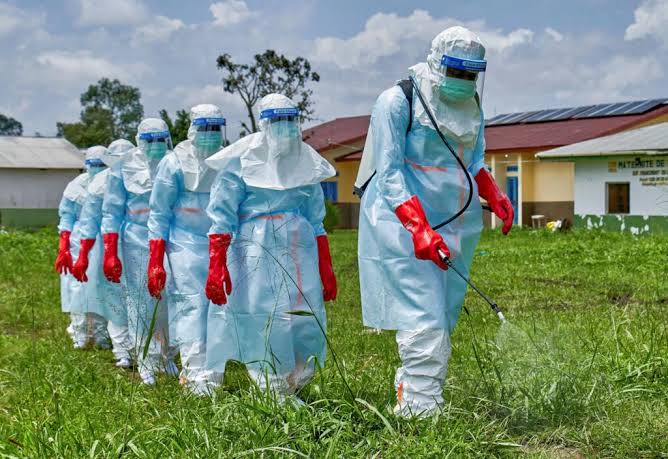
The Bayelsa state government has intensified disease surveillance and emergency preparedness following reports of an Ebola case in Nigeria, disclosing that five persons identified through airport screening are being monitored for 21 days.
However, the government said no case of Ebola had been recorded in the state urging residents to remain calm, observe preventive measures and avoid spreading unverified information capable of triggering public panic.
“The commissioner for Health, prof. Seiyefa Brisibe disclosed this while briefing journalists in Yenagoa the Bayelsa state capital, where he outlined measures being implemented to strengthen the state’s capacity to prevent, detect and respond to any possible introduction of the virus.
”Brisibe said the federal ministry of health and social welfare, through the Nigeria centre for disease control and prevention, had confirmed an Ebola case on October 20, 2026, prompting heightened vigilance among public health authorities.
The commissioner urged residents to report suspected cases promptly to the appropriate health authorities and obtain information only from verified sources, including the state and federal ministries of health and other recognised public health agencies,he warned that spreading rumours about suspected Ebola infections could undermine public health interventions and create unnecessary fear.
“Please do not rely on rumours about Ebola that could cause panic or spread misinformation,anyone who suspects exposure to the virus should contact the nearest health facility, doctor or healthcare provider and use the designated emergency contact numbers provided by the authorities,” he said.
Brisibe stressed that preventing the introduction and spread of infectious diseases required the active participation of residents, noting that outbreaks could affect people irrespective of their ethnic background, race, economic status or social standing.
He urged residents to promptly report credible information about suspected cases rather than circulate unverified claims on social media or other communication platforms,”If you see anything, say something. If you hear anything, take action. This is not just about the Ministry of health or the Bayelsa state government; it is about all of us,” he added.
The commissioner also appealed to residents to maintain proper hygiene, particularly regular handwashing with soap and water and the use of appropriate hand sanitisers.
He called on ministries, government agencies, public institutions and private businesses to provide handwashing facilities on their premises to promote good hygiene practices,however, he cautioned against allowing the preventive measures to create unnecessary anxiety, explaining that hand hygiene was an essential public health practice that helped prevent several infectious diseases, not Ebola alone.
The government also warned against stigmatising people because of their travel history or suspected exposure to the virus.
Brisibe said anyone suspected of exposure should be subjected to appropriate medical assessment and established public health procedures rather than speculation, discrimination or public condemnation.
The commissioner said the state’s experience in managing previous public health emergencies, including the COVID-19 pandemic and cholera outbreaks had strengthened its capacity to prepare for and respond to infectious disease threats.
He recalled that during a diarrhoeal disease and cholera outbreak in 2025, the state adopted measures centred on prevention, community engagement, improved hygiene and effective case management.
According to him, more than 1,000 suspected cases were managed during the outbreak without any recorded deaths in public and private hospitals across the state.
He said the experience reinforced the importance of early intervention, effective communication, disease surveillance and prompt medical attention in reducing the impact of infectious disease outbreaks.
Brisibe explained that the state’s public health strategy was built around three major priorities: preventing outbreaks through public education and community engagement, limiting transmission through improved hygiene contact tracing and surveillance and ensuring the availability of essential medical supplies and treatment to reduce fatalities if cases occurred.
He said the same principles were being applied to the state’s Ebola preparedness efforts, with prevention remaining the immediate priority, “we have gained a lot of valuable experience in handling public health emergencies, including COVID-19, cholera and other infectious disease outbreaks”.
The government disclosed that it was strengthening emergency coordination and rapid-response capacity, with the Bayelsa Emergency Ambulance System providing additional logistical support for emergency medical services.
Brisibe said the Ministry of Health had activated relevant technical teams and appointed an incident manager to coordinate preparedness activities,he identified the director of public health, Dr Ebikapaye Okoyen, as the incident manager, while a technical team led by the ministry’s permanent secretary Dr. John Stow was coordinating the response.
The team is expected to coordinate the various response components, identify existing gaps and ensure that necessary preparedness measures are implemented. Saying the arrangement would improve coordination among health officials and strengthen the state’s ability to identify, assess and respond promptly to potential public health threats.
Brisibe explained that the movement of people through coastal waterways and offshore locations presented additional surveillance challenges, especially where fishing communities interacted with vessels operating in the area.
He said the government was examining potential gaps in monitoring such locations to improve early detection and ensure that vulnerable communities were not excluded from the state’s public health surveillance network.
He urged community stakeholders to disseminate accurate information, encourage residents to report suspected cases and discourage discrimination against anyone requiring medical evaluation.
The government assured residents that it remained committed to protecting public health through continuous surveillance, public education and emergency preparedness,it said strengthened disease surveillance had also helped the state monitor infectious disease threats reported in neighbouring states although the specific outbreak referenced during the briefing was not identified.
Brisibe reiterated the need for residents to remain calm, follow verified public health advisories and promptly report suspected cases through established channels, he emphasised that effective disease prevention required cooperation among government agencies, healthcare professionals, community leaders, the media and members of the public.
The commissioner urged residents to remain informed and vigilant, stressing that suspected cases should be reported to ensure proper medical assessment and prevent possible transmission, rather than to stigmatise affected individuals, “the protection of the public is a shared responsibility and together we can reduce the risk of Ebola entering and spreading within the state,” he said.
By Tony Obiechina, Abuja
The Federal Government has disbursed N38.93 billion to 166 public tertiary institutions nationwide under the Needs Assessment Revitalisation Fund.
The disbursement covers 79 universities, 46 polytechnics and 41 colleges of education to support approved projects aimed at addressing infrastructure gaps and improving teaching and learning facilities across the institutions.
The university component accounts for ₦28.5 billion for 79 institutions, while 46 polytechnics have allocations totalling ₦5.8 billion. The 41 colleges of education are allocated ₦4.
7 billion.The intervention forms part of the Federal Government’s efforts to address the needs of public universities and support the implementation of agreed measures under the Memorandum of Understanding between the Federal Government and the Academic Staff Union of Universities (ASUU).
The funds are expected to enable beneficiary institutions to commence or advance approved projects addressing critical infrastructure and other identified institutional needs, with the overall objective of strengthening the quality of tertiary education in Nigeria.
The disbursement underscores the importance of effective coordination between the Federal Ministry of Finance, the Federal Ministry of Education and beneficiary institutions in ensuring that approved public funding translates into tangible improvements in educational infrastructure and institutional capacity.




Ekpo Empowers Women, Supports Hospital Patients at 50
ShareBy Tambaya Julius, Abuja The All Progressives Congress (APC) flag bearer for Karu/Gitata Constituency in the Nasarawa State House of...

Ebola: Bayelsa Activates Emergency Response
ShareFrom Mike Tayese, Yenagoa The Bayelsa state government has intensified disease surveillance and emergency preparedness following reports of an Ebola...

FG Disburses N38.93bn to Tertiary Institutions
ShareBy Tony Obiechina, Abuja The Federal Government has disbursed N38.93 billion to 166 public tertiary institutions nationwide under the Needs...


Mbah Unveils Multi-billion Naira Pharmaceutical Company in Enugu
ShareFrom Sylvia Udegbunam, Enugu Governor Peter Mbah of Enugu State has commissioned Anchorage Pharmaceutical Industries Limited, a multi-billion naira pharmaceutical...
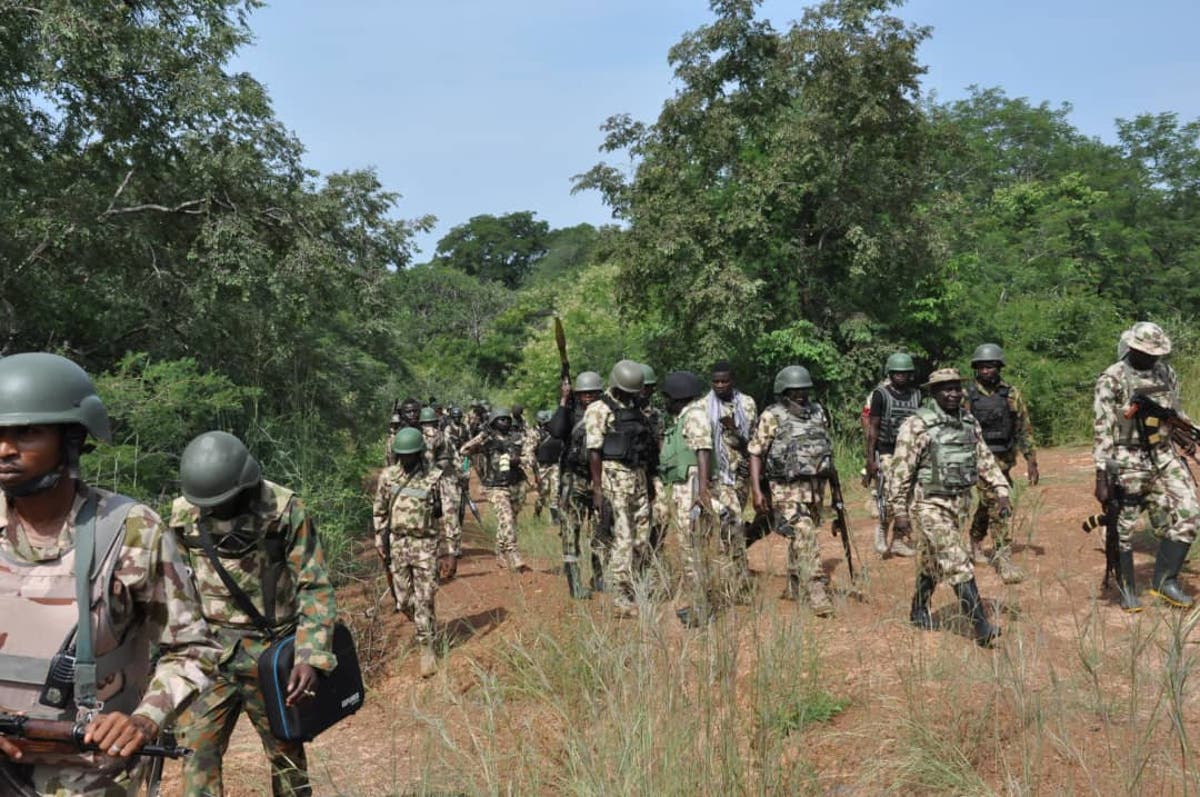
Troops Rescue Three Kidnap Victims in Kebbi
ShareTroops of Sector 2, Operation FANSAN YAMMA, have rescued three kidnapped victims following an operation in Sakaba Local Government Area...


Troops Neutralise Six Terrorists, Arrest 11 Suspected Collaborators in Borno
ShareTroops of the Nigerian Army have neutralised six terrorists, arrested 11 suspected collaborators and received the surrender of a Jama’atu...


JPMorgan’s Entry into Nigeria: Turning Global Finance into a National Development Opportunity
ShareBy Uche Joe Uwaleke The proposed establishment of JPMorgan Merchant Bank Nigeria Limited presents Nigeria with an important opportunity to...


Commissioner Hails Akwa Ibom Governor over Peace Initiatives
ShareVeteran Sports Journalist and Commissioner for Sports Development in Akwa Ibom State, Paul Bassey, has hailed the state Governor, Pastor...

Kogi Probes Mega Electronic Store Inferno
ShareFrom Joseph Amedu, Lokoja The Kogi State Government has commenced investigation into the fire incident that gutted Pee Links, a...

Delta Police Arrest School Bus Driver over Minor’s Kidnapping, Assault
ShareA 28-year-old school bus driver, Onome Ughagha, has been arrested by operatives of the Delta State Police Command for allegedly...