
Agriculture
Food Security Achievable Through RAAMP, Says National Coordinator


By Tony Obiechina, Abuja
The Rural Access and Agricultural Marketing Project (RAAMP) has been described as an appropriate and very effective means of realising food sufficiency and security across the country.
The National Coordinator of RAAMP, Engr Aminu Bodinga Mohammed who made the assertion during the 7th Joint World Bank and French Development Agency Implementation Support Mission of RAAMP at the Shehu Musa Yar’Adua Centre, Abuja, pointing out that most urban centers derive their supply of food from farms, which are located at the rural communities.
His words: “the primary objective of RAAMP is to improve rural roads and trading infrastructure through to boost food production.
Therefore the successful implementation of this project could go a long way towards guaranteeing food sufficiency and security across the country”.He solicited for concerted efforts by all stakeholders to ensure an all-round success of the project.
Aminu noted that the mission was to evaluate the current implementation status, milestones as well as challenges faced by the 19 states participating in the project and announced that arrangements had reached an advanced stage for the commencement of civil works on agro-logistics centers (ALCs) latest by September, 2024 with 23 major contracts that would be awarded across the states.
ALCs refer to market hubs that have been prioritised for transformation to ultra-modern standards at various locations across the country , notably in rural communities to empower and enhance the livelihoods of the people.
Also speaking, the Task Team Leader of the World Bank, Mr. Rakeesh Tripathi hinted that a scale-up was being mooted for the project but emphasized that only states which must have established and operationalised the Rural Access Road Agency (RARA) and State Road Fund (SRF), backed up with the required standing on counterpart funds would be eligible to access the scale-up funds.
He therefore advised all states to take advantage of the mission and get the needed support to tackle every challenge facing their State Project Implementation Unit (SPIU), adding that all the 36 states and the Federal Capital Territory would be encouraged to embrace the scale-up project.
Highpoints of the exercise were presentations by the State Project Coordinators of the respective participating states, question and answer sessions, comments and observations, among other inputs by the stakeholders.
The Task Team Leader of the French Development Agency, AFD; Consultants from the World Bank; the Federal Project Management Unit, FPMU as well as State Project Implementation Units, SPIUs of RAAMP also attended the mission.
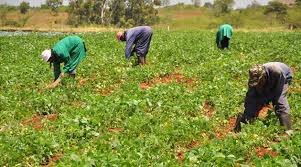
The Tomatoes Growers and Processors Association of Nigeria (TOPAN) has predicted a steady increase in the price of the produce between May and June 2026.
The Kaduna State Chairman TOPAN, Rabiu Zuntu, disclosed this in an interview recently in Lagos.
Zuntu noted that although there is no particular time for tomatoes planting season up north, seasonal weather variations can affect the production of the produce.
“Although we can plant tomatoes all-year-round, we cannot assure quality harvest all-year-round.
“Some farmers are harvesting now, while others are transplanting, and others are harvesting.
“Tomatoes are still available for sale but the price of the produce is gradually on the increase.
“Come May/June, the prices of tomatoes will be very expensive, so now is a good time to stock up the produce. There’s always a scarcity within that period.
“This is because of the nature of the weather in the north around that period, the weather is usually very hot and tomatoes cannot resist such hot temperature,” he said.
Zuntu said the price of tomatoes have started rising up in the north.
“A 50kg rafia basket of tomatoes sells from N20,000 as against N7,000 to N10,000 that was sold earlier in the year.
“While a crate of tomatoes up north is sold between N10,000 and N15,000 as against N5,000 to N6,500 sold earlier in the year.
“In most part of Kano State, where there is bumper harvest, they are rounding off their harvest. So, tomato is not that available there and most buyers have turned to where they can find it now, mostly within Kaduna State and some parts of Plateau State.
“So, that’s why the supply has decreased and the tomato supply and cost is determined by the law of demand and supply,” he said.
A 50kg basket of tomatoes in Lagos, at the moment, sells between N40,000 and N60,000 depending on the size and quality.
The Smallholder Women Farmers Organisation in Nigeria (SWOFON), Oyo State chapter, has said that the lack of irrigation facilities had become a major obstacle to dry season farming in the state.
The Chairperson of SWOFON in Oyo State, Atinuke Akinbade, said this in an interview in Ibadan on Monday.
Akinbade, who shared the experiences of women farmers in the state during the 2025 dry season, said that inadequate access to water for irrigation significantly affected the performance of many farmers during the period.
“It hindered many older farmers from participating in dry season farming and also prevented younger farmers from doing as much as they could in cultivating large acres of land,” she said.
Akinbade explained that farmers who managed to plant during the season struggled to access sufficient water to irrigate their farms, a situation worsened by the effects of climate change.
“Many farmers who depended on streams and wells to water their crops suffered major setbacks because those sources could not provide enough water for irrigation.
“Some farmers had to resort to buying water from commercial water tankers, which increased the cost of production, while at times it was even difficult to get water from the tankers,” she said.
The SWOFON chairperson warned that failure to address the problem could worsen food insecurity in the coming months.
“Even now, rainy season farming has not fully commenced because of the irregular rainfall pattern.
“This is a double burden, and if nothing is done, it may lead to serious hunger later,” she said.
Akinbade, however, acknowledged that the government had organised training for members of the association on home gardening.
She, however, said that little support was provided to address the challenges of dry season farming.
The chairman said that the home garden support package given to members consisted mainly of seedlings and one sprayer.
“They gave us two packs each of maize and pepper seeds, with six seeds in each pack, as well as one sprayer, so that we can grow food for household consumption,” she said.
Earlier, Oluwatoyin Oyedeji, SWOFON Coordinator in Oyo East, explained the severe hardship members of the organisation experienced in sourcing water for irrigation.
“Many farmers are already counting their losses because water was not available to irrigate their farms.
“Those who depended on streams and brooks were badly affected because many of them dried up, while the few that still had water had so little that farmers had to dig deeper into the ground in search of more,” Oyedeji said.
In the same vein, the Women Leader for farmers in Saki East, Musiliu Ashiru, said the absence of irrigation facilities also hampered dry season farming in her area.
According to her, many farmers still engaged in dry season farming have had to pay for water to keep their crops alive.
“Many of them buy water from the dam here to irrigate their crops. It has not been easy for them this year,” Ashiru said.
Nigeria’s agricultural sector has seen a significant surge in investment, rising 224 percent in one year amid escalating insecurity in the country.
Data from the National Bureau of Statistics (NBS) capital importation report showed that foreign direct investment (FDI) in the agric sector hit $167.
3 million in 2025, up 224 percent from $51. 7 million in 2024.On a quarter-on-quarter basis, investment into the sector surged 216 percent to $51.
2 million in the fourth quarter of 2025 from $16.2 million in the corresponding period of 2024.Prior to 2022, investments in the sector had grown consistently at an annual average of 82 percent since 2016, but then reversed in 2022 and continued to decline through 2024, before rebounding in 2025, according to BusinessDay’s analysis.
Experts in the sector attributed the surge to renewed investor interest amid favourable government policies, including importation waivers.
“The economic reforms that restored investors’ confidence and the government’s continuous support to the sector are major drivers of these investments,” said AfricanFarmer Mogaji, chief executive officer, Agbado Value-Chain Ltd
“Also, the country’s growing population always makes the industry attractive for investors, as people must eat. This increased the number of investors, domestically and foreign, who invested in the industry,” Mogaji said.
Nigeria’s agricultural industry experienced several shocks in 2025 that disrupted the food systems and hampered productivity.
High insecurity has significantly impacted farming activities in the country, with the situation intensifying in 2025, forcing many farmers to abandon their farmlands.
Prices of key inputs such as seeds, herbicides, pesticides, fertilisers, and agro machinery tripled in 2025 due to the naira devaluation and spikes in headline inflation.
The surge in production costs, combined with low food prices, eroded farmers’ ability to recover investments made during the 2025 season, leaving many with huge financial losses.
Similarly, the increasing impact of climate change on communities disrupted farming activities during the year. While no country is immune to the impacts of climate change, Nigeria is among the countries that are most vulnerable and least able to cope with the impacts of a changing climate.
The fishing industry, which is one of the sub-sectors of the agricultural industry, attracted a $5.1 million investment in 2025 from zero investments in 2024.
The sector grew by 2.92 percent in 2025 as its performance was significantly impacted by increased youth participation and rising investment in mechanised farming.



Wike Waives C-of-O Fees for Nigerian Law School
ShareBy Laide Akinboade, Abuja The Minister of the Federal Capital Territory (FCT), Nyesom Wike on Thursday gave an immediate waiver of fees for the Certificate of...
Study Links Alcohol to Higher Cancer Burden in Australia
ShareAustralian researchers on Thursday revealed that alcohol consumption causes a higher proportion of cancers in Australia than previous estimates. According to a statement of...


C’River Debunks False COVID-19 Report, Confirms Only One Case
ShareFrom Ene Asuquo, Calabar The Cross River State Government has refuted a publication by online platforms alleging the discovery of 10 new...


NCC Orders Airtime Credits for Poor Network Service
ShareThe Nigerian Communications Commission (NCC) said telecom operators will compensate subscribers for poor network quality through airtime credits under a strengthened regulatory enforcement framework...


CBN Orders Banks on Monthly Report of Mobile, ATM Transactions
Share The Central Bank of Nigeria has directed banks and other financial institutions to submit monthly reports on failed electronic...


Tinubu Seeks Senate Nod for $516m Sokoto–Badagry Superhighway Loan
ShareBy Eze Okechukwu, Abuja President Bola Tinubu has formally requested the National Assembly’s approval for a $516.3 million external loan...


2027: APC Begins Sale of Forms, Adopts Consensus, Direct Primaries
ShareBy David Torough, Abuja The All Progressives Congress (APC) has rolled out a comprehensive and revised timetable for its 2027...


Grant Pardon to Henry Okah, Niger Delta Activists Tells Tinubu
ShareBy Raphael Atuu, Abuja Popular Niger Delta activist Nengi James OON, alongside other youths under the aegis of Advocates for...


NCoS Places Facility on Red Alert over Alleged Attack Threats in Niger
ShareFrom Dan Amasingha, Minna The Nigerian Correctional Service (NCoS) in Niger State has placed all custodial centres across the state on red...


FIBA WWC: D’Tigress Land in Tough Group B with France, Hungary, Korea
ShareNigeria’s D’Tigress will face France, Hungary, and Korea in Group B at the 2026 FIBA Women’s World Cup. The draw set up the D’Tigress for...