
BUSINESS
Forex Ban: CBN Begins Refund of Licence Fees to BDC Operators

By Tony Obiechina, Abuja
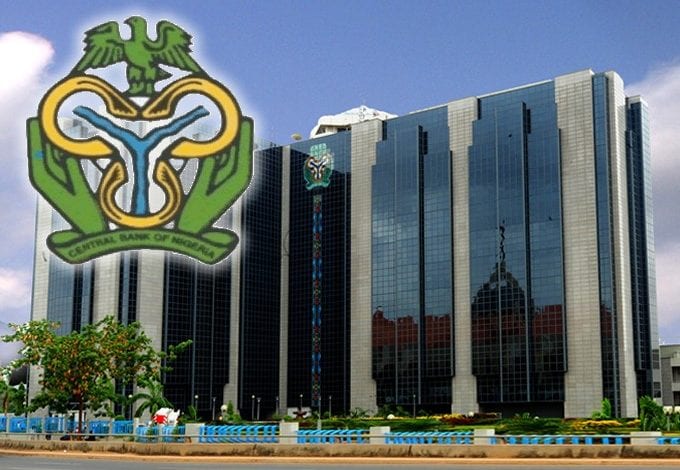
The Central Bank of Nigeria (CBN) said it will begin immediate refund of all outstanding pending minimum capital deposits and licence fees to Bureaux De Change promoters pending licence application.
The Bank stated this in a circular released on Thursday on its website.
The action is coming on the heels of the apex bank’s stoppage of foreign exchange sales to Bureau De Change operators.
CBN Governor, Godwin Emefiele had announced the sales ban on Tuesday at the of the Monetary policy committee meeting.
“Further to the Monetary Policy Committee (MPC) briefing of July 27, 2021, the Central Bank of Nigeria (CBN) will commence the immediate refund of capital deposits and licencing fees (where applicable) to promoters who have pending Bureaux de Change (BDC) licence applications with the CBN,” the Bank said in the circular.
The apex bank had been faced with foreign exchange woes leading to the devaluation of the naira to N410 to the dollar at the official window from N379 previously held.
But at the parallel market, the naira has lost its value to over N503 to the dollar, despite issuing several warnings to speculators by Emefiele.
Promoters of BDC across the country have obligations to pay N35m to the bank and other fees.
The N35m is the minimum capital deposit for promoters to get licence.
With the new development, the apex bank said for a BDC promoter to access the refunds they must put forward their requests in writing to the “Director, Financial Policy and Regulatory Department” of the bank in Abuja.
The apex bank said the request must include a telex copy of the capital deposit of N35m.
Others include account details for the refund, “which should be the same as the account from which capital deposits originated, including the bank name; account name and account number.”
Also, the bank said it would require a copy of the bank draft/telex for payment of licensing fees of N1m.
“All Deposit Money Banks are hereby directed to henceforth stop accepting instructions from customers to transfer capital deposit of N35 million to the designated CBN account for the purpose of applying for BDC licence”, the apex bank added.






The nation’s aggregate Company Income Tax (CIT) for Q4 2025 is reported to be 1.49 trillion, the National Bureau of Statistics (NBS) said.
The figure is contained in the NBS Company Income Tax (CIT) Q4 2025 Report released in Abuja on Wednesday.
According to the report, the figure shows a decrease of 49.
81 per cent on a quarter-on-quarter basis from N2. 96 trillion recorded in Q3 2025.The report said domestic CIT received was N819.83 billion, while foreign CIT payment was N668.21 billion in Q4 2025.
It said on a quarter-on-quarter basis, activities of extraterritorial organisations and bodies recorded the highest growth rate with 75.15 per cent,
The report said this was followed by Education and real estate activities at 54.
20 per cent and 27.25 per cent respectively.“On the other hand, accommodation and food services activities recorded the lowest growth rate at -67.11 per cent, followed by activities of households as employers, undifferentiated goods and services producing activities of households for own use at -63.49 per cent .
“It said mining quarrying was recorded at -49.63 per cent.”
In terms of sectoral contributions, the report showed that the top three activities with the highest contribution in Q4 2025 were financial and insurance activities at 18.17 per cent, manufacturing at 17.30 per cent and mining and quarrying at 15.04 per cent.
It said on the other hand, the activities of households as employers, undifferentiated goods and 0.002 per cent.
“This was followed by water supply, sewage, waste management and remediation activities with 0.04 per cent.
The report, however, said, on a year-on-year basis, CIT collections in Q4 2025 increased by 13.38 per cent from Q4 2024.
The Managing Director/Chief Executive Officer of the Nigerian Independent System Operator, Abdu Bello, has disclosed that Nigeria’s power sector was losing between N5bn and N8bn monthly to transmission inefficiencies, even as he revealed that targeted interventions by the operator have begun to cut losses and improve grid stability.
Bello made this known on Wednesday during the organisation’s first anniversary celebration held at its headquarters in Utako, Abuja, where he presented a detailed scorecard of reforms and operational milestones recorded since its establishment.
Recall that NISO was officially created on April 30, 2024, by the Nigerian Electricity Regulatory Commission following the unbundling of the Transmission Company of Nigeria under the Electricity Act, 2023.
Speaking on one of the most pressing challenges inherited by the operator, Bello said the transmission loss factor at inception was alarmingly high, with severe financial implications for the power sector.
“One of the greatest problems we encountered at the inception of NISO was that we recorded a very high transmission loss factor. At some point, it was close to 10 per cent, costing about N5bn to N8bn monthly,” he said.
He, however, noted that deliberate operational measures have started yielding results.
Adopting a broader tone, the NISO boss said the past year had been defined by institution-building, system stabilisation, and market reforms aimed at repositioning Nigeria’s electricity sector.
He explained that NISO was established to function as an independent system operator with responsibility for system operations, market administration, planning, and enforcement of grid codes and market rules.
On institutional development, he said the organisation had prioritised governance and coordination across the electricity value chain.
A major highlight of the address was NISO’s push to digitise grid operations through advanced monitoring systems.
Bello disclosed that the operator is accelerating the deployment of Supervisory Control and Data Acquisition/Energy Management Systems to enable real-time grid visibility.
He added that the organisation was also deploying telemetry systems and Internet-of-Things-based metering infrastructure across generation units, transmission lines, and substations.
According to him, the initiative would enable near-real-time electricity market settlements and significantly improve operational efficiency.
Bello also revealed that NISO has intensified efforts to tackle grid instability and recurring system collapses through technical reforms and stricter compliance enforcement.
He noted that compliance with this directive has already improved grid frequency stability.
He further disclosed plans to introduce grid “islanding”, a strategy that segments the national grid to prevent widespread outages.
On market operations, Bello said NISO has taken steps to improve transparency, enforce compliance with market rules, and strengthen coordination among industry players.
He added that NISO is playing a central role in coordinating emerging state electricity markets following recent sector reforms.
The NISO boss also linked recent fluctuations in power generation to gas supply challenges, stressing the need for stronger coordination between the power and gas sectors.
He assured that regulators and stakeholders are working to address the issue and prevent future disruptions.
In a significant development, Bello disclosed that Nigeria has achieved trial synchronisation of its national grid with the West African power system, opening new opportunities for cross-border electricity trade.
He explained that the integration would allow Nigeria to export excess power and earn foreign exchange.
These interventions are contributing to improving system discipline and reliability together. On electricity market development and strengthening, we have made deliberate efforts to strengthen market credibility and transparency.
NISO was carved out of the Transmission Company of Nigeria as part of sweeping reforms introduced by the Electricity Act, 2023, to liberalise and decentralise Nigeria’s power sector.
The reform seeks to separate system operations from transmission ownership, improve transparency, and create a more competitive electricity market.
Despite these reforms, Nigeria’s power sector continues to face structural challenges, including transmission constraints, gas supply shortages, liquidity issues, and weak infrastructure.
NISO’s first-year performance signals a shift towards data-driven grid management and coordinated planning, although sustained investment and policy consistency will be required to deliver long-term stability.
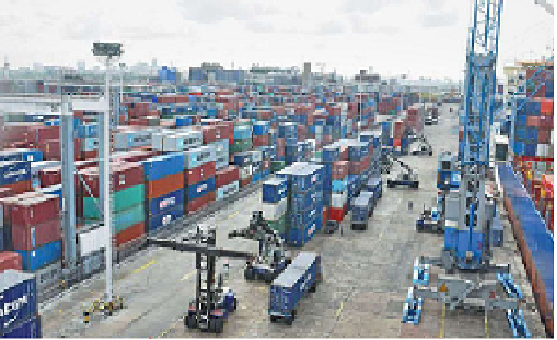
The Nigerian Ports Authority (NPA) said 41 ships carrying petroleum products, food items and other goods are expected at Lagos ports on Wednesday.
The NPA disclosed this in its Daily Shipping Position obtained on Wednesday in Lagos.
According to the bulletin, the vessels are expected between April 8 and April 14.
The authority said 24 of the ships would carry containers loaded with various goods.
“Seventeen ships will berth with bulk sugar, fresh fish, salt, general cargo, gypsum, aviation fuel, diesel, naphtha, gasoline, gas oil and wheat,” it added.
The NPA said 16 ships and tankers had already arrived and were awaiting berthing at the three ports.
According to the authority, the vessels carry general cargo, wheat, diesel, aviation fuel, petrol, gasoline, blend stock, containers, crude oil, fertiliser and fresh fish.
It added that 21 ships were discharging urea, containers, base oil, fresh fish, soya beans, gas and fertiliser at Lekki Deep Sea Port, Apapa and Tincan Island Port.



Byuan Rallies Support, Pledges Two Million Votes for Tinubu in Benue
ShareBy David Torough, Abuja A frontline governorship aspirant on the platform of the All Progressives Congress (APC) in Benue State,...


Efiko Rebrands, Expands Globally To Tackle Execution Plan
ShareBy Raphael Atuu, Abuja Every organization, it seems, needs an Efiko Management Consulting firm because of its rebrand and expanded...


INC Elections: CITRE defends suspension of polls, insists on constitutional order
Share From Mike Tayese, Yenagoa The Council of Ijaw Traditional Rulers and Elders (CITRE) has defended its action suspending the election...


UN Secretary General Visits Benue Condemns Incessant Attacks On Communities, Killings.
ShareFrom Attah Ede Makurdi United Nations Deputy Secretary-General Dr. Amina Mohammed, on Friday condemned the incessant conflicts killings in Nigeria,...


President Tinubu commissions 60 megawatts gas turbine, other projects in bayelsa
ShareFrom Mike Tayese, Yenagoa The much awaited 60 megawatts Gas Turbine embarked upon by the administration of Governor Douye Diri...
Ijaw Traditional Rulers, elders suspend INC elections
Share The National Conference of Ijaw Traditional Rulers and Elders (N-CITRE-INC) has suspended the Ijaw National Congress (INC) elections till...


Experts Advocate Digital Economy, Governance Reforms as Pathway to Inclusive Growth
ShareBy David Torough, Abuja Stakeholders at the 2026 Academic Staff Union of Polytechnics (ASUP) International Conference in Bida have called...


Digital Economy, Good Governance Key to Unlocking Inclusive Growth in Developing Nations — Expert
ShareBy David Torough, Abuja At the 2026 Academic Staff Union of Polytechnics (ASUP) National Conference held at the Federal Polytechnic...


UNILAG Alumni awards scholarship to 28 indigent students
ShareBy Laide Akinboade, Abuja The University of Lagos Alumni Association, Federal Capital Territory (FCT), chapter on Thursday, awarded scholarship to...


JAMB Releases 2026 UTME Examination Slips for Candidates
ShareThe Joint Admissions and Matriculation Board (JAMB) has announced that candidates who registered for the 2026 Unified Tertiary Matriculation Examination (UTME) can now print...