
BUSINESS
Coy Tax for Q4 2025 Stands at N1.49trn – NBS

The nation’s aggregate Company Income Tax (CIT) for Q4 2025 is reported to be 1.49 trillion, the National Bureau of Statistics (NBS) said.
The figure is contained in the NBS Company Income Tax (CIT) Q4 2025 Report released in Abuja on Wednesday.
According to the report, the figure shows a decrease of 49.
81 per cent on a quarter-on-quarter basis from N2. 96 trillion recorded in Q3 2025.The report said domestic CIT received was N819.83 billion, while foreign CIT payment was N668.21 billion in Q4 2025.
It said on a quarter-on-quarter basis, activities of extraterritorial organisations and bodies recorded the highest growth rate with 75.
15 per cent,The report said this was followed by Education and real estate activities at 54.20 per cent and 27.25 per cent respectively.
“On the other hand, accommodation and food services activities recorded the lowest growth rate at -67.11 per cent, followed by activities of households as employers, undifferentiated goods and services producing activities of households for own use at -63.49 per cent .
“It said mining quarrying was recorded at -49.63 per cent.”
In terms of sectoral contributions, the report showed that the top three activities with the highest contribution in Q4 2025 were financial and insurance activities at 18.17 per cent, manufacturing at 17.30 per cent and mining and quarrying at 15.04 per cent.
It said on the other hand, the activities of households as employers, undifferentiated goods and 0.002 per cent.
“This was followed by water supply, sewage, waste management and remediation activities with 0.04 per cent.
The report, however, said, on a year-on-year basis, CIT collections in Q4 2025 increased by 13.38 per cent from Q4 2024.
The Federal Government and Access Bank Plc have emphasised the strategic role of Artificial Intelligence and digital financial infrastructure in expanding small business operations, maintaining that Nigeria’s target of attaining a $1tn economy remains tied to the rapid digitisation of Micro, Small, and Medium Enterprises.
The consensus was reached at the Access Bank MSME Digital Growth Conference, themed “AI for SMEs: Scaling through Digital Tools,” which coincided with the official launch of the Access SME Application on Friday at the bank’s head office in Victoria Island, Lagos.
Delivering the keynote address, the Senior Special Assistant to the President on Entrepreneurship Development in Communications, Innovation and Digital Economy, Chalya Shagaya, stated that the Federal Government considers small enterprise operators critical catalysts in actualising its macroeconomic objectives under the Renewed Hope Agenda.
Shagaya urged business owners to adopt emerging digital tools, noting that modern enterprise operations are heavily reliant on technological integration to scale from local markets to global markets.
She said, “Everyone wants to be an entrepreneur today. You are the ones who will drive the $1tn economy that Mr President has charged us with achieving under this administration of Renewed Hope. We are your partners, and you are ours.”
Addressing operational bottlenecks confronting small enterprise owners, the presidential aide highlighted that AI applications act as critical operational equalisers, enabling small firms to automate inventory tracking, customer insights and supply chain logistics without incurring massive overhead costs.
She added that digital technology serves as a platform for social inclusion, giving neurodivergent entrepreneurs the tools to build structured, independent commercial enterprises.
“AI is not coming in the future; it is here today. The sooner we embrace these tools, the faster we can scale our businesses and build a stronger economy,” Shagaya noted, revealing that President Bola Tinubu recently signed an AI Policy mandating the Ministry of Communications, Innovation, and Digital Economy to set up capacity-building hubs across the country to upskill young business operators.
In his goodwill message, the Executive Director of the University of Lagos Business School, Prof Sunday Adebisi, presented data underlining the vital contributions of small businesses to national output and employment.
Citing recent research figures, Adebisi stated that Nigeria currently has between 39 million and 42 million registered MSMEs, which generate 84 per cent of total employment and contribute 48 per cent to the Gross Domestic Product.
Adebisi said, “All the big companies you think about, including Access Bank, Dangote, Shell, Chevron, and others, account for only 16 per cent of jobs combined. You are responsible for the remaining 84 per cent.
“Beyond that, 96 per cent of all businesses in Nigeria are SMEs, while mega-corporates make up only four per cent.”
The don, however, raised concerns over commercial mortality rates, disclosing that 50 per cent of small businesses in Nigeria fail within their first year of operation. He advised operators to deploy AI as a digital co-pilot to optimise workflows, leverage predictive market analytics and cater to digital-first consumers.
The conference featured two high-level panel sessions. The first panel, titled “Digital Transformation: Beyond the Buzzwords,” examined actionable strategies for small business managers to move beyond industry hype into practical digital workflows, stressing cloud integration, operational efficiency and scalable financial management.
The session featured the Executive Director of IT and Digitisation at Access Holdings Plc, Mr Lanre Bamisebi; the Country Manager for West Africa at Mastercard, Dr. Folasade Femi-Lawal; and the Country Manager for Financial Services Industry at Huawei Nigeria, Glarie Gao.
The second panel session, themed “Navigating the Business Ecosystem: Tools, Trends, and Tactics,” explored practical frameworks for surviving economic pressures and expanding trade networks.
Panellists included the Vice President of World Trade Center Lagos, David Opeyemi Oke; the Principal Consultant at Scientia Partners Innovation Hub, Dr. Helen Emore; and the Creative Director and Co-Founder of Trax Apparel, Mark Odiete.
Access Bank reaffirmed its commitment to deepening non-financial advisory support, expanding credit access and providing specialised digital solutions tailored to improve small business sustainability across the country.

By Tambaya Julius, Abuja
The Nigeria Customs Service (NCS) has dismissed a purported recruitment update circulating on social media, describing it as false and not originating from the Service.
The Service, in a statement, urged members of the public to disregard the misleading information and refrain from sharing unverified content capable of misleading prospective applicants and the general public.
The NCS advised Nigerians to rely solely on information published through its official communication channels for accurate updates on recruitment exercises and other activities of the Service.
It reiterated that its verified social media platforms remain the authentic sources of information and urged the public to always verify recruitment-related announcements before acting on them or sharing them with others.
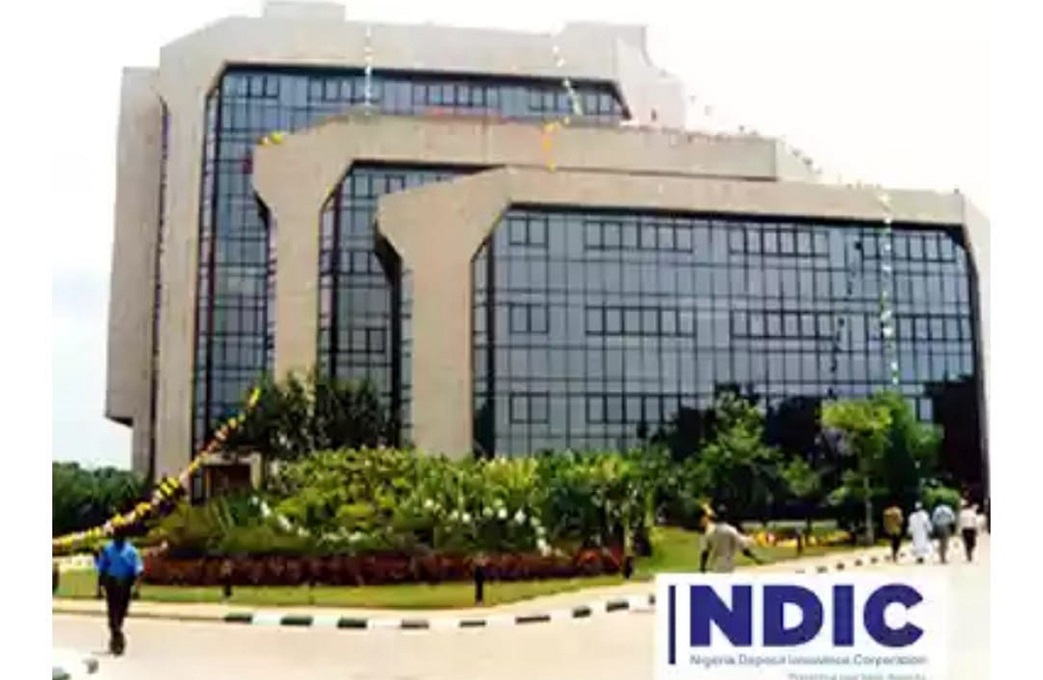
The Nigeria Deposit Insurance Corporation (NDIC) has begun paying insured deposits to customers of the 46 recently failed microfinance banks.
The NDIC Managing Director and Chief Executive, Thompson Sunday, disclosed this in an interview in Abuja.
The interview took place on the sidelines of the International Association of Deposit Insurers Africa Regional Committee meeting.
Sunday said the corporation was using the Nigeria Inter-Bank Settlement System and customers’ Bank Verification Numbers (BVNs) for the payments.
He said NDIC had traced depositors’ alternative bank accounts and credited them directly without requiring physical visits.
He advised depositors without BVNs to visit the nearest NDIC zonal office for verification and payment processing.
“The CBN revoked the licences of the 46 microfinance banks on July 1, 2026,” he said.
He said NDIC automatically became the provisional liquidator after the revocation, in line with the law.
Sunday said the corporation had commenced payment of the insured maximum deposit of N2 million to eligible customers.
He explained that further payments would depend on the recovery of the failed banks’ assets and outstanding debts.
He said proceeds realised from recoveries would be distributed as liquidation dividends to eligible depositors.
Sunday cited Heritage Bank, Aso Savings and Union Homes as examples of NDIC’s prompt reimbursement efforts.
He said insured depositors of Heritage Bank were paid within four days of licence revocation.
He added that customers of Aso Savings and Union Homes received payments within 72 hours.
“The law allows us 30 days, but we are working to surpass our previous records,” he said.
The Central Bank of Nigeria revoked the banks’ licences for failing to meet regulatory requirements for continued operations.
The apex bank said the action was aimed at protecting depositors, strengthening financial stability and ensuring regulatory compliance.




Lekki LCDA Brokers Peace Over Onise Of Ise Succession, Urges Stakeholders To Respect Court Process
ShareBy David Torough, Abuja The Lekki Local Council Development Area (LCDA) has intervened in the lingering dispute over the vacant...
FG, Access Bank Push AI to Grow MSMEs
ShareThe Federal Government and Access Bank Plc have emphasised the strategic role of Artificial Intelligence and digital financial infrastructure in...
We often forget: PWDs also Have Birthdays Reflection on Disability, Dignity, and Nigeria
ShareBy Ebuka Ukoh This piece highlights the systemic barriers – physical, attitudinal, and institutional – that prevent persons with disabilities...
Ghost Agencies, Short Memories, and Ancestral Shame
ShareBy Prince Charles Dickson, PhD Our ancestors did not endure wars, disease, displacement and impossible journeys merely to produce citizens...
Defence Ministry Partners NIMC to Enhance Data Integrity, National Security
ShareBy Tony Obiechina, Abuja The Ministry of Defence has affirmed its commitment to partner with the National Identity Management Commission...

CVR in Ondo Satisfactory – Says INEC
ShareThe Independent National Electoral Commission ( INEC) in Ondo State says the conduct of residents during the Continuous Voter Registration...


NEC Applauds Alia on Economic Transformation
ShareFrom Attah Ede, Makurdi The National Economic Council (NEC) Monitoring and Implementation Committee has commended Benue State Governor, Rev. Fr.Hyacinth...

OPay Unveils Top 48 Teams in National Innovation Challenge
ShareOPay, a leading fintech company in Nigeria, has announced the selection of the top 48teams for the next stage of...


Macrostrat Urges Fiscal Reforms as CBN Holds Rates Steady After 306th MPC Meeting
ShareBy David Torough, Abuja Macrostrat Nigeria Limited has called for stronger fiscal reforms and closer coordination between monetary and fiscal...


Resign Now, Nigeria Needs Fresh Leadership, Peter Obi Tells Tinubu
ShareBy Tambaya Julius, Abuja The presidential candidate of the Nigeria Democratic Congress (NDC), Peter Obi, has called on President Bola...