
NEWS
Foundation Opens Application on Media Reporting Project on HIV-TB for Journalists in Benue, Others

From Attah Ede, Makurdi
AIDS Healthcare Foundation (AHF) Nigeria has formally launched applications for journalists in Benue State and six other States to join a two-month project aimed at deepening ethical, solutions-focused coverage of HIV and TB in communities most affected by both diseases.
The aim is to support journalists in those seven states towards producing well researched human- centered, stigma-free stories that can impact HIV testing, treatment uptake and leading to the prevention of Sexually Transmitted Diseases (STIs), correct use of condoms and public accountability for HIV/TB service delivery.
The “HIV and TB Media Reporting Project: Amplify the Response” will run from September to October 2026 and will support reporters in Abuja FCT, Akwa Ibom, Anambra, Benue, Cross River, Kogi, and Nasarawa to produce human-centered stories that drive testing, treatment uptake, and public accountability.
This was disclosed in a statement by Steve Aborisade, Senior Advocacy and Marketing Manager, AHF Nigeria and made available to newsmen in Makurdi.
Aborisade intimated that the applications would close at the close of business on Monday, 31st August 2026 while interested journalists can apply via https://forms.gle/S8U4HLqQCaCc43Cg7 or by sending documents to Procurement.Nigeria@aidshealth.org with the subject line “AHF HIV/TB Reporting Projects.
AHF currently provides free HIV testing, treatment, care, and TB services across seven states; Abuja FCT, Benue, Akwa Ibom, Anambra, Cross River, Kogi, and Nasarawa.
The decision to support journalists in these areas may have been informed by noticeable gaps that persist in TB reduction, stigma, misinformation, including funding gaps, that has remained major barriers to an AIDS free generation.
Despite significant gains recorded in HIV/AIDS treatment and the stride toward the 95-95-95 targets, there is no gainsaying that global challenges that still exist can be relatively tackled through well researched reports, in order to safeguard the gains already recorded.
It is in light of this that the Media has been identified as a major tool to closing the gaps, by churning out impactful stories that would lead to the reduction and eventually the elimination of some of the identified challenges.
According to AHF, the planned Capacity Training, is expected to orientate newsmen on HIV/TB reporting, data journalism, ethics, and safety, adding that the orientation would be facilitated by National Agency for the Control of AIDS (NACA), National AIDS and STIs Control Programme (NASCP), National Tuberculosis, Buruli Ulcer and Leprosy Control Programme (NTBLCP), AHF’s Technical Team and Senior Editors.
Prior to this, selected Journalists are to attend a full day immersive virtual orientation on HIV/TB reporting, data journalism, ethics, and safety.
Consequently, AHF has stated that as part of measures to ensure comprehensive and credible reportage, it would facilitate access to AHF-supported facilities, State AIDS/TB Control programs, SACAs/TB focal persons, PLHIV networks, and TB survivor groups for interviews.
Furthermore, the beneficiaries of the training would be drawn from the aforementioned states.
Additionally, he pointed out that such reports from Journalists in its operational states, would “Increase quality, ethical, and solutions-focused media coverage of HIV and TB in Nigeria.
Some of the objectives of the training he observed would be to mentor Journalists “on HIV/TB science, U=U, TB-HIV co-infection, domestic financing, local ARVs manufacturing, including challenges in the implementation of Nigeria’s Anti-Discrimination Act 2014.
Noting that while the call for the training will open on Monday, 10th August, 2026, AHF said, it will close on the 31st of August, and selected Journalists would be notified on 14th of September, 2026.
AHF, encouraged women journalists, journalists with disabilities, and reporters from community/local language media, to apply for the training, as it intends to place priority on them.
According to the statement, shortlisted journalists will be notified on 14th September 2026, while selection will be based on strength of story pitch 35%, relevance of work samples 15%, journalism experience 15%, gender diversity 15%, and editor support 10%.
For questions, contact Steve Aborisade, Senior Advocacy and Marketing Manager, AHF Nigeria, at 2 Paul Unongo Street, off Ebitu Ukiwe Street, Jabi, Abuja.
AHF, the world’s largest HIV/AIDS healthcare organization, provides care to more than 2.9 million people across 50 countries. In January 2025, it received The King Center’s MLK Jr. Social Justice Award.
The Cross River Independent Electoral Commission (CROSIEC) has charged newly recruited officers to remain politically neutral and uphold professionalism in discharging their duties.
The Chairman, Dr. Ekong Boco made the call on Tuesday in Calabar at a training workshop for electoral officers, assistant electoral officers and store officers.
Boco urged the officials not to identify with political parties or groups, describing their role as similar to that of judges.
“You are civil servants, not politicians. Never identify yourself with any political party or political group because your role is that of an umpire,” he said.
He further charged the officers to abide by the rules of the state civil service in the interest of effective service delivery.
“I urge you to pay attention to the training, it is an opportunity for you to be aligned with the system.
“This training will equip you with knowledge of administrative procedures, election management processes, practices and conduct of credible elections,” he said.
The chairman said that CROSIEC was established under Cross River State Law No. 2 of 2002, now Law No. 8 of 2024.
Boco stated that the current leadership of the commission had recorded significant achievements such as office renovation, water supply, and electricity.
He identified the successful conduct of the 2024 local government council elections as one of the commission’s major achievements since the assumption of office.
Edet said that under-staffing caused by retirements and deaths had been a major challenge, saying, “this prompted the commission to request for additional personnel from the state government”
Declaring the workshop open, Prof. Anthony Owan-Enoh, the Secretary to Cross River Government, commended CROSIEC for organising the training.
Represented by Okpa Akpet, the Special Adviser to the Governor on Budget and Finance, Owan-Emoh urged the newly recruited officers to uphold utmost integrity in the discharge of their duties.
Similarly, Orok Okon, the Head of Service, urged the new electoral officers to uphold neutrality and professionalism in performing their duties.
Represented by Ignatius Edu, Okon warned the officers against bias and corrupt practices in the interest of electoral credibility and fairness.

The Independent National Electoral Commission (INEC) and the African Youth Growth Foundation (AYGF) have urged Nigerian youths to take ownership of the democratic space and actively participate in governance.
They made the call on Tuesday in Abuja at the National Youth Mentorship Conference on Sustainable Democratic Governance, themed: “Building Sustainable Pathways for Civic Leadership, Electoral Participation and Democratic Governance.
”Executive Director of AYGF, said youths, Dr. Arome Salifu, who constituted more than 70 per cent of Nigeria’s population, had both the responsibility and opportunity to shape the country’s political future.
Salifu, however, lamented that youths had been systematically excluded, directly or indirectly, from meaningful participation in the democratic process and governance.
He said the enactment of the Not Too Young to Run law was an important step but had not removed all barriers preventing youths from actively participating in politics.
Salifu urged youths to seek political power through lawful and democratic means rather than violence, electoral malpractice or intimidation.
He said political participation should involve organising, building networks, developing credible agendas, engaging in democratic processes and pursuing economic empowerment.
He called on stakeholders to create opportunities for youth economic empowerment while providing mentorship, civic education and leadership development to prepare young people for governance.
INEC Resident Electoral Commissioner in Plateau, Prof. Sam Egwu, also urged youths to use elections as a peaceful means of expressing dissatisfaction with government and choosing competent leaders.
He said voter apathy posed a major threat to democratic legitimacy because governments elected by a small proportion of citizens could face questions about the breadth of their mandate.
Egwu said that average voter turnout in Nigeria’s last three electoral cycles had remained between 30 per cent and 35 per cent.
He urged young Nigerians to demonstrate dissatisfaction with poor governance by voting rather than staying away from polling units.
Director-General, National Institute for Legislative and Democratic Studies (NILDS), Prof. Abubakar Sulaiman, said youth inclusion was a fundamental requirement for legitimate and sustainable democracy.
Sulaiman, represented by Dr. Christopher Ngara, Director, Department of Democracy and Governance, identified unemployment, poverty, unequal access to education, weak institutions and limited political financing as major barriers.
He said youths were often treated as voters, campaign mobilisers and political foot soldiers rather than policymakers, legislators and leaders within the democratic system.
Sulaiman said the situation must change, emphasising that meaningful youth participation was essential to ensuring the responsiveness, legitimacy and sustainability of Nigeria’s democracy.
Suleiman Mande, Founder of The Mande Global Impact Consulting Ltd., said the quality of Nigeria’s democracy depended largely on the character, knowledge and responsibility of its citizens.
Mande urged young Nigerians to prepare for leadership by becoming informed, responsible and active citizens capable of contributing positively to democratic governance.
He encouraged youths to participate before, during and after elections, ask questions, demand transparency, respect the rule of law and remain engaged in governance.

By Tony Obiechina, Obiechina
The Central Bank of Nigeria (CBN) has commenced Cohort 2 of the Apex Bank Regulatory Sandbox Programme, inviting eligible innovators, financial institutions, Virtual Asset.
In a statement by the CBN Acting Director of Corporate Communications, Hakama Sidi-Ali on Tuesday, Service Providers (VASPs), financial technology companies, and technology companies applied to participate.
Building on the CBN’s commitment to responsible innovation, Cohort 2 introduces two dedicated testing tracks to support emerging technologies with the potential to strengthen Nigeria’s financial system while upholding high standards of consumer protection, financial stability, and market integrity.
The two tracks are: Virtual Asset Service Provider (VASP) Track, supporting innovative virtual asset, stablecoin, payment, settlement, custody, wallet, and related financial infrastructure solutions that require supervised live testing; and Data-Enabled Financial Services (Non-VASP) Track, supporting innovations that leverage secure digital infrastructure and permission-based data sharing to improve financial inclusion, payments, credit, risk management, operational efficiency, and consumer outcomes.
The CBN Regulatory Sandbox provides a controlled environment in which eligible participants may test innovative financial products, services, business models, and enabling technologies under the supervision of the Central Bank.
The programme enables the CBN and innovators to engage constructively throughout the testing process, supporting regulatory learning while encouraging responsible innovation that benefits consumers and the wider financial system.
The launch of Cohort 2 reflects the CBN’s continued commitment to developing a transparent, proportionate, and risk-based regulatory environment that fosters innovation while preserving monetary and financial stability. Insights from supervised testing will help deepen regulatory understanding of emerging technologies and inform the ongoing development of regulatory and supervisory frameworks for Nigeria’s evolving digital financial ecosystem.
Eligible organisations whose proposed innovations fall within the programme’s scope are encouraged to apply.
Applications will be assessed based on the level of innovation, readiness for controlled live testing, potential consumer or market benefit, governance arrangements, risk management capability, and the suitability of the proposed testing plan.
Successful participants will undertake supervised testing within clearly defined parameters agreed with the CBN, including appropriate safeguards for consumer protection, operational resilience, cybersecurity, and regulatory report
Participation in the Regulatory Sandbox does not constitute a licence, authorisation, or approval to operate outside the approved testing parameters. The Sandbox is intended to facilitate responsible experimentation, strengthen regulatory engagement, and support evidence-based policy development in line with the CBN’s statutory mandate.
Applications for Cohort 2 open on August 12, 2026, and close on August 31, 2026.
To apply, visit the CBN Regulatory Sandbox Portal at https://sandbox.cbn.gov.ng and submit your application before the application deadline.
The Central Bank of Nigeria remains committed to fostering an innovative, resilient, and inclusive financial ecosystem that supports sustainable economic growth while maintaining the safety, soundness, and integrity of Nigeria’s financial system.


Foundation Opens Application on Media Reporting Project on HIV-TB for Journalists in Benue, Others
ShareFrom Attah Ede, Makurdi AIDS Healthcare Foundation (AHF) Nigeria has formally launched applications for journalists in Benue State and six...
Man O’ War Nigeria Holds National Camping in Jos with 3000 Participants
ShareFrom Jude Dangwam, Jos The National Command of the Man O’ War Nigeria has kickstart its 4th National Camping Exercise...

Nigerian Navy, NIMASA Renew Five-Year Partnership to Strengthen Maritime Security
ShareBy David Torough, Abuja The Nigerian Navy and the Nigerian Maritime Administration and Safety Agency (NIMASA) have renewed their strategic...
CROSIEC Tasks New Officers on Neutrality, Professionalism
ShareThe Cross River Independent Electoral Commission (CROSIEC) has charged newly recruited officers to remain politically neutral and uphold professionalism in...

Osun Guber: Kolawole Urges Residents to Vote for Adeleke’s Re-election Bid
ShareFrom Ayinde Akintade, Osogbo As the August 15 Governorship election approaches, prominent chieftain of the Accord in Osun State, Hon...

2027: Kogi Fixes N150m Campaign Signage Fee for Presidential Candidates
ShareFrom Joseph Amedu, Lokoja The Kogi State Government has approved official fees for the placement of billboards, posters, branded T-shirts,...

INEC, AYGF Urge Nigerian Youths to Take Ownership of Democracy
ShareThe Independent National Electoral Commission (INEC) and the African Youth Growth Foundation (AYGF) have urged Nigerian youths to take ownership...

Reject Plot to Substitute Adamawa ADC Governorship Candidate, Group Urges INEC
ShareSome stakeholders of the African Democratic Congress (ADC) in Adamawa have urged the Independent National Electoral Commission (INEC) to reject...
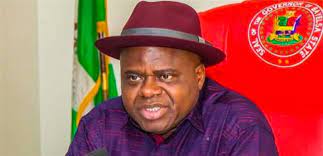

BRM Charges Diri to Address Political Marginalization of Bayelsa East, Yenagoa
ShareFrom Mike Tayese, Yenagoa The Bayelsa Rescue Mission (BRM) has called on Governor Douye Diri to urgently address what it...


CBN Launches Second Cohort for Regulatory Sandbox Programme
ShareBy Tony Obiechina, Obiechina The Central Bank of Nigeria (CBN) has commenced Cohort 2 of the Apex Bank Regulatory Sandbox...