
POLITICS
FRSC Tasks Commanders on Effective Operational Duty


From Sylvia Udegbunam, Enugu
The Federal Road Safety Corps (FRSC), on Thursday, tasked its sector and unit commanders on effective operational duty in a challenging security environment.
The Zonal Commanding Officer of Zone 9, Assistant Corps Marshal (ACM) Uche Chukwurah, gave the task in Enugu while declaring open the 2nd Quarter 2024 Zonal Workshop organised by the Zone 9 FRSC Headquarters, Enugu.
The theme of the workshop is “Raising the Bar/Rejigging FRSC Operational Activities Amidst Insecurity in the South-East: Challenges and Way Forward. ”
Chukwurah, who is in-charge South-East, noted that with the face of increasing security concerns and dynamic operational challenges, the need for collective commitment to ensuring safer roads and secure communities had never been more imperative but for now.
According to her, the FRSC has long stood as a beacon of road safety across Nigeria, with effective traffic enforcement as a vital tool in ensuring road safety.
She said: “However, the prevailing security situation in the South East presents unique challenges that necessitate strategic reassessment and enhancement of our operational framework.
“Today, we gather to deliberate on these challenges and forge a path forward that not only sustains our mission but also elevates our effectiveness amidst adversity.
“The South-East region, known for its vibrant culture and industrious spirit, has unfortunately experienced a surge in security threats. These threats not only jeopardise the safety of our citizens but also impede the seamless execution of our duties.
“The FRSC’s vision to eradicate road traffic crashes and create a safe motoring environment, especially through the enforcement of traffic regulations, must be adapted to navigate this complex landscape.
“This requires innovative approaches, robust strategies, and unwavering dedication.”
Chukwurah noted that insecurity faced by FRSC officers and marshals manifest in various forms, which are armed conflicts, kidnapping, criminal activities and killing of FRSC personnel in the roads.
“These realities demand that we, as an institution, fortify our operational readiness and resilience.
“Enhancing intelligence gathering, fostering collaboration with sister security agencies, and leveraging technology are pivotal steps toward mitigating these threats,” she added.
In dissecting the theme, Corps Commander Anthony Ogbodo, the Deputy Commandant of FRSC Academy, Udi, said that it was imperative that each commander surveys and carries out security threat levels in each environment they operate.
Ogbodo also urged the commanders to have clear collaboration and cooperation with sister security agencies and other stakeholders especially where insecurity level is high, thereby doing more joint operation or calling their assistant.
“There is a need for our offices to be well lit at night, there is a need to have Close Circuit Television (CCTV) cameras around our offices, and our intelligent officers must do a good internal profile of our staff to check insider negative activities,” he said.
The workshop, which also featured a critical questions and answers session on security as it relates to FRSC operations, was attended by Sector and Unit Commanders within FRSC Zone 9, which comprises Abia, Ebonyi, Enugu and Imo States.
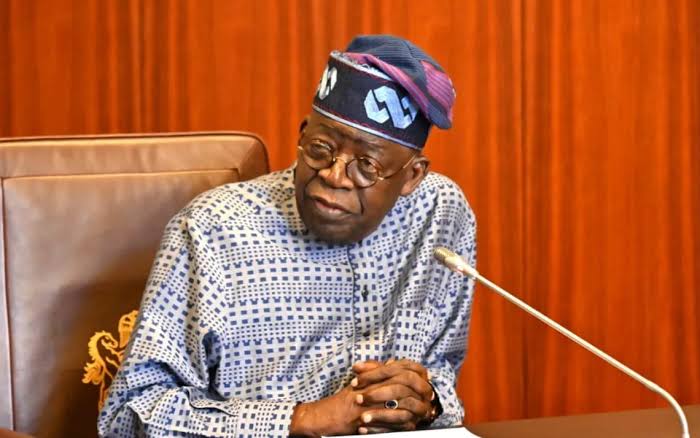
President Bola Tinubu has submitted the 2026 Statutory Budget Proposal of the Niger Delta Development Commission (NDDC) to the House of Representatives for consideration and passage.
This is contained in a letter dated Aug.
20, 2026, addressed to the Speaker of the House of Representatives, Rep. Abbas Tajudeen and read by the Deputy Speaker, Rep. Benjamin Kalu at plenary on Tuesday in Abuja.In the letter, Tinubu said that the budget was prepared by the Minister of Niger Delta Development in line with the provisions of Section 121 of the 1999 Constitution.
According to him, the proposal was based on the NDDC’s revenue and expenditure forecasts and it aligned with the fiscal and developmental policies of the Federal Government and the Renewed Hope Agenda.
He said that the proposal also took into consideration the 2024–2026 Economic Recovery Growth Plan as well as key assumptions of the 2026 Appropriation Act of the Federal Government.
The President said the NDDC had prioritised programmes aimed at improving youth empowerment, energy and power supply, education, industrial and enterprise development, health and security.
He also listed increased agricultural productivity among the commission’s priorities, saying the interventions were intended to lift a significant number of citizens out of poverty.
Tinubu urged the House to give the proposal consideration and ensure its timely passage.
“I look forward to the timely passage of the 2026 Statutory Budget Proposal of the NDDC by the House of Representatives,” he said. (NAN)
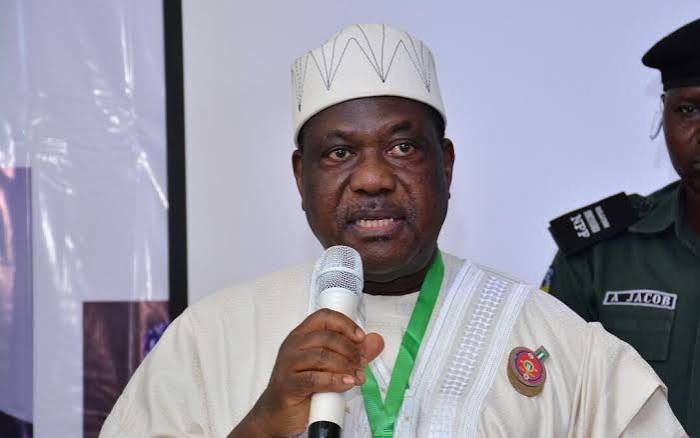
By David Torough, Abuja
The Secretary to the Government of the Federation, Sen. George Akume, has charged Ministries, Departments and Agencies (MDAs) to translate the findings of the 2026 Transparency and Integrity Index (TII) into concrete improvements in their operations in order to strengthen accountability and public trust.
He gave the charge while delivering the keynote address at the presentation of the 2026 Transparency and Integrity Index held at the Auditorium of the Federal Ministry of Finance, Abuja.
The SGF said the administration of President Bola Tinubu, remains committed to open, accountable and responsible governance, stressing that public institutions must ensure that their policies, programmes and actions are transparent, visible and understandable to Nigerians.
According to him, the Index has become a vital instrument for assessing accountability, openness and ethical standards across government institutions, while providing MDAs with clear benchmarks to identify areas of strength and gaps requiring improvement.
He urged heads of MDAs to integrate the findings and indicators of the Index into strategic planning, performance management, budget priorities, procurement processes, staff training and digital disclosure rather than allow the report to become another document left unused.
“The report should not sit on the shelf and should inform management decisions, budget priorities, procurement processes, staff training, digital disclosure, and how you communicate with the public,” he said.
Akume emphasised that transparency should be viewed as an institutional asset rather than an administrative burden, noting that integrity must be embedded in the procedures and culture of public institutions through clear policies, proper record-keeping, effective oversight, ethical leadership and consequences for wrongdoing.
He further tasked MDAs to take advantage of technology by ensuring that their websites and data portals provide accurate, timely and user-friendly information, including current budget, contract and service information, to enable citizens to effectively engage government and track the utilisation of public resources.
The SGF explained that the 2026 TII assesses public institutions in five critical areas comprising fiscal transparency, open procurement and contracting, human resources and inclusion, control of corruption and citizens’ engagement, adding that the initiative complements existing public service reforms, anti-corruption measures and Nigeria’s Open Government Partnership commitments.
He noted that the ultimate objective of transparency and integrity should go beyond institutional rankings to building public institutions that Nigerians can understand, engage with and hold accountable, while safeguarding public resources and improving service delivery.
“The Federal Government remains fully committed to this goal. We will continue building institutions that are transparent, accountable, professional and responsive to the needs of the people,” the SGF said.
Akume commended the Bureau of Public Service Reforms (BPSR) and the Centre for Fiscal Transparency and Public Integrity (CeFTPI) for sustaining the initiative, while calling for stronger collaboration among government, civil society, professional bodies, development partners and the media in strengthening transparency and bringing corruption to its knees.
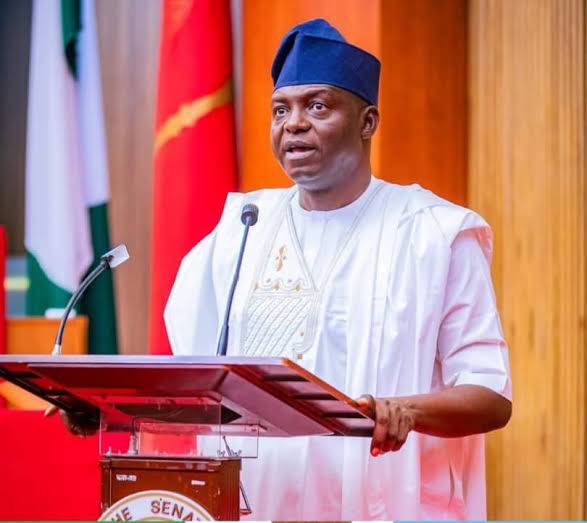
By David Torough, Abuja
The political debate over Nigeria’s economic challenges and the future of the North has intensified ahead of the 2027 general elections, with the ruling All Progressives Congress (APC) and the Allied Peoples’ Movement (APM) offering sharply different explanations for the region’s persistent poverty and insecurity.
APC National Chairman, Prof.
Nentawe Yilwatda, has warned that the North could suffer increased poverty if President Bola Ahmed Tinubu fails to secure re-election in 2027, arguing that the region has benefited significantly from policies and projects implemented by the administration.Yilwatda spoke on Monday while receiving former members of the African Democratic Congress (ADC), led by Princess Aslam Aliyu, who defected to the APC.
The APC chairman cited ongoing and completed road projects, the Nigerian Education Loan Fund (NELFUND), compressed natural gas (CNG) initiatives and fertiliser availability as among the programmes he said were benefiting people in the North.
He also defended the removal of the petrol subsidy, arguing that northern states were among the major beneficiaries of the resulting federal resources.
According to him, many states in the North were unable to pay workers’ salaries and pensioners’ gratuities before the Tinubu administration assumed office in 2023.
Yilwatda questioned the implication of proposals to restore the subsidy, particularly if such a move would reduce funds available for infrastructure and other government programmes.
He said the region could return to worsening poverty if the policies and projects he attributed to the Tinubu administration were reversed.
The APC chairman’s position, however, contrasts with that of APM Vice-Presidential candidate, Alhaji Lawal Daura, who attributed Nigeria’s continuing poverty and insecurity primarily to what he described as leadership failure.
Daura, the running mate to APM presidential candidate Seyi Makinde, spoke on Monday in Lafia, Nasarawa State, during an interview with journalists on the sidelines of the party’s North-Central Town Hall Meeting.
He argued that Nigeria possesses abundant human and natural resources, fertile land and a large domestic market capable of supporting prosperity, but that poverty and insecurity continue to persist because of shortcomings in leadership.
Daura said he and Makinde were offering themselves for public service rather than personal enrichment, stressing that both had achieved success in their private careers before venturing into politics.
He said the APM’s programme was aimed at “resetting Nigeria” and providing the country with a new direction, while calling on Nigerians, particularly young people, to support efforts for what he described as good governance.
The competing positions come as political parties begin to intensify mobilisation ahead of the 2027 elections, with both the ruling party and opposition groups seeking to present their respective programmes as the pathway to economic recovery and improved living conditions.
At the APC event, former ADC members pledged to support Tinubu’s 2027 re-election bid and asked the party leadership to integrate them into its structures.
Speaking on behalf of the defectors, Mohammed Hassan said their decision was intended to mark “a new chapter of service” and pledged their support for the APC and its mobilisation efforts.
Meanwhile, APM supporters in the North-Central region are also using music, social media and other forms of political communication to promote the party’s message.
Abubakar Dabai, chairman of the Kwararafa Artists Forum, said artists and TikTok influencers were being mobilised to take the party’s message beyond Nasarawa State. He said plans were also underway to establish a media office and engage journalists and online television operators in the North.
The political contest is therefore increasingly being framed around competing claims over the causes of poverty, insecurity and economic hardship, as parties seek to convince voters that their respective approaches would deliver better conditions for Nigerians ahead of the 2027 polls.



NAN Backs Insurance Sector’s Transformation Agenda, hails NAICOM
ShareBy Tony Obiechina, Abuja The National Association of Nigerian Students (NANS) National Secretariat, the umbrella body representing over 40.1 Million...


Don Calls for More Investment in Entrepreneurship/Innovation in Nigeria
ShareFrom Joseph Amedu, Lokoja A Professor of Entrepreneurship and Corporate Strategy at the Federal University, Lokoja, John Alabi has called...


Tinubu Submits NDDC 2026 Appropriation Bill
SharePresident Bola Tinubu has submitted the 2026 Statutory Budget Proposal of the Niger Delta Development Commission (NDDC) to the House...


Senate Passes Bill Extending 2025 Capital Budget Implementation to Dec 31
ShareThe Senate on Tuesday passed a bill extending the implementation of the capital component of the 2025 Appropriation Act from...
CANEX 2026 to Unlock Investment, Jobs in Nigeria’s Creative Economy — FG
ShareThe Federal Government said Nigeria’s hosting of the 2026 Creative Africa Nexus (CANEX) Weekend will attract investment, deepen market access...


NNPC Posts N7.2trn Profit amid Revenue Decline
ShareThe Nigerian National Petroleum Company Ltd. (NNPC Ltd.) recorded N7.2 trillion Profit After Tax (PAT) in 2025, a 33 per...

Wike Approves Contracts for Digitization of FCT High Courts
ShareThe Minister of the Federal Capital Territory (FCT), Nyesom Wike, has approved the award of contracts for the digitisation of...

OPay Names Top 10 Teams in N18m National Innovation Challenge
ShareIn a bid to empower young Nigerians with the skills, opportunities and support needed to build solutions for real-world challenges,...


CBN Sets Agenda for Post-Recapitalisation Banking
ShareBy Tony Obiechina, Abuja The Central Bank of Nigeria (CBN) said recent reforms in the foreign exchange market, monetary policy...

Gunmen Abduct 18 Women in Benue, 47 Niger Farmers
ShareFrom Attah Ede, Makurdi, and Dan Amasingha, Minna Fresh fears over the worsening insecurity across the country emerged on Tuesday...