
Foreign News
Germany Bans 3 Organisations Linked to Hezbollah

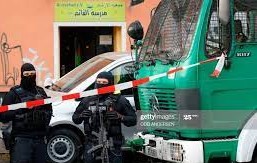
German Interior Minister, Horst Seehofer, has banned three organisations known to have collected money in Germany for projects of the Lebanese Shiite movement Hezbollah.
The bans on German Lebanese Family, People for People and Give Peace had already been pronounced on April 15, a ministry spokesman said on Wednesday.
Raids were carried out and offices were searched in Bremen, Hesse, Hamburg, Lower Saxony, North Rhine Westphalia, Schleswig-Holstein and Rhineland-Palatinate.
“Those who support terrorism will not be safe in Germany,’’ Seehofer’s spokesman quoted him as saying on Twitter.
“Regardless of the garb in which his supporters appear, they will not find a place of retreat in our country,’’ added the minister, who is currently in quarantine at home due to a Coronavirus infection.
The three banned groups were said to have collected donations and arranged sponsorships for Hezbollah `martyr families.’
The aim of the organisations was to promote Hezbollah’s fight against Israel, which goes against the idea of international understanding, the ministry said.
The certainty that the bereaved would receive financial support in the event of their death increases the willingness of young Hezbollah supporters to take part in the fight against Israel.
In March in 2020, Germany banned Hezbollah activity on its soil.
Germany’s domestic intelligence agency estimates that there were about 1,050 Hezbollah members and supporters currently in the country.
They do not comprise an official organisation in Germany, but work unofficially, doing fundraising, among other activities, according to security officials. (dpa/NAN)







China has cut its annual economic growth target to a range of 4.5 per cent-5 per cent, the lowest expansion goal since 1991 as it grapples with challenges both at home and abroad.
It is the first time the target has been lowered since it was cut to “around 5 per cent” in 2023.
A target was not set in 2020 due to the pandemic.The details were released during China’s biggest political gathering, known as the “two sessions”, alongside the release of some details of the 15th Five Year Plan for the world’s second largest economy.
Beijing aims to reshape its economy as it faces issues like weak consumption, a shrinking population, an ongoing property crisis, global trade tensions and an energy crunch due to the Iran war.
The lower target gives China “more room to manage the economy” without being forced into making huge financial commitments just to hit a precise goal.
“China has used flexible targets before, particularly during the pandemic, but it’s not the norm,” Jason Bedford from the East Asian Institute research group added.
The two sessions event, which began on Wednesday and usually runs for at least a week, brings the country’s leaders together for back-to-back meetings.
Details of China’s gross domestic growth (GDP) target and its objectives under its latest Five Year Plan were included in a 46-page report published.
The full text of the plan, which will outline China’s economic development objectives to 2030, will be voted on during the closing day of the gathering.
It is expected to be released by state media one or two days later.
Li told delegates that the Five Year Plan will include investments in innovation, high-tech industries, scientific research and more efforts to boost household consumption.
His comments underline Beijing’s concerns that weak domestic consumption makes the country too reliant on exports, as well as highlighting its ambitions to upgrade the country’s manufacturing industries.
The report outlines plans for more than 100 major projects over the next five years to expand China’s industrial capacity, with a focus on science and technology, transportation and energy.
Beijing also made clear its ambitions to be a global technological powerhouse, with plans to roll out artificial intelligence (AI) tools across key industries.
China aims to lead a green energy push, reducing carbon emissions and improving environmental protection, Li wrote.
The country will also build a “childbirth-friendly society” as it addresses concerns over employment, education and healthcare, the report said.
China faces an ageing population and falling birth rates, complicating Beijing’s plans to boost its economy.
In January, official figures showed that China hit its 5 per cent economic growth target for 2025 as a whole. But Beijing also said economic expansion had slowed to 4.5 per cent in the last three months of the year, weighed down by weak domestic spending and a long-running property crisis.
More than two-thirds of China’s provinces have scaled back their growth ambitions, either lowering targets or shifting language from aiming higher than a certain rate to targeting “around” that level.
Zhou Zheng, a policy analyst at China Macro Group, said Beijing’s new growth target reflects that it is “being realistic” as it deals with complex domestic challenges and a difficult global trade environment.
China’s economic growth still marks a “great achievement” given it has been simultaneously tackling major issues that are deeply interlinked and will take time to solve, Zhou said.
But Georgetown University researcher Ning Leng said China’s growth figures should be taken with “a grain of salt”, as other data suggests a weaker economic picture.
The crisis in China’s property sector has hit the country hard and is a key reason for its domestic consumption being weak, she added.
The real estate market once accounted for nearly a third of the Chinese economy and was a key source of income for local governments – many of which now have huge debts.
The industry’s problems have also led to layoffs and pay cuts across the country.
Manufacturing and exports have helped support China’s economy, recording the world’s biggest-ever trade surplus last year – the value of goods and services sold abroad compared to its imports – of $1.19tn (£890bn).
But it means China has become particularly reliant on exports to plug the gaps, which is a weakness the US can sense, Ning said.
US President Donald Trump’s tariffs have put further pressure on China’s export-reliant economy.
The country has responded by pouring huge resources into redirecting trade to other countries to ensure its products can be sold, sustaining its manufacturing sector, said Ning.
Trump is expected to visit China in April and meet President Xi Jinping for their first face-to-face talks this year.
Meanwhile, the US-Israel war with Iran means Beijing has now lost two key sources of cheap oil this year.
It also can no longer access Venezuelan oil after the US seized President Nicolás Maduro in January.
But Beijing has highlighted that it is far less dependent on fossil fuels as it has for several years been transitioning to renewable energy.

The vision is for Ethiopia’s smart police stations to be unmanned – but giving more people access to police services. Computer tablet screens glow inside a row of partitioned booths at a new-style Ethiopian police station. There is no commotion. There is no front desk, no bench of anxiously waiting civilians, no officer calling out names.
It is a pilot project of what is being called a “smart” – or unmanned – police station in the Bole district of the capital, Addis Ababa, is the latest chapter in Ethiopia’s bid to catch up with the digital revolution.
A large monitor on the wall cycles through welcome messages as well as images of Prime Minister Abiy Ahmed.
But at the moment there are uniformed officers standing by to demonstrate how the system works, which makes it feel more like a tech showroom.
Recently opened, the staff “is here to help people get used to it”, the police’s head of technology expansion department Demissie Yilma said.
Inside a booth, he taps a screen and goes through the steps to make a report.
Demissie selects the type of incident – a crime, a traffic report or a general concern – enters the details and presses a button to submit the comment.
Then, an officer – who is a real person in a remote location rather than a chatbot – pops up on the screen and begins to ask questions and take down information.
“If there is a problem, officers respond immediately and patrol the area mentioned by the reporter,” Demissie says.
In its first week last month, the smart police station (SPS) received just three reports – a lost passport, a financial fraud case and a routine complaint.
But Demissie believes the number of reports will grow as locals become more aware of it.
“The future police service should be near the citizens,” he says.
The use of a computer tablet to communicate with officials may mean less human-to-human contact but the authorities believe that the SPS could increase access to the police in places where there may not be enough personnel to man a fully fledged station.
At the project’s launch on 9 February, the prime minister was quoted in state media as saying that it was aimed at making “law enforcement institutions competent and competitive” and he framed it as part of a wider digital reform drive.
Users of the smart police station enter details on a tablet before a real person appears on the screen
The smart police station is part of a broader move to change how citizens interact with the state.
The national strategy launched last year – known as Digital Ethiopia 2030 – is the government’s blueprint for digitising public services, from identity systems and payments to courts and public administration.
The proportion of Ethiopians who have access to the internet remains quite low, meaning that the country has lagged behind others on the continent in terms of digital transformation.
Also, conflict and political upheavals in recent years have led to internet blackouts.
But as the telecoms sector has opened up, the country is embracing mobile phone digital payments in birr, the local currency.
The government has also introduced a national digital ID system and put several government services online.
Supporters of the moves argue that these changes are long overdue in a country with rapid urban growth and a young population.
Birhan Nega Cheru, a senior software engineer in Addis Ababa, is pleased with the shift.
“When they work well, they reduce paperwork and visits to offices,” he tells the BBC.
But he also recognises security and privacy issues and the dangers that those “who are not digitally literate can easily be scammed”.
“Urban users, younger people, businesses, those with smartphones and skills, benefit most,” the software engineer says.
“Older people, rural communities and low-income groups are at risk of being left out.”
And the numbers support his assertions.
In a report last year, the UN’s educational organisation, Unesco, found that 79% of its citizens were not connected to the internet.
But Zelalem Gizachew, a technology policy analyst, argues that the government’s strategy has been chipping away at the digital divide.
“Digital literacy remains a challenge,” he says. “That is why the Digital Ethiopia 2030 strategy puts emphasis on training and skills, not just technology.”
He points to measurable changes over the past five years.
“Digital payments have boomed with trillions of birr now moving through electronic transactions. Broadband access has expanded sharply, and more than 130 government services have been digitised.
“These are foundational investments,” Zelalem says. “You cannot modernise public services without infrastructure, policy and skills.”
For now, the smart police station remains a pilot.
It is in a controlled environment where officers guide users through a system which is still finding its footing. Traditional stations continue to operate, and most citizens still rely on in-person reporting.
Whether the model expands will depend less on how sleek the technology looks, and more on whether people choose to use it when no-one is there to explain the screens.
In that sense, the quiet room in Bole is not a finished product. It is an experiment, and a small window into how Ethiopia’s broader digital ambitions may play out in everyday life.

The UK government will stop issuing study visas to people from Afghanistan, Cameroon, Myanmar and Sudan from this month, Home Secretary Shabana Mahmood has said, as well as stopping skilled work visas to Afghans.
The Home Office said the action was being taken due to what it said was widespread visa abuse.
According to official figures, people from the four countries were the most likely to make an asylum claim after originally coming to the UK to study.
“The government is clamping down on visa abuse so the UK can maintain its ability and proud tradition of helping those genuinely in need,” a government spokesperson added.
In its release, the government said asylum claims from people who had originally travelled to the UK legally – to do something like studying – had more than tripled between 2021 and 2025.
Home Office figures showed that people claiming asylum off the back of a study visa make up 13% of all claims currently in the system.
Mahmood said she was “taking the unprecedented decision to refuse visas for those nationals seeking to exploit our generosity”.
“I will restore order and control to our borders.”
The Home Office said a higher proportion of people than average from the four specified countries cited destitution as part of their asylum claim, and there were 16,000 people from the four countries currently being supported.
About 95% of Afghans who arrived in the UK on a study visa then applied for asylum since 2021, while applications by students from Myanmar increased 16-fold and claims by students from Cameroon and Sudan more than quadrupled.
In its reasoning for ending work visas for Afghans, the Home Office also cited the large numbers claiming asylum in the UK once their visas expired.
It said that this posed “an unsustainable threat to the UK’s asylum system”.
The security situation is volatile in Afghanistan and recent tensions between the country and Pakistan have resulted in violent clashes in border regions.
There has been a civil war in Sudan since 2023, forcing millions to flee their homes in what the United Nations has called the world’s largest humanitarian crisis.
There is separatist unrest in Cameroon, where militia are fighting for the independence of the country’s two Anglophone regions in what is a mainly French-speaking nation.
In Myanmar, there is a civil war following a military coup in 2021.
Mahmood will introduce new legislation to stop the issuing of visas through an Immigration Rules change on Thursday 5 March.
In November, the home secretary threatened to shut down all UK visas for Angola, Namibia and the Democratic of Congo unless their governments agreed to take deportations, which led to a resumption of return flights with all three countries.
The measures follow the prime minister’s decision to adopt a more hard-edged approach to diplomacy in response to pressure to reduce immigration from those on the political right, including the Conservatives and Reform UK.
Last week, the government announced protection for refugees would be halved to 30 months in an attempt to reduce small boat crossings.
In 2025, a total of 41,472 migrants crossed the Channel in small boats, which was almost 5,000 more than the previous year.
The UK has resettled the sixth largest number of refugees referred by the United Nations High Commissioner for Refugees in the world, which the Home Office said demonstrated the government’s commitment to helping those genuinely in need.
The home secretary will give a speech this week on making the “progressive case” for immigration control.
Last month, about 40 Labour MPs raised concerns about the impact of the proposals to change permanent settlement rights for migrants already living here, describing the retrospective approach as “un-British” and “moving the goalposts”.
They have warned it could worsen the UK’s skills shortage, particularly in the care sector.
Max Wilkinson, Liberal Democrat home affairs spokesman, said it was “right to say student visas are for students and asylum routes are for refugees”.
“The problem is there are still no controlled, safe routes for refugees to reach the UK and no meaningful returns agreements with other countries for those whose claims are rejected,” Wilkinson said.
Ethiopia Experiments Smart Police Stations without Officers
The vision is for Ethiopia’s smart police stations to be unmanned – but giving more people access to police services. Computer tablet screens glow inside a row of partitioned booths at a new-style Ethiopian police station. There is no commotion. There is no front desk, no bench of anxiously waiting civilians, no officer calling out names.
It is a pilot project of what is being called a “smart” – or unmanned – police station in the Bole district of the capital, Addis Ababa, is the latest chapter in Ethiopia’s bid to catch up with the digital revolution.
A large monitor on the wall cycles through welcome messages as well as images of Prime Minister Abiy Ahmed.
But at the moment there are uniformed officers standing by to demonstrate how the system works, which makes it feel more like a tech showroom.
Recently opened, the staff “is here to help people get used to it”, the police’s head of technology expansion department Demissie Yilma said.
Inside a booth, he taps a screen and goes through the steps to make a report.
Demissie selects the type of incident – a crime, a traffic report or a general concern – enters the details and presses a button to submit the comment.
Then, an officer – who is a real person in a remote location rather than a chatbot – pops up on the screen and begins to ask questions and take down information.
“If there is a problem, officers respond immediately and patrol the area mentioned by the reporter,” Demissie says.
In its first week last month, the smart police station (SPS) received just three reports – a lost passport, a financial fraud case and a routine complaint.
But Demissie believes the number of reports will grow as locals become more aware of it.
“The future police service should be near the citizens,” he says.
The use of a computer tablet to communicate with officials may mean less human-to-human contact but the authorities believe that the SPS could increase access to the police in places where there may not be enough personnel to man a fully fledged station.
At the project’s launch on 9 February, the prime minister was quoted in state media as saying that it was aimed at making “law enforcement institutions competent and competitive” and he framed it as part of a wider digital reform drive.
Users of the smart police station enter details on a tablet before a real person appears on the screen
The smart police station is part of a broader move to change how citizens interact with the state.
The national strategy launched last year – known as Digital Ethiopia 2030 – is the government’s blueprint for digitising public services, from identity systems and payments to courts and public administration.
The proportion of Ethiopians who have access to the internet remains quite low, meaning that the country has lagged behind others on the continent in terms of digital transformation.
Also, conflict and political upheavals in recent years have led to internet blackouts.
But as the telecoms sector has opened up, the country is embracing mobile phone digital payments in birr, the local currency.
The government has also introduced a national digital ID system and put several government services online.
Supporters of the moves argue that these changes are long overdue in a country with rapid urban growth and a young population.
Birhan Nega Cheru, a senior software engineer in Addis Ababa, is pleased with the shift.
“When they work well, they reduce paperwork and visits to offices,” he tells the BBC.
But he also recognises security and privacy issues and the dangers that those “who are not digitally literate can easily be scammed”.
“Urban users, younger people, businesses, those with smartphones and skills, benefit most,” the software engineer says.
“Older people, rural communities and low-income groups are at risk of being left out.”
And the numbers support his assertions.
In a report last year, the UN’s educational organisation, Unesco, found that 79% of its citizens were not connected to the internet.
But Zelalem Gizachew, a technology policy analyst, argues that the government’s strategy has been chipping away at the digital divide.
“Digital literacy remains a challenge,” he says. “That is why the Digital Ethiopia 2030 strategy puts emphasis on training and skills, not just technology.”
He points to measurable changes over the past five years.
“Digital payments have boomed with trillions of birr now moving through electronic transactions. Broadband access has expanded sharply, and more than 130 government services have been digitised.
“These are foundational investments,” Zelalem says. “You cannot modernise public services without infrastructure, policy and skills.”
For now, the smart police station remains a pilot.
It is in a controlled environment where officers guide users through a system which is still finding its footing. Traditional stations continue to operate, and most citizens still rely on in-person reporting.
Whether the model expands will depend less on how sleek the technology looks, and more on whether people choose to use it when no-one is there to explain the screens.
In that sense, the quiet room in Bole is not a finished product. It is an experiment, and a small window into how Ethiopia’s broader digital ambitions may play out in everyday life.




Nigerian Military Intensifies Nationwide Operations, Eliminates Key Terror Leaders and Rescues Dozens
ShareBy David Torough, Abuja The Armed Forces of Nigeria have intensified nationwide military operations against terrorism, kidnapping, oil theft, and...


Aondoakaa Condemns Kwande Killings, Calls for Urgent Government Action
ShareBy David Torough, Abuja Former Attorney General of the Federation and Minister of Justice, Michael Kaase Aondoakaa, has strongly condemned...


KWUPO Raises the Alarm Over Killings Near Security Camp in Kwande
ShareBy David Torough, Abuja The Kwande United People’s Organization (KWUPO) has demanded urgent explanations from security authorities following fresh attacks...


Coalition of Geopolitical Youth Associations of Nigeria, CSOs Kick Against Trial of Ozekhome
ShareBy Mike Odiakose, Abuja The Coalition of Geopolitical Youth Associations of Nigeria and Civil Society Organisations have expresses their profound...


Sowunmi: Nigeria Must Create Space for Leaders Like Adewole Adebayo
ShareAs debates over Nigeria’s political future intensify, a chieftain of the Peoples Democratic Party (PDP) in Ogun State, Otunba Segun...
Niger Signs N121bn MoU with Nigerian Army Properties for Suleja Mega Market
ShareFrom Dan Amasingha, Minna The Niger State Government has signed a Memorandum of Understanding (MoU) with Nigerian Army Properties Limited (NAPL) for the construction...


NBBF Crisis Stalls Annual Referees’ Clinic, Says Popoola
ShareTunde Popoola, President, Nigeria Basketball Referees Council, has said that the lingering crisis in the Nigeria Basketball Federation (NBBF) has stalled the annual clinic for referees in the...


China Sets Lowest Economic Growth Target Since 1991
ShareChina has cut its annual economic growth target to a range of 4.5 per cent-5 per cent, the lowest expansion goal since 1991 as it grapples with challenges both...
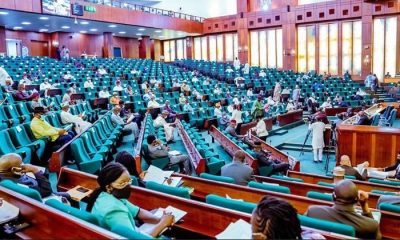

Reps Approve N140Bn for S/East Devt Commission in 2026 Budget
ShareBy Ubong Ukpong, Abuja The House of Representatives Committee on South East Development Commission (SEDC) on Thursday, ,approved the N140 billion proposed budget of the Commission. The proposed budget was approved after...


Residents Flee as Terrorists Attack Ngoshe Community, Abduct 300
ShareFrom Muhammad Muhammad Al-amin, Maiduguri Residents of Ngoshe have raised serious concerns over the fate of elderly people and corpses allegedly...