
Foreign News
UK Cancels Cameroun, South Sudan, Afghanistan, Myanmar Study Visas Due to Abuse


The UK government will stop issuing study visas to people from Afghanistan, Cameroon, Myanmar and Sudan from this month, Home Secretary Shabana Mahmood has said, as well as stopping skilled work visas to Afghans.
The Home Office said the action was being taken due to what it said was widespread visa abuse.
According to official figures, people from the four countries were the most likely to make an asylum claim after originally coming to the UK to study.
“The government is clamping down on visa abuse so the UK can maintain its ability and proud tradition of helping those genuinely in need,” a government spokesperson added.
In its release, the government said asylum claims from people who had originally travelled to the UK legally – to do something like studying – had more than tripled between 2021 and 2025.
Home Office figures showed that people claiming asylum off the back of a study visa make up 13% of all claims currently in the system.
Mahmood said she was “taking the unprecedented decision to refuse visas for those nationals seeking to exploit our generosity”.
“I will restore order and control to our borders.”
The Home Office said a higher proportion of people than average from the four specified countries cited destitution as part of their asylum claim, and there were 16,000 people from the four countries currently being supported.
About 95% of Afghans who arrived in the UK on a study visa then applied for asylum since 2021, while applications by students from Myanmar increased 16-fold and claims by students from Cameroon and Sudan more than quadrupled.
In its reasoning for ending work visas for Afghans, the Home Office also cited the large numbers claiming asylum in the UK once their visas expired.
It said that this posed “an unsustainable threat to the UK’s asylum system”.
The security situation is volatile in Afghanistan and recent tensions between the country and Pakistan have resulted in violent clashes in border regions.
There has been a civil war in Sudan since 2023, forcing millions to flee their homes in what the United Nations has called the world’s largest humanitarian crisis.
There is separatist unrest in Cameroon, where militia are fighting for the independence of the country’s two Anglophone regions in what is a mainly French-speaking nation.
In Myanmar, there is a civil war following a military coup in 2021.
Mahmood will introduce new legislation to stop the issuing of visas through an Immigration Rules change on Thursday 5 March.
In November, the home secretary threatened to shut down all UK visas for Angola, Namibia and the Democratic of Congo unless their governments agreed to take deportations, which led to a resumption of return flights with all three countries.
The measures follow the prime minister’s decision to adopt a more hard-edged approach to diplomacy in response to pressure to reduce immigration from those on the political right, including the Conservatives and Reform UK.
Last week, the government announced protection for refugees would be halved to 30 months in an attempt to reduce small boat crossings.
In 2025, a total of 41,472 migrants crossed the Channel in small boats, which was almost 5,000 more than the previous year.
The UK has resettled the sixth largest number of refugees referred by the United Nations High Commissioner for Refugees in the world, which the Home Office said demonstrated the government’s commitment to helping those genuinely in need.
The home secretary will give a speech this week on making the “progressive case” for immigration control.
Last month, about 40 Labour MPs raised concerns about the impact of the proposals to change permanent settlement rights for migrants already living here, describing the retrospective approach as “un-British” and “moving the goalposts”.
They have warned it could worsen the UK’s skills shortage, particularly in the care sector.
Max Wilkinson, Liberal Democrat home affairs spokesman, said it was “right to say student visas are for students and asylum routes are for refugees”.
“The problem is there are still no controlled, safe routes for refugees to reach the UK and no meaningful returns agreements with other countries for those whose claims are rejected,” Wilkinson said.
Ethiopia Experiments Smart Police Stations without Officers
The vision is for Ethiopia’s smart police stations to be unmanned – but giving more people access to police services. Computer tablet screens glow inside a row of partitioned booths at a new-style Ethiopian police station. There is no commotion. There is no front desk, no bench of anxiously waiting civilians, no officer calling out names.
It is a pilot project of what is being called a “smart” – or unmanned – police station in the Bole district of the capital, Addis Ababa, is the latest chapter in Ethiopia’s bid to catch up with the digital revolution.
A large monitor on the wall cycles through welcome messages as well as images of Prime Minister Abiy Ahmed.
But at the moment there are uniformed officers standing by to demonstrate how the system works, which makes it feel more like a tech showroom.
Recently opened, the staff “is here to help people get used to it”, the police’s head of technology expansion department Demissie Yilma said.
Inside a booth, he taps a screen and goes through the steps to make a report.
Demissie selects the type of incident – a crime, a traffic report or a general concern – enters the details and presses a button to submit the comment.
Then, an officer – who is a real person in a remote location rather than a chatbot – pops up on the screen and begins to ask questions and take down information.
“If there is a problem, officers respond immediately and patrol the area mentioned by the reporter,” Demissie says.
In its first week last month, the smart police station (SPS) received just three reports – a lost passport, a financial fraud case and a routine complaint.
But Demissie believes the number of reports will grow as locals become more aware of it.
“The future police service should be near the citizens,” he says.
The use of a computer tablet to communicate with officials may mean less human-to-human contact but the authorities believe that the SPS could increase access to the police in places where there may not be enough personnel to man a fully fledged station.
At the project’s launch on 9 February, the prime minister was quoted in state media as saying that it was aimed at making “law enforcement institutions competent and competitive” and he framed it as part of a wider digital reform drive.
Users of the smart police station enter details on a tablet before a real person appears on the screen
The smart police station is part of a broader move to change how citizens interact with the state.
The national strategy launched last year – known as Digital Ethiopia 2030 – is the government’s blueprint for digitising public services, from identity systems and payments to courts and public administration.
The proportion of Ethiopians who have access to the internet remains quite low, meaning that the country has lagged behind others on the continent in terms of digital transformation.
Also, conflict and political upheavals in recent years have led to internet blackouts.
But as the telecoms sector has opened up, the country is embracing mobile phone digital payments in birr, the local currency.
The government has also introduced a national digital ID system and put several government services online.
Supporters of the moves argue that these changes are long overdue in a country with rapid urban growth and a young population.
Birhan Nega Cheru, a senior software engineer in Addis Ababa, is pleased with the shift.
“When they work well, they reduce paperwork and visits to offices,” he tells the BBC.
But he also recognises security and privacy issues and the dangers that those “who are not digitally literate can easily be scammed”.
“Urban users, younger people, businesses, those with smartphones and skills, benefit most,” the software engineer says.
“Older people, rural communities and low-income groups are at risk of being left out.”
And the numbers support his assertions.
In a report last year, the UN’s educational organisation, Unesco, found that 79% of its citizens were not connected to the internet.
But Zelalem Gizachew, a technology policy analyst, argues that the government’s strategy has been chipping away at the digital divide.
“Digital literacy remains a challenge,” he says. “That is why the Digital Ethiopia 2030 strategy puts emphasis on training and skills, not just technology.”
He points to measurable changes over the past five years.
“Digital payments have boomed with trillions of birr now moving through electronic transactions. Broadband access has expanded sharply, and more than 130 government services have been digitised.
“These are foundational investments,” Zelalem says. “You cannot modernise public services without infrastructure, policy and skills.”
For now, the smart police station remains a pilot.
It is in a controlled environment where officers guide users through a system which is still finding its footing. Traditional stations continue to operate, and most citizens still rely on in-person reporting.
Whether the model expands will depend less on how sleek the technology looks, and more on whether people choose to use it when no-one is there to explain the screens.
In that sense, the quiet room in Bole is not a finished product. It is an experiment, and a small window into how Ethiopia’s broader digital ambitions may play out in everyday life.

President Donald Trump on Sunday ordered a US naval blockade of the Strait of Hormuz in response to Iran’s “unyielding” refusal to give up its nuclear ambitions during peace talks in Islamabad.
While acknowledging that the marathon negotiations in Pakistan had gone “well” and “most points were agreed to,” Trump said Tehran had refused to concede on the issue of its nuclear program.
“Effective immediately, the United States Navy, the Finest in the World, will begin the process of BLOCKADING any and all Ships trying to enter, or leave, the Strait of Hormuz,” Trump said on his Truth Social platform.
“Any Iranian who fires at us, or at peaceful vessels, will be Blown To Hell!”
US Vice President JD Vance left Pakistan without a deal after weekend talks with a team led by Iran’s parliamentary speaker Mohammad Bagher Ghalibaf — the highest-level meeting between the two sides since the 1979 Islamic revolution.
Tehran’s delegation also included Foreign Minister Abbas Araghchi.
“We leave here with a very simple proposal, a method of understanding that is our final and best offer. We’ll see if the Iranians accept it,” Vance told reporters.
In two lengthy posts on Truth Social, Trump slammed Iran for promising to open the Strait of Hormuz, a strategic waterway through which a fifth of the world’s crude oil passes, and “knowingly” failing to deliver.
“They say they put mines in the water, even though all of their Navy, and most of their ‘mine droppers,’ have been completely blown up. They may have done so, but what ship owner would want to take the chance?” Trump said.
Iran had effectively blocked the Strait of Hormuz for weeks, since the United States and Israel launched a bombing campaign against the Islamic republic more than six weeks ago.
On Saturday, the US military announced that two US warships had transited the strait at the start of a mine clearance operation.
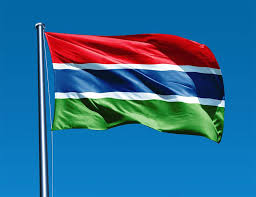
British barrister Martin Hackett has been appointed as The Gambia’s first special prosecutor to try those responsible for human rights abuses carried out during the 22-year rule of ex-President Yahya Jammeh, which ended when he went into exile in 2017.
Hackett will head a newly created office charged with dealing with the cases from a period characterised by widespread repression, enforced disappearances and extrajudicial killings.
The Truth, Reconciliation and Reparations Commission (TRRC) was set up to document the extent of the alleged abuses.
In its final report, handed to current President Adama Barrow in 2021, it identified those most responsible and recommended their prosecution.
The TRRC, which heard harrowing testimony from victims, former security operatives and other witnesses, also called for reparations to be paid to the victims, warning that failure to act risked entrenching impunity.
The TRRC has started phased compensation payments, starting with victims of abuses committed shortly after the 1994 coup when Jammeh first came to power.
But for many survivors, financial compensation is secondary to accountability.
Among the most notorious cases highlighted by the TRRC were the 2004 killing of journalist Deyda Hydara and the murder of more than 50 mainly West African migrants, executed by security forces after being wrongly accused of plotting a coup.
A handful of perpetrators have already been convicted abroad under the principle of universal jurisdiction, including former members of the notorious paramilitary unit and death squad known as “the Junglers” – some of whom have been jailed in Germany and the US.
The appointment of Hackett, who has previously served at the UN-backed Special Tribunal for Lebanon and who investigated war crimes committed by senior military commanders during the Kosovo war, is seen as a decisive step towards domestic accountability.
Attorney General Dawda Jallow was quoted as saying that Hackett had a four-year mandate and was chosen from a wide selection of candidates.
Jammeh, who refused to co-operate with the TRRC, only left power at the insistence of regional leaders.
They sent in troops to The Gambia when he refused to step down after his shock election defeat in December 2016.
Now aged 60, Jammeh has previously denied wrongdoing and is believed to be living in exile in Equatorial Guinea.

By Ademola Bakare
The Nigeria banking sector has witnessed significant recapitalization and consolidation exercises, dating back to 1952. The most recent were in 2004 that terminated in 2006, and 2010. Professor Charles Soludo, then governor of the Central Bank of Nigeria, raised the minimum capital benchmark from N2 billion to N5 billion.
The effort reduced the number of banks in Nigeria to 25 from 89, and Mallam Sanusi Lamido Sanusi, also a former governor, in 2010 established Asset Management Company {AMCON}, “bad bank” to ‘buy toxic assets off commercial banks, and recapitalized distressed financial institutions.That era was largely an abuse of banking industry ethics, hugely perpetrated internally by chief executives, and board members of many banks.
The Central Bank of Nigeria’s {CBN} just concluded effort was announced in 2024 with a two-year timeline, prescribing a new recapitalization regime of minimum capital benchmark of N500 billion, N200 billion, and N50 billion for commercial banks with international, national, regional licences respectively.
The new capital targets were ₦500 billion for international commercial banks, ₦200 billion for national commercial banks, ₦50 billion for regional commercial banks, ₦50 billion for national merchant banks, ₦20 billion for national non-interest banks, and ₦10 billion for regional non-interest banks
Recapitalization of banks in Nigeria is not novel, it has always been a regulatory measure employed by the Central Bank of Nigeria (CBN) to strengthen the financial system, protect depositor funds, and enhance the banking sector’s capacity to support economic growth. The first exercise was carried out in 1952 (Banking Ordinance), caused by the failure of indigenous banks. The then colonial government adopted tight regulations, raising the capital requirement for foreign banks to £400,000. The Banking Act of 1969, was another effort to strengthen banks. It raised the capital base to £1.5 million for foreign banks and £600,000 for indigenous commercial banks.
In 1997/1998 (Bank Failures) following widespread distress and failures within the sector, minimum benchmark capital was once again raised, which ultimately led to the failure of 26 banks.
The Olayemi Cardoso recapitalization programme which started on April 1, 2024 was considered a herculean odyssey deadline for the banks to bolster their capital bases. But the governor has been consistent and uncompromising with his policies. He said “the era of fragile balance sheets was over”. He wasn’t just desirous of bigger and fat figures on a ledger, he was seeking a financial ecosystem capable of financing huge infrastructure, and a $1 trillion economy envisioned by President Bola Tinubu’s administration, as well as structuring the sector to be able to withstand any shock associated with the volatile global economy.
As of March 31, 2026, 33 banks have met the new requirements, raising ₦4.65 trillion in new capital. These efforts aimed to strengthen Nigeria’s banking sector, improve resilience, and support economic growth. The programme was executed seamlessly, devoid of any rancour, and recorded a very strong participation from domestic and international investors, with 72.55 per cent of capital sourced locally and 27.45 percent from international markets. This demonstrated growing and sustained confidence in the Nigerian banking sector, and by extension, the Nigerian economy.
The concluded programme offers several implications and benefits for the Nigerian economy. Among which, but not limited are – increased lending capacity. With stronger capital bases, banks can lend more to businesses, particularly the small and medium enterprises (SMEs), and individuals yearning for capital to expand their businesses. Surely, this will strengthen financial stability as higher capital requirements will reduce the likelihood of bank distress and contagion, thereby promoting financial system stability.
For the $1 trillion economic aspiration of the government, a well-capitalized bank will attract more foreign investors to support Nigeria ‘s economic development, making it competitive. Larger banks are now, not a pack of local lenders, equipped, and can compete effectively with international banks, fostering innovation, and efficiency.
Among other benefits is economic stimulation, to ensure increased lending support for infrastructure development, industrialization, and job creation. With stronger shareholder net worth, banks performance will improve and the shareholders’ confidence boosted.
CBN’s strong regulatory framework employed by Olayemi Cardoso ensured that banks adopt more robust risk management practices, thereby reducing the risk of financial crises. The apex bank, he has often said, will continue to improve on governance, transparency, and accountability in the banking industry.
The recapitalization program when it was wrapped up earned commendation from industry players, and financial technocrats, who viewed the program as the prescription the economy required for its transformation.
However, not all banks operating in the country met the deadline. Some couldn’t, and are still continuing with the process of shoring up their capital adequacy. To these banks, the CBN assured the banking public, will remain functional.
Cardoso said, “Sustainable economic growth is unattainable without a resilient financial system. This recapitalisation ensures Nigerian banks can fund the scale of transactions needed to drive a $1 trillion economy”. Stressing that “the recapitalisation programme has strengthened the capital base of Nigerian banks, reinforced the resilience of the financial system and ensured it is well-positioned to support economic growth and withstand domestic and external shocks”.
The Olayemi Cardoso era will be etched in annals of banking sector history not for complexity of his monetary policies, but for clarity of his vision for the sector and the country.
Ademola Bakare, writes from Abuja.



Justin Bieber Headlines Coachella with Nostalgia-fuelled Set
ShareJustin Bieber made a nostalgia-fuelled return to the major stage as Coachella’s much-anticipated headline act. The 32-year-old spent much of...
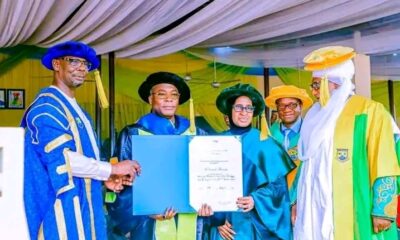

Sule Rewards First-Class Graduates, Honours Tanzania’s President at NSUK 8th Convocation
ShareBy Tambaya Julius, Abuja The Nasarawa State University, Keffi over the weekend celebrated its 25th silver jubilee anniversary and combined...


OPay Named Nigeria’s Most Trusted Digital Financial Company at 2026 ISO Awards
ShareOPay, a leading financial institution in Nigeria, has been awarded The Most Trusted Quality Mobile Money and Digital Financial Services...

Kogi Dismisses Claims of Ethnic Exclusion in Employment
ShareFrom Joseph Amedu, Lokoja The Kogi State Government has responded to a viral voice note allegedly recorded by a female civil servant,...
Prosperity Cup 2026: LGA Finals Get Dates
ShareFrom Mike Tayese, Yenagoa The Central Organizing Committee (COC) of Nigeria’s biggest grassroots football spectacle, the Bayelsa Governor’s Football Tournament,...


Trump Orders US Naval Blockade of Strait of Hormuz
SharePresident Donald Trump on Sunday ordered a US naval blockade of the Strait of Hormuz in response to Iran’s “unyielding” refusal to give up its nuclear ambitions during...
Psychiatrist Decries High Cost of Mental Illness Treatment, Seeks Interventions
ShareA Consultant Psychiatrist, Prof. Taiwo Obindo has decried the cost of care and drugs for individuals undergoing treatment for various mental health conditions, calling for interventions to reverse the...

ENSIEC Fixes 2026 Council Election Timetable Sept 26
Share From Sylvia Udegbunam, Enugu The Enugu State Independent Electoral Commission (ENSIEC) have released a revised timetable for the 2026 local...

Afreximbank Total Assets Grow to $48.5bn in 2025
ShareBy Tony Obiechina, Abuja The African Export-Import Bank (Afreximbank) said it has grown its total assets and contingencies to $48.5...

FG Tasks Dangote Sugar on 600,000MT Capacity Expansion
ShareBy Tony Obiechina, Abuja The Federal Government has urged the Dangote Group to expand the annual production capacity of its...