
Agriculture
Global Support to Producers in Agricultural Sector to Hit $1.759trn by 2030-Report

By Joseph Chibueze, Abuja
A new United Nations report has projected that global support to
producers in the agricultural sector per year will hit $1.759 trillion
by 2030. This is more than three times the current value of $540
billion per year.
Unfortunately, according to the report, about 87 percent of this
support, approximately $470 billion, is price distorting and
environmentally and socially harmful. The report therefore calls for
repurposing damaging incentives to achieve more of the 2030
Sustainable Development Goals (SDGs) and realize the UN Decade of
Ecosystem Restoration.
The report, entitled: A multi-billion-dollar opportunity: Repurposing
agricultural support to transform food systems, launched by the Food
and Agriculture Organisation (FAO), the UN Development Programme
(UNDP) and the UN Environment Programme (UNEP) finds that current
support to producers mostly consists of price incentives, such as
import tariffs and export subsidies, as well as fiscal subsidies which
are tied to the production of a specific commodity or input.
“These are inefficient, distort food prices, hurt people’s health,
degrade the environment, and are often inequitable, putting big
agri-business ahead of smallholder farmers, a large share of whom are
women,” the report said.
According to the report, in 2020, up to 811 million people in the
world faced chronic hunger and nearly one in three people in the world
(2.37 billion) did not have year-round access to adequate food. In
2019, around three billion people, in every region of the world, could
not afford a healthy diet.
“While the majority of agricultural support today has negative
effects, about $110 billion supports infrastructure, research and
development, and benefits the general food and agriculture sector.
Reconfiguring agricultural producer support, rather than eliminating
it, will help end poverty, eradicate hunger, achieve food security,
improve nutrition, promote sustainable agriculture, foster sustainable
consumption and production, mitigate the climate crisis, restore
nature, limit pollution, and reduce inequalities,” it said.
The Director-General of FAO, QU Dongyu, said, “This report, released
on the eve of the UN Food Systems Summit, is a wake-up call for
governments around the world to rethink agricultural support schemes
to make them fit for purpose to transform our agri-food systems and
contribute to the Four Betters: Better nutrition, better production,
better environment and a better life.”
Agriculture is one of the main contributors to climate change through
greenhouse gas emissions from different sources, including manure on
pastureland, synthetic fertilisers, rice cultivation, burning crop
residue, and land-use change. At the same time, agricultural producers
are particularly vulnerable to impacts of the climate crisis, such as
extreme heat, rising sea levels, drought, floods, and locust attacks.
The report said continuing with support-as-usual will worsen the
triple planetary crisis and ultimately harm human well-being. “Meeting
the goals of the Paris Agreement requires shifting support especially
in high-income countries for an outsized meat and dairy industry,
which accounts for 14.5 per cent of global greenhouse gas emissions.
In lower-income countries, governments should consider repurposing
their support for toxic pesticides and fertilizers or the growth of
monocultures,” it said.
“Governments have an opportunity now to transform agriculture into a
major driver of human well-being, and into a solution for the imminent
threats of climate change, nature loss, and pollution,” said Executive
Director of UNEP, Inger Andersen.
“By shifting to more nature-positive, equitable and efficient
agricultural support, we can improve livelihoods, and at the same time
cut emissions, protect and restore ecosystems, and reduce the use of
agrochemicals.”
The report highlights cases where such a process began: the Indian
state of Andhra Pradesh that adopted a policy of Zero Budget Natural
Farming; the 2006 reform of agricultural policies in China that
supports decreased use of mineral fertilizers and chemical pesticides;
the Single Payment Scheme in the United Kingdom that removed subsidies
in agreement with the National Farmers’ Union; the European Union,
where crop diversification has been incentivized through reform of the
Common Agricultural Policy (CAP) and the Senegalese programme PRACAS
to incentivize farmers to cultivate more diverse crops.
Although there is no one-size-fits-all strategy for repurposing
agricultural producer support, the report recommends a broad six-step
approach for governments: Measuring the support provided;
Understanding its positive and negative impacts; Identifying
repurposing options; Forecasting their impacts; Refining the proposed
strategy and detailing its implementation plan; Finally, monitoring
the implemented strategy.
“Repurposing agricultural support to shift our agri-food systems in a
greener, more sustainable direction — including by rewarding good
practices such as sustainable farming and climate-smart approaches —
can improve both productivity and environmental outcomes,” said UNDP
Administrator, Achim Steiner. “It will also boost the livelihoods of
the 500 million smallholder farmers worldwide — many of them women —
by ensuring a more level playing field.”
By optimizing support for the agricultural sector using a transparent,
customised and evidence-based approach, our planet will benefit from a
healthier, more sustainable, equitable and efficient global agri-food
system.
The report is launched ahead of the 2021 Food Systems Summit
(September), COP15 on biodiversity (October) and COP26 on climate
change (November). These events will allow governments to make
multilateral commitments to rethink outdated agricultural subsidies,
build forward better for the post-COVID-19 era, to commit to such a
strategy and to coordinate and monitor its implementation.








Some residents in Lagos State have expressed concern over the recent surge in the price of tomatoes, forcing many households to adopt alternatives.
The residents made their views known in separate interviews on Wednesday in Lagos.
A market survey showed that a 50kg basket of tomatoes now sells between N115,000 and N125,000, compared to between N35,000 and N40,000 recorded last month.
Olachi Igwe, a resident of Ago Palace, said the scarcity and high cost of tomatoes had disrupted her household’s meal plans.
“I contacted my usual vendor, but she said tomatoes were scarce and difficult to source.
“A small bowl we used to buy for between N3,500 and N4,000 now sells for as high as N6,000 to N7,000, when available.
“For now, my family will resort to palm nut stew (ofe akwu) until prices stabilise,” she said.
Another resident, Mercy Okeleye of FESTAC, said although her family prefers fresh tomatoes, rising prices have forced her to consider cheaper options.
“I cannot do without fresh tomatoes because of the taste, but I may have to buy broken ones, popularly called ‘esha’, which are relatively cheaper.
“I do not consider tomato paste a suitable substitute because it is not purely made from tomatoes,” she said.
Also speaking, Tope Babalola from Dopemu, said she might adjust her cooking methods if prices remain high.
“I have not bought tomatoes in over a month, but if the price is still high, I will use more onions and peppers.
“I will not resort to artificial additives; I prefer natural ingredients for my meals,” she said.
Joan Ogugua, another resident, said she had already switched to tomato paste to cope with the situation.
“I asked my son to buy tomato paste for our meals. I cannot justify spending excessively on fresh tomatoes when other basic needs must be met,” she said.
Also, Oge Ugwu, a civil servant at Lekki, said she would resort to cucumber stew with the recent price hike.
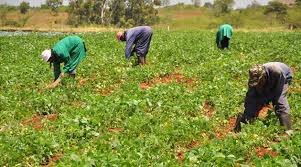
The Tomatoes Growers and Processors Association of Nigeria (TOPAN) has predicted a steady increase in the price of the produce between May and June 2026.
The Kaduna State Chairman TOPAN, Rabiu Zuntu, disclosed this in an interview recently in Lagos.
Zuntu noted that although there is no particular time for tomatoes planting season up north, seasonal weather variations can affect the production of the produce.
“Although we can plant tomatoes all-year-round, we cannot assure quality harvest all-year-round.
“Some farmers are harvesting now, while others are transplanting, and others are harvesting.
“Tomatoes are still available for sale but the price of the produce is gradually on the increase.
“Come May/June, the prices of tomatoes will be very expensive, so now is a good time to stock up the produce. There’s always a scarcity within that period.
“This is because of the nature of the weather in the north around that period, the weather is usually very hot and tomatoes cannot resist such hot temperature,” he said.
Zuntu said the price of tomatoes have started rising up in the north.
“A 50kg rafia basket of tomatoes sells from N20,000 as against N7,000 to N10,000 that was sold earlier in the year.
“While a crate of tomatoes up north is sold between N10,000 and N15,000 as against N5,000 to N6,500 sold earlier in the year.
“In most part of Kano State, where there is bumper harvest, they are rounding off their harvest. So, tomato is not that available there and most buyers have turned to where they can find it now, mostly within Kaduna State and some parts of Plateau State.
“So, that’s why the supply has decreased and the tomato supply and cost is determined by the law of demand and supply,” he said.
A 50kg basket of tomatoes in Lagos, at the moment, sells between N40,000 and N60,000 depending on the size and quality.
The Smallholder Women Farmers Organisation in Nigeria (SWOFON), Oyo State chapter, has said that the lack of irrigation facilities had become a major obstacle to dry season farming in the state.
The Chairperson of SWOFON in Oyo State, Atinuke Akinbade, said this in an interview in Ibadan on Monday.
Akinbade, who shared the experiences of women farmers in the state during the 2025 dry season, said that inadequate access to water for irrigation significantly affected the performance of many farmers during the period.
“It hindered many older farmers from participating in dry season farming and also prevented younger farmers from doing as much as they could in cultivating large acres of land,” she said.
Akinbade explained that farmers who managed to plant during the season struggled to access sufficient water to irrigate their farms, a situation worsened by the effects of climate change.
“Many farmers who depended on streams and wells to water their crops suffered major setbacks because those sources could not provide enough water for irrigation.
“Some farmers had to resort to buying water from commercial water tankers, which increased the cost of production, while at times it was even difficult to get water from the tankers,” she said.
The SWOFON chairperson warned that failure to address the problem could worsen food insecurity in the coming months.
“Even now, rainy season farming has not fully commenced because of the irregular rainfall pattern.
“This is a double burden, and if nothing is done, it may lead to serious hunger later,” she said.
Akinbade, however, acknowledged that the government had organised training for members of the association on home gardening.
She, however, said that little support was provided to address the challenges of dry season farming.
The chairman said that the home garden support package given to members consisted mainly of seedlings and one sprayer.
“They gave us two packs each of maize and pepper seeds, with six seeds in each pack, as well as one sprayer, so that we can grow food for household consumption,” she said.
Earlier, Oluwatoyin Oyedeji, SWOFON Coordinator in Oyo East, explained the severe hardship members of the organisation experienced in sourcing water for irrigation.
“Many farmers are already counting their losses because water was not available to irrigate their farms.
“Those who depended on streams and brooks were badly affected because many of them dried up, while the few that still had water had so little that farmers had to dig deeper into the ground in search of more,” Oyedeji said.
In the same vein, the Women Leader for farmers in Saki East, Musiliu Ashiru, said the absence of irrigation facilities also hampered dry season farming in her area.
According to her, many farmers still engaged in dry season farming have had to pay for water to keep their crops alive.
“Many of them buy water from the dam here to irrigate their crops. It has not been easy for them this year,” Ashiru said.




NAN Backs Insurance Sector’s Transformation Agenda, hails NAICOM
ShareBy Tony Obiechina, Abuja The National Association of Nigerian Students (NANS) National Secretariat, the umbrella body representing over 40.1 Million...


Don Calls for More Investment in Entrepreneurship/Innovation in Nigeria
ShareFrom Joseph Amedu, Lokoja A Professor of Entrepreneurship and Corporate Strategy at the Federal University, Lokoja, John Alabi has called...


Tinubu Submits NDDC 2026 Appropriation Bill
SharePresident Bola Tinubu has submitted the 2026 Statutory Budget Proposal of the Niger Delta Development Commission (NDDC) to the House...


Senate Passes Bill Extending 2025 Capital Budget Implementation to Dec 31
ShareThe Senate on Tuesday passed a bill extending the implementation of the capital component of the 2025 Appropriation Act from...
CANEX 2026 to Unlock Investment, Jobs in Nigeria’s Creative Economy — FG
ShareThe Federal Government said Nigeria’s hosting of the 2026 Creative Africa Nexus (CANEX) Weekend will attract investment, deepen market access...


NNPC Posts N7.2trn Profit amid Revenue Decline
ShareThe Nigerian National Petroleum Company Ltd. (NNPC Ltd.) recorded N7.2 trillion Profit After Tax (PAT) in 2025, a 33 per...


Wike Approves Contracts for Digitization of FCT High Courts
ShareThe Minister of the Federal Capital Territory (FCT), Nyesom Wike, has approved the award of contracts for the digitisation of...


OPay Names Top 10 Teams in N18m National Innovation Challenge
ShareIn a bid to empower young Nigerians with the skills, opportunities and support needed to build solutions for real-world challenges,...


CBN Sets Agenda for Post-Recapitalisation Banking
ShareBy Tony Obiechina, Abuja The Central Bank of Nigeria (CBN) said recent reforms in the foreign exchange market, monetary policy...

Gunmen Abduct 18 Women in Benue, 47 Niger Farmers
ShareFrom Attah Ede, Makurdi, and Dan Amasingha, Minna Fresh fears over the worsening insecurity across the country emerged on Tuesday...