
Education
Gov. Ganduje Receives Roadmap on Free, Compulsory Basic Education

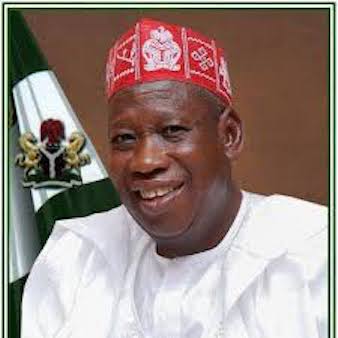
Gov. Abdullahi Ganduje of Kano State on Monday received a roadmap for the implementation of the state’s free and compulsory primary and secondary School education policy, according to Abba Anwar, the Chief Press Secretary (CPS) to the governor.
Anwar said in a statement issued to newsmen in Kano that the event took place on Monday when the governor met with Dr Kabiru Shehu, his Special Adviser on Free and Compulsory Education, and members of his technical committee on the policy.
The CPS quoted the governor as saying that strengthening the policy of free and compulsory primary and secondary schools’ education in the State, is one of the main thrusts of his administration.
“It is a team of 54 members partitioned into 14 sub-committees for effective and efficient deliberations. The committee’s membership was drawn from experts in the education sector, development partners and other stakeholders that are also specialists in the area.
“It was designed in such a way that technical contributions could be accessed from those who understand the concept of education very well.
“Parts of the fundamental objectives of the technical committee was to seek a way to drastically reduce the number of out-of-school children.
“To integrate Islamiyyah and Tsangaya system into conventional system of education, to see to the overall development of the state, by way of an improved education system, among others”, Anwar said.
Receiving the roadmap, Gov. Ganduje said: “There are three variables that are behind the policy statement of free and compulsory primary and post-primary schools education, right from the onset. We are dealing with problems of accessibility, affordability and sustainability.
“The idea of the roadmap was a kind of framework to be used in order to go about implementing the policy very well. It is more like a fine tuning process.
“All Ministries, Departments and Agencies (MDAs) should critically take a look at this document and see what can be added or adjusted. As we are laying the foundation, we believe it must be solid, so that the incoming administrations can have a platform for forging ahead. We need commitment and coordination to work with this effectively,” he said.
After acknowledging that financing education was a herculean task, Ganduje identified some of the avenues the state would employ to ensure that the sector is financed effectively.
“Apart from the budgetary allocation of over 26 percent in our fiscal document, we have Education Trust Fund, we have avenues for some levies”, he said, adding that there was also community participation, Corporate Social Responsibility (CSR) from corporate organisations and development partners.
Ganduje said once there was a well articulated programme supported by accurate data, coupled with a transparent posture, development partners would respond positively.
“You must make sure that the issue of data is being handled very well. We must always strive to have accurate data.
“Data is very critical in governance. Development partners also need to work and partner with accurate data all the times,” he said.
The News Agency of Nigeria (NAN) recalled that the state government had since introduced free and compulsory primary, secondary school education in the state.


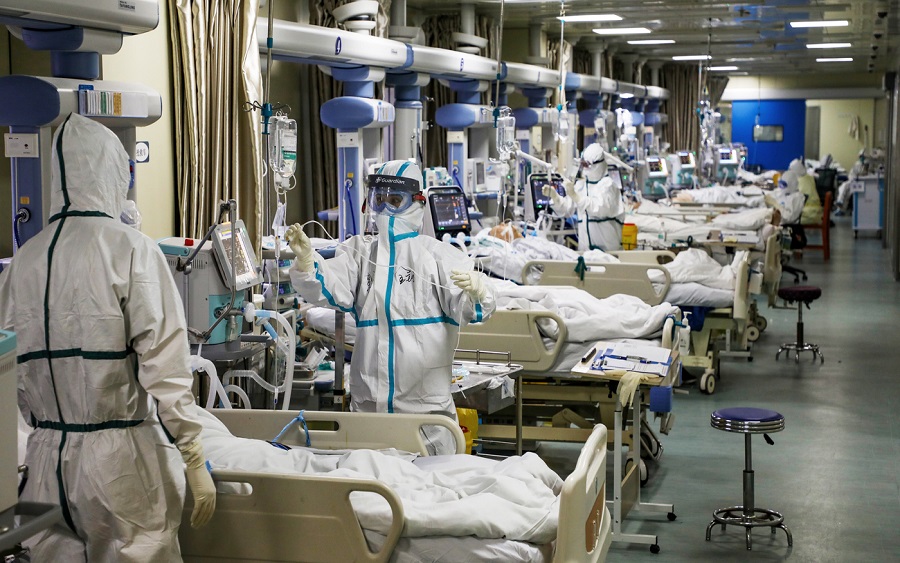
The Founder and Chancellor of the Afe Babalola University Ado-Ekiti (ABUAD), Aare Afe Babalola has announced plans to forward proposals on his idea of quality, functional and impactful education to President Bola Tinubu and other key government officials.
The Founder and Chancellor of the Afe Babalola University Ado-Ekiti (ABUAD), Aare Afe Babalola has announced plans to forward proposals on his idea of quality, functional and impactful education to President Bola Tinubu and other key government officials.
Babalola disclosed this in his letter of appreciation to the Chairman of United Nigeria Airlines, Prof Obiora Okonkwo, who was a Guest Lecturer at the recent convocation ceremony of ABUAD held at university campus in Ado Ekiti.
The legal icon said he had constituted a committee of distinguished academics at ABUAD to examine the contents of the lecture and other related documents, particularly their functionality and relevance to Nigeria’s development.
The committee, according to him, would study Okonkwo’s 14th convocation lecture titled, “Functional Education and the Nigerian Project: Strategic Human Capital Development for National Renewal,” delivered at ABUAD during its 14th convocation ceremony.
The findings, he said, would be transmitted to appropriate authorities, including the President, the Minister of Education, the Minister of Health, the Minister of Agriculture and the Executive Secretary of the National Universities Commission, NUC, for consideration.
Babalola said the initiative was driven by his conviction that Nigeria’s development challenges could not be adequately addressed without quality, functional and impactful education.
He also called on the Federal Government to increase investment in education, while urging wealthy and patriotic Nigerians to emulate the culture of philanthropy prevalent in the United States and Britain, where individuals and institutions support educational establishments.Buy Maps
According to him, sustained private-sector support for education remains critical to building institutions capable of producing globally competitive graduates and addressing national development needs.
He said: “The feelers I have been getting on the well-researched and articulately delivered lecture point to the fact that the lecture was not only well understood, but that its contents will remain indelible in the minds of the audience for a long time to come.”
“It is now obvious that both of us have something in common: How to make this country better. When the result of the findings of my teachers are out, we will send them to the appropriate authorities such as the President and Commander-In-Chief, the Minister of Education, the Minister of Health, the Minister of Agriculture and the Executive Secretary of the National Universities Commission, NUC, among others for them to appreciate the place and import of quality, functional and impactful education.
“Government must be prepared to spend more on Education. Patriotic and well-to-do-Nigerians should emulate then practice in the United States of America and England where well-to-do individuals support private institutions in those countries, that is why our university, Afe Babalola University, Ado-Ekiti, ABUAD, is the clear leader even though it is barely 16 years old”.

By David Torough, Abuja
The founder of Menroi Rural Priority Organisation, Professor Kohol Iornem has challenged leaders of the National Union of Benue State Students (NUBESS) in the Diaspora to prioritise service delivery, accountability and measurable achievements over the mere pursuit of leadership positions.
Kohol, a Professor of Business Management and John Maxwell Certified Leadership Speaker, Trainer and Coach, gave the charge while delivering a keynote address at the inaugural NUBESS Diaspora Leadership Conference held virtually on November 14, 2026.
Speaking on the theme, “The Essence of Leadership: Making Today’s Opportunities the Foundation for Tomorrow’s Leadership,” he maintained that occupying an executive position does not automatically make one an effective leader, stressing that leadership credibility comes from problems solved, initiatives introduced and lasting improvements achieved.
“A position gives you authority, but your actions give you credibility. Your achievements give you a legacy,” he said.
Prof. Kohol urged chapter presidents to adopt a 90-day leadership challenge involving identifying students’ needs, developing practical solutions, mobilising resources and implementing measurable projects. He also stressed transparency in managing association funds and advised executives to document their achievements as evidence of their leadership experience.
Addressing factionalism and declining student participation in NUBESS activities, the professor recommended neutral mediation and urged leaders to make the association more attractive through scholarships, bursaries, entrepreneurial training, employability skills and career development opportunities.
He also pledged to facilitate entrepreneurial training and connect NUBESS leaders with Benue indigenes in the Diaspora to support student-focused initiatives.
Professor Kohol holds an MBA and PhD from Cardiff Metropolitan University, United Kingdom, and is a Fellow of Advance HE. He currently teaches Business Management at the London College of Contemporary Arts and serves as Director of Programmes at the London Graduate School.
A former Senior Lecturer at Regent College London, he is a member of the British Academy of Management and Fellow of the Institute of Management Consultants. He is also a published author, with his book, A Social Science Student’s Guide to Surviving Your PhD, published by Open University Press.
Beyond academia, Prof. Kohol served as President of Mzough U Tiv United Kingdom (MUTUK) from 2019 to 2023 and founded Menroi Rural Priority Foundation and Mzehemen u Tiv Foundation to promote rural development and improve opportunities for disadvantaged communities in Nigeria.
The conference, convened by NUBESS Diaspora President, Rt. Comr. Tsaha Ernest, in collaboration with the union’s Director of Inter-Camp Affairs, Rt. Comr. Iorwa Timothy Avalumun, also featured Dr Ejeh Sunday of the University of Abuja, who spoke on rebuilding NUBESS through accountability and leadership beyond office positions.
A graduate of the University of Maiduguri, Shianya Ebwaseh, said the Nigerian Education Loan Fund (NELFUND) helped improve her Grade Point Average (GPA) to 3.50 through financial support that enabled her to concentrate on her studies.
Ebwaseh, who graduated from the Department of Zoology, Faculty of Life Sciences, said this in an interview on Monday in Maiduguri.
She said financial difficulties had previously affected her academic performance, as she struggled to meet her daily needs while pursuing her degree.
The graduate said she resorted to selling fried chips and groundnuts on campus to support herself, sometimes missing lectures because of the time and energy required to run the business.
According to her, the introduction of NELFUND’s student loan scheme relieved her financial burden through tuition support and a monthly N20,000 upkeep allowance.
“Before NELFUND, I struggled with my GPA because of financial challenges. I sometimes missed lectures after spending hours frying and packaging chips for sale.
“But when NELFUND came, I stopped the business and concentrated on my studies. My GPA improved to 3.50, which is Second Class Upper,” she said.
Ebwaseh said the financial support also enabled her to attend lectures regularly, purchase learning materials and prepare adequately for tests and examinations without constant worries about money.
She added that her examination scores improved significantly after she began receiving the support, attributing the change to increased concentration and financial stability.
The graduate, who said she accessed the scheme in her third year, described the application process as simple and encouraged other eligible students to apply.
She also said the programme had helped financially disadvantaged students remain in school, particularly those whose parents could not afford tuition fees and upkeep.
Ebwaseh appealed to the Federal Government to sustain the initiative, emphasising that withdrawing the support could expose many students to financial difficulties and possible dropout.
She said the scheme had given beneficiaries an opportunity to pursue their academic ambitions with fewer financial distractions.(NAN)


Afe Babalola Send Education Reform Proposals to Tinubu
ShareThe Founder and Chancellor of the Afe Babalola University Ado-Ekiti (ABUAD), Aare Afe Babalola has announced plans to forward proposals...


Sunbeth Treenuts & Sesame Acquires 73.29 Per Cent of Livestocks Feeds Plc
ShareSunbeth Treenuts and Sesame Limited, a subsidiary of Sunbeth Agro HoldCo, announces the completion of its acquisition of UAC of...

How Tinubu’s Reforms Halted Nigeria’s Economic Collapse – Mbah
ShareFrom Sylvia Udegbunam, Enugu Enugu State Governor, Dr. Peter Mbah, says Nigeria would have suffered total economic collapse but for...


Oborevwori Presents N1.23trn 2027 Budget
ShareFrom Francis Sadhere, Delta Delta State Governor, Rt. Hon. Sheriff Oborevwori, on Monday presented a proposed N1.23 trillion 2027 budget...


Sanwo-Olu Gifts Flamingos N10m Each over World Cup Triumph
ShareLagos State Governor, Babajide Sanwo-Olu, has rewarded each member of Nigeria’s Flamingos with ₦10 million and an iPhone 18 Pro...


UniAbuja Land Tussle: Wike Only Implemented What His Predecessor Approved – FCTA
ShareBy Laide Akinboade, Abuja The Federal Capital Territory Administration (FCTA) has described today’s protest by the Joint Action Committee (JAC)...


Obi to Publish Anambra Achievements in 10-day Series
ShareThe 2027 presidential candidate of the Nigeria Democratic Congress, Peter Obi, has announced plans to publish a 10-day account of...


NiMet Predicts Dust Haze, Thunderstorms Nationwide
ShareThe Nigerian Meteorological Agency (NiMet) has predicted dust haze and thunderstorms across the country from Monday to Wednesday. NiMet’s weather...


INEC Debunks Claims of Remote BVAS Log-Out, Lost Election Results
ShareBy Orjime Moses, Abuja The Independent National Electoral Commission (INEC) has dismissed claims that presiding officers can be remotely logged...
Needless Diplomatic Brawl
ShareNigeria and South Africa do not need another quarrel. They have had too many already — xenophobic attacks, trade disputes,...