
NEWS
Gov. Mbah Restates Commitment to Continue to Prioritise Security Infrastructure

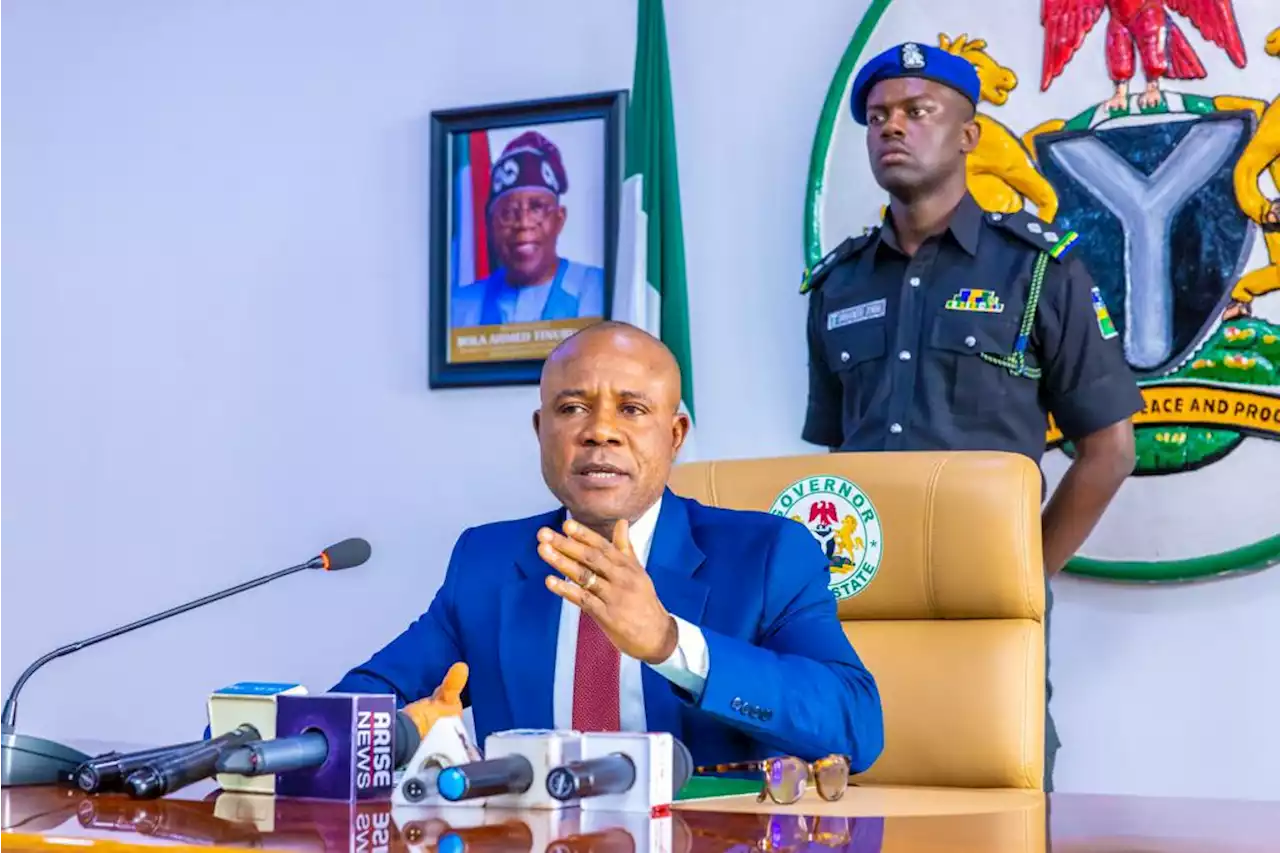
Gov. Peter Mbah of Enugu State has restated his administration’s continue commitment to prioritise security infrastructure in order to ensure secured business and living environment in the state.
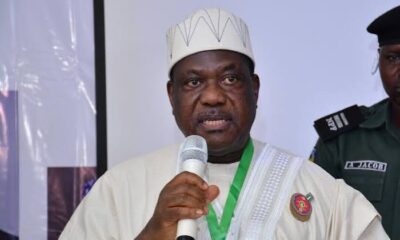
Mbah gave the assurance in Enugu on Thursday at a Security Town Hall Meeting with Stakeholders to commemorate the Maiden National Police Day, 2025, held in Enugu.
The Town Hall Meeting was themed: “The Police and the Community: Pathways to Strengthening Partnerships for Enhanced Security in Enugu State’’.
The governor, represented by the Commissioner for Special Duties, Chief Sunday Ajogwu, assured the Nigeria Police of his administration’s continued support in its mandate in fighting criminality, vices and unscrupulous elements.
“This administration has made huge and unprecedented investment in security in less than two years and we are not stopping at that; since security is dynamic and evolving issue.
‘’To continue on the honorable path we have chosen, we have launched the Enugu State Security Trust Fund.
“The security trust fund will ensure that the security infrastructure provided is maintained and more investment is made to give our people the best and ensure adequate protection of lives and property in the state.
‘’These positive measures will definitely translate to increase in commercial activities, attract multi-million naira investments and net worth individuals to come and live as well as invest,” he said.
Mbah applauded President Bola Tinubu for approving the National Police Day meant to celebrate and appreciate positive impact and sacrifices of police personnel to the nation.
The governor also appreciated all police personnel for joining the state government in fighting heinous crimes and chasing criminals out as well as ending the illegal and economic draining Monday Sit-at-Home.
Speaking, Igwe Emmanuel Ugwu, the Traditional Ruler of Ibegwa Nike community in Enugu East Local Government Area, urged the people to give the police and its personnel maximum cooperation to perform efficiently.
Ugwu, who represented the traditional institution, said that “security is most times local and peculiar”.
The traditional ruler noted that people within each locality or community have major role to play to ensure that their communities or localities are protected by reporting suspicious persons and movements to security agencies.
‘’The police should also work closely with local vigilante groups, neighbourhood guards and forest guards to gather intelligence and be more proactive in the discharge of their duties,” he said.
Contributing, the Executive Director of Daniel Ukwu Leadership Foundation, Mr Daniel Ukwu, urged residents to give police actionable information of anything going wrong not only crime but for safety and public peace.
“Police personnel are not magicians, they needed our help and intelligence to perform and serve us better,” Ukwu said.
Earlier, the state’s Commissioner of Police, Mr Mamman Giwa, commended the state government for its huge investment in hi-tech security infrastructure and robust support to the police.
Giwa also appreciated the Inspector General of Police, Dr Kayode Egbetokun, for motivation of personnel and providing essential training to further sharpen skills of personnel.
“Since I took over two weeks ago, I have removed three Divisional Police Officers due to gross misconduct as I clearly told them I will not condone and they will be held liable for misconduct from personnel under them.
“I have cautioned superior officers that they will be held liable for any personnel found, reported or caught collecting money for simple documentation of evidence or writing down complaint at their stations.
“Please, just give the Command sometime, and I will make sure that misconduct both at the station or in field of operation is totally checked,” he said.
He called on residents to continue to support the police, give vital security information that would be treated confidentially, adding: “You can come to my office and pass the information to me directly”. (NAN)
The National Bureau of Statistics (NBS) has reported that the 36 states and the Federal Capital Territory (FCT) collectively generated N5.15 trillion as Internally Generated Revenue (IGR) in 2025.
This was contained in the NBS report on IGR at State Level for 2025 released on Thursday in Abuja.
The report said the 2025 IGR grew by 40.
93 per cent when compared to the N3.65 trillion recorded in 2024.According to NBS, the 2025 IGR had two major revenue sources – taxes and Ministries, Departments and Agencies (MDAs)’ revenue.
The bureau said the taxes sub-category recorded in the period are Pay As You Earn (PAYE), Direct Assessment, Road taxes, Stamp duties, Capital gain tax, Withholding taxes, Other taxes and LGAs revenue.
According to the report, the leading states in total IGR in 2025 were Lagos, Rivers and Enugu with N1.77 trillion, N428.42 billion and N406.77 billion, respectively.
“The least three performing states during the year are Yobe, Ebonyi and Sokoto with the value of N16.01 billion, N17.18 billion and N20.48 billion, respectively.”
The report said PAYE was the most tax revenue source in 2025 at N2.64 trillion, which represented 69.51 per cent of the total tax revenue collected.
The bureau said capital gains tax generated the least in 2025 with N12.40 billion.
The report said the share of total tax revenue to total IGR stood at 73.64 per cent nationally. (NAN)
From Dan Amasingha, Minna
The National Examinations Council (NECO) has released the results of the 2026 Senior School Certificate Examination (SSCE) Internal, with 804,948 candidates, representing 58.67 per cent of those who sat for the examination, obtaining at least five credits including English Language and Mathematics.
The figure represents a 1.
59 percentage-point decline from the 60.26 per cent recorded in 2025, when 818,492 candidates met the same benchmark.Announcing the results yesterday at the council’s headquarters in Minna, Niger State, NECO Registrar and Chief Executive, Prof.
Dantani Ibrahim Wushishi, said 1,378,048 candidates registered for the 2026 examination, comprising 682,352 males and 695,696 females.He said 1,371,992 candidates eventually sat for the examination, including 678,903 males and 693,089 females.
Wushishi, however, disclosed that the overall five-credit performance improved slightly, with 1,162,118 candidates, representing about 84.67 per cent, obtaining five credits and above irrespective of English Language and Mathematics.
The figure compares with 1,144,496 candidates, or 84.26 per cent, recorded under the same benchmark in 2025.
In absolute terms, the number of candidates who secured five credits including the two core subjects fell by 13,544, from 818,492 in 2025 to 804,948 in 2026. By contrast, the number who obtained five credits irrespective of English and Mathematics increased by 17,622.
The number of candidates who sat for the examination also rose by 13,653, from 1,358,339 in 2025 to 1,371,992 in 2026.
Malpractice records sharp decline
The council also reported a substantial reduction in examination malpractice, with 1,406 candidates implicated in various forms of malpractice in 2026, compared with 3,878 candidates in 2025.
The latest figure represents a 63.74 per cent decline from the previous year’s record. NECO had recorded 10,094 malpractice cases in 2024.
Wushishi attributed the reduction to improved examination processes, strengthened monitoring and collaboration with security agencies and other stakeholders.
He specifically acknowledged the support of the Nigeria Security and Civil Defence Corps and the Department of State Services, saying their involvement helped reinforce discipline, deter malpractice and safeguard the examination process.
Kano leads state figures
Kano State recorded the highest number of candidates who obtained five credits and above, including English Language and Mathematics, with 74,413 candidates.
Lagos followed with 72,496, while Oyo recorded 55,543 candidates under the same benchmark.
At the geopolitical-zone level, the Southwest accounted for the largest share of candidates with five credits and above irrespective of English and Mathematics, at 24.60 per cent. It was followed by the Northwest with 22.10 per cent, North Central with 19.00 per cent, Northeast with 14.70 per cent, South-South with 10.53 per cent and Southeast with 9.07 per cent.
The council also released separate state, geopolitical-zone and gender rankings based on the different performance benchmarks.
In the North Central, Benue led with 3.82 per cent, followed by Nasarawa with 3.66 per cent. Anambra led the Southeast with 2.92 per cent, ahead of Enugu with 2.14 per cent.
Rivers topped the South-South ranking with 3.03 per cent, followed by Edo with 2.17 per cent, Delta with 1.84 per cent, Akwa Ibom with 1.61 per cent and Cross River with 1.30 per cent.
Wushishi also disclosed that candidates at NECO examination centres in Saudi Arabia and Niger Republic recorded no candidate with five credits and above under the stated benchmark.
Exam held in Nigeria, six countries
The 2026 SSCE Internal examination was conducted from June 15 to July 23 across the 36 states, the Federal Capital Territory and six foreign countries—Benin Republic, Equatorial Guinea, Niger Republic, Côte d’Ivoire, Togo and Saudi Arabia.
The nationwide marking exercise was conducted between August 17 and September 4.
A total of 1,334 candidates with special needs participated in the examination, with the council maintaining that measures were put in place to promote inclusiveness.
Wushishi thanked the Federal Government, education authorities, the NECO Governing Board, National Assembly, security agencies, state governments, schools and other stakeholders for their support.
He declared the results released and said candidates could access them through the NECO website using their examination registration numbers.
The registrar urged candidates to remain focused on their academic pursuits, assuring stakeholders that the council would continue to uphold the credibility, fairness and integrity of its examinations.
By David Torough, Abuja
The Federal Government has declared that Nigeria is moving from a period of difficult economic reforms and stabilisation into a new phase of growth, production and shared prosperity, pledging to consolidate the gains of the reforms and translate them into better opportunities and improved living conditions for citizens.
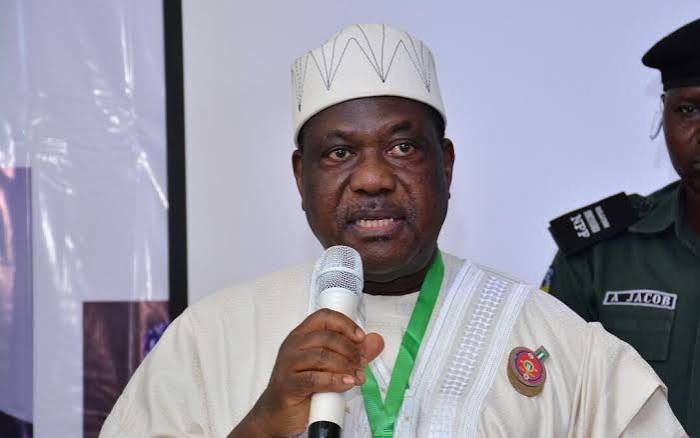
Secretary to the Government of the Federation (SGF) and Chairman of the Inter-Ministerial Committee for Nigeria’s 66th Independence Anniversary, Senator George Akume, made the declaration yesterday in Abuja at a World Press Conference marking the commencement of activities for the anniversary.
The anniversary, themed “From Reforms to Stability: Consolidating Nigeria’s Renewed Hope for Shared Prosperity,” is intended to shift attention from the implementation of economic reforms to ensuring that their benefits are felt more directly by Nigerians.
Akume said the administration’s reforms, including the removal of the fuel subsidy regime, the unification of foreign exchange windows and measures to strengthen fiscal and monetary management, were undertaken to restore fiscal balance, attract investment and lay the foundation for sustainable economic growth.
“The task before us today, as leaders and citizens, is consolidation. We must ensure that the gains from reform translate into better opportunities for ordinary Nigerians,” he said.
The SGF said the Federal Government was mobilising additional revenue, improving public finances, strengthening non-oil revenue collection and attracting new investment to create the fiscal space required to finance development.
He listed infrastructure, agriculture, education, healthcare, social protection and security among the areas receiving sustained attention.
According to him, government investments in roads, railways, airports, seaports, electricity generation and transmission, as well as digital connectivity, are designed to reduce the cost of doing business, connect farmers with markets and support industrial production.
He also said farmers were being supported through improved seeds, fertilisers, irrigation, storage and processing facilities, while initiatives such as the National Agricultural Development Fund were aimed at strengthening agricultural production and agro-industrial development.
On human capital, Akume highlighted expanded access to education and the Nigerian Education Loan Fund as part of efforts to equip young Nigerians with the skills and opportunities needed to participate in the economy.
He said the Federal Government was equally strengthening security operations against terrorism, banditry, kidnapping, oil theft and other threats through improved intelligence, equipment and coordination among the armed forces, police, security agencies and local communities.
The SGF stressed that economic growth must benefit communities across the country, pointing to the Renewed Hope Ward Development Programme and other grassroots interventions as mechanisms for widening participation in national development.
Economy enters new phase
Minister of Information and National Orientation, Mohammed Idris, said Nigeria had moved beyond the most difficult phase of reform and stabilisation and was beginning to enter a period focused increasingly on production, investment and shared prosperity.
Idris said real Gross Domestic Product grew by 4.43 per cent in the second quarter of 2026, compared with 4.23 per cent in the corresponding quarter of 2025. He also cited stronger foreign reserves, expanded domestic refining capacity and increased investment and productive activity as indicators of emerging economic gains.
He noted that Nigeria’s delisting from the Financial Action Task Force (FATF) Grey List and return to the JP Morgan Emerging Markets Bond Index after 11 years were also significant developments in the country’s external economic position.
“Today, however, Nigeria is moving from the difficult work of reform and stabilisation towards a new phase of growth, production and shared prosperity,” Idris said.
He acknowledged that Nigerians had borne significant costs from the reforms but said the next priority was to ensure that economic gains translated into jobs, higher incomes, improved access to education and credit, lower costs and wider economic opportunities.
The minister said the Renewed Hope Agenda was pursuing these objectives through investments in infrastructure, agriculture, education, consumer credit, digital skills, energy and enterprise.
‘More work ahead’
Minister of Budget and Economic Planning, Senator Abubakar Atiku Bagudu, said the reforms were intended to create a larger and more inclusive economy through deliberate policy choices.
“We are not yet where we want to be. What is important is to identify what are the choices that we need to make so that we can go to where we want to be,” Bagudu said.
On security, Idris said significant progress had been recorded through increased investment in equipment, intelligence, personnel and inter-agency coordination, while acknowledging that security challenges had not been completely resolved.
Minister of Agriculture and Food Security, Senator Abubakar Kyari, meanwhile, said improved security in farming communities, alongside the provision of fertiliser and improved seeds, was contributing to increased agricultural production.
Kyari said access had improved in several areas previously affected by insecurity, allowing more farmers to return to their farms and increasing production.
Akume said the government’s consolidation strategy was anchored on productivity, diversification, human capital development and resilience under the Renewed Hope National Development Plan 2026–2030.
“From reforms, we have built stability. From stability, let us now deepen growth and opportunity. And from growth, let us extend shared prosperity to every corner of Nigeria,” he said.
The Minister of Information formally announced the anniversary programme, which includes the Juma’at Service on September 25, the Church Service on September 27, the Independence Day Public Lecture on September 30 and President Bola Ahmed Tinubu’s nationwide broadcast on October 1.The World Press Conference brought together senior government officials and formed part of activities to mark Nigeria’s 66th Independence Anniversary.




Pete Edochie Pays Tribute to Olu Jacobs, Celebrates His Life, Legacy
ShareLegendary Nollywood actor, Pete Edochie, has paid glowing tribute to late colleague, Olu Jacobs, describing him as a peaceful and...


NIPCO Plans $3bn Floating LNG Project
ShareNIPCO Group plans to develop a more than $3 billion Floating Liquefied Natural Gas (FLNG) project to boost gas monetisation...

Tinubu, Shettima and the United Nations Assembly
ShareBy Reuben Abati The high-level meetings and debates of the UN General Assembly (UNGA) open today at the UN Headquarters...

2027: INEC Raises the Alarm over Smear Campaigns among Political Parties
ShareThe Independent National Electoral Commission (INEC) has raised an alarm over smear campaigns among political parties and threatened to sanction...


NOA Urges Nigerians to Promote Respect for National Symbols
ShareThe National Orientation Agency (NOA) has called on Nigerians to take the lead in promoting love, respect and positive disposition...

Late Former Kogi Gov, Ibrahim Idris for Burial Today in Abuja
ShareFrom Joseph Amedu, Lokoja Abdullahi Ibrahim Idris, son of the Late Ex- Kogi Governor Ibrahim Idris has announced that the...

States, FCT Generate N5.15trn IGR in 2025 – NBS
ShareThe National Bureau of Statistics (NBS) has reported that the 36 states and the Federal Capital Territory (FCT) collectively generated...

NECO Releases 2026 SSCE Results as Core-Subject Pass Rate Falls
ShareFrom Dan Amasingha, Minna The National Examinations Council (NECO) has released the results of the 2026 Senior School Certificate Examination...

Nigeria at 66: FG Shifts Focus from Reforms to Growth
ShareBy David Torough, Abuja The Federal Government has declared that Nigeria is moving from a period of difficult economic reforms...


Police Deny Shooting Motorcyclist in Kwara
ShareThe Kwara State Police Command has denied shooting a 23-year-old motorcyclist, Abdurasaq Lukman, during a stop-and-search operation around Oyun Bridge,...