
POLITICS
Governors, Gunmen and Gestapo Governance

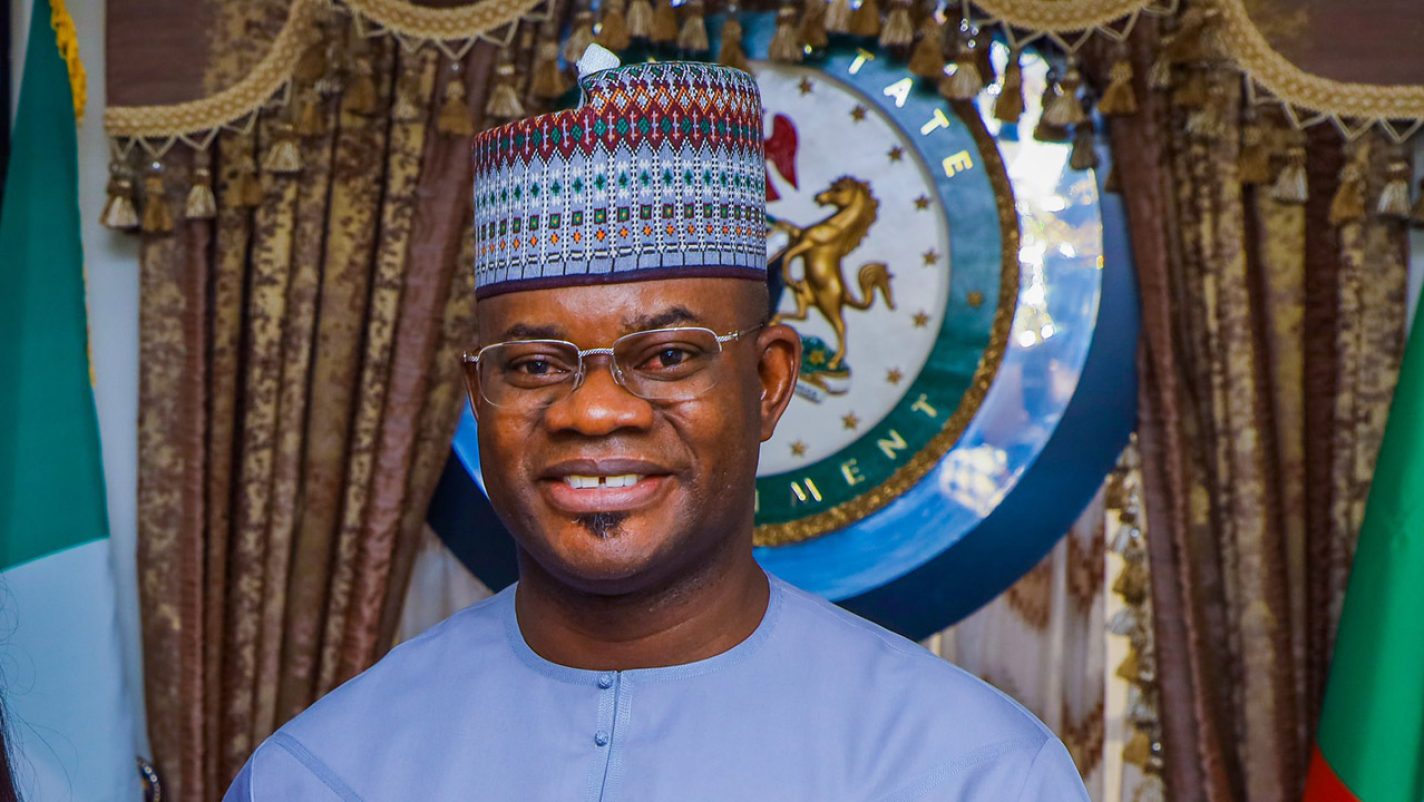
By Tunde Olusunle
The media handlers of Yahaya Bello, the overtly exuberant governor of Kogi state, have been in overdrive in the last few days. They’ve been issuing rebuttal after rejoinder after release, all in a spirited attempt to absolve their principal of a most calamitous faux pax he recently committed.
He just might have unwittingly illuminated preexisting fogs in general thought, and cleared cobwebs in the public eye. Bello’s wrong-headed gaffe most probably would ordinarily have been dismissed as a tolerable incidence of logorrhoea — that verbal affliction which makes people “over-talk”. The gist of his exegesis, however, transcends what can be papered over courtesy of inchoate contestations, vacuous statements and discombobulated appearances on television.Understandably and deservedly, Bello’s treatise commands deeper dilation against the backdrop of what has become the new normal, in a sleepy state hitherto famous for its tranquil, welcoming attributes.
While addressing his kinsmen at Ihima, Okehi local government area in the central senatorial zone of the state recently, Bello made a detour into his indigenous Ebira language, the major tongue spoken in that section of the state. Ogori and Magongo, the other ethnicities in the same zone, are wholly subsumed by the Ebira. He exhorted his listeners to record his address and playback for those who were not physically present. The video clip which is still trending on the internet has been subtitled in instances to enable listeners to grasp the meat of Bello’s homily.
First, he made it very clear that as the incumbent governor, he was not inclined to have anybody but his kinsman and protege succeed him. He reeled out some of the projects his administration had sited in Ebiraland which would not have been possible under a governor from another zone. He alluded to the Confluence University of Science and Technology (CUSTECH) in Osara, the upgrading of the Obangede Specialist Hospital and the road repairs and rehabilitation being undertaken in his zone. Even if he did not enunciate further, Bello’s drift was in direct reference to the preceding monocultural grip on governance in the state of the Igala-dominated Kogi east zone. Beginning from January 1992 all the way to January 2016, straddling the regimes of Abubakar Audu, Ibrahim Idris and Idris Wada, Kogi east grossed at least 18 years in the state’s helmsman’s position. There was of course a military interregnum, between November 1993 and May 1999.
At the expiration of Bello’s second term in office in January 2024, Kogi central would have spent eight years in Lugard House, Lokoja; the way the government house in the state is addressed. For the benefit of hindsight, Bello’s ascent to the governorship was purely providential. The candidate of the All Progressives Congress (APC) in the 2015 gubernatorial election, Abubakar Audu, was coasting home to victory in the contest, trouncing his major opponent, Idris Wada of the Peoples’ Democratic Party (PDP). Sadly, however, Audu died before the tallying of the final election results. Further to some opaque interpretation of the electoral laws by Abubakar Malami (SAN), the attorney general of the federation, Bello who came second in the governorship primary which produced Audu was bequeathed with the position.
Yahaya Bello’s contention at the Okehi Declaration suggests that he will unilaterally impose on the state in 2024 an Ebira successor, who will anchor the relay for two more terms of four years each. This is to ensure that Kogi central approximates the subsisting record of Kogi east when the zone would have chalked 16 years by 2032, two years short of the Igala record. Curiously, in all of these political permutations, Kogi west, the third leg in the sociopolitical tripod of Kogi state and home to the Okun-Yoruba people in the main, is not featured. In the 31-year existence of the state, the area has not produced a substantive governor except for a three-month stint in 2008 when the erstwhile speaker of the state house of assembly, Clarence Olafemi, stood in as acting governor following the nullification of the 2007 governorship election of Ibrahim Idris, by the courts. The ruling called for fresh polls between Idris and Abubakar Audu.
Bello, at the Ihima outing, warned those he described as critics of his administration, telling his listeners that he was “a seasoned gun handler”. As a decorated marksman, he promised to pursue his political adversaries all the way into their hiding holes. Issuing a categorical threat, Bello said: “I’m coming after those who abuse us, who poke their hands in our mouths. Those fingers will be severed from their hands. I will pursue them to their bedrooms and hiding places. Those of you who harbour or protect such characters must be ready to confront the boiling point of my wrath when I come. My eyes will be flaming with fire and I will ensure you are burnt. Anyone who opposes my agenda will be picked up and kept in a place where will never see the sun again”. Indeed, en route to the decisive actualization of his political master plan to install a homeboy as successor, Bello announced to his audience that the coming politicking and elections “will be very hot and those who cross my path will be spontaneously consumed”. He reminded his congregants that he is the famous “white lion” who still roars and feeds on his preys. Kogi state is just about becoming an expansive, modern-day shooting range, in the hands of gangsters.
It was good Yahaya Bello spoke his mind the way he did. His communication managers, unfortunately, have been running around, trying spiritedly to rewrite the narrative, freely and consciously spewed by their boss. They forget that words are like eggs. A Yoruba proverb indeed reminds us that alcoholic intoxication is just an enabler of the unfettered expression of long-harboured thoughts. Such thoughts had previously been catalyzed and were just awaiting public ventilation in due season. Bello definitely knows what he is saying. Puzzles and consternation about the post-2016 descent of Kogi state into a full-scale Hobbesian state may just be receiving illumination, thanks to the candour demonstrated by Bello in his address.
Sadly, and spontaneously too, the celebrated confluence state hitherto an oasis of serenity has spiralled into a jungle of the rule of the gun. Certain incidents have happened in the recent political past of Kogi state, which is getting clearer now, thanks to Yahaya Bello’s recent outburst. Ahead of the February 2019 presidential election, hooded gunmen besieged the Lokoja home of former governor Ibrahim Idris, where elders of the PDP were strategizing for the polls. Dignitaries at the meeting included Tunde Ogbeha, (a retired army general and former senator); Salifu Atawodi, (a retired air vice marshal); Dino Melaye, Biodun Ojo; Tolorunju Faniyi; Musa Ahmadu, (all former federal parliamentarians), among other senior stakeholders. It took Ogbeha’s phone call to the commander, Command Army Records in Lokoja, to detail personnel to disband the hoodlums. Instructively, upon the arrival of the military, the hooded gang simply strolled leisurely, albeit confidently, into the adjoining premises of Government House, Lokoja.
Months later, the gubernatorial primary of the PDP in Kogi state was disrupted by unknown gunmen who invaded the Lokoja stadium, the venue of the process. Past midnight when the votes were being tallied, electricity in the stadium was suddenly put out as the sports arena erupted into a cacophony of gunfire. The Adamawa state governor, Umaru Fintiri who was delegated by the PDP headquarters to oversee the process, was shielded out of the stadium by his very professional and courageous security aides. A similar scenario played out on the eve of the gubernatorial election proper when the delegated anchor of the Kogi state PDP governorship election, Oyo state governor, Seyi Makinde, was briefing leaders of the party at a Lokoja hotel. Again, masked men breached the hotel premises and intimidated members of the PDP. Makinde’s security stood firm and repelled the invaders.
Days after, a PDP woman leader, Salome Abuh, was shot, locked up in her home and incinerated in Ochadamu, in Ofu LGA, for standing for her political preference during the governorship election in late 2019. Early July 2020, staff of the Federal Medical Centre in Lokoja, were attacked by gunmen suspected to have been sponsored by the Kogi state government. The medical workers were planning a press conference to implore the federal government to establish a COVID-19 screening centre in the state when they were assaulted within the premises of the hospital. Voters in Lokoja, the state capital, will not forget in a hurry, the aerial attacks that visited them on election day in November 2019. A helicopter reportedly procured from the Nigeria Police was deployed to fire live bullets at voters in the densely populated capital, which typically posts high election figures.
Yahaya Bello’s recent advisory re-echoes the Ebira song which was spontaneously composed in the aftermath of Bello’s victory at the 2019 polls. The video clip, which has been trending for three years now, features excited youngsters singing and dancing to the rhythm of a song celebrating Bello’s triumph. While part of the song was in Ebira, it was interspersed with English. It suggested that “nobody can deny the Ebiras a second term at the helm in Kogi state. As many people as attempted to vote according to their conscience rejecting the Ebira candidate, Yahaya Bello, were treated to the rhythm of gunfire, ta-ta-ta-ta-ta-ta”. Simply put, what we have in place in Kogi state today is democracy by the barrel of the gun.
On the tail of Yahaya Bello’s outing was yet another threat, woven around the senatorial election next February. The major speaker at that event declared that the forthcoming parliamentary poll is a direct contest between Ebiraland and Delta state. You wonder why? Abubakar Sadiku Ohere, a serving commissioner under Bello, is the APC candidate for the office while Natasha Akpoti, also a daughter of the soil and PDP flagbearer, recently got married to Emmanuel Oritsejolomi Uduaghan, the Alema of Warri and a businessman from Delta state, at a well-attended ceremony. Her marriage to someone outside her geo-cultural hemisphere has now been clad in the mould of what Catholics refer to as a grievous sin. Such is the magnitude of toxicity which is being thrown up in the Kogi political space months before the polls, from supposedly high places.
Just months ago, Bello who had relocated to Abuja for about 18 months while contesting for the ticket of the nation’s presidency under the banner of his party expended tons and tons of resources belonging to Kogi state on a vainglorious quest. It was a season of good, brisk business for the media — print, electronic and advertising. Bello marketed youthfulness and capacity as his strong points. His pseudo-seriousness actually hoodwinked some otherwise circumspect political watchers, who bought into the real possibility of his eventual emergence as the candidate of the APC at the last presidential primary. Nigerians have definitely dodged a bullet by being spared the prospect of having a sniper as the national helmsman.
Bello has just acquitted himself as an uncharacteristic ambassador of his Ebira kinsmen, most of whom are courteous, civilised and cosmopolitan. He cannot be representing His Majesty Abdul Rahman Ado Ibrahim, or the Abdulrahman Okenes, Aliyu Attas, Tom Adabas, Patrick Adabas, Isa Ozi Salamis, Moses Okinos, Clem Baiyes, Austin Oniwons, George Omaku Ehusanis, Angela Okatahis, Ladi Ibrahims, Sunnie Ododos, Mercy Johnsons or the Natasha Akpotis. The departed A.T. Ahmeds, Musa Etudaiyes, Salihu Ibrahims, Joseph Makojus, Onukaba Adinoyi-Ojos among other prominent Ebira personalities were notably sober, sane and savvy people in their time.
He is not a good advert copy for Kogi state at large either, a polity famous for availing Nigeria across generations, some of the nation’s very best in the project of national development and reengineering. Need we rehash their names in hundreds and thousands here? The Sunday Awoniyis, Silas Daniyans, Moody Olorunmonus, Ayo Johns, David Medaiyese Jemibewons, George Oshos, Femi John Femis, Kola Jamodus, Eyitayo Lambos, Bayo Ojos, Mohammed Chris Allis, Mohammed Ndatsu Umarus, Abdulrasaq Isa Kutepas, Olusola Akanmodes, Olu Obafemis, Albert Anjorins, Olatunji Dares, Ola Oyelolas, John Baiyesheas, Julius Oshanupins, Yomi Awoniyis, Dapo Olorunyomis, Dapo Asajus, Yemi Akinwumis, Gbenga Ibileyes, Tunde Adelaiyes, John Obaros, are some of the finest human species one can find anywhere in the world.
This is not forgetting Ahmadu Alis, Yakubu Mohammeds, Ibrahim Ogohis, Isaac Alfas, Salifu Atawodis, Jibrin Usmans, Ibrahim Idris, Idris Wada, Jibrin Okutepas, Emmanuel Onucheyos, Patrick Okolos, Dan Okolos, Josephine Agbonikas, Gabriel Oyibos, Jeremiah Abalakas, Halima Musas, Humphrey Abbas, John Sani Egwugwu Illahs, Nicolas Ugbanes, Attai Aidokos, Armstrong Idachabas, who rank among the most cultured across the globe. Francis Idachabas, P. S. Achimugus, Stephen Achemas, and James Eneojo Ocholis were fine personalities when they were here. Being identified as constituents of a governor who prides himself as a marksman is not an edifying ascription.
Yahaya Bello has to go beyond the predictable, puerile, disjointed alibis being pleaded by his image makers. Power must be exercised with caution, discipline and responsibility. He should be holding town hall meetings across the state now, apologizing for his verbal somersaults and restating his subscription to civility in corporate governance. He must begin, speedily, to exorcise the demons and monsters of bloodletting violence which have become an integral component of his administration’s DNA. This was unwittingly planted and groomed in the sociopolitical scheme of Kogi state under his watch. For his information, every bullet that is fired, every innocent citizen hit, and every drop of blood spilt in the name of Kogi politics, henceforth, will be traced to him.
Bello’s predecessor governors, Joshua Dariye and Jolly Nyame of Plateau and Taraba states respectively have just graduated from the “Kuje Corrections University” with honours, albeit for different causes. De-facto number two man under the leadership of Sani Abacha, a three-star army general and chief of army staff at the time, Ishaya Bamaiyi, was kept out of circulation for eight long years. For all his closeness to former President Olusegun Obasanjo, PDP elder statesman Bode George had his years behind the bars. Obasanjo himself, who was Nigeria’s military head of state in 1976 when Bello was a toddler, was kept in the gulag for over three years by the Abacha government.
Former Liberian president, Charles Ghankey Taylor, was tracked and picked up within Nigerian territory by Interpol in 2006 to answer for human rights abuses he committed in Liberia and Sierra Leone. He was sentenced to 50 years imprisonment in 2012 and is serving time in prison at The Hague. Taylor is 74 and with his prison term expiring in 40 years’ time in 2062. He may “never see the sun again”, to deploy Bello’s expressions. Taylor, once a “lion” in the wilds of Liberia and Sierra Leone, is a lonely, miserable kitten in the cold cell of a foreign prison today. He no longer has those scruffy, substance-ingesting, bloodshot-eyed, gun-toting rebels and militias at his beck and call. Former Chadian president, Hissene Habre, was exiled to Senegal after his ouster from office, concurrently tried in Chad and Senegal, and simultaneously sentenced to life imprisonment. He was convicted of various human rights offences. He died in exile in 2021 at 79, interred in a distant cemetery in Dakar, not in N’Djamena, the capital of his home country.
Entrenching democratic institutions may take a while. But then, we’ve taken the first steps as a democratic sociopolity. A word is enough for the discerning.






By Kayode Oladele
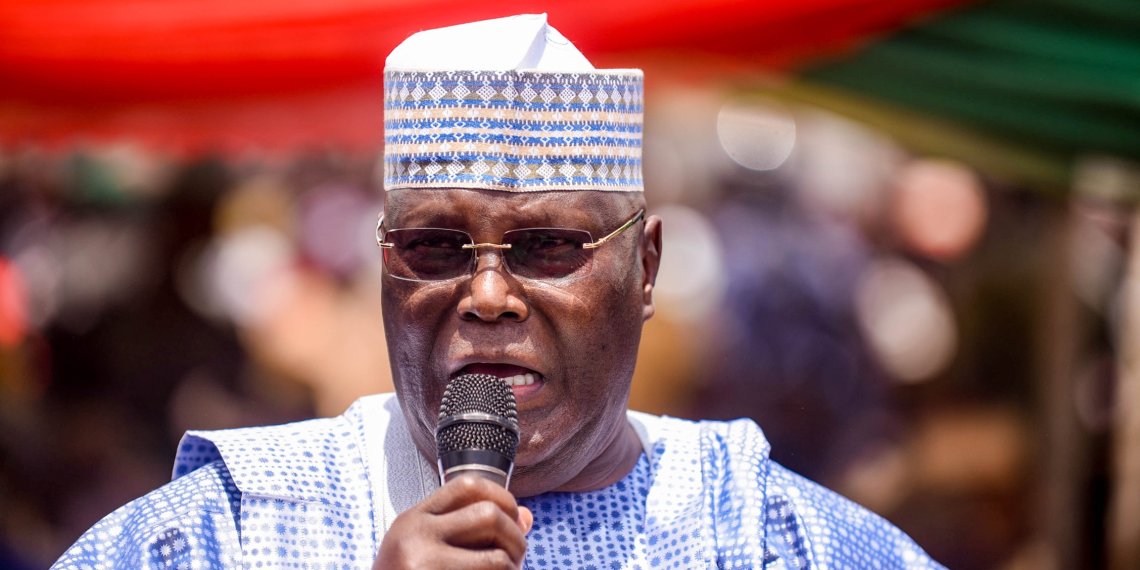
Alhaji Atiku Abubakar, former Vice President of Nigeria and presidential candidate of the African Democratic Congress, (ADC), has returned to the centre of Nigeria’s economic debate with a proposal that deserves careful scrutiny.
In his Independence Day policy statement, Alhaji Atiku Abubakar promised Nigerians what he described as a capped and budgeted production subsidy tied to verified petrol refined in Nigeria.
Imported petrol, he said, would not qualify. The subsidy would support domestic refining, its costs and beneficiaries would be disclosed and independently audited and the benefit would be expected to reach Nigerians through lower pump prices.On the surface, the proposition is attractive, particularly at a time when Nigerians are understandably concerned about transportation costs and their effect on virtually every aspect of daily life. However, once the attractive packaging is removed, Atiku’s proposal raises a very familiar economic question.
If the government deliberately reduces the cost of producing petrol so that it can be sold more cheaply, who pays the difference? The answer is the Nigerian public.
Atiku has insisted that his proposal is different from the old subsidy arrangement and that distinction should be acknowledged. The previous system was largely associated with subsidising imported petrol. Atiku proposes instead to support domestic production, with the subsidy tied to verified locally refined fuel. However, moving the subsidy from importation to production does not make its cost disappear. It merely changes the point at which public resources enter the petroleum value chain.
If crude that could otherwise be sold at its economic value is supplied to qualifying refineries at a discount, the difference represents an opportunity cost to the Federation. Atiku himself has acknowledged this. The relevant question, therefore, is not whether the subsidy has a cost.
It plainly does. The questions are how much it will cost, how long it will last, where the resources will come from and whether the expected reduction will actually reach the Nigerian standing at the petrol pump.
This is where the proposal becomes far less straightforward than its political appeal suggests.
Atiku says the subsidy will be capped. What is the cap? He says it will be budgeted. What is the proposed annual budget? What volume of locally refined petrol will qualify? What will be the subsidy per barrel or litre? What happens if international crude prices rise substantially or the exchange rate moves sharply? What is the maximum financial exposure of the Federation? How will qualifying production be verified? Most importantly, what enforceable mechanism will guarantee that the financial benefit given to producers is passed through the distribution chain to the consumer? These are questions of elementary public finance.
The APC Presidential Campaign Council has already asked Atiku to disclose the proposed subsidy rate, annual expenditure ceiling, eligible volume, funding source and safeguards against diversion, smuggling and fraudulent claims. Those are legitimate questions.
If Atiku believes the assumptions being advanced by the APC are wrong, he should provide his own figures. Nigerians need more than the promise that petrol will become cheaper. They deserve to see the arithmetic behind that promise. Anyone asking Nigerians to entrust him with the management of their economic resources should be prepared to put numbers behind his policies.
There is also the legal and regulatory question. Atiku’s running mate, Rotimi Amaechi, has now said that an Atiku administration would seek an amendment to the Petroleum Industry Act if the existing law prevents the proposed production subsidy from being implemented.
That statement is significant because it confirms that the relationship between the proposal and the present petroleum regulatory framework is not an imaginary concern raised by political opponents. It is a matter that Atiku’s own ticket may require legislative action.
This brings us to an even more fundamental issue. Nigeria has travelled the subsidy road before. For years, enormous public resources were committed to keeping petrol prices artificially low. The arrangement became a major burden on public finances and was associated with smuggling, abuse and distorted economic incentives. Resources that could otherwise have been available for roads, schools, hospitals, security, power and other public purposes were committed to sustaining the system.
It is therefore striking that Atiku, who has long presented himself as an advocate of market reform and previously supported subsidy removal, now proposes another subsidy as part of his answer to Nigeria’s economic difficulties.
The mechanism may be different and fairness requires us to acknowledge that difference. However, Nigerians are still entitled to ask what has changed in his economic thinking and why an intervention he once regarded as unsustainable has returned, albeit in a redesigned form, to the centre of his petroleum policy. Politics should not erase institutional memory.
The contrast with President Bola Ahmed Tinubu’s reform direction should also be properly understood. The choice is not between subsidising petrol and simply abandoning Nigerians to high transportation costs.
Tinubu’s alternative is to move government intervention away from permanently subsidising every litre of petrol consumed and towards changing the underlying economics of transportation through alternative fuels, domestic refining, infrastructure and competition. That distinction, in
My opinion is fundamental.
Under the old subsidy arrangement, the government attempted to make petrol cheaper by absorbing part of its cost. As consumption increased and international prices and the exchange rate moved, the potential burden on the treasury also increased. Tinubu’s alternative seeks to reduce Nigeria’s dependence on petrol itself.
This is the thinking behind the expansion of Compressed Natural Gas and electric mobility. Nigeria is richly endowed with natural gas. Rather than continue depending overwhelmingly on petrol and diesel for road transportation, the government is seeking to use more of that domestic resource to power vehicles while developing electric transportation and mass transit.
The principle is straightforward. If commuters can move more cheaply using CNG or electric transportation, the government does not have to subsidise every litre of petrol consumed in Nigeria in order to reduce transportation costs. If commercial transport operators increasingly move from petrol to domestically available gas, Nigeria can progressively reduce the vulnerability of transportation costs to international petroleum prices and foreign exchange pressures.
The Federal Government reported in September that more than 120,000 vehicles had been converted to CNG, with more than 400 certified conversion centres and over 90 CNG refuelling stations operating across the country. The government has also reported lower fares on some routes served by CNG and electric public transportation.
These are government reported figures and they must ultimately be measured against what Nigerians actually experience across the country. The important point is the direction of policy. The objective is to create alternatives to petrol rather than make the treasury permanently responsible for reducing the price of petrol.
Domestic refining is another essential part of the alternative. For decades, Nigeria lived with the contradiction of being a major producer of crude oil while depending heavily on imported refined petroleum products. A more sustainable petroleum economy should refine more of what Nigerians consume at home while encouraging sufficient competition among refiners, distributors and retailers.
Competition matters because deregulation without competition can leave consumers exposed to concentrated market power. The ultimate objective should therefore be a market with adequate domestic refining capacity, multiple suppliers, alternative fuels and efficient distribution so that competition increasingly influences prices rather than an open ended commitment from the public treasury.
This is where the difference between Atiku’s proposal and Tinubu’s approach becomes clear. Atiku proposes using public resources to reduce the production cost of locally refined petrol in the expectation that the benefit will reach consumers through lower pump prices. Tinubu’s approach is to maintain market based petrol pricing while expanding domestic refining and developing alternatives to petrol, particularly CNG and electric transportation.
Put simply, Atiku proposes another government subsidy to make petrol cheaper. Tinubu’s reform seeks progressively to make Nigerians less dependent on petrol. That is a fundamental policy distinction.
Atiku is entitled to present his alternative to Nigerians. However, he must also submit that alternative to the discipline of numbers. Saying that a subsidy will be capped does not tell us the cap. Saying it will be budgeted does not tell us the budget. Saying it will be transparent does not tell us the annual fiscal exposure. Saying that consumers will benefit does not explain how the government will guarantee that the benefit reaches them.
These details matter because Nigeria cannot afford economic policy built around promises whose costs become clear only after implementation.
President Tinubu took the difficult decision to confront a subsidy system that had become a serious burden on the public treasury. The transition has created pressures for Nigerians and the government must acknowledge and respond to them. The answer, however, should be to make the reforms work better, deepen domestic refining, accelerate CNG infrastructure, expand electric and mass transportation, encourage genuine competition and strengthen the productive economy until Nigerians increasingly feel the benefits.
There is nothing wrong with questioning Tinubu’s reforms. Indeed, Nigerians should question them and demand results. However, questioning the speed or effectiveness of reform is different from concluding that the country should once again commit public resources to suppressing the effective price of petrol.
Atiku says his own subsidy will be different. Then let him show Nigerians precisely how different it will be. Let him state the proposed subsidy rate, the eligible volume, the annual ceiling, the source of funding, the expected duration and the mechanism for ensuring that the benefit reaches consumers. Let Nigerians see the figures and judge the proposal on its actual economic consequences rather than its immediate political attractiveness. That, in my view, is where the debate should be.
Nigeria cannot permanently subsidise its way out of structural economic problems. There will always be political pressure to postpone difficult decisions. There will always be an election around the corner. There will always be an attractive argument for making an expensive commodity cheaper through government intervention. However, somebody ultimately pays the bill. Therefore, before Nigerians are asked to embrace another subsidy arrangement, Atiku should tell them exactly what that bill will be.
Giving an old economic instrument a new design does not remove its cost. Nigeria has travelled the subsidy road before and knows the dangers that can accompany it. The more sustainable course is to confront the weaknesses in the present reforms, accelerate the alternatives, expand domestic production and competition and make those reforms work for ordinary Nigerians rather than return the public treasury to the endless business of paying the difference at the petrol pump.
Kayode Oladele is a Nigeria -US Attorney, former member of the House of Representatives and former Chairman of the House Committee on Financial Crimes.
By Tambaya Julius, Abuja
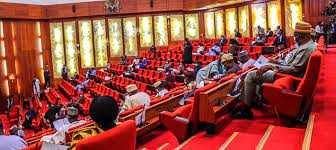
The Senate has postponed its two-day National Security Summit earlier scheduled for October 12 and 13, 2026, following the crash of a Nigerian Air Force (NAF) ATR-42 aircraft in Igbokoda, Ondo State.
The crash, which occurred on Monday in Ilaje Local Government Area of the state, claimed the lives of 25 officers and seven crew members.
The Leader of the Senate and Chairman of the Senate Ad-hoc Committee on the National Security Summit, Senator Opeyemi Bamidele, announced the postponement in a statement he personally signed on Tuesday.
He said the decision followed President Bola Ahmed Tinubu’s declaration of three days of national mourning in honour of those who died in the crash.
The Senate had planned the summit to review Nigeria’s longstanding security challenges and develop practical measures to improve the protection of lives and property across the country.
Bamidele said the ad-hoc committee had completed preparations for the summit after concluding zonal public hearings before the crash forced the postponement.
President Tinubu had directed that the national flag be flown at half-mast across the country throughout the mourning period.
The Senate said it considered it appropriate to defer the summit until further notice in honour of the deceased officers and crew members.
The upper chamber also expressed its condolences to the President, the Nigerian Armed Forces, particularly the Nigerian Air Force, and the families of the personnel who lost their lives while serving the country.
According to the Senate, a new date for the summit would be announced in due course.
It appealed to all stakeholders invited to the summit to take note of the national tragedy and bear with the Senate during the period of national mourning.
By Tambaya Julius, Abuja
The Independent National Electoral Commission (INEC) said Nigeria’s voter register has risen to more than 103 million ahead of the 2027 general elections.
INEC Chairman, Joash Amupitan, disclosed this on Monday in Abuja while speaking at a strategic workshop for media executives.
The workshop, themed “Strengthening Democracy Through Partnership Among Editors, Civil Society and Electoral Institutions,” was organised by INEC in collaboration with Development Alternatives Incorporated (DAI) and the Nigerian Guild of Editors (NGE).
Amupitan said more than 10.6 million Nigerians took part in the commission’s three-phase Continuous Voter Registration (CVR) exercise.
He said INEC had completed the public display of the preliminary register, giving citizens an opportunity to raise claims and objections.
The commission, he added, had also concluded the final cleanup of the voter register using the Automated Biometric Identification System (ABIS).
Amupitan announced that nationwide collection of Permanent Voter Cards (PVCs) would begin on October 9.
He urged Nigerians who registered during the exercise to collect their PVCs and prepare to participate in the 2027 elections.
The INEC chairman also said the commission would continue to improve the Bimodal Voter Accreditation System (BVAS) and the INEC Result Viewing Portal (IReV) to strengthen the credibility and transparency of the electoral process.
“The ultimate arbiter of electoral integrity is public trust,” Amupitan said.
He called for stronger cooperation among INEC, media organisations, civil society groups and other stakeholders ahead of the elections.
According to him, INEC is prepared to listen to concerns raised by editors, address operational challenges and provide timely information to prevent misinformation from filling communication gaps.
Amupitan said the commission would also give editors direct access to verify field incidents, logistical developments and security reports in real time.
He proposed a sustained editorial feedback mechanism between INEC and the NGE to review the commission’s operational progress and address emerging challenges throughout the 2027 election cycle.
The chairman said closer engagement with the media was important to ensuring that voters receive accurate information, especially during periods of heightened public interest in electoral activities.
Also, DAI Team Leader, Rudolf Elbling, said credible elections depended not only on effective electoral administration but also on professional, ethical and fact-based journalism.
Elbling identified electoral integrity, election technology, the safety of journalists and voters, and information disorder as some of the key challenges facing the media ahead of the 2027 elections.
He said journalists had a critical role in providing voters with accurate information while holding electoral institutions and other stakeholders accountable.
The workshop brought together electoral officials, editors, civil society representatives and other stakeholders to strengthen collaboration and improve public communication ahead of the 2027 general elections.


ASUSS Opposes NUT Strike in FCT, Urges Teachers to Ignore Stay-at-home Directive
ShareBy Laide Akinboade, Abuja The Academic Staff Union of Secondary Schools (ASUSS), Federal Capital Territory (FCT) Chapter, has dissociated itself...
Edo Varsity Lecturer Dies after Sex Romp in Hotel
ShareA senior lecturer at the Ambrose Alli University, Ekpoma in Edo State, Dr. Matthew Uwuigbe, has died under mysterious circumstances...
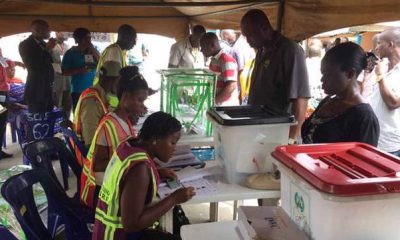

Over 84 Per Cent Nigerians willing to Vote During 2027 Elections – Yiaga
ShareYiaga Africa said 84 per cent of Nigerians intend to vote during the 2027 general elections, urging political parties to...

PNC 2026: NCDMB, DMG Affirm Collaboration with Bayelsa, Unveil New Activities
ShareFrom Mike Tayese, Yenagoa As preparations intensify for the 2026 edition of the Practical Nigerian Content (PNC) Forum, slated for...

Tinubu’s $700 Billion Mineral Resources Deal With America at Whose Interest?
ShareBy Hajia Hadiza Mohammed For some time now the hottest issue of debate in the Nigeria media space has been...

Atiku’s Production Subsidy: Has politics overtaken economics?
ShareBy Kayode Oladele Alhaji Atiku Abubakar, former Vice President of Nigeria and presidential candidate of the African Democratic Congress, (ADC),...

2027: Governors’ Backing Boosts Tinubu’s Chances, says Presidency
ShareBy Tambaya Julius, Abuja The Presidency has said the growing number of governors backing President Bola Tinubu has strengthened his...
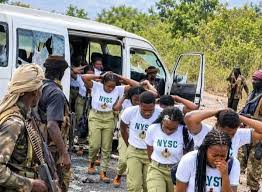

Security Operatives Rescue 20 Abducted NYSC Members in Imo
ShareBy Tambaya Julius, Abuja Security operatives have rescued 20 members of the National Youth Service Corps (NYSC) who were abducted...

Nigeria’s Oil Reforms will Unlock $50bn Deep Offshore Investments – Tinubu
SharePresident Bola Tinubu said recent reforms in Nigeria’s oil and gas sector are designed to unlock up to 50 billion...
Ododo Condoles Families of NAF Personnel, Armed Forces Over Ondo Crash
ShareFrom Joseph Amedu, Lokoja Kogi State Governor, Ahmed Ododo has commiserated with the families of the Nigerian Air Force personnel...