
POLITICS
Group Sets Conditions for Candidates, Parties Seeking Igbo Support in Future Elections

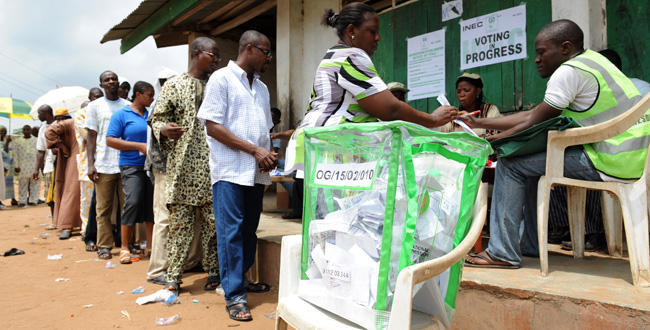
Igbo Agenda Dialogue (IAD), a socio-cultural group, says henceforth, any candidate or political party seeking Igbo people’s support in future elections must enter into a binding Memorandum of Understanding with them.The group stated this in a communique jointly signed by it its Convener, Chief Chekwas Okori, and Executive Secretary, Jonathan Elendu, after its inaugural meeting on Wednesday in Abuja.
Okorie, who read the communiqué, stressed that Igbo votes must never again be taken for granted. He said the group had resolved to undertake a mass mobilisation and education campaign to reawaken political consciousness within the Igbo nation to ensure their full participation in future elections.Okorie said it was high time for Ndigbo to “redeem, reassert, and reclaim” their rightful place in Nigeria’s political and economic space through unity, resilience, and strategic engagement.“The gathering noted with concern the historical absence of a unified Igbo political front since the end of the Nigerian Civil War in 1970.“It condemned the ridicule, marginalisation, and alienation of Ndigbo in Nigeria’s political space and resolved that such a trend must no longer continue.“Any candidate or political party seeking Igbo support must enter into a binding MoU with the Igbo nation, and such agreements shall be made public through verified platforms,” he said.He said the meeting also observed the decline in voter turnout among the Igbo people in recent elections and resolved to reawaken political consciousness through mass mobilisation and education.“It was agreed that the Permanent Voter’s Card (PVC) is the strongest instrument of political empowerment for Ndigbo, far more effective than violence or armed struggle,” he said.Okorie reaffirmed that the IAD was not a rival or parallel body to Ohanaeze Ndigbo Worldwide, which remains the apex socio-cultural organisation of the Igbo nation.IAD, he explained, is a complementary platform dedicated to formulating a clear and binding political agenda for the Igbo in Nigeria.Okorie said that the meeting endorsed the proposal to formulate practical strategies in a sustainable manner to ensure full Igbo participation in all electoral contests wherever they are domiciled in Nigeria.According to him, this strategy aims at harnessing Igbo networks for electoral fortunes.“The meeting resolved to build a formidable Igbo National Grid, integrating all credible Igbo associations, unions, professional bodies, and diaspora groups.”They are to be integrated into a coordinated structure for political mobilisation, economic empowerment, and cultural renaissance,” he said.He further said the meeting also resolved to work toward convening a comprehensive Igbo Political Summit to be hosted in Enugu on a date to be agreed upon.Okorie said the summit would be inclusive, cutting across political parties, market and professional associations, town unions, women and youth organisations, the Igbo diaspora, and all critical stakeholders across the South-East.He added that it would also include all Igbo-speaking communities in Delta, Edo, Rivers, Bayelsa, Cross River, Akwa Ibom, Benue, Kogi states, and beyond.“The meeting also resolved that the proposed Summit shall adopt an Igbo Charter, a comprehensive political agenda that will define Igbo interests, rights, and responsibilities in Nigeria.“A select committee of respected Igbo leaders, technocrats, and intellectuals shall be constituted to draft the Charter, ensuring depth, quality, and durability,” he said.(NAN)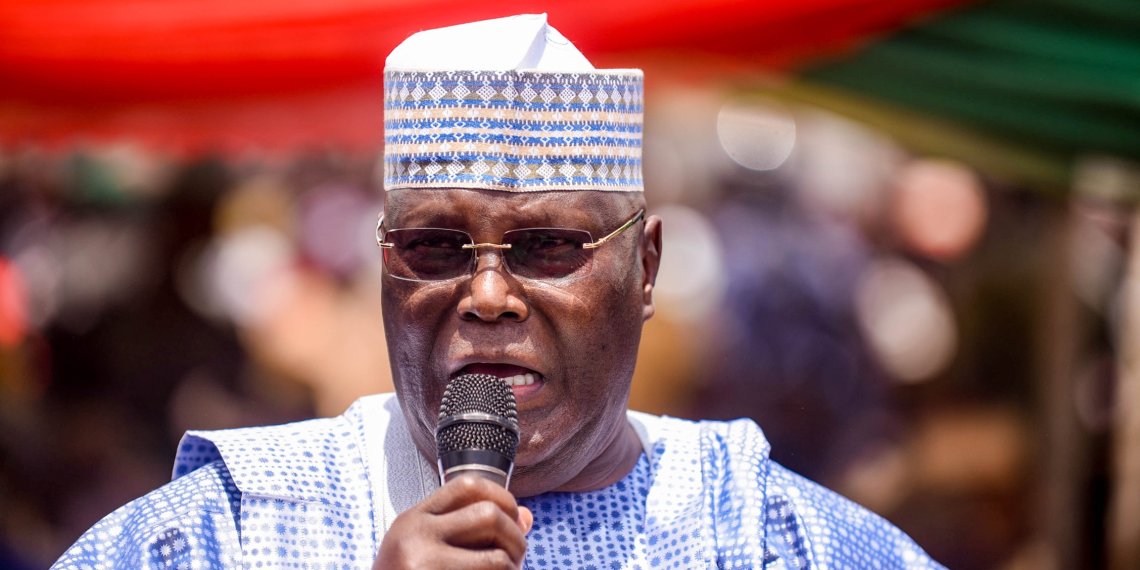
By Kayode Oladele
Alhaji Atiku Abubakar, former Vice President of Nigeria and presidential candidate of the African Democratic Congress, (ADC), has returned to the centre of Nigeria’s economic debate with a proposal that deserves careful scrutiny.
In his Independence Day policy statement, Alhaji Atiku Abubakar promised Nigerians what he described as a capped and budgeted production subsidy tied to verified petrol refined in Nigeria.
Imported petrol, he said, would not qualify. The subsidy would support domestic refining, its costs and beneficiaries would be disclosed and independently audited and the benefit would be expected to reach Nigerians through lower pump prices.On the surface, the proposition is attractive, particularly at a time when Nigerians are understandably concerned about transportation costs and their effect on virtually every aspect of daily life. However, once the attractive packaging is removed, Atiku’s proposal raises a very familiar economic question.
If the government deliberately reduces the cost of producing petrol so that it can be sold more cheaply, who pays the difference? The answer is the Nigerian public.
Atiku has insisted that his proposal is different from the old subsidy arrangement and that distinction should be acknowledged. The previous system was largely associated with subsidising imported petrol. Atiku proposes instead to support domestic production, with the subsidy tied to verified locally refined fuel. However, moving the subsidy from importation to production does not make its cost disappear. It merely changes the point at which public resources enter the petroleum value chain.
If crude that could otherwise be sold at its economic value is supplied to qualifying refineries at a discount, the difference represents an opportunity cost to the Federation. Atiku himself has acknowledged this. The relevant question, therefore, is not whether the subsidy has a cost.
It plainly does. The questions are how much it will cost, how long it will last, where the resources will come from and whether the expected reduction will actually reach the Nigerian standing at the petrol pump.
This is where the proposal becomes far less straightforward than its political appeal suggests.
Atiku says the subsidy will be capped. What is the cap? He says it will be budgeted. What is the proposed annual budget? What volume of locally refined petrol will qualify? What will be the subsidy per barrel or litre? What happens if international crude prices rise substantially or the exchange rate moves sharply? What is the maximum financial exposure of the Federation? How will qualifying production be verified? Most importantly, what enforceable mechanism will guarantee that the financial benefit given to producers is passed through the distribution chain to the consumer? These are questions of elementary public finance.
The APC Presidential Campaign Council has already asked Atiku to disclose the proposed subsidy rate, annual expenditure ceiling, eligible volume, funding source and safeguards against diversion, smuggling and fraudulent claims. Those are legitimate questions.
If Atiku believes the assumptions being advanced by the APC are wrong, he should provide his own figures. Nigerians need more than the promise that petrol will become cheaper. They deserve to see the arithmetic behind that promise. Anyone asking Nigerians to entrust him with the management of their economic resources should be prepared to put numbers behind his policies.
There is also the legal and regulatory question. Atiku’s running mate, Rotimi Amaechi, has now said that an Atiku administration would seek an amendment to the Petroleum Industry Act if the existing law prevents the proposed production subsidy from being implemented.
That statement is significant because it confirms that the relationship between the proposal and the present petroleum regulatory framework is not an imaginary concern raised by political opponents. It is a matter that Atiku’s own ticket may require legislative action.
This brings us to an even more fundamental issue. Nigeria has travelled the subsidy road before. For years, enormous public resources were committed to keeping petrol prices artificially low. The arrangement became a major burden on public finances and was associated with smuggling, abuse and distorted economic incentives. Resources that could otherwise have been available for roads, schools, hospitals, security, power and other public purposes were committed to sustaining the system.
It is therefore striking that Atiku, who has long presented himself as an advocate of market reform and previously supported subsidy removal, now proposes another subsidy as part of his answer to Nigeria’s economic difficulties.
The mechanism may be different and fairness requires us to acknowledge that difference. However, Nigerians are still entitled to ask what has changed in his economic thinking and why an intervention he once regarded as unsustainable has returned, albeit in a redesigned form, to the centre of his petroleum policy. Politics should not erase institutional memory.
The contrast with President Bola Ahmed Tinubu’s reform direction should also be properly understood. The choice is not between subsidising petrol and simply abandoning Nigerians to high transportation costs.
Tinubu’s alternative is to move government intervention away from permanently subsidising every litre of petrol consumed and towards changing the underlying economics of transportation through alternative fuels, domestic refining, infrastructure and competition. That distinction, in
My opinion is fundamental.
Under the old subsidy arrangement, the government attempted to make petrol cheaper by absorbing part of its cost. As consumption increased and international prices and the exchange rate moved, the potential burden on the treasury also increased. Tinubu’s alternative seeks to reduce Nigeria’s dependence on petrol itself.
This is the thinking behind the expansion of Compressed Natural Gas and electric mobility. Nigeria is richly endowed with natural gas. Rather than continue depending overwhelmingly on petrol and diesel for road transportation, the government is seeking to use more of that domestic resource to power vehicles while developing electric transportation and mass transit.
The principle is straightforward. If commuters can move more cheaply using CNG or electric transportation, the government does not have to subsidise every litre of petrol consumed in Nigeria in order to reduce transportation costs. If commercial transport operators increasingly move from petrol to domestically available gas, Nigeria can progressively reduce the vulnerability of transportation costs to international petroleum prices and foreign exchange pressures.
The Federal Government reported in September that more than 120,000 vehicles had been converted to CNG, with more than 400 certified conversion centres and over 90 CNG refuelling stations operating across the country. The government has also reported lower fares on some routes served by CNG and electric public transportation.
These are government reported figures and they must ultimately be measured against what Nigerians actually experience across the country. The important point is the direction of policy. The objective is to create alternatives to petrol rather than make the treasury permanently responsible for reducing the price of petrol.
Domestic refining is another essential part of the alternative. For decades, Nigeria lived with the contradiction of being a major producer of crude oil while depending heavily on imported refined petroleum products. A more sustainable petroleum economy should refine more of what Nigerians consume at home while encouraging sufficient competition among refiners, distributors and retailers.
Competition matters because deregulation without competition can leave consumers exposed to concentrated market power. The ultimate objective should therefore be a market with adequate domestic refining capacity, multiple suppliers, alternative fuels and efficient distribution so that competition increasingly influences prices rather than an open ended commitment from the public treasury.
This is where the difference between Atiku’s proposal and Tinubu’s approach becomes clear. Atiku proposes using public resources to reduce the production cost of locally refined petrol in the expectation that the benefit will reach consumers through lower pump prices. Tinubu’s approach is to maintain market based petrol pricing while expanding domestic refining and developing alternatives to petrol, particularly CNG and electric transportation.
Put simply, Atiku proposes another government subsidy to make petrol cheaper. Tinubu’s reform seeks progressively to make Nigerians less dependent on petrol. That is a fundamental policy distinction.
Atiku is entitled to present his alternative to Nigerians. However, he must also submit that alternative to the discipline of numbers. Saying that a subsidy will be capped does not tell us the cap. Saying it will be budgeted does not tell us the budget. Saying it will be transparent does not tell us the annual fiscal exposure. Saying that consumers will benefit does not explain how the government will guarantee that the benefit reaches them.
These details matter because Nigeria cannot afford economic policy built around promises whose costs become clear only after implementation.
President Tinubu took the difficult decision to confront a subsidy system that had become a serious burden on the public treasury. The transition has created pressures for Nigerians and the government must acknowledge and respond to them. The answer, however, should be to make the reforms work better, deepen domestic refining, accelerate CNG infrastructure, expand electric and mass transportation, encourage genuine competition and strengthen the productive economy until Nigerians increasingly feel the benefits.
There is nothing wrong with questioning Tinubu’s reforms. Indeed, Nigerians should question them and demand results. However, questioning the speed or effectiveness of reform is different from concluding that the country should once again commit public resources to suppressing the effective price of petrol.
Atiku says his own subsidy will be different. Then let him show Nigerians precisely how different it will be. Let him state the proposed subsidy rate, the eligible volume, the annual ceiling, the source of funding, the expected duration and the mechanism for ensuring that the benefit reaches consumers. Let Nigerians see the figures and judge the proposal on its actual economic consequences rather than its immediate political attractiveness. That, in my view, is where the debate should be.
Nigeria cannot permanently subsidise its way out of structural economic problems. There will always be political pressure to postpone difficult decisions. There will always be an election around the corner. There will always be an attractive argument for making an expensive commodity cheaper through government intervention. However, somebody ultimately pays the bill. Therefore, before Nigerians are asked to embrace another subsidy arrangement, Atiku should tell them exactly what that bill will be.
Giving an old economic instrument a new design does not remove its cost. Nigeria has travelled the subsidy road before and knows the dangers that can accompany it. The more sustainable course is to confront the weaknesses in the present reforms, accelerate the alternatives, expand domestic production and competition and make those reforms work for ordinary Nigerians rather than return the public treasury to the endless business of paying the difference at the petrol pump.
Kayode Oladele is a Nigeria -US Attorney, former member of the House of Representatives and former Chairman of the House Committee on Financial Crimes.
By Tambaya Julius, Abuja
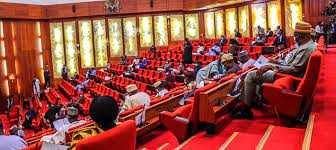
The Senate has postponed its two-day National Security Summit earlier scheduled for October 12 and 13, 2026, following the crash of a Nigerian Air Force (NAF) ATR-42 aircraft in Igbokoda, Ondo State.
The crash, which occurred on Monday in Ilaje Local Government Area of the state, claimed the lives of 25 officers and seven crew members.
The Leader of the Senate and Chairman of the Senate Ad-hoc Committee on the National Security Summit, Senator Opeyemi Bamidele, announced the postponement in a statement he personally signed on Tuesday.
He said the decision followed President Bola Ahmed Tinubu’s declaration of three days of national mourning in honour of those who died in the crash.
The Senate had planned the summit to review Nigeria’s longstanding security challenges and develop practical measures to improve the protection of lives and property across the country.
Bamidele said the ad-hoc committee had completed preparations for the summit after concluding zonal public hearings before the crash forced the postponement.
President Tinubu had directed that the national flag be flown at half-mast across the country throughout the mourning period.
The Senate said it considered it appropriate to defer the summit until further notice in honour of the deceased officers and crew members.
The upper chamber also expressed its condolences to the President, the Nigerian Armed Forces, particularly the Nigerian Air Force, and the families of the personnel who lost their lives while serving the country.
According to the Senate, a new date for the summit would be announced in due course.
It appealed to all stakeholders invited to the summit to take note of the national tragedy and bear with the Senate during the period of national mourning.
By Tambaya Julius, Abuja
The Independent National Electoral Commission (INEC) said Nigeria’s voter register has risen to more than 103 million ahead of the 2027 general elections.
INEC Chairman, Joash Amupitan, disclosed this on Monday in Abuja while speaking at a strategic workshop for media executives.
The workshop, themed “Strengthening Democracy Through Partnership Among Editors, Civil Society and Electoral Institutions,” was organised by INEC in collaboration with Development Alternatives Incorporated (DAI) and the Nigerian Guild of Editors (NGE).
Amupitan said more than 10.6 million Nigerians took part in the commission’s three-phase Continuous Voter Registration (CVR) exercise.
He said INEC had completed the public display of the preliminary register, giving citizens an opportunity to raise claims and objections.
The commission, he added, had also concluded the final cleanup of the voter register using the Automated Biometric Identification System (ABIS).
Amupitan announced that nationwide collection of Permanent Voter Cards (PVCs) would begin on October 9.
He urged Nigerians who registered during the exercise to collect their PVCs and prepare to participate in the 2027 elections.
The INEC chairman also said the commission would continue to improve the Bimodal Voter Accreditation System (BVAS) and the INEC Result Viewing Portal (IReV) to strengthen the credibility and transparency of the electoral process.
“The ultimate arbiter of electoral integrity is public trust,” Amupitan said.
He called for stronger cooperation among INEC, media organisations, civil society groups and other stakeholders ahead of the elections.
According to him, INEC is prepared to listen to concerns raised by editors, address operational challenges and provide timely information to prevent misinformation from filling communication gaps.
Amupitan said the commission would also give editors direct access to verify field incidents, logistical developments and security reports in real time.
He proposed a sustained editorial feedback mechanism between INEC and the NGE to review the commission’s operational progress and address emerging challenges throughout the 2027 election cycle.
The chairman said closer engagement with the media was important to ensuring that voters receive accurate information, especially during periods of heightened public interest in electoral activities.
Also, DAI Team Leader, Rudolf Elbling, said credible elections depended not only on effective electoral administration but also on professional, ethical and fact-based journalism.
Elbling identified electoral integrity, election technology, the safety of journalists and voters, and information disorder as some of the key challenges facing the media ahead of the 2027 elections.
He said journalists had a critical role in providing voters with accurate information while holding electoral institutions and other stakeholders accountable.
The workshop brought together electoral officials, editors, civil society representatives and other stakeholders to strengthen collaboration and improve public communication ahead of the 2027 general elections.



ASUSS Opposes NUT Strike in FCT, Urges Teachers to Ignore Stay-at-home Directive
ShareBy Laide Akinboade, Abuja The Academic Staff Union of Secondary Schools (ASUSS), Federal Capital Territory (FCT) Chapter, has dissociated itself...
Edo Varsity Lecturer Dies after Sex Romp in Hotel
ShareA senior lecturer at the Ambrose Alli University, Ekpoma in Edo State, Dr. Matthew Uwuigbe, has died under mysterious circumstances...

Over 84 Per Cent Nigerians willing to Vote During 2027 Elections – Yiaga
ShareYiaga Africa said 84 per cent of Nigerians intend to vote during the 2027 general elections, urging political parties to...

PNC 2026: NCDMB, DMG Affirm Collaboration with Bayelsa, Unveil New Activities
ShareFrom Mike Tayese, Yenagoa As preparations intensify for the 2026 edition of the Practical Nigerian Content (PNC) Forum, slated for...

Tinubu’s $700 Billion Mineral Resources Deal With America at Whose Interest?
ShareBy Hajia Hadiza Mohammed For some time now the hottest issue of debate in the Nigeria media space has been...

Atiku’s Production Subsidy: Has politics overtaken economics?
ShareBy Kayode Oladele Alhaji Atiku Abubakar, former Vice President of Nigeria and presidential candidate of the African Democratic Congress, (ADC),...

2027: Governors’ Backing Boosts Tinubu’s Chances, says Presidency
ShareBy Tambaya Julius, Abuja The Presidency has said the growing number of governors backing President Bola Tinubu has strengthened his...
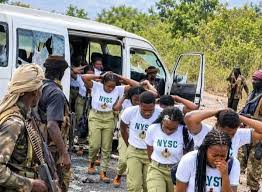

Security Operatives Rescue 20 Abducted NYSC Members in Imo
ShareBy Tambaya Julius, Abuja Security operatives have rescued 20 members of the National Youth Service Corps (NYSC) who were abducted...

Nigeria’s Oil Reforms will Unlock $50bn Deep Offshore Investments – Tinubu
SharePresident Bola Tinubu said recent reforms in Nigeria’s oil and gas sector are designed to unlock up to 50 billion...
Ododo Condoles Families of NAF Personnel, Armed Forces Over Ondo Crash
ShareFrom Joseph Amedu, Lokoja Kogi State Governor, Ahmed Ododo has commiserated with the families of the Nigerian Air Force personnel...