
Health
Group Tasks Jigawa Govt on Adolescent Girls Empowerment


The A360, a non-governmental organisation, has urged the Jigawa government to prioritise empowerment of adolescent girls to stem maternal mortality and morbidity in state.
The group is implementing a girls empowerment programme tagged: “Matasan Matan Arewa” in the state.
It is being implemented with support of the Society For Family Health (SFH).
The A360 Amolify Project Manager, Bethsheba Daure, made the call during the Mid-Project Dissemination meeting, on Saturday in Dutse.
She said the project focused at promoting use of contraceptives by married adolescent girls, and empower them to achieve their life goals.
According to Daure, the programme is providing vocational skills training to empower girls to improve their economic and social status.
She said the programme planned to incorporate Maternal and Newborn Child Health (MNCH) to sensitise girls on how to pursue healthy pregnancies.
Daure said the programme was creating awareness among the adolescent and young married women to enable them to know their contraceptive choices and make good life choices.
The programme, she said, was geared towards achieving 27 per cent contraceptive prevalence rate by 2024 in the state.
“Part of the commitment of Nigeria is to reach contraceptive prevalence rate of 27 per cent by 2024 and Jigawa is currently at 4.7 per cent.
“So, part of our plans is to help it achieve 27 per cent or close to it because it has the highest fertility rate of women of reproductive age,” Daure said.
She advocated for more funding of adolescent girls’ education, health and empowerment programmes, to improve sexual and reproductive health outcomes in the state.
Dr Shehu Sambo, the Director, Jigawa State Primary Healthcare Development Agency, attributed the scarcity of contraceptives to the monopoly of supply chain by the Federal Government.
He said the demand for family planning products had increasee compared to previous years in the state.
“We are in short supply of these products because the demand has risen compared to previous years, and Jigawa state made the bold step early this year when we purchased the products worth about N20 million.
“Although the state has made procurement, the products are still not enough.
“This is because the Federal Ministry of Health has the monopoly of supplying states with family planning products. The quantity being supplied is actually not enough,” he said.
He, however, assured that the products would soon be available as the agency had sent a memo to the state governor, Umar Namadi for his approval to procure more.
Also speaking, Hajiya Adama Umar, the Director Women Affairs, Jigawa State Ministry of Women Affairs and Social Development, said the state had earmarked N7 million for the provision of Adolescent Sexual and Reproductive Health products (ASRH) in the ministry.
She said the state’s Women Development Center was also providing vocational skills training for adolescent girls. (NAN)
FEATURES
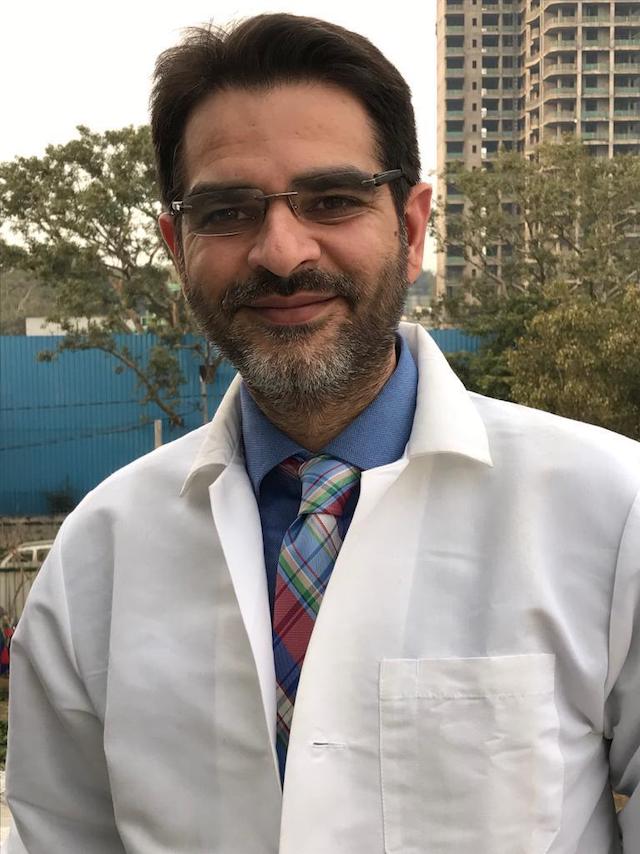
Ashish Sabharwal, India’s Leading Surgeon, Who Drives Robotic Cancer Surgery At Apollo Hospital
By Cletus Akwaya, who was in India
Nothing about him looks extraordinary. He is built of an average body frame, self-effacing and calm. His presence doesn’t immediately signal the arrival of a medical expert of the highest pedigree that he is.
Behind his simplicity however, lies the master of Robotic Surgery, one of India’s leading Urologist of international acclaim.
Dr Ashish Sabharwal, 50, works as Consultant Urologist at India’s premier International hospital, Indraprastha Apollo Hospital in Delhi, the political capital of the World’s arguably, the most populated country.
Dr Ashish as he is simply called is one of those that have given the Apollo hospital the fame and reputation it has gotten in India.
Founded in 1996 by Dr Prathap C. Reddy, Apollo hospital as a joint venture with the government of India, the hospital located in the heart of New Delhi, has a massive 700-bed capacity for mostly international patients, who throng it from all corners of the World in search of modern medical care at competitive rates.
The hospital was accredited by Joint Commission International (JCI) USA as the first internationally accredited Hospital in India and South Asia in 2005. In 2011, the hospital got re-accredited by JCI for a fourth time consequently, making it the first hospital in India to attain such international status. In February 2026, Indraprastha Apollo Hospital launched an advanced technology Varian Edge® Radiosurgery system to treat cancer, adding to its many feats in medical science over the decades.
The strength of Apollo Hospital is however, not in its size nor the fact that it is the premier international hospital. Its actual strength lies in the quality of medical services made possible by highly trained personnel and state of- the- art medical equipment at their disposal.
One of the experts making sterling contributions to sustain the hospital’s reputation is Dr Ashish Sabharwal, an Indian Consultant Urologist and Surgeon. Sabharwal qualified as a Surgeon in the US and worked as Consultant in the Jackson Health System in Miami, Florida before returning to India in 2011 to be of service to his country.
Dr Ashish is a Specialist in Robotic Surgery, the latest surgical procedure he has so mastered and now carries out with ease in the treatment of Prostrate Cancer.
“ I returned to India because there were a few people doing Robotic Surgery at the time and there were a few problems in the economy in US and India was booming so I came back,” he told Daily Asset in an interview.
His expertise in Robotic surgery for Prostrate Cancer has made him very famous.
“I carry out about 100 Robotic Surgeries for prostrate Cancer in a year” he disclosed. “Sometimes we carry out two Robotic Surgeries in a week and other surgeries also” he stated. Since his engagement with Apollo Hospital, Dr Ashish has carried out over 2,000 surgeries of different kinds to treat kidney diseases, erectile dysfunction, liver, urinary track diseases, kidney stones among others”.
“When people talk of Robotic Surgery, they forget that the Robot doesn’t perform the Surgery all by itself, the Consultant, who sits at the consul controls the Robot and gives instructions to get the desired result,” he explained alluding to his expertise in the deployment of Robotic Assisted Technology for surgeries especially the Robotic Radical Prostatectomy. His Robotic Surgery procedures have been largely successful and his mastery of the process makes it easy for him to determine the route to take in each patient and often times the outcomes.
Apart from Robotic surgeries, Dr Ashish carries out emergency consultations and non-surgical medical procedures on his patients depending on the reported cases or diseases. Going by his tight schedules, its quite clear that the Consultant Urologist is in love with his profession and accordingly dedicates most part of each passing day to the practice of his trade.
“I come from a medical family. So right from time, I had interest in Medicine and that’s all I do, my wife is also a Consultant Gynaecologist,” he further disclosed adding that he doesn’t have low moments neither does he regret in anyway to have studied Medicine or taken to the practice of the profession.
India boasts of numerous high profile international hospitals like Artemis, Mendata, Fortis, Primus, CK Birla, etc each offering competitive services in the fast advancing technology-driven Medicare environment. However, the expertise and dedication of specialists like Dr Ashish distinguishes Apollo Hospital from many.
Beyond the wide array of experienced specialists, Apollo Hospital has a well – organized patient management system. On arrival at the reception is a large lounge for international patients, well equipped with accounting experts for billing, a well -stocked Pharmacy also on the ground floor of the multi-floor building and offices housing dozens of Consultants across many fields of medical expertise.
The patients’ beds are located on the upper floors just as the numerous Operation Theatres (OT), some of which are fully equipped with the latest Robotic Technology.
Patients who cannot walk by themselves are assisted by the ever-willing attendants in carts, wheel chairs and motors to various service areas or wards.
The thousands of visitors, patients and their attendants, who enter the hospital daily are well protected by the Hospital’s tight security system, assisted by Close Circuit Television Cameras(CCTV), an effective car parking(Valet) system and ever-smiling receptionists, always willing to assist where there is difficulty.
And with an excellent in-patient care in the Wards- clean environment, neat beddings, quality drugs, friendly Nurses and dieticians to structure meals for all manner of patients, Apollo Hospital gets more popular by the day as each patient, once successfully treated becomes an ambassador of the Hospital.
For Dr Ashish, as Chinua Achebe, the African Literary giant once wrote, “it is still Morning on Creation Day”. Retirement is not yet in sight as he said his focus is to treat more patients and even more patients in the course of his career.

The World Health Organisation has recommended that people with type 1 diabetes receive insulin injections several times per day, with doses adjusted to blood glucose levels.
The recommendation is its first-ever guideline on the diagnosis and management of Type 1 Diabetes in adults, more than a century after the discovery of insulin.
The guidelines released on Saturday to mark World Diabetes Day 2026 are designed to guide the diagnosis and treatment of adults living with type 1 diabetes across different healthcare settings, including low-resource environments, emergencies and humanitarian crises.
WHO called for improved access to affordable insulin, regular blood glucose monitoring and quality diabetes care, including in countries and communities with limited healthcare resources.
The new guidelines come against the backdrop of a growing global burden of the condition, with millions of people still struggling to access the essential medicines and healthcare services required to manage it.
According to WHO, an estimated 9.5 million people were living with type 1 diabetes globally in 2025, while another 500,000 people were diagnosed with the condition within the same year.
Although type 1 diabetes has traditionally been associated with childhood, WHO noted that the condition is increasingly affecting adults.
It highlights the need for healthcare systems to strengthen diagnosis and treatment services beyond paediatric care.
Type 1 diabetes is a lifelong condition in which the pancreas produces little or no insulin, a hormone that regulates blood glucose levels.
People living with the condition depend on daily insulin treatment to survive and must regularly monitor their blood glucose to prevent potentially life-threatening complications.
Speaking on the new recommendations, WHO Director of Noncommunicable Diseases and Mental Health, Dr Soren Brostrom, said access to affordable and quality insulin remained a major challenge in spite of the treatment being discovered more than 100 years ago.
“Insulin is a lifesaving treatment, discovered more than 100 years ago. Yet many people with type 1 diabetes do not have access to affordable and high-quality insulin,” he said.
He explained that the guidelines provide evidence-based recommendations to help countries improve diabetes care.
According to WHO, it also ensure that people living with the condition receive appropriate treatment, even in settings where resources are limited and health services are disrupted.
Under the new recommendations, WHO advises that people with type 1 diabetes receive insulin through multiple daily injections, with doses adjusted according to their blood glucose levels.
The guidelines identify human insulin, a manufactured medicine that works similarly to insulin naturally produced by the human body, as an appropriate and effective treatment option.
Other types of insulin may also be used where necessary, depending on individual needs and availability.
Beyond insulin treatment, WHO emphasises the importance of regular blood glucose monitoring as a critical component of managing the condition and reducing the risk of complications.
At healthcare facilities, it said monitoring may involve periodic blood tests that measure average blood glucose levels over the preceding few months.
At home, it recommends that patients can monitor their blood sugar through finger-prick testing or continuous glucose monitoring systems, which use small sensors worn on the skin to track glucose levels.
In settings where blood glucose testing is unavailable, WHO said urine glucose testing may be considered as an alternative.
The recommendations are also intended to support WHO’s broader global targets for diabetes care, particularly the goal of ensuring that all people living with type 1 diabetes have access to affordable insulin treatment and blood glucose self-monitoring by 2030.
By David Torough, Abuja
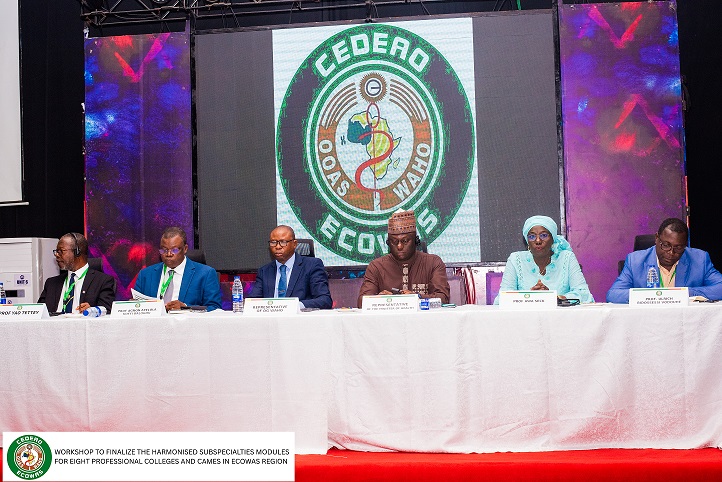
Accredited health professional colleges, training institutions and regulatory bodies across the Economic Community of West African States (ECOWAS) region have commenced efforts to finalise harmonised subspecialty training modules for eight professional colleges and the West African postgraduate medical education framework under the West African Health Organization (WAHO) and the African and Malagasy Council for Higher Education (CAMES).
The initiative, discussed at an integration meeting in Abuja on Monday, is aimed at strengthening regional cooperation, improving the quality of specialist training, facilitating professional mobility and reducing the need for patients to travel outside West Africa to access advanced medical care.
The meeting brought together representatives of ECOWAS member states, professional regulatory bodies, accredited training institutions, health ministries and regional health organisations to review and finalise the harmonised subspecialty modules ahead of their implementation.
Speaking on behalf of the Coordinating Minister of Health and Social Welfare, Professor Muhammad Ali Pate, Nigeria’s Liaison Officer to WAHO and the African Union at the Federal Ministry of Health and Social Welfare, Dr Dakum Londji, said harmonising health professional education was essential to building a stronger and more resilient West African health system.
In his address titled “Strengthening Regional Integration and Harmonization of Health Professional Education for a Stronger West Africa,” Pate welcomed participants to Nigeria and stressed that health challenges across the region required collective solutions.
He noted that diseases did not respect national boundaries and that knowledge, expertise and health professionals should similarly be able to move across borders through effective regional cooperation.
According to him, differences in curricula, training standards and accreditation procedures have historically created barriers to professional mobility, limited the quality of training and made it difficult for qualified health professionals to practise across the subregion.
He said the integration process was not intended to impose uniformity but to establish common standards of excellence while respecting the peculiarities and national contexts of individual countries.
The minister identified three major priorities for the regional initiative: harmonisation of curricula and training standards, mutual recognition of professional qualifications to promote mobility, and strengthened quality assurance and accountability among regulatory institutions.
He explained that harmonising core competencies, minimum training requirements and accreditation criteria would help ensure that health professionals trained in different ECOWAS countries attained comparable standards.
Pate also emphasised the need for regulatory bodies to strengthen collaboration through information sharing, ethical enforcement and improved professional oversight to guarantee that graduates were competent, compassionate and fit to practise.
He said the initiative aligned with Nigeria’s Renewed Hope Agenda and ongoing health sector reforms, which include investments in training institutions, expansion of accreditation, stronger regulation and the promotion of digital learning and innovation.
The minister urged participants to ensure that the meeting produced concrete decisions, a practical implementation roadmap and clear timelines, describing regional integration as a necessity rather than an option.
He commended WAHO, the ECOWAS Commission, professional regulatory bodies, training institutions and development partners for their contributions to advancing health workforce development in West Africa before formally declaring the meeting open.
WAHO highlights persistent health workforce crisis
In his remarks, the Director-General of WAHO, Professor Palokinam Pitche, represented by the organisation’s Programme Manager, Professor Joseph Olorunda, described the integration meeting as an important step towards addressing the persistent shortage of skilled health professionals and weaknesses in healthcare delivery across the ECOWAS region.
He expressed appreciation to President Bola Ahmed Tinubu and the Coordinating Minister of Health and Social Welfare for supporting the organisation of the meeting in Nigeria.
Olorunda observed that despite several international and regional commitments to achieving health for all, many West African countries continued to struggle with inadequate health financing, weak disease surveillance systems, poor public health infrastructure and insufficient human resources for health.
He said the challenges had been compounded by inadequate funding for training institutions, employment restrictions, poor working conditions, low remuneration and limited opportunities for professional advancement.
These factors, he explained, had contributed to the migration of skilled health professionals within and outside the region, further weakening healthcare delivery, particularly in rural and underserved communities.
Citing findings from a 2025 review by the WHO Regional Office for Africa’s West African Office, he noted that most of the 15 ECOWAS member states had fewer than one physician, nurse and midwife per 1,000 inhabitants, while only two countries recorded health workforce density ratios between one and 2.2 per 1,000 inhabitants.
He said the figures underscored the significant workforce gap confronting the region as countries work towards achieving universal health coverage by 2030.
Olorunda also recalled that previous assessments had highlighted the need for at least 2.5 health workers per 1,000 population to make meaningful progress in reducing maternal mortality, describing the human resources shortage as a major obstacle to sustainable development.
The WAHO representative outlined several interventions undertaken by the organisation to strengthen health professional education and workforce development.
He disclosed that WAHO had facilitated the harmonisation of 58 training curricula at basic and post-basic levels across different health professional categories.
Other interventions, he said, included the development of harmonised training modules for community-based health workers, scholarships for 44 health professionals in critical areas, and financial assistance to member states implementing harmonised curricula.
The organisation had also developed trainers’ manuals, supported research and academic publications by professional colleges, and established a regional action plan for motivating and retaining health professionals in difficult terrains.
He further highlighted WAHO’s support for the continuous training of 23 health professionals from ECOWAS countries in antibiotherapy and vaccinology, as well as support for professional colleges and academic institutions to strengthen research and knowledge development.
The colleges benefiting from various forms of support include the West African colleges of Surgeons, Physicians, Pharmacists, Nursing and Midwifery, Environmental Health and Medical Laboratory Science, as well as the Society of Obstetricians and Gynaecologists.
Olorunda reiterated WAHO’s commitment to working with governments, professional institutions and development partners to implement regional decisions on health workforce development.
He identified five critical priorities emerging from the WHO’s 2025 review: ensuring that health workers receive quality training, protecting and supporting health personnel, improving workforce efficiency throughout their professional careers, addressing inequalities and imbalances in workforce distribution, and strengthening partnerships and trust to support fragile health systems.
Speaking on behalf of the West African professional colleges, Professor Yao Tettey commended WAHO for facilitating the harmonisation exercise, describing the ongoing process as a significant development in the evolution of postgraduate health professional education in the region.
He recalled that ECOWAS Heads of State and Government had previously expressed concerns about the lengthy duration of postgraduate fellowship training and the limited availability of middle-level specialists to serve the wider population.
According to him, the concerns prompted discussions through the Assembly of Health Ministers, leading professional colleges to introduce Part One membership examinations as an exit point for doctors who could subsequently serve as specialists in district hospitals.
Tettey explained that while the introduction of membership qualifications addressed the need for middle-level specialists, the colleges recognised the growing demand for highly specialised medical services across West Africa.
He said the professional colleges subsequently developed subspecialty programmes to address advanced healthcare needs and reduce dependence on countries outside the region for highly specialised treatment.
He commended WAHO for supporting the development and harmonisation of the programmes, noting that the current exercise would consolidate the progress already achieved in harmonising training from basic professional education through fellowship and now subspecialty levels.
Tettey, however, expressed concern about the high cost of subspecialty healthcare and the lack of appropriate equipment and infrastructure in some countries, which had forced highly trained specialists to leave after returning home.
Using Ghana as an example, he said some specialists who returned after advanced training had been unable to practise effectively because the facilities and equipment required for their expertise were unavailable.
He noted that the emergence of centres of excellence across the subregion was gradually creating opportunities for highly trained specialists to return and practise their skills.
He cited developments in Nigeria in areas such as interventional cardiology and renal transplantation as examples of the growing capacity for advanced healthcare delivery within the region.
The college representative therefore appealed to ECOWAS leadership and national governments to provide adequate financial support, equipment and infrastructure for subspecialty programmes to enable trained professionals to deliver the services for which they had been prepared.
He said the ultimate objective should be to build a West African healthcare system capable of providing advanced medical services locally, eliminating the need for patients to travel to the United Kingdom, United States, France and other countries for specialised treatment.
The Abuja integration meeting represents another phase in the broader effort to establish a coordinated framework for health professional education and specialist development across West Africa.
With the harmonisation of subspecialty modules, participating institutions are expected to strengthen common training standards, improve the comparability of professional qualifications and create opportunities for greater collaboration among accredited colleges and regulatory authorities.
The discussions also highlighted the importance of matching investments in specialist training with adequate healthcare infrastructure, equipment, funding and incentives to retain skilled professionals.
Participants are expected to review and finalise the harmonised documents during the meeting, laying the groundwork for their implementation across participating institutions and ECOWAS member states.


Ashish Sabharwal, India’s Leading Surgeon, Who Drives Robotic Cancer Surgery At Apollo Hospital
ShareBy Cletus Akwaya, who was in India Nothing about him looks extraordinary. He is built of an average body frame,...


Recruitment Concerns: Customs Suspends Training at Two Colleges
ShareBy Tambaya Julius, Abuja The Nigeria Customs Service (NCS) has temporarily suspended training activities at its two training colleges to...

WPRF Delegates Leaving Nigeria with Positive Impressions – Customs CG
ShareBy Tambaya Julius, Abuja The Comptroller-General of the Nigeria Customs Service (NCS), Adewale Adeniyi, has said delegates attending the World...


INEC Urges South-South Youths to Shun Electoral Violence Ahead 2027 Polls
ShareBy Orjime Moses, Abuja The Independent National Electoral Commission (INEC) has urged youths in the South-South to shun electoral violence,...
Nigeria’s Politics of Fear: Who Profits When Democracy Bleeds?
ShareBy Jude Dike Nigeria is approaching another general election, but something more troubling than the contest for political power is...

NAICOM Wants Improved Claims Settlement, Risk Management
ShareBy Tony Obiechina, Abuja The National Insurance Commission has called for improved claims settlement, stronger risk management, and greater accountability...


2027: Alia Mobilises Benue for Tinubu, APC Candidates
ShareBy Attah Ede, Makurdi Benue State Governor, Rev. Fr. Hyacinth Alia, has called on residents of the state to throw...


FG Targets 40 Per Cent Drop in Transport Fares
ShareBy David Torough, Abuja President Bola Tinubu has unveiled fresh measures to reduce the cost of transportation across Nigeria, targeting...
A Right to Life, But at What Cost?
ShareBy Oluwaleye Adedoyin Grace What is the value of a constitutional right that citizens struggle to enjoy? In Nigeria, the...
Bayelsa Oil Communities Accuse Renaissance of Withholding Contract Plan
ShareFrom Mike Tayese, Yenagoa More than 100 Oil-Producing Communities in Bayelsa, and their Representatives, has accused Renaissance Africa Energy Company...