
Foreign News
Helicopter Crashes with India Military Chief on Board: Air force


New Delhi: A helicopter carrying India’s defense chief General Bipin Rawat crashed in the southern state of Tamil Nadu on Wednesday, the air force said.
The 63-year-old chief of defense staff was traveling in a Russian-made Mi-17V5 chopper that “met with an accident today near Coonoor, Tamil Nadu,” the Indian Air Force said on Twitter.
Rawat is India’s first chief of defense staff, a position that the Indian government established in 2019, and is seen as close to Prime Minister Narendra Modi.
He and his wife were on board along with other officers and were headed to the Defense Services Staff College, a senior army officer told AFP.
Videos broadcast on Indian news channels showed a fiery wreck at the crash site in a dense forested area near the college in Nilgiris district.
Media reports said the chopper took off from Sulur Air Force Station on Wednesday afternoon and that some passengers had been taken to hospitals for treatment.
Rawat comes from a military family with several generations having served in the Indian armed forces.
The general, who has four decades of service behind him, has commanded forces in Indian-administered Kashmir and along the Line of Actual Control bordering China.
He is credited with reducing insurgency on India’s northeastern frontier and supervised a cross-border counter-insurgency operation into neighboring Myanmar.
The air force said an inquiry was underway into the accident.
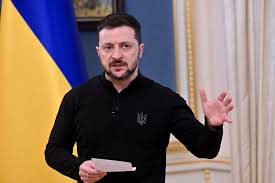
Ukraine’s President Volodymyr Zelensky has condemned a US decision to extend the period during which Russia is allowed to sell oil despite Western sanctions.
The move means countries can purchase Russian oil and petroleum products already loaded on vessels at sea until 16 May.
The US argues that the waiver is meant to ease the energy supply crunch sparked by the US-Israel war with Iran.
But in his remarks on Sunday, Zelensky said “every dollar paid for Russian oil is money for the war” in Ukraine. Widespread sanctions have been in place against Russia since President Vladimir Putin launched his full-scale invasion of its neighbour in February 2022.
The devastating US and Israel attacks against Iran have prompted it to retaliate not only against Israel and US military bases in the Gulf, but also against energy fatalities and other civilian sites across Arab allies of the US in the region.
Additionally, Iran has virtually shut the Strait of Hormuz – the narrow passage where some 20% of the world’s oil and liquefied natural gas (LNG) is usually transported through.
This has led to turmoil in energy markets, with fears that a world recession may ensue if it is not reopened soon.
The US move to ease Russian sanctions on 13 March was widely condemned by Zelensky as well as his European allies.
Extending the waiver on Friday, the US said it wanted “to ensure oil is available to those who need it” as negotiations to end the war “accelerate”.
The Ukrainian leader said Russia had more than 110 tankers from its “shadow fleet” – vessels with obscured ownership designed to help it bypass sanctions – with “over 12 million tons” of oil.
Their sale, he added, would bring $10bn (£7.4bn) to Moscow’s coffers as “a resource that is directly converted into new strikes against Ukraine”.
The Ukrainian leader did not explain what those figures were based on.
But he added that just over the past week, Russia had launched “over 2,360 attack drones, more than 1,320 guided aerial bombs, and nearly 60 missiles of various types at our cities and communities”.
That included the deadliest attack against Ukraine in months on 15 April during which more than 700 drones and missiles were used in multiple waves in one night, killing at least 18 people.
Ukraine has also attacked Russia, particularly focusing on energy facilities.
However, despite ongoing attacks, a stalemate has been reached in the war in Ukraine, with Russia in control of about 20% of Ukrainian territory.
Efforts led by the US to end the war have been put on hold as a result of the war in Iran.

Pope Leo has criticised leaders who spend billions on wars and said the world was “being ravaged by a handful of tyrants” in unusually forceful comments during a visit to Cameroon.
The pontiff blasted those he said had manipulated “the very name of God” for their own gain, while touring a region ravaged by a deadly insurgency.
The remarks come just days after a high-profile spat with US President Donald Trump, who posted a lengthy attack on the Pope, a vocal critic of the US-Israeli military operation in Iran.
The Pope had voiced his concern about Trump’s threat that “a whole civilisation will die” if Iran did not agree to US demands to end the war and open the Strait of Hormuz.
Leo, who last year became the first US-born Pope, has previously also questioned the Trump administration’s approach to immigration.
“Leo should get his act together as Pope,” Trump wrote in a Truth Social post at the time.
The Pope told reporters at the start of his Africa tour that he did not want to get into a debate with Trump but would continue to promote peace.
Speaking in Cameroon, the Pope criticised leaders who “turn a blind eye to the fact that billions of dollars are spent on killing and devastation, yet the resources needed for healing, education and restoration are nowhere to be found”.
“The masters of war pretend not to know that it takes only a moment to destroy, yet often a lifetime is not enough to rebuild,” he said on Thursday.
The Pope also condemned “an endless cycle of destabilisation and death” in a “bloodstained” region of Cameroon that has been gripped by insurgency for nearly a decade.
“Those who rob your land of its resources generally invest much of the profit in weapons, thus perpetuating an endless cycle of destabilisation and death,” he told those gathered at a cathedral in the north-western city of Bamenda – the centre of the violence that has left at least 6,000 people dead and displaced many more.
“Peace is not something we must invent: it is something we must embrace by accepting our neighbour as a brother and as our sister,” the Pope said.
Separatist insurgents in Cameroon’s two Anglophone regions have been fighting the predominantly Francophone government since 2017.
Following Leo’s address, the Archbishop of Canterbury, Sarah Mullally, said that she stood with the Pope in his “courageous call for a kingdom of peace”.
The war in Iran has increasingly placed the Pope and the Trump administration at odds.
Soon after the first US and Israeli attacks on Iran, US Defence Secretary Pete Hegseth recited a highly controversial prayer at a Pentagon worship service that talked of “overwhelming violence” and “justice executed swiftly and without remorse”.
Then, during a Palm Sunday Mass in St Peter’s Square, the Pope said the conflict between Iran, Israel and the US was “atrocious” and that Jesus could not be used to justify war.
“This is our God: Jesus, king of peace, who rejects war, whom no one can use to justify war,” he told tens of thousands of worshippers gathered in Vatican City.
“He does not listen to the prayers of those who wage war, but rejects them.”
The pontiff also quoted the Bible passage Isaiah 1:15: “Even though you make many prayers, I will not listen: your hands are full of blood.”
Earlier this week, Trump launched a scathing attack on the Pope on social media, in which he described the leader of the Catholic Church as “WEAK on Crime and terrible for Foreign Policy” while portraying himself as a Jesus-like figure.
He later doubled-down on his criticism and refused to apologise – but deleted the AI-generated image of himself.
Asked about the US president’s remarks as he arrived in Algiers, the Pope said he had “no fear” of the Trump administration and that he would continue to speak out against war.
The Catholic leader’s wide-ranging Africa tour will include stops in 11 cities across four countries. It is his second major foreign visit since being elected to the papacy last year, and reflects the importance of Catholicism in Africa.
More than a fifth of the world’s Catholics – some 288 million people – live in Africa, according to figures from 2024.
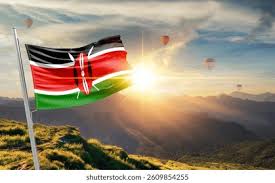
Kenya has sharply raised the cost of petroleum, with diesel prices rising by a record margin despite a fuel tax cut, as the conflict in Iran pushes up global oil prices.
In its latest review, the energy regulator raised the cost of diesel by 40 Kenya shillings to 206 ($1.
6; £1. 2) a litre, while petrol rose by 28 shillings to a similar level. It said this reflected higher global oil and shipping costs, even as the government cut value added tax to 13% from 16%.The new prices will last until 14 May when the next review is due.
Fuel shortages have been reported in parts of the country, although the government insists stocks are sufficient and accuses some fuel companies of hoarding supplies.
The reports of shortages have been overshadowed by controversy over an allegedly substandard consignment imported last month outside government-to-government arrangements and at a significantly higher cost.
Reports that the fuel may have entered the market after being blended with stocks in government storage tanks have sparked public outrage and calls for accountability.
The government has previously said it cancelled the consignment amid concerns over its quality and cost and barred oil marketers from selling it. The matter, which led to the arrest and resignation of senior energy officials, is still under investigation.
On Wednesday, the Energy and Petroleum Regulatory Authority (Epra) said the disputed consignment had not been included in the computation of the new prices.
The price rises come amid the global fuel crisis caused by the US-Israel war with Iran that began on 28 February.
Concerns remain that the energy crisis may deepen despite a conditional two-week ceasefire signed last Wednesday that included opening the Strait of Hormuz, a key shipping route for global oil and gas supplies.
Shipments through the strait have largely been at a standstill since the war began.
Countries have taken various measures to cope with the crisis and cushion consumers from the price shocks, including cutting taxes and minimising wastage.
Kenya’s directive to cut VAT on fuel is scheduled to last until July. South Africa announced a one-month cut in the fuel levy two weeks ago to limit pump prices.
Other African countries to have announced similar measures include Zambia, Namibia and Ghana, while South Sudan announced electricity rationing and Ethiopia prioritised certain sectors to deal with the crisis.



FCT Primary School Teachers Commence Indefinite Strike Today
ShareBy Laide Akinboade, Abuja The Nigeria Union of Teachers (NUT) FCT Wing, at the weekend said it has concluded an arrangement to commence indefinite strike over...
U-17 WWCQ: Guinea Thrash Niger to Set up Clash with Flamingos
ShareGuinea will face Nigeria’s Flamingos in the final qualifying round for the 2026 FIFA U-17 Women’s World Cup. The Guineans defeated...

Zelensky Condemns US Extension of Russian Sanctions Waiver
ShareUkraine’s President Volodymyr Zelensky has condemned a US decision to extend the period during which Russia is allowed to sell oil despite Western sanctions. The move means countries can...


Delta Unveils Plan to Tackle Hunger, Boost Food Security by 2030
ShareFrom Francis Sadhere, Delta The Delta State Government has reaffirmed its commitment to boosting food security through the development of a clear and practical implementation work plan aimed...

FG Debunks False Allegation on Hidden Agenda, Federal Revenue Diversion
ShareBy Tony Obiechina, Abuja The federal government has refuted media reports to the effect that a significant portion of federation earnings is...
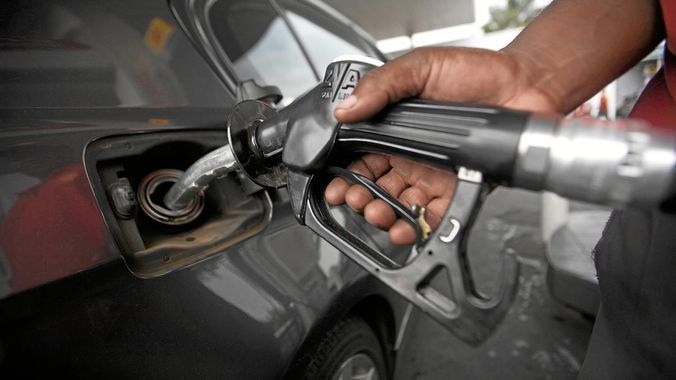
Petrol Consumption Hits 4.93bn Litres in Q1
ShareNigerians consumed about 4.93 billion litres of Premium Motor Spirit (petrol) to fuel various economic activities in the first quarter...

Religious Leaders Decry Rising Killings, Economic Hardship
ShareBy David Torough, Abuja Growing insecurity across Nigeria has drawn fresh concern from religious leaders, even as the military reports...

Abducted UTME Candidates Regain Freedom, Seek Second Chance
ShareFrom Attah Ede, Makurdi A unified picture of relief, controversy and ongoing examination processes emerged on Sunday as authorities confirmed...


Sultan wasn’t invited to Ecumenical Chapel Event – CAN
ShareBy Laide Akinboade, Abuja The Christian Association of Nigeria (CAN) at the weekend, dismissed a misleading opinion and related social...

Joseph Undu Bags National Safety Personality Award in Lagos
ShareBy David Torough, Abuja Award-winning Nigerian journalist and security analyst, Joseph Saater Undu, has been shortlisted for the prestigious Safety...