
NEWS
Home Run for Adams Oshiomhole

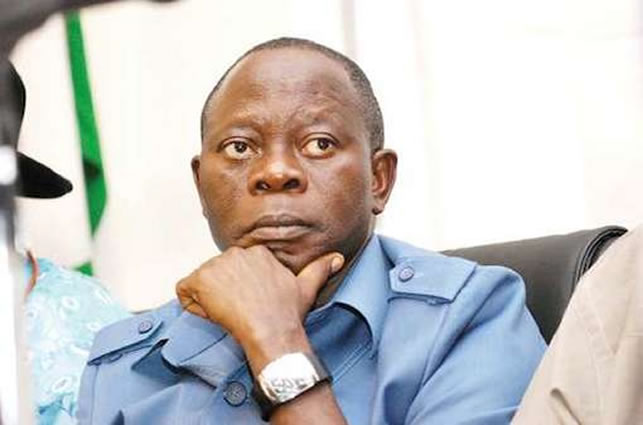
By Azu Ishiekwene
The Independent National Electoral Commission (INEC) had barely finished announcing the result of last Saturday’s Edo governorship poll when I got a call to eat the humble pie. Senator Adams Oshiomhole, the man I called a product vendor in my last article, had pulled off another big one.
Why? I had no dog in the fight.
But I got the drift. I had warned that given Oshiomhole’s reputation for campaigning for candidates for whom he often ended up apologising, voters could hardly ignore the warning label on his candidate, Monday Okpebholo, and that, at any rate, if it wasn’t that in politics, crime multiplies grace, Comrade’s factory should have been sealed or closed long ago.But he got this one, right? Okpebholo, who Oshiomhole carried on his back throughout the campaign, is now governor-elect. The Comrade is entitled to ask his critics to eat the humble pie. Fair enough. While I shop for the sugar-free variety, let’s review the poll, starting with issues we might agree on.
Power shift
Rotation or zoning is still a crucial factor in politics. The two leading parties in the contest—the All Progressives Congress (APC) and the Peoples Democratic Party (PDP)—put forward candidates from Edo Central, which had not produced a governor before, except for the brief spell of Oserheimen Osunbor.
The governor-elect, Okpebholo (APC), and his rival, Asue Ighodalo (PDP), are from this senatorial district. But the Labour Party thought differently: the party put forward Olumide Akpata from Edo South, which, apart from being the home of Governor Godwin Obaseki, had also produced more governors than any other. Akpata invited the fight to his crowded backyard.
The first thing Saturday’s election taught was that Edo people wanted power to shift elsewhere. Ighodalo may not have reaped the full benefit, but the result showed that he defeated Okpebholo in Edo Central, even though he currently represents this zone in the Senate. That lesson – that zoning matters – was lost on Labour, and it paid dearly for it.
Godfather never sleeps
Godfathers matter, too. In elite circles and on TV discussion programmes, we can criticise godfathers and call them names, like I called Oshiomhole, a decorated vendor of lousy products. It doesn’t matter, as the results of the poll have shown. The election was a contest of godfathers: Oshiomhole vs. Obaseki, each with a hefty trail of other godfathers lurking in the shadows.
If godfathers didn’t matter, Obaseki wouldn’t go, like a thief in the night, accompanied by Ighodalo, to the Abuja private residence of the Minister of the Federal Capital Territory, Nyesom Wike, his interim godfather four years ago in a desperate attempt to curry favour.
Complaining about the role of godfathers in our elections won’t change anything. Party members or their sympathisers must be prepared to put their money and energy where their mouth is. It’s a waste of time to disregard party funding and involvement in party organisation, only to complain at elections that Piper Godfathers are playing a disgusting tune. They will.
Oshiomhole has redeemed himself as a preeminent product vendor and godfather of Edo politics. He has also retired Obaseki to Afrinvest or whatever may be left of his investment company.
There’s a life lesson here, too: choose your fight. The question was not who Obaseki was fighting but who he was not fighting. He fought Oshiomhole, fought those who sheltered him from vagrancy four years ago, fought his deputy, fought relations of his deputy in the civil service, fought anyone remotely connected to Oshiomhole, fought the Palace, and fought anyone who advised him to stop fighting. Ultimately, he’ll have to deal with the echoes of what might have been – alone.
Over their dead body
The poll tells us yet another thing—something the PDP may learn over its dead body: that the division in the party that snatched its cap in 2023 may behead it sooner than later. The ruling APC has had problems, especially concerning the chairman’s home troubles and the power tussle in the North Central. However, the gold for internal chaos must go to the PDP and the Labour Party.
Even though PDP governors converged on Benin during the election to present a common front, the party’s core – the governors and its National Working Committee – has been wracked by divisions. The same problem has split the Labour Party down the middle, with each party’s faction claiming to be the authentic one. On Saturday, the candidates of both parties were, strictly speaking, political orphans struggling to get to shore from the parties’ sinking boats.
Broken
Saturday also cleared any doubts that voter apathy is an increasingly severe problem. In a state with a population of about 4.4 million and over half registered voters, voter turnout was 24.49 percent. We have seen this trend in virtually every election. All that happens the day after is the parties and INEC trading blame.
Until politicians restore trust and people begin to see elections as a viable means of making politicians accountable, the voter numbers will continue to drop.
To make matters worse, elections have become warfare. For example, the ratio of voters to security personnel in the Edo election was 1:11. Ultimately, voters are either overwhelmed by indifference or lethargy or discouraged by fear.
But who cares? Once the results are announced and the winner is declared, those who are displeased and have the money go to court. Voters go home until the next cycle.
Adding up
Discrepancies between the figures on the election result viewer portal (iREV), the number of accredited voters, and what INEC finally announces remain a severe headache. The bimodal accreditation system’s whole point was to reduce significant disputes over figures and make the process more transparent.
Some progress has been made since Mike Tyson was on the voter roll, and palm kernel shells were improvised as thumbprints. Yet, it’s a considerable irony that the same system, which seemed to work well in 2020 and was praised by the PDP and independent monitors as a contributory factor for the poll’s success that year, was perhaps one of the most contentious in Saturday’s vote. INEC must get its act together.
Never say, never
And finally, we saw again on Saturday that interests are the only thing permanent in politics. And I’m not talking here about Philip Shaibu changing parties like underwear, although you would be right to cite that as a good example. I’m talking about Ighodalo and what might have been.
In case you missed it, Senator Babafemi Ojudu shared a viral message last week: Asue Ighodalo was a member of the Bola Ahmed Tinubu transition committee after he was elected Lagos State governor in 1999. In another life, Ighodalo, a dyed-in-the-wool Lagos Boy, might have been on Tinubu’s side, as Obaseki once was. What politics cannot divide does not exist.
But who knows? Never say never. If lousy product vendors can get a second – even a third – life, you never know what the future holds. As they wrote on the tail of that famous mammy wagon to Eastern Nigeria many years ago: No condition is permanent!Ishiekwene is the editor-in-chief of LEADERSHIP and the author of the new book Writing for Media and Monetising It.

By Mike Odiakose, Abuja
The National leader and former presidential candidate of the Social Democratic Party (SDP), Prince Adewole Adebayo, has joined other well meaning Nigerians with felicitate with an elder statesman, Alhaji Tanko Yakasai as he turns describing his new age as rare and majestic
In a congratulatory message on the auspicious event, Adebayo said: “Your life has become so deeply interwoven with the political journey of Nigeria that celebrating you is, in truth, celebrating the nation itself.
“Your 100 years summon not just admiration but reverence, for your presence in our national life reminds us of the long road we have travelled, the storms we have weathered, and the promises we must still labour to fulfill.
“Today is not merely a birthday; it is a national moment of reflection. It is the commemoration of a lifetime that stretches across a century of our collective hopes, struggles, triumphs, disappointments and renewed aspirations. It is the celebration of a man whose personal story is etched so deeply into the conscience of Nigeria that to speak of you is, in many ways, to speak of Nigeria’s own soul.
“Whenever I reflect on your life, I am struck by the truth that Nigeria has produced many public figures, but very few have endured with the consistency, clarity, courage and moral steadiness that define your towering legacy.”
He eulogized Alhaji Yakasai noting that in spite of the fact in 1925 when he was born when colonial rule held sway and the idea of an independent Nigeria was a distant horizon, Yakasai still emerged early as someone with a restless and determined spirit. ‘You were a young man who believed that freedom, justice and dignity must become the inheritance of all Nigerians, not privileges for the few. From your early activism in Northern Elements Progressive Union (NEPU) under the luminous guidance of Mallam Aminu Kano to your pivotal roles in shaping the First and Second Republics, the conviction that Nigeria must work for all her people has guided your entire life. That conviction has remained unsullied, unbent and unbroken.
“Whenever I listen to you or read your reflections on governance and nationhood, I am reminded of the rare blessing Allah has bestowed upon you; the blessing of a mind that refuses to age. At 100, your intellect retains the sharpness of a scholar, the discipline of a statesman and the moral clarity of a patriot who has never, for one day, retired from the obligation of thinking about Nigeria’s progress,” Adebayo stated.
He said every nation needs its moral anchors, noting that Yakasai represents one for Nigeria. He described the elder statesman as a living archive, a grand repository of wisdom shaped not by speculation but by lived experience, frontline service, courage in the face of repression and sacrifices made for the greater good. “You speak of colonialism, independence, coups, transitions, reconciliation and democratic rebirth not as someone who observed history from the gallery but as one who stood in the arena, feeling its dust and its fire.
“You have seen Nigeria in her brightest dawns and in her darkest nights. You have watched leaders rise with promise and fall through hubris; you have watched institutions flourish with hope and decay under neglect; you have seen policies lift citizens into dignity and others plunge them into despair.
“You have advised presidents, mentored young politicians, challenged those whose paths strayed from justice and comforted those whom the system forgot. Through all these shifting seasons, you have remained firm in principle, fearless in speech and unbending in patriotic devotion. “Whenever I consider my interactions with you, I am reminded that leadership is not a performance staged for applause but a sacred responsibility, that patriotism is not a slogan repeated for convenience but a lifelong covenant and that nation-building is not an event but a relay and you have carried your baton with honour for 100 years,” he said.
He described him as a man whose courage deserves its own chapter in Nigeria’s book of heroes, stressing, “You are not the kind of elder statesman who retreats into the comfort of age to offer safe or vague commentary. You speak truth even when truth is costly. You defend unity even when unity is under assault. You insist on justice even when justice is unfashionable. And for these convictions, you endured arrests, detentions and public criticisms; yet you remained unbroken. Your steadfastness is a rebuke to cynicism and a beacon to a generation that must rediscover its moral compass.”
He also described the people of Kano and the wider Northern region as a cultural treasure and a historic pillar, whose contributions helped shape regional identity and civic consciousness. “Yet you are far greater than a northern icon; you are a national symbol. Throughout your long and distinguished life, you have championed the idea that Nigeria’s diversity is not a burden but a divine blessing, provided we govern with fairness. Your friendships and alliances cut across ethnicity, religion, region and ideology. For a man who has witnessed nearly every storm of our national life to still believe so passionately in Nigeria’s potential is a profound testimony to your faith, resilience and patriotism. As you turn 100, my heart overflows with gratitude to Almighty Allah for preserving you,” he stated.
He prayed to God to strengthen him and bless his remaining years with peace, joy and fulfillment, adding that longevity is a gift but purposeful longevity is a miracle.
Continuing, he said: “May God preserve your wisdom for generations yet to come and may He grant that Nigeria, the nation you have served with body, mind and conscience, may one day, fully embody the ideals of justice, unity, compassion and accountable leadership that you have defended all your life. Your example calls every Nigerian to honesty in speech, fidelity in service, love for our country even when she stumbles and an unshakeable belief in the dignity of every citizen. If we imitate even a fraction of your courage and moral clarity, Nigeria will, undoubtedly, become a better nation.
“And so, today, we are not merely celebrating a birthday; we are celebrating a century of service, a century of conviction and a century of national memory. Alhaji Tanko Yakasai, you are a rare gift to Nigeria. Your life is a national treasure, a guiding light, a moral compass and a historical archive wrapped in human form.
“On this joyful day, on behalf of my family, my associates and every Nigerian who cherishes the values you embody, I honour you with deep respect, profound affection and sincere admiration. “Happy 100th birthday, Alhaji! Nigeria salutes you. History remembers you. The future will learn from you and may Allah bless you always. God bless the Federal Republic of Nigeria.”
By David Torough, Abuja
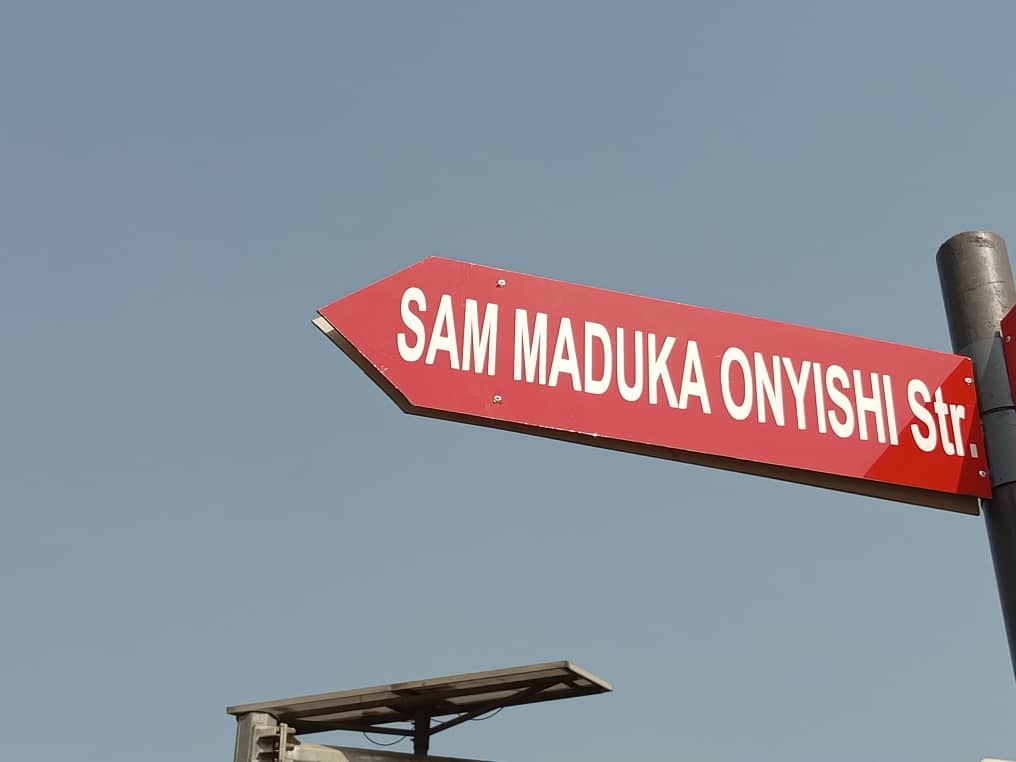
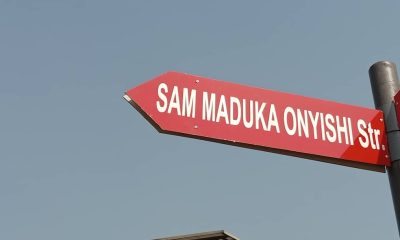
Authorities in the Federal Capital Territory on Saturday honoured renowned entrepreneur and philanthropist, Chief Dr. Sam Maduka Onyishi, with the unveiling of a street named after him in Asokoro, Abuja.
Speaking at the event, the representative of the Abuja Metropolitan Management Council’s Department of Street Naming, Mr.
Charles Adikwu, said the honour was in recognition of Onyishi’s remarkable contributions to national development, job creation, and community upliftment.Adikwu described the Peace Mass Transit founder as “a businessman who built his enterprises from scratch to the top,” noting that Onyishi has grown into one of Nigeria’s most influential private-sector employers.
The honouree is the Chairman of Globus Bank, Peace Microfinance Bank, Peace Oil & Gas, Peace Mass Transit, and the Chancellor of Sam Maduka University, Akwegbo, Enugu. According to Adikwu, Onyishi’s businesses have collectively provided employment to over 150,000 Nigerians, making him “one of the highest employers of labour in the country.”
Adikwu added that naming streets after distinguished Nigerians also enhances security and navigation within Abuja communities.
“If anything happens along this route, it can now be easily identified as taking place at No. 7 Sam Maduka Onyishi Street,” he said. “Before now, locating places involved unnecessary descriptions that sometimes complicated emergency responses.”
Also speaking, the Regional Manager of Peace Mass Transit (Northern Region), Mr. Ngwu Jude Chinweike, said the gesture reflects government’s increasing willingness to recognise individuals who positively impact society.
He expressed delight that his principal was among those honoured, describing the development as a morale boost for communities and a reminder that meaningful contributions do not go unnoticed.
“The public will now understand that when you make positive impact in your community, government has a way of recognising your efforts,” he said.
Chinweike noted that the newly named street is already attracting interest from businesses and institutions, including security agencies, and assured that Peace Mass Transit and Onyishi’s other subsidiaries would support efforts to enhance the area’s outlook.
“Since the street bears his name, we will keep our eyes here and contribute to ensuring it looks good,” he added.
Chief Dr. Sam Maduka Onyishi, widely regarded for his philanthropy and transformative investment footprint, continues to maintain an active presence in transportation, finance, energy, and education sectors across the country.
By Laide Akinboade, Abuja
Experts in the health sector, at the weekend agreed that even though foreign grants and aid remain highly valuable, it is imperative for the three tiers of government to increase domestic funding in Nigeria.
They agreed that it is only through the above the nation can build a resilient, domestically financed health system.
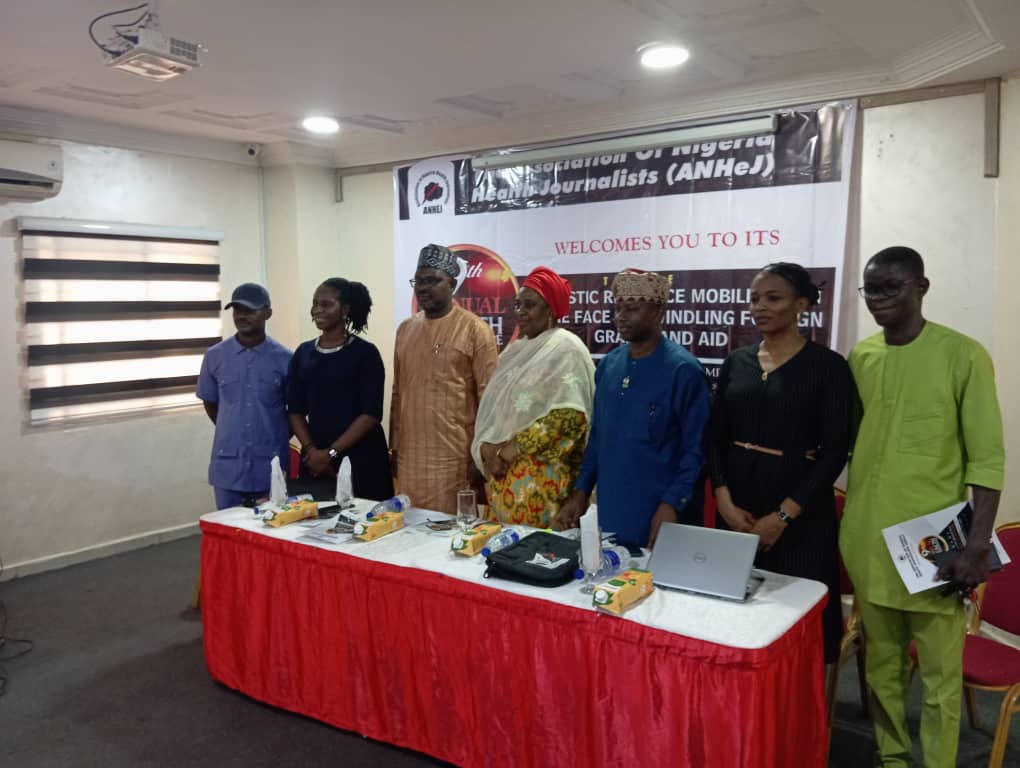
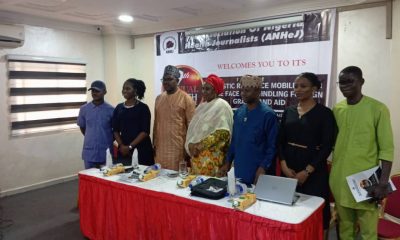
This was agreed at the 9th annual health conference organized by the Association of Nigeria Health Journalists (ANHeJ) in Abuja.
The theme of this year conference is ‘Domestic Resource Mobilization in the Face of Dwindling Foreign Grants and Aids’ .
Among those who spoke at the occasion, include, Special Adviser to President on Health, Dr.
Salma Ibrahim Anas, .Minister of State for Health and Social Welfare, Dr. Kunle Salako, representative from National Agency for Food and Drug Administration and Control, (NAFDAC), Dr. Matins Illuyomade,Salako who was represented by his Special Adviser, Dr. Babatunde Akinyemi, said Nigeria has benefited from substantial foreign health assistance, including over $6 billion from PEPFAR, $2.5 billion from the Global Fund, $1.5 billion from the World Bank, $1.2 billion from Gavi, and $1.6 billion from the Bill & Melinda Gates Foundation.
He stressed, that government initiatives under the Renewed Hope Agenda and the Nigeria Health Sector Renewal Investment Initiative (NHSRII), including the Basic Health Care Provision Fund (BHCPF), which has disbursed over N260 billion to states and the Federal Capital Territory since 2018, and the National Health Insurance Authority (NHIA) Act, mandating health insurance for all Nigerians.
He said, “The United States government, through PEPFAR, has invested over $6 billion in Nigeria’s HIV/AIDS response since 2004, with annual allocations averaging $400-450 million in recent years. In fiscal year 2023 alone, USAID (Now DoS) allocated approximately $535 million for health programs in Nigeria, covering HIV/AIDS, malaria, tuberculosis, and maternal and child health initiatives.
“The Global Fund to Fight AIDS, Tuberculosis, and Malaria has disbursed over $2.5 billion to Nigeria since 2003, making us one of the largest recipients globally. The World Bank currently supports our health sector with approximately $1.5 billion through various projects, including the $500 million Nigeria COVID-19 Action Recovery and Economic Stimulus Program and the $820 million International Development Association credit for primary healthcare strengthening. Similarly, Gavi, the Vaccine Alliance, has committed over $1.2 billion to Nigeria since 2001 for immunization programs, while the Bill and Melinda Gates Foundation has invested approximately $1.6 billion across various health interventions in Nigeria over the past two decades.
“The United Kingdom’s Foreign, Commonwealth and Development Office (FCDO), though reducing its overall aid budget, continues to invest significantly in Nigeria’s health system, particularly through the £210 million Health Systems Strengthening program. The European Union and its member states collectively provide approximately €100 million annually for health-related interventions, while the Government of Japan, through JICA, supports our health infrastructure development with grants averaging $30 million annually.
.Multilateral development banks and financial instruments have also remained vital partners; the World Bank in 2024 approved substantial concessional financing, including a major credit and complementary grant financing package that supports health outcomes and health system resilience across states and communities. Such financing is targeted not only at service delivery but at strengthening our ability to prevent, detect, and respond to emergencies”.
Salako noted, “Foreign grants and aid remain highly valuable and will continue to finance critical interventions for some time. But the future we must build is one where domestic resource mobilization, fiscal discipline, efficient spending, and innovative financing are the engines that sustain our national health priorities. The Government of Nigeria is already advancing legal and budgetary instruments, leaning on proven programme data, and working with partners to protect gains while we scale domestic financing.
“Our commitment is to ensure that no Nigerian is left behind during this transition, and that we convert a period of funding volatility into a long-term opportunity to build a resilient, domestically financed health system”.
The Minister of state also enumerated the innovative domestic financing efforts at the state and private sector levels.
“Lagos State allocates over 12% of its budget to health, Kaduna State’s contributory health scheme has enrolled 1.6 million residents, and Abia State has launched a diaspora health investment fund.
“The Private Sector Health Alliance of Nigeria and the Nigeria Sovereign Investment Authority contributed over N50 billion and $200 million, respectively, to health initiatives,” he said.
Dr. Salma, in her presentation, said, donor fatigue is real, and the inevitable graduation of Nigeria from various aid programs is approaching.
In his welcome address, ANHeJ President, Joseph Kadiri, said the conference theme, “Domestic Resource Mobilisation in the Face of Dwindling Foreign Grants and Aid,” underscores the urgent need to strengthen domestic financing, partnerships, and resilient health institutions.
Kadiri called on journalists to track government commitments, highlight gaps, and amplify the realities faced by Nigerian families.

Is Community Parenting Still Relevant?
ShareBy Dorcas Jonah In the Nigerian culture, extended families and communities play a crucial role in care-giving, instilling values, and...

Tinubu’s Ambassadors Should Undergo Rigorous Senatorial Scrutiny
ShareMore than two years after terminating the services of all ambassadors, appointed by the previous administration; precisely on September 2,...

Former Liverpool Co-owner Hicks Dies at 79
ShareFormer Liverpool co-owner Tom Hicks has died at the age of 79. The American, who owned the club alongside George...


NGX Says Reforms Set to Strengthen Nigeria’s Investment Climate
ShareChairman, Nigerian Exchange Group (NGX), Dr Umaru Kwairanga, said ongoing regulatory reforms are positioning țhe nation’s capital market to attract...


Adebayo, Obi Have Capacity, Knowledge Determination to Lead Nigeria – Pastor Ituah Ighodalo
SharePastor Ituah Ighodalo is a prominent man of God who supritends Trinity House, a non denominational Christian fellowship centre. He...


SDP Leader, Adebayo Celebrates Tanko Yakasai at 100
ShareBy Mike Odiakose, Abuja The National leader and former presidential candidate of the Social Democratic Party (SDP), Prince Adewole Adebayo,...

PDP BoT Vows to Restore Confidence, Holds
ShareBy Laide Akinboade, Abuja The Peoples Democratic Party (PDP) Board of Trustees (BoT), Wike’s fraction on Sunday, vowed to restore...

LP Reps Accuse Tinubu, APC of Choosing 2027 over Citizens’ Security, Welfare
ShareBy Ubong Ukpong, Abuja The Labour Party Caucus in the House of Representatives has accused President Bola Tinubu and his...

Street Named After Business Mogul, Sam Maduka Onyishi Unveiled in Asokoro
ShareBy David Torough, Abuja Authorities in the Federal Capital Territory on Saturday honoured renowned entrepreneur and philanthropist, Chief Dr. Sam...

Experts Task Government on Increase in Domestic Funding
ShareBy Laide Akinboade, Abuja Experts in the health sector, at the weekend agreed that even though foreign grants and aid...