
Education
How female Medicine Degree Holder Abandoned Certificate for Carpentry- Bugaje


The Executive Secretary, National Board for Technical Education (NBTE), Prof. Idris Bugaje has expressed the need to promote inclusivity, especially for women and persons with disabilities in technical education.
Bugaje stated this in Abuja while assessing the impact of President Bola Tinubu’s administration after two years in office.
He appealed for greater gender inclusivity in vocational and technical education, stressing that deliberate policies such as scholarships and incentives could help bridge the gender gap.
In support of his position, Bugaje shared an inspiring story of a female medical doctor who abandoned her medical career to pursue carpentry.
“There is a story I want to share with you, about a girl who was interested in becoming a carpenter.
“The father was a carpenter and they were four children in the family, three boys and herself.
“Whenever she joined the boys to the workshop, the father would send her away, saying, `you are a girl, go back to the house, you are not supposed to be a carpenter’’.
“Without giving considerations to the passion of the young girl, the father sent her to a medical school.
“She graduated with the MBBS, went and did the one-year internship after graduation, and chose a role as a medical doctor.
“After that, she came back to the father, returned the MBBS certificate to him, and thanked him.
“Afterward, she told the father that her passion is in carpentry, not to practice as medical doctor,” Bugaje narrated
He added that after spending seven years on medical training, the father had no option but to send her to Turkey to learn how to make furniture.
Addressing cultural and societal barriers often faced by young women in technical fields, Bugaje appealed to parents to support their daughters’ interests in trades like plumbing, electrical installation, and carpentry.
He also called on policymakers to prioritise passion and skill development among youth, especially girls, noting that such encouragement could lead to greater innovation and self-reliance.
“If they want to become carpenters, ICT experts, or POP artists, allow them.
“In skills’ training, passion is very important. That’s what motivates children and helps them innovate.
“We need to harness these innovations if the country is to move forward and rise beyond being a third-world nation,” he said.
He emphasized the need to have deliberate policies to encourage women to come into TVET through scholarships and other incentives. (NAN)
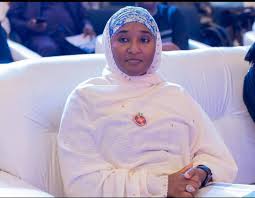
The Minister of State for Education, Prof. Suwaiba Ahmad has expressed satisfaction with the conduct of the National Examinations Council (NECO) Computer-Based Test (CBT) Senior School Certificate Examination,
Ahmad, while monitoring the ongoing examination at Redeemers Teap School and Anglican Girls’ Grammar School on Wednesday in Abuja, described the exercise as a major step towards eliminating examination malpractice.
She said feedback from candidates at both centres indicated that most of them preferred the CBT format to the traditional paper-based examination.
According to her, the candidates also confirmed that they experienced no technical glitches and that the examinations commenced on schedule.
”I spoke with a lot of the students and most of them said they prefer the CBT examination.
”They also confirmed that they had not seen the examination questions before the test and that each candidate answered a different set of questions randomly.
”The CBT makes communication between candidates impossible and is one of the best ways of tackling examination malpractice,” she said.
The minister said the successful deployment of CBT represented significant progress in the education sector, adding that the government would only proceed with full transition after ensuring adequate infrastructure nationwide.
”We will not begin the full transition until we have everything in place because we do not want to put any student at a disadvantage.
”We are working with the National Assembly, state governors, private partners and other stakeholders to provide the facilities required for a seamless nationwide transition,” she said.
Ahmad added that the adoption of CBT would ultimately improve the quality of education by promoting merit and integrity in examinations.
Also speaking, the Registrar of NECO, Prof. Ibrahim Wushishi, said the council recorded no technical hitch since the commencement of the examination.
”They assured me that since the commencement of this year’s examination, they have not experienced any technical glitch. The exams were ready, they started on time, no hiccups, no network problems, nothing like that.”
He disclosed that 1,378,048 candidates registered for this year’s Senior School Certificate Examination, with female candidates slightly outnumbering their male counterparts.
According to him, the increasing participation of girls reflects the impact of government policies promoting girl-child education.
Wushishi also said NECO had about 10 CBT centres in the Federal Capital Territory (FCT), adding that the council is expected to release the examination results by the first week of September to support the 2026 admission process.
He reaffirmed that the CBT system, through question randomisation, had greatly reduced opportunities for examination malpractice while enhancing the credibility of the examination process.
One of the candidates, Ambassador Alabi, from Redeemer’s teap described the CBT experience as seamless and more convenient than the traditional paper-based examination.
Another Candidate from the Anglican girls school Isaac Abioro said CBT examination has been efficient and easy to answer questions and there have not been any technical glitch in the process so far
On her part the Principal of Anglican Girls’ Grammar School, Mrs Nkiruka Nwafor, said the transition to CBT was preparing students for a technology-driven future.
According to her, the school adopted the system early to familiarise students with computer-based examinations before external assessments.
”The CBT experience is what we’ve all been waiting for. The future our girls are going into is dynamic and heavily ICT-driven.
”We are excited that our proprietor got on board. We have also introduced CBT for some of our internal examinations so that from JS1 and JS2, the students gradually get used to the system. So it’s about time, and it’s good that it’s happening,” she said.
The monitoring exercise at Redeemer’s Teap Secondary School and Anglican Girls’ Grammar School showed candidates writing the examination in an orderly environment without reported technical challenges.

By Tony Obiechina, Abuja
The Federal Government has suspended the proposed review of registration fees for the 2027 West African Senior School Certificate Examination (WASSCE) and the National Examinations Council (NECO) Senior School Certificate Examination (SSCE).
The federal government last week announced the jacking up of the fees from N27,500 to N50,000.
However, in a statement on Monday July 13, 2026, signed by Director, Press and Public Relations, Boriowo Folasade, the Federal Ministry of Education announced that the letter conveying the proposed fee adjustment, dated June 18, 2026, has been withdrawn to allow for a comprehensive review and broader consultations with all relevant stakeholders before a final decision is taken.
According to the statement, the Ministry acknowledged the concerns and constructive feedback received from the public and appreciates the keen interest shown by Nigerians in matters relating to access to quality education.
The statement read: “The proposed review was informed by the prevailing economic realities and the rising cost of conducting credible national examinations.
“The current examination registration fees have remained largely unchanged for several years despite significant increases in operational costs, including logistics, security, printing of examination materials, technology deployment, quality assurance and other essential services required to maintain the integrity and credibility of public examinations across the country.
“Nevertheless, the Honourable Minister of Education, Dr. Maruf Tunji Alausa, has directed that the proposal be placed on hold in line with the Federal Government’s commitment to inclusive, transparent and evidence-based policymaking.
“This decision underscores the Ministry’s determination to ensure that policies affecting millions of Nigerian students and their families are carefully considered, socially responsive and reflect the collective interest of the nation.
“As part of the fresh review process, the Ministry will further engage extensively with examination bodies, State Ministries of Education, school proprietors and administrators, parents’ associations, organised labour, education stakeholders and other critical partners to ensure that any future decision is fair, sustainable, transparent and responsive to prevailing realities while safeguarding access to education.
“Accordingly, the proposed review of examination registration fees will not take effect, as earlier communicated, pending the conclusion of the consultation process.
“The Federal Ministry of Education reassures Nigerians that the welfare of students, equitable access to quality education and responsible policy decisions remain at the heart of the Renewed Hope Agenda of President Bola Tinubu, for the education sector.
“The Ministry appreciates the understanding, patience and continued support of all stakeholders and remains committed to keeping the public fully informed throughout the consultation process.”, it added.

The Federal Government’s approval of a N50,000 registration fee for National Examinations Council (NECO) and West African Examinations Council (WAEC) from 2027 has attracted mixed reactions from education stakeholders.
In separate interviews on Sunday in Abuja, some of the stakeholders described the increase as excessive and unaffordable, warning it could worsen financial pressure on families and students.
Others urged the government to review the decision, introduce subsidies for vulnerable candidates, and ensure any fee adjustment reflects prevailing economic realities and wider stakeholder consultations.
However, some stakeholders supported the review, arguing that improved funding could strengthen certificate verification, digital infrastructure and service delivery if implemented with transparency and affordability safeguards.
The approval was conveyed by the Federal Ministry of Education in a memo dated June 18, 2026, signed by the Director of Senior Secondary Education, Adeniji Ibrahim.
The memo was signed on behalf of the Minister of Education, Dr. Tunji Alausa, following a directive to harmonise WAEC and NECO Senior School Certificate Examination registration fees.
Under the approval, NECO’s SSCE internal fee will rise from N30,000 to N50,000, while WAEC’s will increase from N27,000 to N50,000 from 2027.
An educationist, Beatrice Oke, described the increase as excessive despite acknowledging rising operational and logistics costs.
“The percentage increase is too high, although we expected a review after some time due to rising logistics costs.
“However, many average Nigerians may not afford the new fees, and this could force some students out of school,” she said.
Oke urged the government to review the increase or introduce measures to cushion its impact on low-income households.
She said affordable examination fees were vital to sustaining access to education and preventing more children from dropping out of school.
She also urged governments at all levels to expand subsidies and intervention programmes for vulnerable students to guarantee equitable access to education.
A private school owner, Funmilayo Soyoye, also described the increase as excessive.
She said many graduates seeking employment or admission for further studies might struggle to pay the new fee.
“Certificate verification is a mandatory requirement for many academic and employment processes and should remain affordable.
“The government should consider the economic realities facing Nigerians before approving such a sharp increase.
“This policy may discourage many young people from pursuing opportunities that require certificate verification,” she said.
Another school owner, who preferred anonymity, urged the government to justify the increase.
The proprietor said any fee review should be transparent and reflect improvements in service delivery.
According to the school owner, certificate verification should become faster, more efficient and more accessible.
A parent, Alhaji Abdulfatai Ibrahim, appealed to the government to rescind the decision in the interest of students and job seekers.
He said the increase would worsen hardship for families already grappling with rising education costs.
Ibrahim urged the authorities to engage stakeholders and adopt a more moderate pricing structure.
However, an education consultant, Olamide Ogunkoya, said the review might be justified if it strengthened certificate verification and digital infrastructure.
She said investment in secure verification systems would curb certificate fraud and enhance the credibility of Nigerian examination bodies.
Ogunkoya urged the government to balance cost recovery with citizens’ access to essential public services.
She also called for wider consultations before implementing major education policies, stressing that affordability and accessibility should remain central to reforms.
The memo, directed to the Registrar, NECO, conveying the increase, read:
“Re: Upward review of registration fees for examinations conducted by NECO.
“The West African Examinations Council has requested an upward review of the examination fees for the Senior School Certificate Examination for school candidates, with effect from 2027.
“You may recall that at a meeting of examination bodies held with the Honourable Minister of Education on March 31, 2026, where the need for upward review of examination fee was discussed, the Honourable Minister of Education directed that WAEC and NECOshould adopt a uniform fee for the conduct of the SSCE.
“Consequently, I am directed to convey the Honourable Minister of Education’s approval of the sum of Fifty Thousand Naira (N50,000) only, as the new examination fee for candidates with effect from NECO SSCE internal 2027.
“You are to bring the content of this letter to all stakeholders.
“Please accept the Honourable Minister’s warm regards.”




Tinubu, Shettima not Elected by Muslims Alone, Northern Christian Chair Slams Cleric
ShareChairman of the Northern Christian Association, NCA, Rev. Joseph Hayab, has said President Bola Tinubu and Vice President Kashim Shettima...

Dangote Confident on Group’s Projected $100bn Revenue Target By 2030
ShareAliko Dangote, has expressed confidence in his company meeting estimated revenue growth in the next four years. He said detailed...


Chevron Says Competitive Local Capacity Devt to Define Nigeria’s Energy Future
ShareThe Managing Director of Chevron Nigeria Limited, Jim Swartz, has highlighted key areas that would sustain Nigeria’s energy transition growth...
Reading the Early Signals of Nigeria’s 2027 Presidential Contest
ShareBy Tom Chiahemen In Chinua Achebe’s Things Fall Apart, the wrestling arena was more than a place where strong men...
Dressing, Addressing, and Redressing Nigeria’s Lawyers and Judges
ShareBy Chidi Anselm Odinkalu On 20 June 2011, Willy Mutunga assumed office as the first Chief Justice of Kenya under...


Kyari Charges BOA to Explore Blended Finance, Guarantees to Boost Agric Lending
ShareBy Raphael Atuu, Abuja The Minister of Agriculture and Food Security, Sen. Abubakar Kyari, said the Federal Government is repositioning...


Akume Hails Tinubu’s Infrastructure, Education, Security Achievements
ShareBy David Torough, Abuja The Secretary to the Government of the Federation (SGF), Senator George Akume, has commended President Bola...

Enugu Civil Service Commission Gets New Chairman
ShareFrom Sylvia Udegbunam, Enugu Enugu State Governor Peter Mbah has appointed the former Permanent Secretary, State Ministry of Information, Chris...
FACAN Petitions EFCC over Alleged N150m Fraud, Impersonation in Benue
ShareFrom Attah Ede, Makurdi The Federation of Agricultural Commodity Association (FACAN), Benue State chapter, has petitioned the Economic and Financial...


FG Inaugurates Advertising Offences Tribunal to Strengthen Industry Regulation
ShareBy David Torough, Abuja The Federal Government has inaugurated the newly constituted Advertising Offences Tribunal as part of efforts to...