
POLITICS
I Would Love To See Buhari Handcuffed And Made To Pay For His Crimes – Sowore

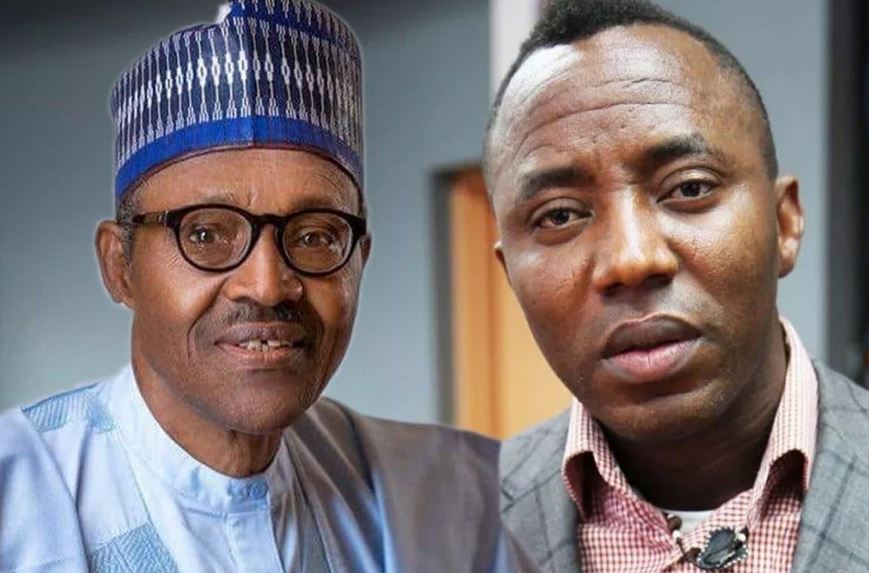
Nigerian activist and 2023 presidential candidate of the African Action Congress (AAC), Omoyele Sowore, on Wednesday, stated that his greatest joy would be to see the immediate past president, Muhammadu Buhari handcuffed and made to pay for his alleged crimes against humanity.
Sowore said that while former leaders in civilised countries are arrested and prosecuted for their crimes, in Nigeria, they are rewarded with pensions.
The AAC presidential candidate, while speaking at an event to mark the 2023 International Day of the Victims of Enforced Disappearance, in Abuja, submitted that he would love to see Buhari handcuffed and made to pay for all his crimes against Nigerians, either in Nigeria or at the International Criminal Court (ICC).
Citing the case of the former United States president, Donald Trump, who has been charged with different crimes, Sowore noted that “Nigerian leaders who engage in corruption, abuse of human rights, are given red carpet reception every day and every night everywhere, including the one that just left (Buhari).
“The moment he left, the Nigerian government first paid for him to go and do a medical check-up in London instead of putting him on the plane to go to the ICC (International Criminal Court).
“Because the force disappearance we are seeing is small compared to what the Buhari regime did in terms of human rights violation.
“We are not talking about people who were summarily executed, having been labelled as IPOB (Indigenous People of Biafra) members or the 3,000 Shiite members that were killed and buried overnight in Zaria.
“The person who did it, the governor of the state, was about to be made a minister, and he is now a reggae musician because they didn’t make him a minister.
These are grievous crimes, and Nigeria has witnessed too many of these inhuman crimes – degrading treatment and torture of its citizens that we should not be appealing to the government. We should not be appealing to the people who are responsible for committing the crimes.
“Nigeria must reach a level where Nigerian leaders pay for their own crimes – whether they are in office or outside of office.
“I would love one day to see Buhari handcuffed to pay for his crimes, if not in this country, at the International Criminal Court of Justice.”
Speaking further, Sowore stated, “These crimes don’t have a statute of limitations. It doesn’t matter whether you committed force disappearance in 1960 or in 2023; you can be punished for it at any age as long as you are alive.
“It applies to the military, the police officers, the DSS (Department of State Services) or anybody within the Nigerian security agencies.
“The DSS officers behave as if they don’t have names, families and records. We know all of them. If you have been working against the Nigerian people, no matter how long it takes, you must be made to pay for the atrocities you committed against the Nigerian people.
“It is not true that nothing will happen forever. Some of them will start paying for their crimes when they retire.”

By David Torough, Abuja
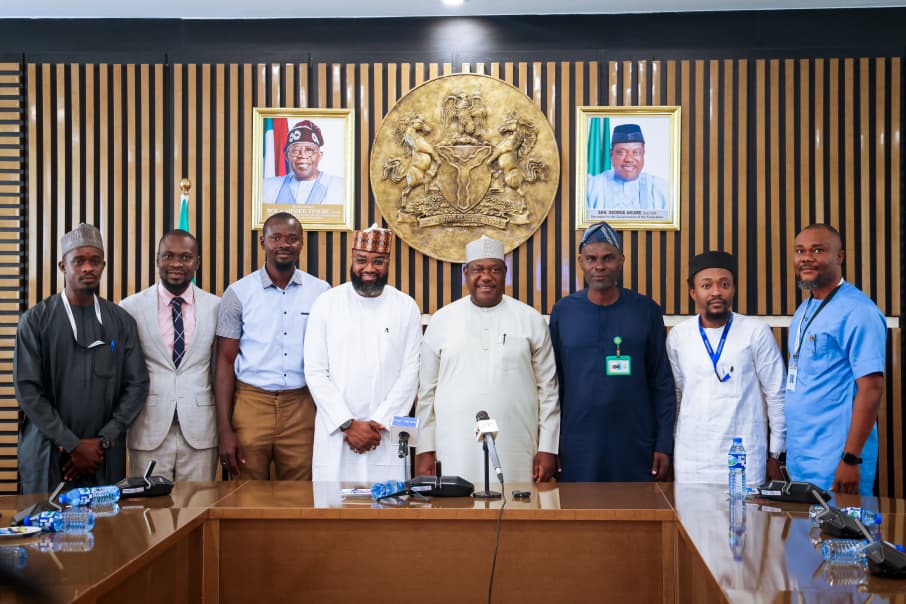
The Secretary to the Government of the Federation (SGF), Senator George Akume, has commended the National Agency for Science and Engineering Infrastructure (NASENI) for its strides in innovation and technological development, assuring the agency of the Federal Government’s continued support.
Akume gave the commendation on Tuesday, September 8, 2026, in Abuja when he received NASENI’s Executive Vice Chairman and Chief Executive Officer, Khalil Suleiman Halilu, members of his management team and winners of the agency’s Innovation Assessment and Award Competition.
The SGF described NASENI’s inter-agency and intra-agency innovation competition for federal civil and public servants and Ministries, Departments and Agencies (MDAs) as a significant milestone in efforts to develop home-grown solutions to Nigeria’s challenges.
He said the innovative products emerging from the competition could have significant implications for national security, food sovereignty and healthcare, adding that the achievements demonstrated the depth of talent and ingenuity among young Nigerians.
“Nigeria has talents. I don’t doubt about that. Wherever you go in the world, Nigerians are recognized as people with lot of talents and people with a great future,” Akume said.
He also praised NASENI for adopting what he described as a transparent and non-partisan process in selecting and assessing the innovations, saying the credibility of the competition would encourage more Nigerians to come forward with innovative ideas.
Akume expressed optimism that sustained government support could enable Nigeria to attain greater technological heights, including developing advanced aerospace capabilities.
“Tomorrow, who knows, Nigeria can manufacture rockets that can send people to the moon. And this can be the courtesy of NASENI,” he said.
Earlier, Halilu said the award programme was designed to identify and recognise outstanding contributions by civil and public servants through both inter-agency and intra-agency competitions.
He said NASENI’s innovation strategy goes beyond developing technological products to equipping innovators with skills needed to commercialise their ideas successfully.
According to him, technical and engineering expertise must be complemented by competencies in accounting, marketing and business development for innovations to achieve their full potential.
Halilu disclosed that NASENI had, in about two years, facilitated the establishment of 20 factories across the country and developed more than 40 products as part of efforts to transform research and innovation into commercially viable solutions.
He added that the agency had also introduced programmes aimed at identifying and nurturing innovators from an early age. One of the initiatives, the Future Makers Programme, targets children between five and 15 years to stimulate interest in science, technology, engineering and innovation.
The meeting also featured demonstrations by representatives of two of the six winners of the innovation competition.
A team from the National Space Research and Development Agency (NASRDA) showcased a security jacket equipped with technology designed to facilitate real-time communication with the command-and-control centres of security agencies, potentially improving coordination and response.
The winning team from NASENI, meanwhile, presented a commercial electronic platform designed to serve as a digital marketplace through which MDAs can promote and market their goods and services.
Akume congratulated NASENI and the winners of the competition, reaffirming the Federal Government’s commitment to creating an enabling environment for research, innovation and technological development in Nigeria.
From Ayinde Akintade, Osogbo
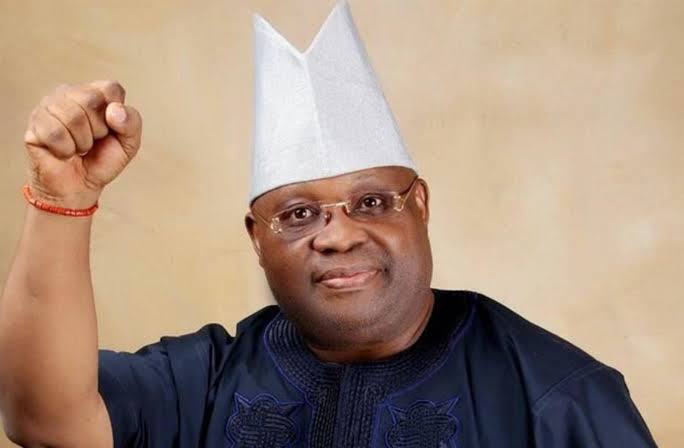
The All Progressives Congress has taken Osun state Governor Ademola Adeleke’s re-election to court as the petition is now on the notice board of the Osun State Governorship Election Petition Tribunal in Osogbo.
The papers went up on Monday, 7 September.
Tribunal secretary Pefe Belemore had said the notices would be displayed before noon. Secretariat staff were already in the courtroom as preparations for sitting continued.Two petitions challenge the 15 August result that returned Adeleke for another term.
The APC case, marked EPT/OS/GOV/01/2026, was filed by its candidate, Asiwaju Munirudeen Bola Oyebamiji, against Adeleke, the Accord Party and the Independent National Electoral Commission.
The Peoples Democratic Party case, marked EPT/OS/GOV/02/2026, was filed by Adebayo Olugbenga Adedamola against Adeleke, INEC and Accord.
Display of the petitions is a procedural step. The parties must still be served before full hearing begins. Adeleke remains the declared winner. The detailed grounds of each petition have not been published. The tribunal has not issued a ruling.
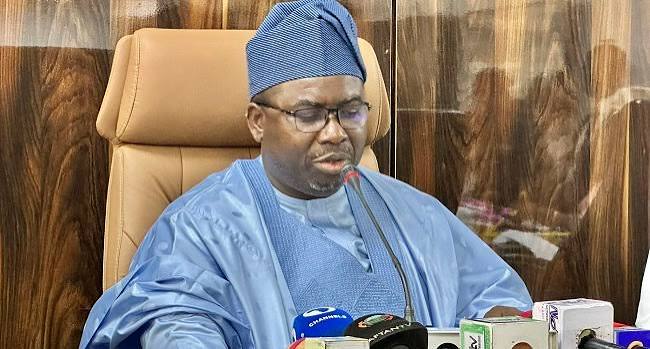
Chairman, Independent National Electoral Commission (INEC), Prof. Joash Amupitan, has urged Administrative Secretaries to reject shortcuts and political interference in the discharge of their duties ahead of the 2027 general elections.
Amupitan gave the charge on Monday in Lagos at a Strategic Operational Workshop for INEC Administrative Secretaries from the 36 states and the Federal Capital Territory.
He said the professionalism of state offices depended largely on the institutional culture created by Administrative Secretaries and their commitment to discipline, neutrality, punctuality and compliance.
The INEC chairman also urged the Administrative Secretaries to remain professionally competent and sufficiently knowledgeable to prevent anyone from taking advantage of them in the discharge of their responsibilities.
Amupitan said the Administrative Secretary remained a critical bridge between INEC policy and its implementation at the state level.
He said their responsibilities included ensuring institutional discipline, operational readiness, administrative continuity, proper documentation and early escalation of emerging challenges.
According to him, Administrative Secretaries must also support Electoral Officers, promote neutrality and protect the institutional independence of the Commission.
The chairman said lessons from recent off-cycle elections, particularly the Osun Governorship Election, had demonstrated that effective logistics, functional technology and administrative discipline were critical to credible elections.
Amupitan, however, said the success recorded in single-state elections must now be translated into a uniform national operational standard ahead of the general election.
He said the Commission was entering a critical six-month preparation window and could no longer afford fragmented interpretations of administrative responsibilities or divergent operational practices across states.
The chairman said the two-day workshop was designed to eliminate guesswork, harmonise operational strategies and ensure that Administrative Secretaries understood standardised national protocols.
He said the workshop would focus on Continuous Voter Registration and Permanent Voter Card distribution, logistics and election materials management, electoral technologies, human resources and ad-hoc staff optimisation and others.
Amupitan said particular attention would be given to institutional mastery of technologies including the Bimodal Voter Accreditation System (BVAS), IReV, eEC8A, Election Monitoring and Support Centre (EMSC), CROMS, IOMIS and PFRAS.
He said the Commission would also develop a standardised Excel-based Administrative Secretary Master Operational Tracker to provide a real-time picture of state-level election readiness.
According to him, the tracker will link with the EMSC dashboard and Election Project Plan, enabling relevant officers at the state and headquarters levels to monitor material distribution, ad-hoc staff training and other readiness indicators.
The chairman said the template would also provide a permanent onboarding framework for future Administrative Secretaries beyond the 2027 election.
He urged the participants to engage actively with facilitators and development partners, identify state-specific operational bottlenecks and leave the workshop with a clear understanding of their mandates.
Amupitan said the synergy between Administrative Secretaries and Resident Electoral Commissioners would be crucial to the smooth conduct of the 2027 General Election.
He commended the Office of the Secretary to the Commission and development partners for organising the workshop, describing it as timely and necessary for national electoral preparedness.
In his address, Prof. Ayobami Salami, Resident Electoral Commissioner (REC), Lagos State, urged INEC Administrative Secretaries to strengthen coordination, accountability and operational readiness ahead of the 2027 General Election.
Salami stressed the need for strategic, systematic and collective preparation for the election.
He said Administrative Secretaries occupied a critical position in election administration, with their effectiveness having direct implications for the success of electoral operations.
Salami urged participants to share field experiences, identify operational gaps and develop practical solutions that could be applied in their respective states.
He said the ultimate value of the workshop would be measured by how effectively participants translated lessons from the sessions into improved operations, stronger accountability and resilient systems for the 2027 election.
Speaking, Rose Oriaran-Anthony, INEC Secretary, urged Administrative Secretaries to ensure greater synergy with Resident Electoral Commissioners (RECs) to enhance preparations for the 2027 General Election.
Oriaran-Anthony said the Commission had convened the workshop to ensure that its headquarters and state offices operated within the same framework and implemented the Election Project Plan in line with its expectations.
She said the workshop would provide a safe space for Administrative Secretaries to openly identify operational bottlenecks, particularly those affecting their working relationships with RECs, and collectively develop solutions.
According to her, logistics, recruitment and training of ad-hoc personnel, financial and asset management, staff discipline and mastery of electoral technologies would be central to the workshop.
She said getting these areas right would make the 2027 election easier to administer. (NAN)




Information Minister Backs NIPSS Plan to Unlock Nigeria’s Orange Economy Potential
ShareBy David Torough, Abuja The Federal Government has pledged its support for the National Institute for Policy and Strategic Studies...


Google Warns against Using AI as Shortcut to Learning
ShareGoogle on Tuesday warned against using Artificial Intelligence (AI) as a shortcut to learning, urging students to harness the technology...


FRSC Records 25 Per Cent Reduction in Road Crashes in Osun
ShareThe Gbongan Unit Command of the Federal Road Safety Corps (FRSC) in Osun recorded a 25 per cent reduction in...
OPEC May Review Members Production Capacity to Arrive At 2027 Output Baseline
ShareThe Organization of Petroleum Exporting Countries (OPEC) may most likely be going to pause its output increases for the fourth...


First Bank Backs 10th Calabar Entertainment Conference, Festival
ShareFirst Bank has renewed its partnership with the Calabar Entertainment Conference and Festival (CECF) as the event’s official banking partner...


FIFA Yet to Decide on NFF Visit to Nigeria
ShareWorld football governing body FIFA said it is yet to reach a decision on the future of the Nigeria Football...

Adeleke, ASUU Differ over Tenure Extension for UNIOSUN VC
ShareThe Osun State Government has urged members of the Osun State University community to refrain from actions capable of creating...

Translate Capital into Productive Investment, Tinubu Urges Banks
SharePresident Bola Tinubu has called on the financial services industry to translate their capital into productive investment and employment opportunities...
Gunmen Launch Attacks on Kaduna Communities, Kill Five, Abduct 27
ShareFrom Agbo Emmanuel, Kaduna Suspected bandits have launched a fresh wave of attacks across parts of Kaduna State, killing at...
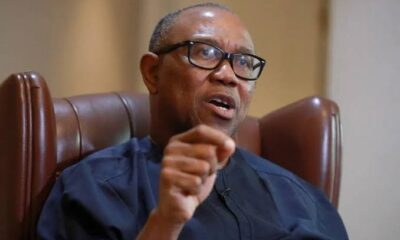

Benue Blockade: Obi, Alia Trade Blame over Disrupted Yelewata Visit
ShareFrom Attah Ede, Makurdi A planned visit by the presidential candidate of the Nigeria Democratic Congress (NDC), Peter Obi, to...