
DEFENCE
ICPC does not Spend Recovered Funds — Owasanoye

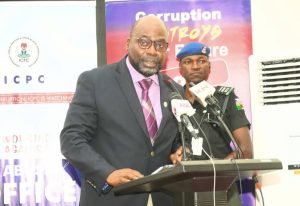
The Chairman, Independent Corrupt Practices and Other Related Offences Commission (ICPC), Prof. Bolaji Owasanoye, has said that money recovered by the commission is paid into the coffers of the Federal Government.
The chairman disclosed this at a one-day Sensitisation Dialogue with stakeholders on Behavioural Change, National Ethics and Integrity Policy on Wednesday in Abuja.
The workshop is an avenue to sensitise stakeholders on its Constituency Projects Tracking Initiative which commenced in 2019, focusing on how well money allocated to critical sectors by government is utilised.
The project is in it fourth phase with the recovery of assets worth billions of Naira to the government, return of equipment to communities for whom they were meant.
Also, the project has forced a lot of contractors to return to sites and completed hitherto shoddily done or abandoned projects.
The exercise, however, led to revelation that some projects were excellently and completely executed.
Reacting to question on what happened to recovered assets, the ICPC boss reiterated that all the monetary recovered goes into the ‘Recovery Account’ and the account is with the Central Bank of Nigeria (CBN).
He said the commission has no powers over funds or assets recovered from corrupt people, adding that it does not spend recovered funds.
“The commission has a designated account for the recovery of proceeds of crime known as ‘ICPC Recovery Account’ into which all recovered funds were paid into
“Let me clear some of the misinformation out there. First thing is that, all the monetary recoveries goes into the recovery account.
“And there’s a lot of misinformation out there and it’s because there is a high level of cynicism. People do not believe anything righteous about the government.
“But I can swear an affidavit I can go on oath and swear on the Bible. Since I resumed in ICPC, no one kobo from recovered assets have been diverted.
“What is the proper thing? There is a recovery account the money goes there, that’s one.
“So if it is liquid cash, the money goes there and that account is in the CBN. This information is important for community leaders to have because most people just accuse and say things that are simply incorrect.
“You can ask anybody that you know who has ever been the suspect of investigation by ICPC.
“They have paid through remittance into the recovery accounts called ‘ICPC Recovery Account’, he said.
Owasanoye further explained that the Proceeds of Crime Act was recently passed and the law says, “confiscation account should be opened and we have also opened one.
“If you step out of our compound, all you cars you see to the right are sized vehicles, covered vehicles, because the procedure for disposal was not carried until recently.
“We pressured until government made claim the guidelines by saying every agency now has responsibility to dispose of assets and put the money into the recovery account.
“So ICPC has formed an Asset Disposal Committee which included members of the public as observers. The Nigeria Labour Congress, Nigeria Union of Journalists, Civil Societies, Bureau of Public Procurement all are represented.
“Let them come and see what we are doing and broadcast it to the whole world,” he added.
He urged the public to visit the ICPC website for information on its recovered assets, adding that such information has been on its website since 2020.
“We try to put this information out there. All the recovered assets by ICPC have been on our website since 2020 and we have a digital assets record for all recovered assets whether interim or final.
“Government doesn’t have good reputation. Even when they are doing the right thing, citizens will say they have stolen the money.
“People will grant interview and they will be talking with passion and you will almost believe them that what they are saying is correct. But sometimes, how many people can you correct?”.
In explaining further, the three categories of assets recovery, Owasanoye added it was important for the public to be carried along for transparency purposes.
“It’s good to educate the public.
When assets are recovered, they are recovered in three categories.
“They can been siezed, interim forfeiture and final forfeiture.
“So, a lot of assets that dragged for years are under interim forfeiture. If at the end of the day ICPC loses the cases for whatever reason. The court might say we do not agree with us on some evidence tendered.
“Like recently, we arrested somebody that used public fund to acquired 19 properties and we say this can not be his money.
“We filed all the documents. The court said some of these properties can be acquired by the suspect.
“The court forfeited four to government and left the rest of the properties to the suspect. We have appealed but there is nothing we can do, ” he said.
The ICPC boss maintained that under interim forfeiture, the properties would be under its custody until the court case had concluded.
“We will mark them and put security there. We do not allow you to operate there except if they are perishable, we bond it. You give us the value of the assets. We hold it until the case is concluded.”
He, however, stated that the new regime openly stated that before the end of the year, the commission would publish some assets that were under final forfeiture that have been valued and have no challenge in court.
“We will wait until the court cases are concluded. If ICPC wins, the assets becomes government properties, if we lose it goes back to the suspect,” he maintained. (NAN)






By David Torough, Abuja
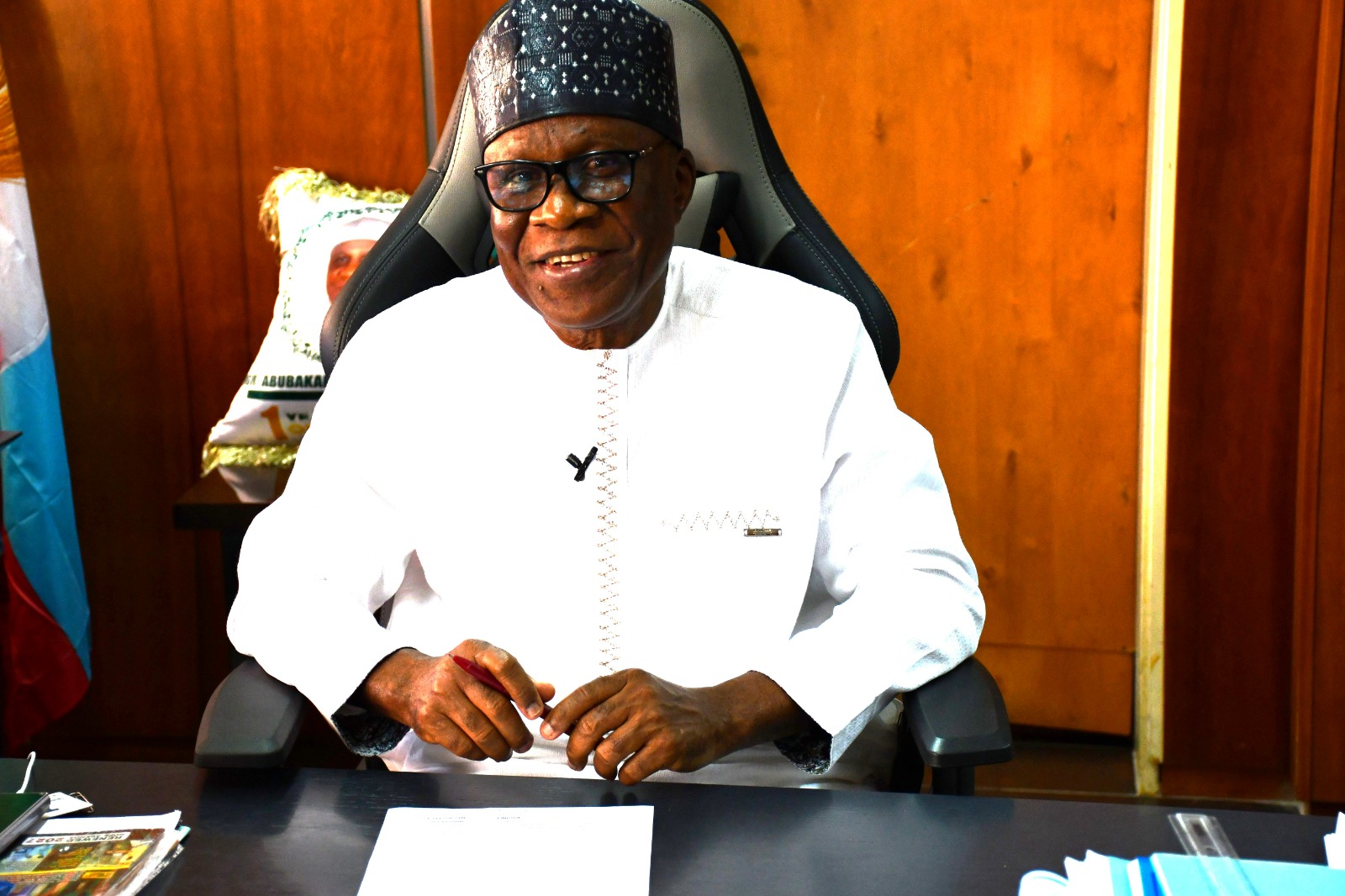
The Minister of Regional Development, Engr. Abubakar Momoh, has described the establishment of the Regional Development Commissions as one of President Bola Ahmed Tinubu’s best decisions towards addressing longstanding regional inequalities, accelerating inclusive national development and ensuring that every geopolitical zone benefits from targeted government interventions.
The Minister stated this at the weekend during an exclusive interview on the impact of the Regional Development Commissions on overall sub-national development and the Ministry’s role in coordinating their programmes and projects.
He explained that one of the Ministry’s major responsibilities is to coordinate the activities of the Regional Development Commissions to ensure that their interventions align with national policies and development priorities.
“The role of the Ministry and the Commissions is to intervene where there is a gap in any of the government agencies,” he said, noting that most regional development funds are domiciled with the Commissions.
Momoh observed that the Niger Delta Development Commission and the North East Development Commission, having existed for several years, have recorded considerable achievements in infrastructure and human capital development across their respective regions. He added that the two Commissions had executed several projects within the first three years of the present administration.
He further explained that the remaining five Regional Development Commissions were inaugurated in 2025 and commenced effective operations in February 2026. According to him, some of the Commissions have settled into their operations and are making efforts to deliver on their mandates within the limits of available financial resources.
However, the Minister expressed particular concern about the South-South Development Commission, which, he noted, does not yet have an operational office and has not fully submitted itself to the Ministry’s coordination framework.
The Minister expressed optimism that Nigerians should expect more from the Regional Development Commissions, noting that many of them have now settled into their operations and are positioning themselves to deliver on their respective mandates and make meaningful contributions to national development.
By David Torough, Abuja
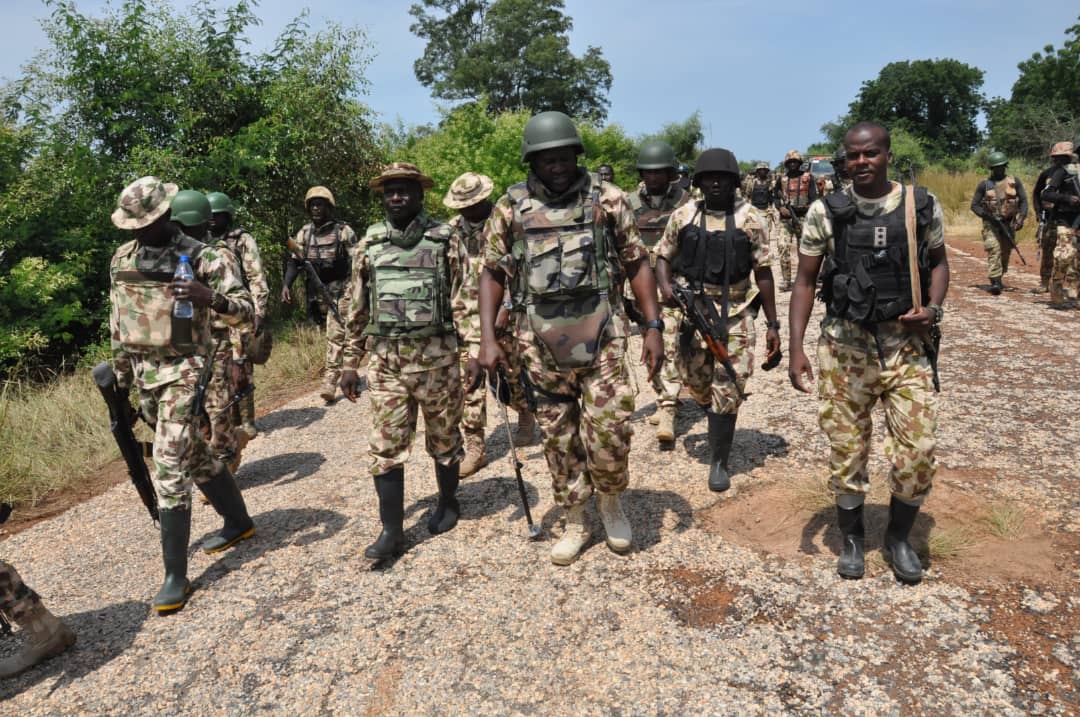
Troops of the Nigerian Army have arrested a suspected ammunition supplier and recovered 300 rounds of 7.62 x 39mm ammunition concealed in a sack of beans during an intelligence-led operation.
The operation, carried out at about 9:30 p.
m. on Tuesday, November 17, 2026, involved troops of the Atsawa Blocking Force working in collaboration with local vigilantes.The suspect, identified as 47-year-old Umaru Muhammad, a resident of Ashe Village, was intercepted following credible intelligence. A search of his belongings reportedly uncovered the ammunition, which had been concealed in a sack of beans in an apparent attempt to disguise its transportation as an ordinary commercial consignment.
According to a statement issued on Wednesday by the Acting Director of Army Public Relations, Colonel Appolonia Anele, preliminary interrogation indicated that the ammunition was allegedly intended for two individuals identified as Gimba and Dare, reportedly residents of Gori Village along the River Niger corridor in Lokoja Local Government Area of Kogi State.
The statement said the two individuals were described as local vigilantes, raising concerns about the possible infiltration or exploitation of community security structures by criminal ammunition supply networks.
However, the allegations remain subject to further investigation.
Other items recovered during the operation included a Bajaj motorcycle, a mobile telephone and ₦30,500 in cash.
Muhammad is currently in military custody as investigations continue to determine the extent of the suspected ammunition supply network and identify other individuals who may be connected to the alleged transaction.
The Army said the interception formed part of its sustained efforts to dismantle the logistics and ammunition supply chains supporting banditry, terrorism, kidnapping and other criminal activities across the country.
It added that troops would continue to intensify intelligence-driven operations and strengthen collaboration with local security stakeholders to prevent criminal groups from accessing weapons and other resources used to carry out attacks.
The Nigerian Army also urged members of the public to remain vigilant and report suspicious movements, particularly the transportation of concealed arms, ammunition and other prohibited items, to security agencies.
The military reiterated its commitment to protecting law-abiding citizens and restoring lasting peace and security across the country.
By David Torough, Abuja
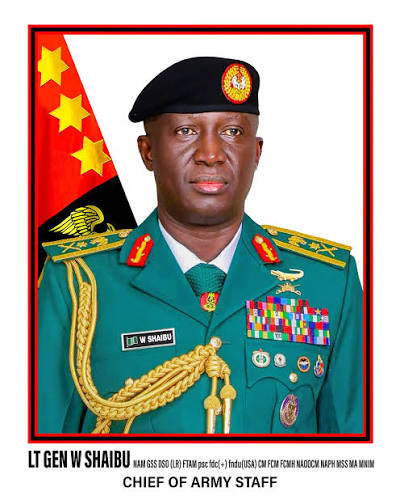
The Chief of Army Staff (COAS), Lieutenant General Waidi Shaibu, has commissioned 20 transit flats and a modern Officers’ Mess at Obienu Barracks in Bauchi State, reaffirming the Nigerian Army’s commitment to improving the welfare and living conditions of its personnel and their families.
The facilities were commissioned on Wednesday, November 18, 2026, as part of the Army’s ongoing efforts to strengthen personnel welfare, modernise its infrastructure and enhance operational readiness.
Speaking at the ceremony, General Shaibu said the Army’s modernisation drive extends beyond acquiring sophisticated military equipment and expanding formations to include investments in personnel welfare and improved living conditions.
He stressed that decent accommodation and a conducive environment were essential to boosting troops’ morale, promoting family stability and improving operational effectiveness, particularly as the Army continues to expand its capacity to tackle emerging security threats.
According to him, the newly commissioned 20 transit flats would address accommodation challenges faced by personnel deployed on postings, courses and temporary assignments.
He added that the modern facility, named the Lieutenant General Waidi Shaibu Officers’ Mess, features contemporary accommodation, a Hall of Fame and recreational facilities designed to encourage professional interaction, strengthen esprit de corps and promote institutional pride among officers.
The Army Chief commended the Nigerian Army Armoured Corps and other stakeholders for the successful execution of the projects, describing them as evidence of the military’s commitment to personnel welfare and prudent resource management.
He also urged personnel who would benefit from the facilities to ensure their proper maintenance to guarantee their sustainability and continued usefulness.
General Shaibu reiterated that the welfare of soldiers and their families remained a major priority of his leadership, assuring that investments in accommodation, healthcare, education and other welfare initiatives would continue alongside the Army’s modernisation and expansion programmes.
He maintained that a well-motivated, professionally trained and adequately supported force remained crucial to sustaining operational successes against terrorism, insurgency, banditry and other security threats facing the country.
The commissioning underscores the Nigerian Army’s growing emphasis on balancing military capability development with improved welfare infrastructure for its personnel.



Court Nullifies Omo-Agege’s NDC Senatorial Candidacy
ShareFrom Francis Sadhere, Delta The Federal High Court sitting in Warri, Delta State, has nullified the nomination of former Deputy...


APC Mourns 15 Supporters Killed In Zamfara Road Accident
ShareBy Orjime Moses, Abuja The All Progressives Congress (APC) has mourned 15 of its members and supporters reportedly killed in...
Ortom ‘Ranched’ Benue People in IDP Camps Instead of Cattle – Tondo
ShareFrom Attah Ede, Makurdi Former Benue State Commissioner for Lands and Survey, John Tondo, has criticised former Governor Samuel Ortom...


2027: INEC Chairman Seeks Stronger Security Cooperation Ahead Of Elections
ShareBy Orjime Moses, Abuja The Chairman of the Independent National Electoral Commission (INEC), Prof. Joash Ojo Amupitan, SAN, has called...


CBN Retains Interest Rate at 23 Per Cent
ShareBy Tony Obiechina, Abuja The Monetary Policy Committee (MPC) of the Central Bank of Nigeria (CBN) has retained the benchmark...


2027: Emovworho Warns Delta Politicians Against Exploiting Youths
ShareBy Orjime Moses, Abuja A concerned son of the Urhobo Nation, Austin Obule Emovworho, has warned political leaders in Delta...

Katsina Suspends Daura Emir, Orders Probe into Sexual Assault Allegation
ShareBy David Torough, Abuja The Katsina State Government has suspended all official engagements and travels of the Emir of Daura,...

Makarfi Chairs DAILY ASSET 10th Anniversary, Awards
ShareBy David Torough, Abuja Former Kaduna State Governor, Senator Ahmed Mohammed Makarfi, has accepted the invitation to chair the 10th...

Customs Unveils Novara to Spotlight Officers’ Challenges
ShareBy Tambaya Julius, Abuja The Nigeria Customs Service (NCS) has unveiled a 79-episode television drama series, Novara, to showcase the...

FCT Upgrades 20 PHCs Under World Bank-supported IMPACT Project
ShareBy Laide Akinboade, Abuja The Federal Capital Territory Administration (FCTA) has upgraded 20 Primary Health Centres (PHCs) across the territory...